Modern European thinkers, 19th century: Gentile to Wallon
- 1
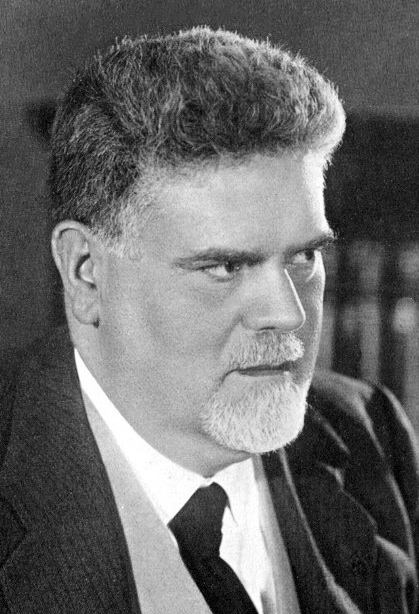 PhilosopherModern European1875 – 1944
Giovanni Gentile
Giovanni Gentile was an Italian pedagogue, philosopher, and politician. He was one of the primary founders of fascism.
Read the full pageGiovanni Gentile ( jen-TEE-lay; Italian: [dʒoˈvanni dʒenˈtiːle]; 29 May 1875 – 15 April 1944) was an Italian pedagogue, philosopher, and politician. He was one of the primary founders of fascism.
Born in Castelvetrano, Gentile graduated from the Scuola Normale Superiore and the University of Pisa. He, alongside Benedetto Croce, was a major exponent of Italian idealism in Italian philosophy, and also devised his own system of thought, which he called "actual idealism" or "actualism", which has been described as "the subjective extreme of the idealist tradition".
- 2
 PhilosopherModern European1877 – 1964
Reginald Garrigou-Lagrange
Réginald Marie Garrigou-Lagrange was a French Dominican friar, philosopher and theologian. As a neo-Thomist, he is recognized along with Édouard Hugon and Martin Grabmann as a distinguished theologian of the 20th century.
Read the full pageRéginald Marie Garrigou-Lagrange (French: [gaʁigu lagʁɑ̃ʒ]; 21 February 1877 – 15 February 1964) was a French Dominican friar, philosopher and theologian. As a neo-Thomist, he is recognized along with Édouard Hugon and Martin Grabmann as a distinguished theologian of the 20th century. As professor at the Pontifical University of Saint Thomas Aquinas, he taught dogmatic and spiritual theology in Rome from 1909 to 1959. There he wrote The Three Ages of the Interior Life (Les trois âges de la vie intérieure) in 1938.
Gontran-Marie Garrigou Lagrange was born in Auch, near Toulouse, France on 21 February 1877. His father François Garrigou-Lagrange, was a civil servant. Lagrange was the relative of Henri Lasserre, a historian, through his mother, Cleménce Lasserre and his paternal grand-uncle was Maurice-Marie-Matthieu Garrigou. Although Lagrange's family was Catholic, Lagrange in his youth didn't show signs of remarkable piety as was seen in the late nineteenth century of those who would later become saints.
- 3
 PhilosopherModern European1878 – 1938
Egon Friedell
Egon Friedell was a prominent Austrian cultural historian, playwright, actor and Kabarett performer, journalist and theatre critic. Friedell has been described as a polymath.
Read the full pageEgon Friedell (born Egon Friedmann; 21 January 1878, Vienna – 16 March 1938, Vienna) was a prominent Austrian cultural historian, playwright, actor and Kabarett performer, journalist and theatre critic. Friedell has been described as a polymath. Before 1916, he was also known by his pen name Egon Friedländer.
Friedell's parents had immigrated to Vienna from the eastern parts of the Austro-Hungarian Empire. Friedell was the second child of Jewish parents, Moriz Friedmann and Karoline (née Eisenberger), who were running a silk manufactory in Mariahilf. His older brother, Oskar Friedmann , also later became a writer and journalist.
- 4
 PhilosopherModern European1878 – 1903
Gemma Galgani
Gemma Umberta Pia Galgani, also known as Gemma of Lucca, was an Italian mystic, canonized as a saint in the Catholic Church in 1940. She has been called the "daughter of the Passion" because of her profound imitation of the Passion of Christ.
Read the full pageGemma Umberta Pia Galgani (12 March 1878 – 11 April 1903), also known as Gemma of Lucca, was an Italian mystic, canonized as a saint in the Catholic Church in 1940. She has been called the "daughter of the Passion" because of her profound imitation of the Passion of Christ. She is especially venerated in the Congregation of the Passion of Jesus Christ (Passionists) while during her life, she was rejected by the Passionists.
Gemma Umberta Maria (Pia) Galgani was born on 12 March 1878, in the hamlet of Camigliano in the comune of Capannori, province of Lucca. She was the fifth of eight children and the first daughter; her father, Enrico Galgani, was a prosperous pharmacist.
- 5
 PhilosopherModern European1878 – 1973
Mirra Alfassa
Mirra Alfassa, known to her followers as The Mother or La Mère, was a French-Indian spiritual guru, occultist and yoga teacher, and a collaborator of Sri Aurobindo, who considered her to be of equal yogic stature to him and called her by the name "The Mother" or "Shri Maa". Alfassa was born in Paris in 1878 to a bourge
Read the full pageMirra Alfassa (21 February 1878 – 17 November 1973), known to her followers as The Mother or La Mère, was a French-Indian spiritual guru, occultist and yoga teacher, and a collaborator of Sri Aurobindo, who considered her to be of equal yogic stature to him and called her by the name "The Mother" or "Shri Maa".
Alfassa was born in Paris in 1878 to a bourgeois Sephardi Jewish family from Turkey. In her youth, she traveled to Algeria to practice occultism along with the occultist Max Théon. After returning to Paris, Alfassa guided a group of spiritual seekers. In 1914, she traveled to Pondicherry, India, and met Sri Aurobindo. She identified him as "the dark Asiatic figure" of her visions, and called him Krishna. During this first visit, she helped publish a French version of the periodical Arya, which serialised most of Sri Aurobindo's post-political prose writings.
- 6
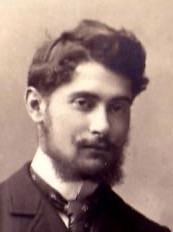 PhilosopherModern European1879 – 1962
Henri Wallon
Henri Paul Hyacinthe Wallon was a French philosopher, psychologist (in the field of social psychology), neuropsychiatrist, teacher, and politician. He was the grandson of the historian and statesman Henri-Alexandre Wallon.
Read the full pageHenri Paul Hyacinthe Wallon (March 15, 1879 – December 1, 1962) was a French philosopher, psychologist (in the field of social psychology), neuropsychiatrist, teacher, and politician. He was the grandson of the historian and statesman Henri-Alexandre Wallon.
Henri Wallon conducted two parallel careers. As a convinced Marxist, he took up political duties while carrying out scientific work in the field of developmental psychology.