Modern European thinkers, 19th century: Lossky to Schweitzer
- 1
 PhilosopherModern European1870 – 1965
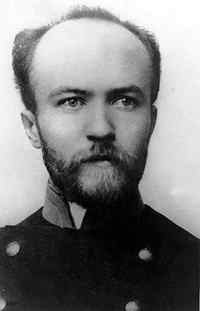
Nikolay Lossky
Nikolay Onufriyevich Lossky, was a Russian philosopher, representative of Russian idealism, intuitionist epistemology, personalism, libertarianism, ethics and axiology (value theory). He gave his philosophical system the name intuitive-personalism.
- ◆gnosiology
Read the full pageNikolay Onufriyevich Lossky (; 6 December [O.S. 24 November] 1870 – 24 January 1965), was a Russian philosopher, representative of Russian idealism, intuitionist epistemology, personalism, libertarianism, ethics and axiology (value theory). He gave his philosophical system the name intuitive-personalism. He spent his working life in St. Petersburg and, after his exile by the Bolsheviks in 1922, in Prague and New York. He was the father of the influential Christian theologian Vladimir Lossky.
Lossky was born in Kreslavka, then in the Russian Empire. His father, Onufry Lossky, had Belarusian roots (his grandfather was a Greek-Catholic Uniate priest) and was an Eastern Orthodox Christian; his mother Adelajda Przylenicka was Polish and Roman Catholic. He was expelled from school for propagating atheism.
- 2
 PhilosopherModern European1871 – 1919
Rosa Luxemburg
Rosa Luxemburg was a Polish and naturalised-German Marxist theorist and revolutionary. She was a leading theorist of the Social Democratic Party of Germany (SPD) and later co-founded the anti-war Spartacus League, which evolved into the Communist Party of Germany (KPD).
Read the full pageRosa Luxemburg ( LUK-səm-burg; Polish: Róża Luksemburg [ˈruʐa ˈluksɛmburk] ; German: [ˈʁoːza ˈlʊksm̩bʊʁk] ; 5 March 1871 – 15 January 1919) was a Polish and naturalised-German Marxist theorist and revolutionary. She was a leading theorist of the Social Democratic Party of Germany (SPD) and later co-founded the anti-war Spartacus League, which evolved into the Communist Party of Germany (KPD). An influential member of the international socialist movement, she is remembered for her writings on imperialism and revolution.
Born and raised in Russian-ruled Poland to a secular Jewish family, Luxemburg became active in revolutionary politics in her youth. She co-founded the Social Democracy of the Kingdom of Poland and Lithuania (SDKPiL), a party that rejected Polish nationalism in favour of an international class struggle. After moving to Germany in 1898, she became the foremost voice of the SPD's revolutionary wing. In her 1900 pamphlet Social Reform or Revolution?, she defended the necessity of revolution against the reformist theories of Eduard Bernstein, arguing that the struggle for reforms was a means to an end, not an end in itself. Inspired by the 1905 Russian Revolution, she developed a theory of the mass strike as the proletariat's most important revolutionary tool, emphasizing the spontaneous creativity of the working class.
- 3
 PhilosopherModern European1871 – 1945
Paul Valéry
Ambroise Paul Toussaint Jules Valéry was a French poet, essayist, and philosopher. In addition to his poetry and fiction (drama and dialogues), his interests included aphorisms on art, history, letters, music, and current events.
Read the full pageAmbroise Paul Toussaint Jules Valéry (French: [pɔl valeʁi]; 30 October 1871 – 20 July 1945) was a French poet, essayist, and philosopher. In addition to his poetry and fiction (drama and dialogues), his interests included aphorisms on art, history, letters, music, and current events.
Valéry was nominated for the Nobel Prize in Literature in 12 different years.
- 4
 PhilosopherModern European1871 – 1944
Sergei Bulgakov
Sergei (Sergius) Nikolayevich Bulgakov was a Russian Orthodox theologian, priest, philosopher, and economist. As a priest, Bulgakov served as a spiritual father and confessor to Maria Skobtsova, who was canonized a saint by the Holy Synod of the Ecumenical Patriarchate in 2004.
Read the full pageSergei (Sergius) Nikolayevich Bulgakov was a Russian Orthodox theologian, priest, philosopher, and economist. As a priest, Bulgakov served as a spiritual father and confessor to Maria Skobtsova, who was canonized a saint by the Holy Synod of the Ecumenical Patriarchate in 2004. Bulgakov is best known for his development of sophiology, a theological system centered on Sophia, the Wisdom of God. Orthodox scholar David Bentley Hart has named Bulgakov "the greatest systematic theologian of the twentieth century."
Sergei Nikolayevich Bulgakov was born on 28 July 1871 to the family of a rural Orthodox priest (Nikolai Bulgakov) in the town of Livny, Oryol Governorate, in Russia. The family produced Orthodox priests for six generations, beginning in the sixteenth century with their ancestor Bulgak, a Tatar from whom the family name derives. Metropolitan Macarius Bulgakov (1816–1882), one of the major Eastern Orthodox theologians of his days, and one of the most important Russian church historians, was a distant relative.
- 5
 PhilosopherModern European1872 – 1933
Theodor Lessing
Karl Theodor Richard Lessing was a German philosopher. He is known for opposing the rise of Hindenburg as president of the Weimar Republic and for his classic work on Jewish self-hatred (Der jüdische Selbsthaß), a book which he published in 1930, three years before Adolf Hitler came to power, in which he tried to expla
- ◆Jewish self-hatred
Read the full pageKarl Theodor Richard Lessing (8 February 1872 – 31 August 1933) was a German philosopher.
He is known for opposing the rise of Hindenburg as president of the Weimar Republic and for his classic work on Jewish self-hatred (Der jüdische Selbsthaß), a book which he published in 1930, three years before Adolf Hitler came to power, in which he tried to explain the phenomenon of Jewish intellectuals who incited antisemitism against the Jewish people and who regarded Judaism as the source of evil in the world.
- 6
 PhilosopherModern European1873 – 1897
Thérèse of Lisieux
Thérèse of Lisieux, religious name Therese of the Child Jesus and the Holy Face was a French Discalced Carmelite. She is popularly known in English as the "Little Flower of Jesus", or simply the "Little Flower", and in French and German as the "little Therese", in contrast to Teresa of Avila, who is called the "great T
Read the full pageThérèse of Lisieux (born Marie Françoise-Thérèse Martin; 2 January 1873 – 30 September 1897), religious name Therese of the Child Jesus and the Holy Face was a French Discalced Carmelite. She is popularly known in English as the "Little Flower of Jesus", or simply the "Little Flower", and in French and German as the "little Therese", in contrast to Teresa of Avila, who is called the "great Therese").
Therese has been a highly influential model of sanctity for Catholics and for others because of the simplicity and practicality of her approach to the spiritual life. She is one of the most popular saints in the history of the church, although she was obscure during her lifetime. Pope Pius X called her "the greatest saint of modern times".
- 7
 PhilosopherModern European1873 – 1914
Charles Péguy
Charles Pierre Péguy was a French poet, essayist, and editor. His two main philosophies were socialism and nationalism; by 1908 at the latest, after years of uneasy agnosticism, he had become a believing (but generally non-practicing) Catholic.
Read the full pageCharles Pierre Péguy (French: [ʃaʁl(ə) peɡi]; 7 January 1873 – 5 September 1914) was a French poet, essayist, and editor. His two main philosophies were socialism and nationalism; by 1908 at the latest, after years of uneasy agnosticism, he had become a believing (but generally non-practicing) Catholic. From that time, Catholicism strongly influenced his works. Péguy was killed in World War I at age 41 by German invading forces near Villeroy, Seine-et-Marne.
Péguy was born into poverty in Orléans. His mother Cécile, widowed when he was an infant, mended chairs for a living. His father Désiré Péguy was a cabinet maker, and had died in 1874 as a result of combat wounds. Péguy studied at the Lycée Lakanal in Sceaux, winning a scholarship to the École normale supérieure (Paris). There he attended notably the lectures of Henri Bergson and Romain Rolland, whom he befriended. He formally left without graduating, in 1897, though he continued attending some lectures in 1898. Influenced by Lucien Herr, librarian of the École Normale Supérieure, he became an ardent Dreyfusard.
- 8
 PhilosopherModern European1873 – 1928
Alexander Bogdanov
Alexander Aleksandrovich Bogdanov, born Alexander Malinovsky, was a Russian and later Soviet physician, philosopher, science fiction writer, and Bolshevik revolutionary. He was a polymath who pioneered blood transfusion, as well as general systems theory, and anticipated many of the ideas that inspired cybernetics.
- ◆Tektology
Read the full pageAlexander Aleksandrovich Bogdanov (Russian: Александр Александрович Богданов; 22 August 1873 [O.S. 10 August] – 7 April 1928), born Alexander Malinovsky, was a Russian and later Soviet physician, philosopher, science fiction writer, and Bolshevik revolutionary. He was a polymath who pioneered blood transfusion, as well as general systems theory, and anticipated many of the ideas that inspired cybernetics.
He was a key figure in the early history of the Russian Social Democratic Labor Party, originally established 1898, and of its Bolshevik faction. In 1904–1906, he published three volumes of the philosophic treatise Empiriomonizm (Empiriomonism), in which he tried to merge Marxism with the philosophy of Ernst Mach, Wilhelm Ostwald, and Richard Avenarius. His work later affected a number of Russian Marxist theoreticians, including Nikolai Bukharin and Dov Ber Borochov.
- 9
 PhilosopherModern European1874 – 1948
Nikolai Berdyaev
Nikolai Alexandrovich Berdyaev was a Russian philosopher, theologian, and Christian existentialist who emphasized the existential spiritual significance of human freedom and the human person.
- ◆existential
- ◆human freedom
Read the full pageNikolai Alexandrovich Berdyaev (; Russian: Николай Александрович Бердяев; 18 March [O.S. 6 March] 1874 – 24 March 1948) was a Russian philosopher, theologian, and Christian existentialist who emphasized the existential spiritual significance of human freedom and the human person.
Berdyaev was born on 18 March [O.S. 6 March] 1874 in Obukhiv, Kiev Governorate (present-day Ukraine) to an aristocratic military family. His father, Alexander Mikhailovich Berdyaev, came from a long line of Russian nobility. Almost all of Alexander Mikhailovich's ancestors served as high-ranking military officers, but in the sixth grade, he left the cadet school and began studying for the matriculation exams for admission to the university. Nikolai's mother, Alina Sergeevna Berdyaeva, was half-French and came from the top levels of both French and Russian nobility. She also had Polish, Georgian and Tatar origins.
- 10
 PhilosopherModern European1874 – 1947
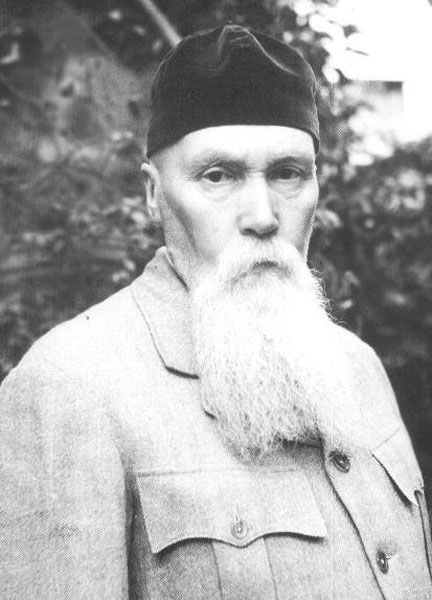
Nicholas Roerich
Nikolai Konstantinovich Rerikh (Russian: Николай Константинович Рерих), better known as Nicholas Roerich, was a Russian painter, writer, archaeologist, theosophist, philosopher, and public figure. He is best known for his prolific body of artwork, which spans over 7,000 paintings, and his contributions to a wide array
Read the full pageNikolai Konstantinovich Rerikh (Russian: Николай Константинович Рерих), better known as Nicholas Roerich (; October 9, 1874 – December 13, 1947), was a Russian painter, writer, archaeologist, theosophist, philosopher, and public figure. He is best known for his prolific body of artwork, which spans over 7,000 paintings, and his contributions to a wide array of cultural, political, intellectual, and artistic movements and causes. The Government of India has recognized him as a Navaratna, one of India's nine great artists whose work is protected as a national treasure.
Born in Saint Petersburg to a Baltic German father and Russian mother, Roerich had a privileged upbringing that exposed him to many artists, intellectuals, and scientists. In his youth he displayed a natural curiosity and aptitude for various activities and subjects ranging from drawing to botany. Trained as an artist and lawyer, his main interests were literature, philosophy, archaeology, spiritual practice, and esotericism. An avid music enthusiast, he also found success in set design, most notably for Sergei Diaghilev's Ballets Russes and for the 1913 premiere of Igor Stravinsky’s early Modernist ballet The Rite of Spring.
- 11
 PhilosopherModern European1874 – 1945
Ernst Cassirer
Ernst Alfred Cassirer was a German philosopher and historian of philosophy. Trained within the Marburg school of neo-Kantianism, he initially followed his mentor Hermann Cohen in attempting to supply an idealistic philosophy of science.
- ◆Animal symbolicum
- ◆Ontic structural realism
- ◆Stanford Encyclopedia of Philosophy
Read the full pageErnst Alfred Cassirer ( kah-SEER-ər, kə-; German: [ˈɛʁnst kaˈsiːʁɐ]; July 28, 1874 – April 13, 1945) was a German philosopher and historian of philosophy. Trained within the Marburg school of neo-Kantianism, he initially followed his mentor Hermann Cohen in attempting to supply an idealistic philosophy of science.
After Cohen's death in 1918, Cassirer developed a theory of symbolism and used it to expand the "logic and psychology of thought" into a more general "logic of the cultural sciences". Cassirer was one of the leading 20th-century advocates of philosophical idealism. His most famous work is the Philosophy of Symbolic Forms (1923–1929).
- 12
 PhilosopherModern European1875 – 1965
Albert Schweitzer
Ludwig Philipp Albert Schweitzer was a German polymath from Alsace. He was a theologian, organist, musicologist, writer, humanitarian, philosopher, and physician.
- ◆Quest for the historical Jesus
- ◆Reverence for Life
- ◆Consistent "thorough-going" eschatology
Read the full pageLudwig Philipp Albert Schweitzer (German: [ˈalbɛʁt ˈʃvaɪtsɐ] ; 14 January 1875 – 4 September 1965) was a German polymath from Alsace. He was a theologian, organist, musicologist, writer, humanitarian, philosopher, and physician. As a Lutheran minister, Schweitzer challenged both the secular view of the historical Jesus as depicted by the historical-critical method current at this time, as well as the traditional Christian view. His contributions to the interpretation of Pauline Christianity concern the role of Paul's mysticism of "being in Christ" as primary and the doctrine of justification by faith as secondary.
He received the 1952 Nobel Peace Prize for his philosophy of "Reverence for Life". His philosophy was expressed in many ways, but most famously in founding and sustaining the Hôpital Albert Schweitzer in Lambaréné, French Equatorial Africa (now Gabon). As a music scholar and organist, he studied the music of German composer Johann Sebastian Bach and influenced the Organ Reform Movement (Orgelbewegung).