American thinkers, 19th century: Bello to Martí
- 1
 PhilosopherAmericas1781 – 1865
Andrés Bello
Andrés de Jesús María y José Bello López was a Venezuelan humanist, diplomat, poet, legislator, philosopher, educator and philologist, whose political and literary works constitute an important part of Spanish American culture. Bello is featured on the old 1992 50 and 1998 2,000 Venezuelan bolívar notes and the 20,000
Read the full pageAndrés de Jesús María y José Bello López (Spanish pronunciation: [anˈdɾes ˈβeʝo]; November 29, 1781 – October 15, 1865) was a Venezuelan humanist, diplomat, poet, legislator, philosopher, educator and philologist, whose political and literary works constitute an important part of Spanish American culture. Bello is featured on the old 1992 50 and 1998 2,000 Venezuelan bolívar notes and the 20,000 Chilean peso notes.
In Caracas, where he was born, Andrés Bello was Simón Bolívar's teacher for a short period of time and participated in efforts that led to Venezuelan independence. As a diplomat for the new independent government that he helped establish, he went with Luis López Méndez and Simón Bolívar on their first diplomatic mission to London. He lived in London from 1810 to 1829.
- 2
 PhilosopherAmericas1805 – 1844
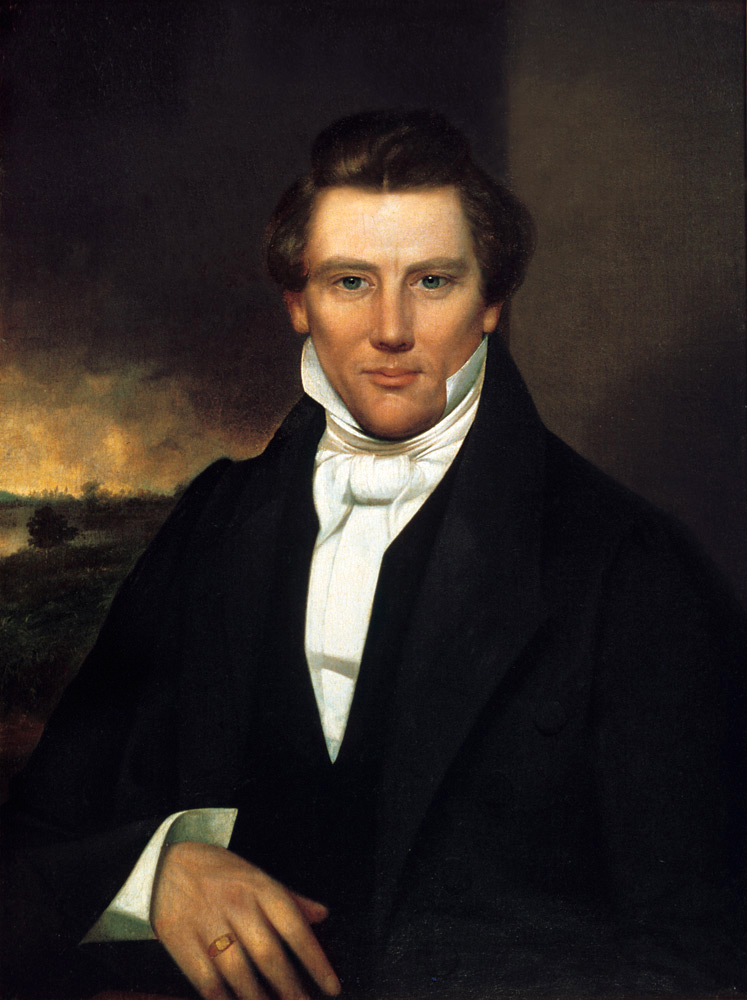
Joseph Smith
Joseph Smith Jr. was an American religious and political leader and the founder of Mormonism and the Latter Day Saint movement. Publishing the Book of Mormon at the age of 24, Smith attracted tens of thousands of followers by the time of his death fourteen years later.
- ◆Mormonism
Read the full pageJoseph Smith Jr. (December 23, 1805 – June 27, 1844) was an American religious and political leader and the founder of Mormonism and the Latter Day Saint movement. Publishing the Book of Mormon at the age of 24, Smith attracted tens of thousands of followers by the time of his death fourteen years later. The religious movement he founded is followed by millions of global adherents and several churches, the largest of which is the Church of Jesus Christ of Latter-day Saints (LDS Church).
Born in Sharon, Vermont, Smith moved with his family to Western New York by 1816. Smith reported that, in 1820, he had a vision in which he saw God the Father and Jesus Christ. In 1823, he claimed he was visited by an angel who directed him to a buried book of golden plates inscribed with a Judeo-Christian history of an ancient American civilization. In 1830, Smith published the Book of Mormon, which he described as an English translation of those plates. The same year, he organized the Church of Christ, calling it a restoration of the early Christian Church.
- 3
 PhilosopherAmericas1808 – 1887
Lysander Spooner
Lysander Spooner was an American abolitionist, entrepreneur, lawyer, essayist, natural rights legal theorist, pamphleteer, political philosopher, and writer often associated with the Boston anarchist tradition. Spooner was a strong advocate of the labor movement and is politically identified with individualist anarchis
Read the full pageLysander Spooner (January 19, 1808 – May 14, 1887) was an American abolitionist, entrepreneur, lawyer, essayist, natural rights legal theorist, pamphleteer, political philosopher, and writer often associated with the Boston anarchist tradition.
Spooner was a strong advocate of the labor movement and is politically identified with individualist anarchism. His writings contributed to the development of both left-libertarian and right-libertarian political theory.
- 4
 PhilosopherAmericas1809 – 1880
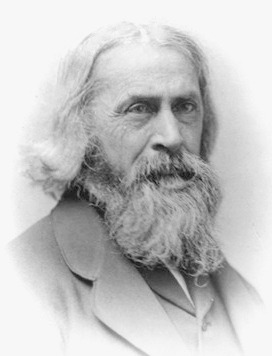
Benjamin Peirce
Benjamin Peirce was an American mathematician who taught at Harvard University for approximately 50 years. He made contributions to celestial mechanics, statistics, number theory, algebra, and the philosophy of mathematics.
Read the full pageBenjamin Peirce (; April 4, 1809 – October 6, 1880) was an American mathematician who taught at Harvard University for approximately 50 years. He made contributions to celestial mechanics, statistics, number theory, algebra, and the philosophy of mathematics.
Benjamin Peirce was born in Salem, Massachusetts, the son of first cousins Benjamin Peirce (1778–1831), later librarian of Harvard, and Lydia Ropes Nichols Peirce (1781–1868).
- 5
 PhilosopherAmericas1810 – 1850
Margaret Fuller
Sarah Margaret Fuller, sometimes referred to as Margaret Fuller Ossoli, was an American journalist, editor, critic, translator, and women's rights advocate associated with the American transcendentalism movement. She was the first American female war correspondent and full-time book reviewer in journalism.
Read the full pageSarah Margaret Fuller (May 23, 1810 – July 19, 1850), sometimes referred to as Margaret Fuller Ossoli, was an American journalist, editor, critic, translator, and women's rights advocate associated with the American transcendentalism movement. She was the first American female war correspondent and full-time book reviewer in journalism. Her book Woman in the Nineteenth Century is considered the first major feminist work in the United States.
Born in Cambridgeport, Massachusetts, she was given a substantial early education by her father, Timothy Fuller, a lawyer who died in 1835 due to cholera. She later had more formal schooling and became a teacher before, in 1839, she began overseeing her Conversations series: classes for women meant to compensate for their lack of access to higher education. She became the first editor of the transcendentalist journal The Dial in 1840, which was the year her writing career started to succeed, before joining the staff of the New-York Tribune under Horace Greeley in 1844.
- 6
 PhilosopherAmericas1830 – 1875
Chauncey Wright
Chauncey Wright was an American philosopher and mathematician, who was an influential early defender of Darwinism and an important influence on American pragmatists such as Charles Sanders Peirce and William James.
Read the full pageChauncey Wright (September 10, 1830 – September 12, 1875) was an American philosopher and mathematician, who was an influential early defender of Darwinism and an important influence on American pragmatists such as Charles Sanders Peirce and William James.
Wright was born in Northampton, Massachusetts, the son of a merchant and a pillar of the local Unitarian church. With financial help from a benefactor, Wright attended Harvard, where his reading of Ralph Waldo Emerson led him to abandon his youthful Unitarianism. In 1852 he graduated from Harvard and became a computer to the Nautical Almanac. In college, he was mainly interested in science and mathematics. In the 1850s, however, he began reading philosophers such as Francis Bacon, John Stuart Mill, and William Hamilton (about whom he learned through his philosophy tutor, Francis Bowen), and he became a frequent contributor to the North American Review and The Nation, becoming a well-known defender of Darwinism and a critic of the English philosopher and social theorist Herbert Spencer.
- 7
 PhilosopherAmericas1847 – 1930
Christine Ladd-Franklin
Christine Ladd-Franklin was an American psychologist, logician, and mathematician.
Read the full pageChristine Ladd-Franklin (December 1, 1847 – March 5, 1930) was an American psychologist, logician, and mathematician.
Christine Ladd, sometimes known by the nickname "Kitty", was born on December 1, 1847, in Windsor, Connecticut, to Eliphalet, a merchant, and Augusta (née Niles) Ladd. During her early childhood, she lived with her parents and younger brother Henry (born 1850) in New York City. In 1853 the family moved back to Windsor, Connecticut, where her sister Jane Augusta Ladd McCordia was born the following year. Family correspondence shows that Augusta and one of her sisters were both staunch supporters of women's rights. Before Ladd turned five, her mother had taken her to a lecture given by Elizabeth Oakes Smith, a well-known proponent of women's rights. Additionally, her father was a graduate professor who was supportive of his eldest daughter's education.
- 8
 PhilosopherAmericas1851 – 1933
Felix Adler
Felix Adler was a German-American professor of political and social ethics, rationalist, influential lecturer on euthanasia, religious leader and social reformer who founded the Ethical Culture movement.
- ◆Ethical Culture movement
- ◆euthanasia
Read the full pageFelix Adler (August 13, 1851 – April 24, 1933) was a German-American professor of political and social ethics, rationalist, influential lecturer on euthanasia, religious leader and social reformer who founded the Ethical Culture movement.
Felix Adler was born in Alzey, Rhenish Hesse, Grand Duchy of Hesse, Germany, the son of a rabbi, Samuel Adler, a leading figure in European Reform Judaism, and Henrietta Frankfurter. The family immigrated to the United States from Germany when Felix was six years old so that his father could accept the appointment as head rabbi at Temple Emanu-El in New York City.
- 9
 PhilosopherAmericas1853 – 1895
José Martí
José Julián Martí Pérez was a Cuban nationalist, poet, philosopher, essayist, journalist, translator, professor, and publisher, who is considered a Cuban national hero because of his role in the liberation of his country from Spain. He was also an important figure in Latin American literature.
Read the full pageJosé Julián Martí Pérez (Spanish: [xoˈse maɾˈti]; 28 January 1853 – 19 May 1895) was a Cuban nationalist, poet, philosopher, essayist, journalist, translator, professor, and publisher, who is considered a Cuban national hero because of his role in the liberation of his country from Spain. He was also an important figure in Latin American literature. He was a political activist and is considered an important philosopher and political theorist. Through his writings and political activity, he became a symbol of Cuba's bid for independence from the Spanish Empire in the 19th century and is referred to as the "Apostle of Cuban Independence". From adolescence on, he dedicated his life to the promotion of liberty, political independence for Cuba, and intellectual independence for all Spanish Americans; his death was used as a cry for Cuban independence from Spain by both the Cuban revolutionaries and those Cubans previously reluctant to start a revolt.
Born in Havana, Spanish Empire, Martí began his political activism at an early age. He traveled extensively in Spain, Latin America, and the United States, raising awareness and support for the cause of Cuban independence. His unification of the Cuban émigré community, particularly in Florida, was crucial to the success of the Cuban War of Independence against Spain. He was a key figure in the planning and execution of this war, as well as the designer of the Cuban Revolutionary Party and its ideology. He died in military action during the Battle of Dos Ríos on 19 May 1895. Martí is considered one of the great turn-of-the-century Latin American intellectuals. His written works include a series of poems, essays, letters, lectures, a novel, and a children's magazine.