American thinkers, 19th century: Hubbard to Korzybski
- 1
 PhilosopherAmericas1856 – 1915
Elbert Green Hubbard
Elbert Green Hubbard was an American writer, publisher, artist, and philosopher. Raised in Hudson, Illinois, he had early success as a traveling salesman for the Larkin Soap Company.
Read the full pageElbert Green Hubbard (June 19, 1856 – May 7, 1915) was an American writer, publisher, artist, and philosopher. Raised in Hudson, Illinois, he had early success as a traveling salesman for the Larkin Soap Company. Hubbard is known best as the founder of the Roycroft artisan community in East Aurora, New York, an influential exponent of the Arts and Crafts movement.
Among Hubbard's many publications were the fourteen-volume work Little Journeys to the Homes of the Great and the short publication A Message to Garcia. He and his second wife, Alice Moore Hubbard, died aboard the RMS Lusitania when it was torpedoed and sunk by German submarine SM U-20 off the coast of Ireland on May 7, 1915.
- 2
 PhilosopherAmericas1860 – 1935
Jane Addams
Laura Jane Addams was an American settlement activist, reformer, social worker, sociologist, public administrator, philosopher, and author. She was a leader in the history of social work and women's suffrage.
Read the full pageLaura Jane Addams (September 6, 1860 – May 21, 1935) was an American settlement activist, reformer, social worker, sociologist, public administrator, philosopher, and author. She was a leader in the history of social work and women's suffrage. In 1889, Addams co-founded Hull House, one of America's most famous settlement houses, in Chicago, Illinois, providing extensive social services to poor, largely immigrant families. Philosophically a "radical pragmatist", she was arguably the first woman public philosopher in the United States. In the Progressive Era, when even presidents such as Theodore Roosevelt and Woodrow Wilson identified themselves as reformers and might be seen as social activists, Addams was one of the most prominent reformers.
An advocate for world peace, and recognized as the founder of the social work profession in the United States, in 1931 Addams became the first American woman to be awarded the Nobel Peace Prize; she shared the win with Nicholas Murray Butler. Earlier, Addams was awarded an honorary Master of Arts degree from Yale University in 1910, becoming the first woman to receive an honorary degree from the school. In 1920, she was a co-founder of the American Civil Liberties Union (ACLU).
- 3
 PhilosopherAmericas1861 – 1934
James Mark Baldwin
James Mark Baldwin was an American philosopher and psychologist who was educated at Princeton under the supervision of Scottish philosopher James McCosh and who was one of the founders of the Department of Psychology at Princeton and the University of Toronto. He made important contributions to early psychology, psychi
Read the full pageJames Mark Baldwin (January 12, 1861 – November 8, 1934) was an American philosopher and psychologist who was educated at Princeton under the supervision of Scottish philosopher James McCosh and who was one of the founders of the Department of Psychology at Princeton and the University of Toronto. He made important contributions to early psychology, psychiatry, and the theory of evolution, for example, evolutionary biology's Baldwin effect was named after him.
Baldwin was born on January 12, 1861 and raised in Columbia, South Carolina. His father, who was from Connecticut, was an abolitionist and was known to purchase slaves in order to free them. During the Civil War his father moved north, but the family remained in their home until the time of Sherman's March. Upon their return after the war, Baldwin's father was part of the Reconstruction Era government. Baldwin was sent north to receive his secondary education in New Jersey. As a result, he chose to attend the College of New Jersey (now Princeton University).
- 4
 PhilosopherAmericas1862 – 1947
Nicholas Murray Butler
Nicholas Murray Butler was an American philosopher, diplomat, and educator. Butler was president of Columbia University, president of the Carnegie Endowment for International Peace, a recipient of the Nobel Peace Prize, and the late James S.
Read the full pageNicholas Murray Butler (April 2, 1862 – December 7, 1947) was an American philosopher, diplomat, and educator. Butler was president of Columbia University, president of the Carnegie Endowment for International Peace, a recipient of the Nobel Peace Prize, and the late James S. Sherman's replacement as William Howard Taft's running mate in the 1912 United States presidential election. The New York Times printed his Christmas greeting to the nation for many years during the 1920s and 1930s.
Butler, great-grandson of Morgan John Rhys, was born in Elizabeth, New Jersey, to Mary Butler and manufacturing worker Henry Butler. He enrolled in Columbia College (later Columbia University) and joined the Peithologian Society. He earned his bachelor's degree in 1882, his master's degree in 1883, and his doctorate in 1884. Butler's academic and other achievements led Theodore Roosevelt to call him "Nicholas Miraculous". In 1885, Butler studied in Paris and Berlin and became a lifelong friend of future Secretary of State Elihu Root. Through Root he also met Roosevelt and William Howard Taft. In the fall of 1885, Butler joined the staff of Columbia's philosophy department.
- 5PhilosopherAmericas1863 – 1930
Mary Whiton Calkins
Mary Whiton Calkins was an American philosopher and psychologist, whose work informed theory and research of memory, dreams and the self. She developed the paired-associate learning technique and the theory of self-psychology.
Read the full pageMary Whiton Calkins (; 30 March 1863 – 26 February 1930) was an American philosopher and psychologist, whose work informed theory and research of memory, dreams and the self. She developed the paired-associate learning technique and the theory of self-psychology. In 1903, she was ranked twelfth in a list of the fifty most eminent psychologists, chosen by her peers. In 1895, Calkins was refused a Ph.D. by Harvard University because of her gender even though she completed all the requirements. Calkins' experience at Harvard reflected the limited status of women in graduate education at the time, as they were often permitted to attend lectures informally but were excluded from official enrollment and degree recognition. She was given honorary membership of the British Psychology Association in 1928.
She taught psychology and philosophy at Wellesley College for four decades, and conducted research there and at Harvard University. At Wellesley College, Calkins established the first psychological laboratory for women. She later became president of the American Psychological Association and the American Philosophical Association, and was the first woman to be president of both.
- 6
 PhilosopherAmericas1868 – 1963
W. E. B. Du Bois
William Edward Burghardt Du Bois was an American sociologist, writer, historian, and Pan-Africanist civil rights activist. Born in Great Barrington, Massachusetts, Du Bois grew up in a relatively tolerant and integrated community.
- ◆The Souls of Black Folk
- ◆Black Reconstruction in America
- ◆The Crisis
Read the full pageWilliam Edward Burghardt Du Bois ( doo-BOYSS; February 23, 1868 – August 27, 1963) was an American sociologist, writer, historian, and Pan-Africanist civil rights activist. Born in Great Barrington, Massachusetts, Du Bois grew up in a relatively tolerant and integrated community. He completed graduate work at Harvard University, where he was the first African American to earn a doctorate. He was a professor at Atlanta University and over the course of his life wrote many books and articles. He spent the last years of his life in Ghana and died in Accra on August 27, 1963.
Du Bois rose to national prominence as a leader of the Niagara Movement, a group of black civil rights activists seeking equal rights. Du Bois and his supporters opposed the Atlanta Compromise. Instead, Du Bois insisted on full civil rights and increased political representation, which he believed would be brought about by the African-American intellectual elite. He referred to this group as the talented tenth, a concept under the umbrella of racial uplift, and believed that African Americans needed the chance for advanced education to develop their leadership. Du Bois was one of the founders of the National Association for the Advancement of Colored People (NAACP) in 1909. Du Bois used his position in the NAACP to respond to racist incidents.
- 7PhilosopherAmericas1873 – 1962
Arthur Oncken Lovejoy
Arthur Oncken Lovejoy was an American philosopher and intellectual historian, who founded the discipline known as the history of ideas with his book The Great Chain of Being, on the topic of that name, which has been described as 'probably the single most influential work in the history of ideas in the United States du
- ◆History of ideas
Read the full pageArthur Oncken Lovejoy (October 10, 1873 – December 30, 1962) was an American philosopher and intellectual historian, who founded the discipline known as the history of ideas with his book The Great Chain of Being (1936), on the topic of that name, which has been described as 'probably the single most influential work in the history of ideas in the United States during the last half century'. He was elected to the American Philosophical Society in 1932. In 1940, he founded the Journal of the History of Ideas.
Lovejoy was born in Berlin, Germany, while his father was doing medical research there. Eighteen months later, his mother, a daughter of Johann Gerhard Oncken, died from an overdose, whereupon his father gave up medicine and became a clergyman in the Protestant Episcopal Church, eventually becoming professor of Hebrew at Reformed Episcopal Seminary and, later, at Pacific Theological Seminary. Lovejoy studied philosophy, first at the University of California at Berkeley, then at Harvard under William James and Josiah Royce. He did not earn a Ph.D. In 1901, he resigned from his first job, at Stanford University, to protest the dismissal of a colleague who had offended a trustee. The President of Harvard then vetoed hiring Lovejoy on the grounds that he was a known troublemaker. Over the subsequent decade, he taught at Washington University in St. Louis, Columbia University, and the University of Missouri.
- 8
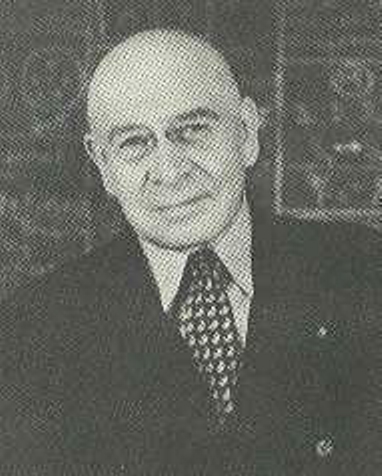 PhilosopherAmericas1879 – 1950
Alfred Korzybski
Alfred Habdank Skarbek Korzybski was a Polish-American philosopher and independent scholar who developed a field called general semantics, which he viewed as both distinct from, and more encompassing than, the field of semantics. He is most notable for proposing that human knowledge of the world is limited both by the
- ◆General semantics
- ◆Map–territory relation
Read the full pageAlfred Habdank Skarbek Korzybski ( kor-ZIB-skee, kə-ZHIP-skee; Polish: [ˈalfrɛt kɔˈʐɨpskʲi]; July 3, 1879 – March 1, 1950) was a Polish-American philosopher and independent scholar who developed a field called general semantics, which he viewed as both distinct from, and more encompassing than, the field of semantics.
He is most notable for proposing that human knowledge of the world is limited both by the human nervous system and the languages humans have developed, and thus no one can have direct access to reality, given that the most we can know is that which is filtered through the brain's responses to reality. His best known dictum is "The map is not the territory". Many of his ideas and theories were presented in his book Science and Sanity (1933), which became the foundational text of general semantics.