Analytic philosophy: Popper to Sellars
- 1
 PhilosopherModern European1902 – 1994
Karl Popper
Philosopher of science for whom theories must be falsifiable; defender of the open society.
- ◆Bold hypothesis
- ◆Falsifiability
- ◆dogmatic
- ◆naive falsificationism
- ◆Demarcation problem
- ◆trial and error
Read the full pageSir Karl Raimund Popper (28 July 1902 – 17 September 1994) was an Austrian–British philosopher, academic and social commentator. One of the 20th century's most influential philosophers of science, Popper is known for his rejection of the classical inductivist views on the scientific method in favour of empirical falsification made possible by his falsifiability criterion, and for founding the Department of Philosophy at the London School of Economics and Political Science. According to Popper, a theory in the empirical sciences can never be proven, but it can be falsified, meaning that it can (and should) be scrutinised with decisive experiments. Popper was opposed to the classical justificationist account of knowledge, which he replaced with "the first non-justificational philosophy of criticism in the history of philosophy", namely critical rationalism.
In political discourse, he is known for his vigorous defence of liberal democracy and the principles of social criticism that he believed made a flourishing open society possible. His political thought resides within the camp of Enlightenment rationalism and humanism. He was a dogged opponent of totalitarianism, communism, nationalism, fascism, historicism, and other kinds of (in Popper's view) reactionary and irrational ideas, and identified modern liberal democracies as the best-to-date embodiment of an open society.
- 2
 PhilosopherModern European1902 – 1988
Herbert Feigl
Herbert Feigl was an Austrian-American philosopher and an early member of the Vienna Circle. He coined the term "nomological danglers".
- ◆Nomological danglers
Read the full pageHerbert Feigl (; German: [ˈfaɪgl̩]; December 14, 1902 – June 1, 1988) was an Austrian-American philosopher and an early member of the Vienna Circle. He coined the term "nomological danglers".
The son of a trained weaver who became a textile designer, Feigl was born in Reichenberg (Liberec), Bohemia, into a Jewish (though not religious) family.
- 3PhilosopherModern European1903 – 1930
Frank P. Ramsey
Frank Plumpton Ramsey was a British philosopher, mathematician, and economist who made major contributions to all three fields before his death at the age of 26. He was a close friend of Ludwig Wittgenstein and, as an undergraduate, translated Wittgenstein's Tractatus Logico-Philosophicus into English.
- ◆Theory of simple types
- ◆Redundancy theory of truth
- ◆Ramsey sentence
- ◆Ramsey–Lewis method
- ◆Ramsey theory
- ◆Ramsey problem
Read the full pageFrank Plumpton Ramsey (; 22 February 1903 – 19 January 1930) was a British philosopher, mathematician, and economist who made major contributions to all three fields before his death at the age of 26. He was a close friend of Ludwig Wittgenstein and, as an undergraduate, translated Wittgenstein's Tractatus Logico-Philosophicus into English. He was also influential in persuading Wittgenstein to return to philosophy and Cambridge University. Like Wittgenstein, he was a member of the Cambridge Apostles, a secret intellectual society at the university, from 1921.
Ramsey was born on 22 February 1903 in Cambridge where his father Arthur Stanley Ramsey (1867–1954), also a mathematician, was President of Magdalene College. His mother was Mary Agnes Stanley (1875–1927). He was the eldest of two brothers and two sisters, and his brother Michael Ramsey, the only one of the four siblings who was to remain Christian, later became Archbishop of Canterbury. He entered Winchester College in 1915 and later returned to Cambridge to study mathematics at Trinity College. There he became a student of John Maynard Keynes and an active member in the Apostles. In 1923, he received his bachelor's degree in mathematics, passing his examinations with the result of first class with distinction, and was named Senior Wrangler (top of his class). Easy-going, simple and modest, Ramsey had many interests besides his mathematical and scientific studies. Even as a teenager, Ramsey exhibited both a profound ability and, as attested by his brother, an extremely diverse range of interests:
- 4
- ◆Rational mysticism
Read the full pageJohn Niemeyer Findlay (; 25 November 1903 – 27 September 1987), usually cited as J. N. Findlay, was a South African philosopher.
Findlay read classics and philosophy first at Pretoria High School for Boys, then from 1919 as an undergraduate at Transvaal University College, where he became fascinated with the Theosophical Society’s blend of Oriental religious beliefs, which developed into a serious study of Hindu, Buddhist, and Neoplatonist writings. He taught himself enough Sanskrit to read the Bhagavad-Gita.
- 5PhilosopherModern European1905 – 1997
Carl Gustav Hempel
Carl Gustav "Peter" Hempel was a German writer, philosopher, logician, and epistemologist. He was a major figure in logical empiricism, a 20th-century movement in the philosophy of science.
- ◆Deductive-nomological model
- ◆Inductive-statistical model
- ◆Hempel's paradox
- ◆Hempel's dilemma
- ◆Explanandum and explanans
Read the full pageCarl Gustav "Peter" Hempel (; German: [ˈhɛmpl̩]; January 8, 1905 – November 9, 1997) was a German writer, philosopher, logician, and epistemologist. He was a major figure in logical empiricism, a 20th-century movement in the philosophy of science. Hempel articulated the deductive-nomological model of scientific explanation, which was considered the "standard model" of scientific explanation during the 1950s and 1960s. He is also known for the raven paradox ("Hempel's paradox") and Hempel's dilemma.
Hempel studied mathematics, physics and philosophy at the University of Göttingen and subsequently at the University of Berlin and the Heidelberg University. In Göttingen, he encountered David Hilbert and was impressed by his program attempting to base all mathematics on solid logical foundations derived from a limited number of axioms.
- 6PhilosopherAmericas1906 – 1998
Nelson Goodman
Henry Nelson Goodman was an American philosopher, known for his work on counterfactuals, mereology, the problem of induction, irrealism, and aesthetics.
- ◆New riddle of induction
- ◆Stanford Encyclopedia of Philosophy
- ◆counterfactual conditional
- ◆Goodman's method
- ◆languages of art
- ◆irrealism
Read the full pageHenry Nelson Goodman (7 August 1906 – 25 November 1998) was an American philosopher, known for his work on counterfactuals, mereology, the problem of induction, irrealism, and aesthetics.
Goodman was born in Somerville, Massachusetts, the son of Sarah Elizabeth (née Woodbury) and Henry Lewis Goodman. He was of Jewish origins. He graduated from Harvard University, AB, magna cum laude (1928). During the 1930s, he ran an art gallery in Boston, Massachusetts, while studying for a Harvard PhD in philosophy, which he completed in 1941. His experience as an art dealer helps explain his later turn towards aesthetics, where he became better known than in logic and analytic philosophy. During World War II, he served as a psychologist in the US Army.
- 7
 PhilosopherModern European1907 – 1992
H. L. A. Hart
Herbert Lionel Adolphus Hart was a British legal philosopher. One of the most influential legal theorists of the 20th century, he was instrumental in the development of the theory of legal positivism, which was popularised by his book The Concept of Law.
- ◆Empiricist
- ◆normative
- ◆legal system
- ◆rule of recognition
Read the full pageHerbert Lionel Adolphus Hart (; 18 July 1907 – 19 December 1992) was a British legal philosopher. One of the most influential legal theorists of the 20th century, he was instrumental in the development of the theory of legal positivism, which was popularised by his book The Concept of Law. Hart's contributions focused on the nature of law, the relationship between law and morality, and the analysis of legal rules and systems, introducing concepts such as the "rule of recognition" that have shaped modern legal thought.
Born in Harrogate, Hart received a first-class honours degree in classical studies from New College, Oxford, before qualifying at the English bar. During World War II, Hart served in British intelligence, working with figures including Alan Turing and Dick White. After the war, Hart transitioned to academia, becoming Professor of Jurisprudence at the University of Oxford in 1952, a position he held until 1969.
- 8
 PhilosopherAmericas1908 – 2000
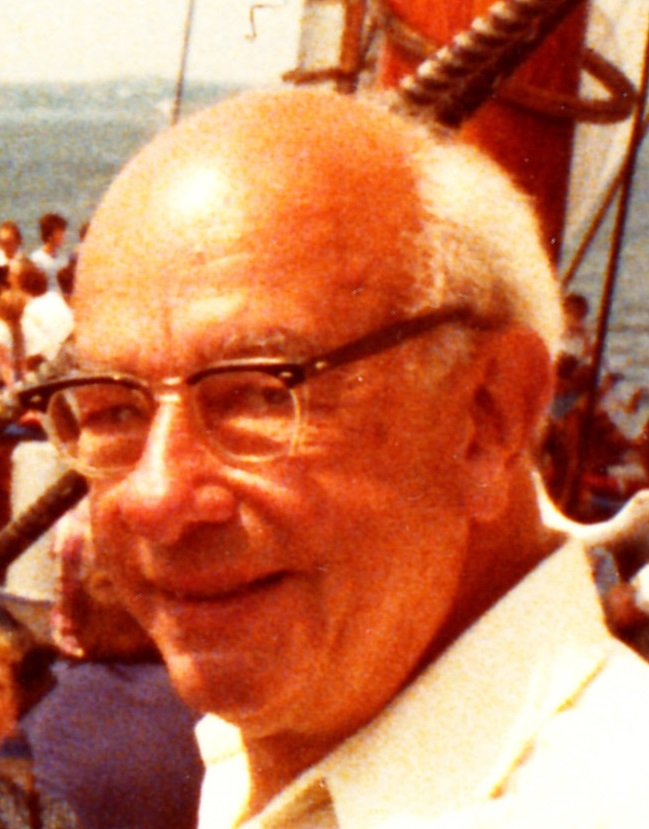
W. V. O. Quine
Naturalist who rejected the analytic–synthetic distinction.
- ◆New Foundations
- ◆abstract objects
- ◆indeterminacy of translation
- ◆referential inscrutability
- ◆naturalized epistemology
- ◆ontological commitment
Read the full pageWillard Van Orman Quine ( KWYNE; June 25, 1908 – December 25, 2000) was an American logician and philosopher in the analytic tradition, recognized as "one of the most influential philosophers of the twentieth century". He held the Edgar Pierce Chair of Philosophy at Harvard University from 1956 to 1978.
Quine was a teacher of logic and set theory. He was famous for his position that first-order logic is the only kind worthy of the name, and developed his own system of mathematics and set theory, known as New Foundations. In the philosophy of mathematics, he and his Harvard colleague Hilary Putnam developed the Quine–Putnam indispensability argument, an argument for the reality of mathematical entities. He was the main proponent of the view that philosophy is not conceptual analysis, but continuous with science; it is the abstract branch of the empirical sciences. This led to his famous quip that "philosophy of science is philosophy enough". He led a "systematic attempt to understand science from within the resources of science itself" and developed an influential naturalized epistemology that tried to provide "an improved scientific explanation of how we have developed elaborate scientific theories on the basis of meager sensory input". He also advocated holism in science, known as the Duhem–Quine thesis.
- 9PhilosopherAmericas1908 – 1979
Charles L. Stevenson
Charles Leslie Stevenson was an American analytic philosopher best known for his work in ethics and aesthetics.
- ◆Emotivism
Read the full pageCharles Leslie Stevenson (June 27, 1908 – March 14, 1979) was an American analytic philosopher best known for his work in ethics and aesthetics.
Stevenson was born on June 27, 1908, in Cincinnati, Ohio. He was educated at Yale, receiving in 1930 a Bachelor of Arts (BA) degree in English literature, at Jesus College, Cambridge, where in 1933 he was awarded a BA degree in moral sciences (philosophy), and at Harvard, getting his Doctor of Philosophy degree there in 1935. While at Cambridge he studied under Ludwig Wittgenstein and G. E. Moore. He was an instructor at Yale University from 1939 to 1944, spending some of that time teaching mathematics to wartime naval recruits. His post was not renewed in 1944 because the department did not approve of the metaethical views he espoused in his book Ethics and Language (1944).
- 10
 PhilosopherModern European1910 – 1989
A. J. Ayer
Sir Alfred Jules "Freddie" Ayer was an English philosopher who became professionally established through his exposition of major theses of logical positivism in Language, Truth, and Logic. The work's dismissal of metaphysics and endorsement of emotivism was the cause of much controversy and debate.
- ◆Verification principle
- ◆emotivist ethics
Read the full pageSir Alfred Jules "Freddie" Ayer ( AIR; 29 October 1910 – 27 June 1989) was an English philosopher who became professionally established through his exposition of major theses of logical positivism in Language, Truth, and Logic (1936). The work's dismissal of metaphysics and endorsement of emotivism was the cause of much controversy and debate.
Following his education at the University of Oxford and a period of study and discussion with Moritz Schlick and the Vienna Circle over the winter of 1932–1933, from 1933 to 1940 he lectured on philosophy at Christ Church, Oxford (his alma mater). After serving as a Special Operations Executive and MI6 agent during the Second World War, Ayer soon after became Grote Professor of the Philosophy of Mind and Logic at University College London from 1946 until 1959. He returned to Oxford to become Wykeham Professor of Logic at New College, a chair he held until his retirement in 1977/1978. He was knighted in 1970.
- 11PhilosopherModern European1911 – 1960
John Langshaw Austin
John Langshaw Austin was an English philosopher of language and leading proponent of ordinary language philosophy, best known for developing the theory of speech acts. Austin pointed out that we use language to do things as well as to assert things, and that the utterance of a statement like "I promise to do so-and-so"
- ◆Speech acts
- ◆performative utterance
- ◆descriptive fallacy
- ◆linguistic phenomenology
Read the full pageJohn Langshaw Austin (26 March 1911 – 8 February 1960) was an English philosopher of language and leading proponent of ordinary language philosophy, best known for developing the theory of speech acts.
Austin pointed out that we use language to do things as well as to assert things, and that the utterance of a statement like "I promise to do so-and-so" is best understood as doing something—here, making a promise—rather than making an assertion about anything; hence the title of one of his best-known works, How to Do Things with Words (1955).
- 12
 PhilosopherAmericas1912 – 1989
Wilfrid Sellars
Wilfrid Stalker Sellars was an American philosopher and prominent developer of scientific realism and critical perceptual realism who "revolutionized both the content and the method of philosophy in the United States". His work has had a profound impact in virtually all areas of analytic philosophy beginning in the lat
- ◆foundationalist
- ◆epistemology
- ◆Psychological nominalism
- ◆Kantian empiricism
- ◆semantic
- ◆Synoptic vision
Read the full pageWilfrid Stalker Sellars (; May 20, 1912 – July 2, 1989) was an American philosopher and prominent developer of scientific realism and critical perceptual realism who "revolutionized both the content and the method of philosophy in the United States". His work has had a profound impact in virtually all areas of analytic philosophy beginning in the latter half of the 20th century, including in epistemology, philosophy of language, philosophy of mind, philosophy of perception, and philosophy of science. His most notable contributions include his critique of foundationalist epistemology (the "Myth of the Given"), a synoptic philosophy aiming to unite what he called the manifest and scientific images, and an inferentialist account of meaning.
Wilfrid was educated at the University of Michigan (BA, 1933), the University at Buffalo, and Oriel College, Oxford (1934–1937), where he was a Rhodes Scholar, obtaining his highest earned degree, an MA, in 1940.