Personalism
Personalism is an intellectual stance that emphasizes the importance of the human person. Personalism exists in many different versions, and this makes it somewhat difficult to define as a philosophical and theological movement.
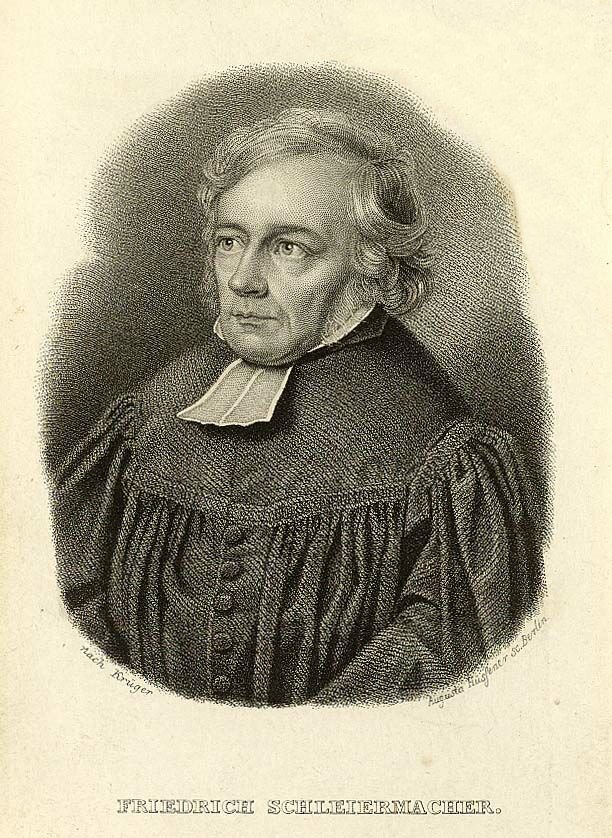
Personalism is an intellectual stance that emphasizes the importance of the human person. Personalism exists in many different versions, and this makes it somewhat difficult to define as a philosophical and theological movement. Friedrich Schleiermacher first used the term personalism (German: Personalismus) in print in 1799. One can trace the concept back to earlier thinkers in various parts of the world.
Overview
Writing in the Stanford Encyclopedia of Philosophy, Thomas D. Williams and Jan Olof Bengtsson cite a plurality of "schools" holding to a "personalist" ethic and "Weltanschauung", arguing:
Personalism exists in many different versions, and this makes it somewhat difficult to define as a philosophical and theological movement. Many philosophical schools have at their core one particular thinker or even one central work which serves as a canonical touchstone. Personalism is a more diffused and eclectic movement and has no such common reference point. It is, in point of fact, more proper to speak of many personalisms than one personalism. In 1947 Jacques Maritain could write that there are at least "a dozen personalist doctrines, which at times have nothing more in common than the word 'person.'" Moreover, because of their emphasis on the subjectivity of the person, some of the more important exponents of personalism have not undertaken systematic treatises of their theories.
It is perhaps more proper to speak of personalism as a "current" or a broader "worldview", since it represents more than one school or one doctrine while at the same time the most important forms of personalism do display some central and essential commonalities. Most important of the latter is the general affirmation of the centrality of the person for philosophical thought. Personalism posits ultimate reality and value in personhood – human as well as (at least for most personalists) divine. It emphasizes the significance, uniqueness and inviolability of the person, as well as the person's essentially relational or social dimension. The title "personalism" can therefore legitimately be applied to any school of thought that focuses on the centrality of persons and their unique status among beings in general, and personalists normally acknowledge the indirect contributions of a wide range of thinkers throughout the history of philosophy who did not regard themselves as personalists. Personalists believe that the person should be the ontological and epistemological starting point of philosophical reflection. Many are concerned to investigate the experience, the status, and the dignity of the human being as person, and regard this as the starting-point for all subsequent philosophical analysis.
Thus, according to Williams, one ought to keep in mind that although there are many theorists and activists in the West adhering to the rubric of "personalism," their particular foci may not align with each other and, in fact, might even diverge considerably.
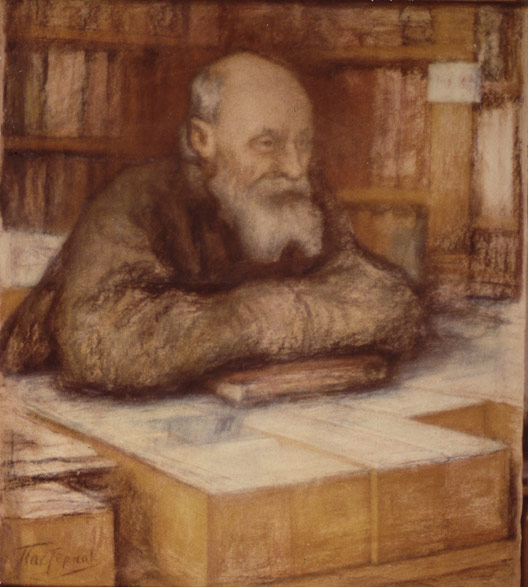
Nikolai Alexandrovich Berdyaev
Nikolai Alexandrovich Berdyaev (1874–1948) was a Russian religious and political philosopher who emphasized human freedom, subjectivity and creativity.
Emmanuel Mounier
In France, philosopher Emmanuel Mounier (1905–1950) was the leading proponent of personalism, around which he founded the review Esprit, which exists to this day. Under Jean-Marie Domenach's direction, it criticized the use of torture during the Algerian War. Personalism was seen as an alternative to both liberalism and Marxism, which respected human rights and the human personality without indulging in excessive collectivism. Mounier's personalism had an important influence in France, including in political movements, such as Marc Sangnier's Ligue de la jeune République (Young Republic League) founded in 1912.
Catholic personalism
Following on the writings of Dorothy Day, a distinctively Christian personalism developed in the 20th century. Its main theorist was the Polish philosopher Karol Wojtyła (later Pope John Paul II). In his work, Love and Responsibility, first published in 1960, Wojtyła proposed what he termed 'the personalistic norm':
This norm, in its negative aspect, states that the person is the kind of good which does not admit of use and cannot be treated as an object of use and as such the means to an end. In its positive form the personalistic norm confirms this: the person is a good towards which the only proper and adequate attitude is love
This brand of personalism has come to be known as "Thomistic" because of its efforts to square modern notions regarding the person with the teachings of Thomas Aquinas. Wojtyła was influenced by the ethical personalism of German phenomenologist Max Scheler.
A first principle of Christian personalism is that persons are not to be used, but to be respected and loved. In Gaudium et spes, the Second Vatican Council formulated what has come to be considered the key expression of this personalism: "man is the only creature on earth that God willed for its own sake and he cannot fully find himself except through a sincere gift of himself".
This formula for self-fulfillment offers a key for overcoming the dichotomy frequently felt between personal "realization" and the needs or demands of social life. Personalism also implies inter-personalism, as Benedict XVI stresses in Caritas in veritate:
As a spiritual being, the human creature is defined through interpersonal relations. The more authentically he or she lives these relations, the more his or her own personal identity matures. It is not by isolation that man establishes his worth, but by placing himself in relation with others and with God.
Renowned laity contribute significantly to the modern Catholic disposition on personalism as well. For example, Dietrich von Hildebrand noted:
[Moral values] can only grow out of conscious, free attitudes; man himself must essentially cooperate for their realization. They can only develop through his conscious, free abandonment of himself to genuine values. In proportion to man’s capacity to grasp values, in so far as he sees the fullness of the world of values with a clear and fresh vision, in so far as his abandonment to this world is pure and unconditional, will he be rich in moral values.
Boston personalism
Personalism flourished in the early 20th century at Boston University in a movement known as Boston personalism led by theologian Borden Parker Bowne. Bowne emphasized the person as the fundamental category for explaining reality and asserted that only persons are real. He stood in opposition to certain forms of materialism which would describe persons as mere particles of matter. For example, against the argument that persons are insignificant specks of dust in the vast universe, Bowne would say that it is impossible for the entire universe to exist apart from a person to experience it. Ontologically speaking, the person is "larger" than the universe because the universe is but one small aspect of the person who experiences it. Personalism affirms the existence of the soul. Most personalists assert that God is real and that God is a person (or as in Christian trinitarianism, three 'persons', although the nonstandard meaning of the word 'person' in this theological context is significantly different from Bowne's usage).
Bowne also held that persons have value (see axiology, value theory, and ethics). In declaring the absolute value of personhood, he stood firmly against certain forms of philosophical naturalism (including social Darwinism) which sought to reduce the value of persons. He also stood against certain forms of positivism which sought to render ethical and theological discourse meaningless and dismiss talk of God a priori.
Georgia Harkness was a major Boston personalist theologian. Francis John McConnell was a major second-generation advocate of Boston personalism who sought to apply the philosophy to social problems of his time.
California personalism
George Holmes Howison taught a metaphysical theory called personal idealism or California personalism. Howison maintained that both impersonal, monistic idealism and materialism run contrary to the moral freedom experienced by persons. To deny the freedom to pursue the ideals of truth, beauty, and "benignant love" is to undermine every profound human venture, including science, morality, and philosophy. Thus, even the personalistic idealism of Borden Parker Bowne and Edgar S. Brightman and the realistic personal theism of Thomas Aquinas are inadequate, for they make finite persons dependent for their existence upon an infinite Person and support this view by an unintelligible doctrine of creatio ex nihilo.
Adapted from the Wikipedia article Personalism, available under CC BY-SA 4.0.
Connections
Proposed by
5


Members
5


Key contributors
1
You might also explore
 Christianity★Modern EuropeanChristianity is an Abrahamic monotheistic religion based on the Bible and the teachings of Jesus. The Gospels state…
 Consciousness★Subjective experience — the felt "what-it-is-like" of being a mind.