Ontology
Ontology is the philosophical study of being. It is traditionally understood as the subdiscipline of metaphysics focused on the most general features of reality.
Ontology is the philosophical study of being. It is traditionally understood as the subdiscipline of metaphysics focused on the most general features of reality. As one of the most fundamental concepts, being encompasses all of reality and every entity within it. To articulate the basic structure of being, ontology examines the shared characteristics among all things and investigates their classification into basic types, such as the categories of particulars and universals. Particulars are unique, non-repeatable entities, such as the person Socrates, whereas universals are general, repeatable entities, like the color green. Another distinction exists between concrete objects existing in space and time, such as a tree, and abstract objects existing outside space and time, like the number 5. Systems of categories aim to provide a comprehensive inventory of reality by employing categories such as substance, property, relation, state of affairs, and event.
Ontologists disagree regarding which entities exist at the most basic level. Platonic realism asserts that universals have objective existence, while conceptualism maintains that universals exist only in the mind, and nominalism denies their existence altogether. Similar disputes pertain to mathematical objects, unobservable objects assumed by scientific theories, and moral facts. Materialism posits that fundamentally only matter exists, whereas dualism asserts that mind and matter are independent principles. According to some ontologists, objective answers to ontological questions do not exist, with perspectives shaped by differing linguistic practices.
Ontology employs diverse methods of inquiry, including the analysis of concepts and experience, the use of intuitions and thought experiments, and the integration of findings from natural science. Formal ontology investigates the most abstract features of objects, while applied ontology utilizes ontological theories and principles to study entities within specific domains. For example, social ontology examines basic concepts used in the social sciences. Applied ontology is particularly relevant to information and computer science, which develop conceptual frameworks of limited domains. These frameworks facilitate the structured storage of information, such as in a college database tracking academic activities. Ontology is also pertinent to the fields of logic, theology, and anthropology.
The origins of ontology lie in the ancient period with speculations about the nature of being and the source of the universe, including ancient Indian, Chinese, and Greek philosophy. In the modern period, philosophers conceived ontology as a distinct academic discipline and coined its name.
Definition
Ontology is the study of being. It is the branch of philosophy that investigates the nature of existence, the features all entities have in common, and how they are divided into basic categories of being. It aims to discover the foundational building blocks of the world and characterize reality as a whole in its most general aspects. In this regard, ontology contrasts with individual sciences like biology and astronomy, which restrict themselves to a limited domain of entities, such as living entities and celestial phenomena. In some contexts, the term ontology refers not to the general study of being but to a specific ontological theory within this discipline. It can also mean an inventory or a conceptual scheme of a particular domain, such as the ontology of genes. In this context, an inventory is a comprehensive list of elements. A conceptual scheme is a framework of the key concepts and their relationships.
Ontology is closely related to metaphysics but the exact relation of these two disciplines is disputed. A traditionally influential characterization asserts that ontology is a subdiscipline of metaphysics. According to this view, metaphysics is the study of various aspects of fundamental reality, whereas ontology restricts itself to the most general features of reality. This view sees ontology as general metaphysics, which is to be distinguished from special metaphysics focused on more specific subject matters, like God, mind, and value. A different conception understands ontology as a preliminary discipline that provides a complete inventory of reality while metaphysics examines the features and structure of the entities in this inventory. Another conception says that metaphysics is about real being while ontology examines possible being or the concept of being. It is not universally accepted that there is a clear boundary between metaphysics and ontology. Some philosophers use both terms as synonyms.
The etymology of the word ontology traces back to the ancient Greek terms ὄντως (ontos, meaning 'being') and λογία (logia, meaning 'study of'), literally, 'the study of being'. The ancient Greeks did not use the term ontology, which was coined by philosophers in the 17th century.
Being
Being, or existence, is the main topic of ontology. It is one of the most general and fundamental concepts, encompassing all of reality and every entity within it. In its broadest sense, being only contrasts with non-being or nothingness. It is controversial whether a more substantial analysis of the concept or meaning of being is possible. One proposal understands being as a property possessed by every entity. Critics argue that a thing without being cannot have properties. This means that properties presuppose being and cannot explain it. Another suggestion is that all beings share a set of essential features. According to the Eleatic principle, "power is the mark of being", meaning that only entities with causal influence truly exist. A controversial proposal by philosopher George Berkeley suggests that all existence is mental. He expressed this immaterialism in his slogan "to be is to be perceived".
Depending on the context, the term being is sometimes used with a more limited meaning to refer only to certain aspects of reality. In one sense, being is unchanging and permanent, in contrast to becoming, which implies change. Another contrast is between being, as what truly exists, and phenomena, as what appears to exist. In some contexts, being expresses the fact that something is while essence expresses its qualities or what it is like.
Ontologists often divide being into fundamental classes or highest kinds, called categories of being. Proposed categories include substance, property, relation, state of affairs, and event. They can be used to provide systems of categories, which offer a comprehensive inventory of reality in which every entity belongs to exactly one category. Some philosophers, like Aristotle, say that entities belonging to different categories exist in distinct ways. Others, like John Duns Scotus, insist that there are no differences in the mode of being, meaning that everything exists in the same way. A related dispute is whether some entities have a higher degree of being than others, an idea already found in Plato's work. The more common view in contemporary philosophy is that a thing either exists or not with no intermediary states or degrees.
The relation between being and non-being is a frequent topic in ontology. Influential issues include the status of nonexistent objects and why there is something rather than nothing.
Particulars and universals
A central distinction in ontology is between particular and universal entities. Particulars, also called individuals, are unique, non-repeatable entities, like Socrates, the Taj Mahal, and Mars. Universals are general, repeatable entities, like the color green, the form circularity, and the virtue courage. Universals express aspects or features shared by particulars. For example, Mount Everest and Mount Fuji are particulars characterized by the universal mountain.
Universals can take the form of properties or relations. Properties describe the characteristics of things. They are features or qualities possessed by an entity. Properties are often divided into essential and accidental properties. A property is essential if an entity must have it; it is accidental if the entity can exist without it. For instance, having three sides is an essential property of a triangle, whereas being red is an accidental property. Relations are the ways in which two or more entities connect to one another. Unlike properties, they apply to several entities and characterize them as a group. For example, being a city is a property while being east of is a relation, as in "Kathmandu is a city" and "Kathmandu is east of New Delhi". Relations are often divided into internal and external relations. Internal relations depend only on the properties of the objects they connect, like the relation of resemblance. External relations express characteristics that go beyond what the connected objects are like, such as spatial relations.
Substances play an important role in the history of ontology as the particular entities that underlie and support properties and relations. They are considered the fundamental building blocks of reality that can exist on their own. According to some accounts, they contrast in this respect with properties and relations, which cannot exist without substances. Substances persist through changes as they acquire or lose properties. For example, when a tomato ripens, it loses the property green and acquires the property red.
States of affairs are complex particular entities that have several other entities as their components. The state of affairs "Socrates is wise" has two components: the individual Socrates and the property wise. States of affairs that correspond to reality are called facts. Facts are truthmakers of statements, meaning that whether a statement is true or false depends on the underlying facts.
Events are particular entities that occur in time, like the fall of the Berlin Wall and the first moon landing. They usually involve some kind of change, like the lawn becoming dry. In some cases, no change occurs, like the lawn staying wet. Complex events, also called processes, are composed of a sequence of events.
Concrete and abstract objects
Concrete objects are entities that exist in space and time, such as a tree, a car, and a planet. They have causal powers and can affect each other, like when a car hits a tree and both are deformed in the process. Abstract objects, by contrast, are outside space and time, such as the number 7 and the set of integers. They lack causal powers and do not undergo changes. The existence and nature of abstract objects remain subjects of philosophical debate.
Concrete objects encountered in everyday life are complex entities composed of various parts. For example, a book is made up of two covers and the pages between them. Each of these components is itself constituted of smaller parts, like molecules, atoms, and elementary particles. Mereology studies the relation between parts and wholes. One position in mereology says that every collection of entities forms a whole. According to another view, this is only the case for collections that fulfill certain requirements, for instance, that the entities in the collection touch one another. The problem of material constitution asks whether or in what sense a whole should be considered a new object in addition to the collection of parts composing it.
Abstract objects are closely related to fictional and intentional objects. Fictional objects are entities invented in works of fiction. They can be things, like the One Ring in J. R. R. Tolkien's book series The Lord of the Rings, and people, like the Monkey King in the novel Journey to the West. Some philosophers say that fictional objects are abstract objects and exist outside space and time. Others understand them as artifacts that are created as the works of fiction are written. Intentional objects are entities that exist within mental states, like perceptions, beliefs, and desires. For example, if a person thinks about the Loch Ness Monster then the Loch Ness Monster is the intentional object of this thought. People can think about existing and non-existing objects. This makes it difficult to assess the ontological status of intentional objects.
Other concepts
Ontological dependence is a relation between entities. An entity depends ontologically on another entity if the first entity cannot exist without the second entity. For instance, the surface of an apple cannot exist without the apple. An entity is ontologically independent if it does not depend on anything else, meaning that it is fundamental and can exist on its own. Ontological dependence plays a central role in ontology and its attempt to describe reality on its most fundamental level. It is closely related to metaphysical grounding, which is the relation between a ground and the facts it explains.
An ontological commitment of a person or a theory is an entity that exists according to them. For instance, a person who believes in God has an ontological commitment to God. Ontological commitments can be used to analyze which ontologies people explicitly defend or implicitly assume. They play a central role in contemporary metaphysics when trying to decide between competing theories. For example, the Quine–Putnam indispensability argument defends mathematical Platonism, asserting that numbers exist because the best scientific theories are ontologically committed to numbers.
Possibility and necessity are further topics in ontology. Possibility describes what can be the case, as in "it is possible that extraterrestrial life exists". Necessity describes what must be the case, as in "it is necessary that three plus two equals five". Possibility and necessity contrast with actuality, which describes what is the case, as in "Doha is the capital of Qatar". Ontologists often use the concept of possible worlds to analyze possibility and necessity. A possible world is a complete and consistent way how things could have been. For example, Haruki Murakami was born in 1949 in the actual world but there are possible worlds in which he was born at a different date. Using this idea, possible world semantics says that a sentence is possibly true if it is true in at least one possible world. A sentence is necessarily true if it is true in all possible worlds. The field of modal logic provides a precise formalization of the concepts of possibility and necessity.
In ontology, identity means that two things are the same. Philosophers distinguish between qualitative and numerical identity. Two entities are qualitatively identical if they have exactly the same features, such as perfect identical twins. This is also called exact similarity and indiscernibility. Numerical identity, by contrast, means that there is only a single entity. For example, if Fatima is the mother of Leila and Hugo then Leila's mother is numerically identical to Hugo's mother. Another distinction is between synchronic and diachronic identity. Synchronic identity relates an entity to itself at the same time. Diachronic identity relates an entity to itself at different times, as in "the woman who bore Leila three years ago is the same woman who bore Hugo this year". The notion of identity also has a number of philosophical implications in terms of how it interacts with the aforementioned necessity and possibility. Most famously, Saul Kripke contended that discovered identities such as "Water is H2O" are necessarily true because "H2O" is what's known as a rigid designator.
Branches
There are different and sometimes overlapping ways to divide ontology into branches. Pure ontology focuses on the most abstract topics associated with the concept and nature of being. It is not restricted to a specific domain of entities and studies existence and the structure of reality as a whole. Pure ontology contrasts with applied ontology, also called domain ontology. Applied ontology examines the application of ontological theories and principles to specific disciplines and domains, often in the field of science. It considers ontological problems in regard to specific entities such as matter, mind, numbers, God, and cultural artifacts.
Social ontology, a major subfield of applied ontology, studies social kinds, like money, gender, society, and language. It aims to determine the nature and essential features of these concepts while also examining their mode of existence. According to a common view, social kinds are useful constructions to describe the complexities of social life. This means that they are not pure fictions but, at the same time, lack the objective or mind-independent reality of natural phenomena like elementary particles and stars. In the fields of computer science, information science, and knowledge representation, applied ontology is interested in the development of formal frameworks to encode and store information about a limited domain of entities in a structured way. A related application in genetics is Gene Ontology, which is a comprehensive framework for the standardized representation of gene-related information across species and databases.
Formal ontology is the study of objects in general while focusing on their abstract structures and features. It divides objects into different categories based on the forms they exemplify. Formal ontologists often rely on the tools of formal logic to express their findings in an abstract and general manner. Formal ontology contrasts with material ontology, which distinguishes between different areas of objects and examines the features characteristic of a specific area. Examples are ideal spatial beings in the area of geometry and living beings in the area of biology.
Descriptive ontology aims to articulate the conceptual scheme underlying how people ordinarily think about the world. Prescriptive ontology departs from common conceptions of the structure of reality and seeks to formulate a new and better conceptualization.
Another contrast is between analytic and speculative ontology. Analytic ontology examines the types and categories of being to determine what kinds of things could exist and what features they would have. Speculative ontology aims to determine which entities actually exist, for example, whether there are numbers or whether time is an illusion.
Meta-ontology studies the underlying concepts, assumptions, and methods of ontology. Unlike other forms of ontology, it does not ask "what exists" but "what does it mean for something to exist" and "how can people determine what exists". It is closely related to fundamental ontology, an approach developed by philosopher Martin Heidegger that seeks to uncover the meaning of being.
Realism and anti-realism
The term realism is used for various theories that affirm that some kind of phenomenon is real or has mind-independent existence. Ontological realism is the view that there are objective facts about what exists and what the nature and categories of being are. Ontological realists do not make claims about what those facts are, for example, whether elementary particles exist. They merely state that there are mind-independent facts that determine which ontological theories are true. This idea is denied by ontological anti-realists, also called ontological deflationists, who say that there are no substantive facts one way or the other. According to philosopher Rudolf Carnap, for example, ontological statements are relative to language and depend on the ontological framework of the speaker. This means that there are no framework-independent ontological facts since different frameworks provide different views while there is no objectively right or wrong framework.
Adapted from the Wikipedia article Ontology, available under CC BY-SA 4.0.
Connections
Proposed by
6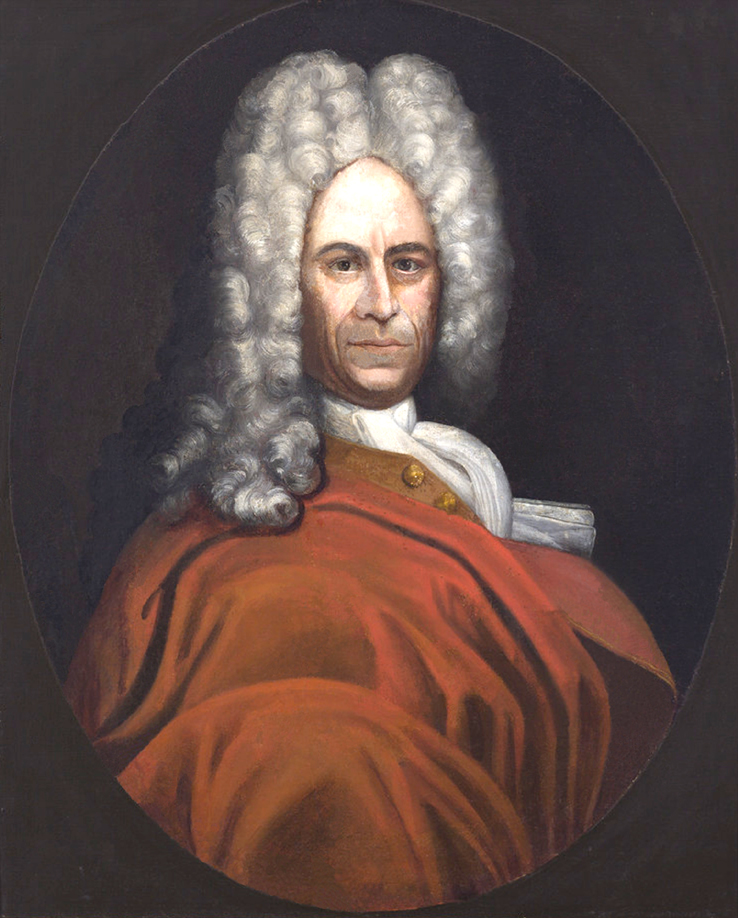


Key contributors
33 Friedrich Nietzsche1844 – 1900
 Jean-Paul Sartre1905 – 1980
 Martin Heidegger1889 – 1976
 Parmenidesc. 515 – 450 BCE
 Edmund Husserl1859 – 1938
 Slavoj Žižekborn 1949
Show 27 moreShow less
 William of Ockham1287 – 1347
 Zeno of Eleac. 490 – 430 BCE
 Max Stirner1806 – 1856
 Ibn ʿArabī1165 – 1240
 Gorgias483 – 375 BCE
 Martin Buber1878 – 1965
 W. V. O. Quine1908 – 2000
 Gabriel Marcel1889 – 1973
 Emmanuel Levinas1906 – 1995
 Maurice Merleau-Ponty1908 – 1961
 Alain Badiouborn 1937
 Paul Tillich1886 – 1965
 Franz Brentano1838 – 1917
- Fakhr al-Din al-Razi1150 – 1210
 Mary Daly1928 – 2010
 Cornelius Castoriadis1922 – 1997
 María Zambrano1904 – 1991
- Donald Davidson1917 – 2003
 Alexius Meinong1853 – 1920
 Jean-Luc Nancy1940 – 2021
 Muhammad Husayn Tabatabaei1892 – 1981
- Henry Corbin1903 – 1978
 Anton Marty1847 – 1914
 Johannes Clauberg1622 – 1665
 Paul of Venice1369 – 1429
- William Crathorn1301
- Slavoj Žižekborn 1949
You might also explore
 HermeneuticsModern EuropeanHermeneutics () is the study of the methodological principles of interpretation, especially the interpretation of…Value theoryModern EuropeanValue theory, also called axiology, studies the nature, sources, and types of values. It is a branch of philosophy and…