Hermeneutics
Hermeneutics () is the study of the methodological principles of interpretation, especially the interpretation of biblical texts, wisdom literature, and philosophical texts. As necessary, hermeneutics may include the art of understanding and communication.
Hermeneutics () is the study of the methodological principles of interpretation, especially the interpretation of biblical texts, wisdom literature, and philosophical texts. As necessary, hermeneutics may include the art of understanding and communication.
Modern hermeneutics includes both verbal and non-verbal communication, as well as semiotics, presuppositions, and pre-understandings. Hermeneutics has been broadly applied in the humanities, especially in law, history and theology.
Hermeneutics was initially applied to the interpretation, or exegesis, of scripture, and has been later broadened to questions of general interpretation. The terms hermeneutics and exegesis are sometimes used interchangeably. Hermeneutics is a wider discipline which includes written, verbal, and nonverbal communication. Exegesis focuses primarily upon the word and grammar of texts.
Hermeneutic, as a count noun in the singular, refers to some particular method of interpretation (see, in contrast, double hermeneutic).
Etymology
Hermeneutics is derived from the Greek word ἑρμηνεύω (hermēneuō, "translate, interpret"), from ἑρμηνεύς (hermeneus, "translator, interpreter"). While the etymology is uncertain, both R. S. P. Beekes (2009) and Zsolt Simon (2019) suggest an Anatolian (Carian) origin.
The technical term ἑρμηνεία (hermeneia, "interpretation, explanation") was introduced into philosophy mainly through the title of Aristotle's work Περὶ Ἑρμηνείας (Peri Hermeneias), commonly referred to by its Latin title De Interpretatione and translated in English as On Interpretation. It is one of the earliest (c. 360 BCE) extant philosophical works in the Western tradition to deal with the relationship between language and logic in a comprehensive, explicit and formal way.
The early usage of "hermeneutics" places it within the boundaries of the sacred. A divine message must be received with implicit uncertainty regarding its truth. This ambiguity is an irrationality; it is a sort of madness that is inflicted upon the receiver of the message. Only one who possesses a rational method of interpretation (i.e., a hermeneutic) could determine the truth or falsity of the message.
Folk etymology
Folk etymology places its origin with Hermes, the mythological Greek deity who was the 'messenger of the gods'. Aside from being a mediator among the gods and between the gods and men, he led souls to the underworld upon death.
Moreover, Hermes was considered the inventor of language and speech, an interpreter, a liar, a thief, and a trickster. These multiple roles made Hermes an ideal representative figure for hermeneutics. As Socrates noted, words have the power to reveal or conceal and can deliver messages in an ambiguous way. The Greek view of language as consisting of signs that could lead to truth or to falsehood was the essence of Hermes, who was said to relish the uneasiness of those who received the messages he delivered.
Mesopotamian hermeneutics
Talmudic hermeneutics
Summaries of the principles by which Torah can be interpreted date back to, at least, Hillel the Elder, although the thirteen principles set forth in the Baraita of Rabbi Ishmael are perhaps the best known. These principles ranged from standard rules of logic (e.g., a fortiori argument [known in Hebrew as קל וחומר – kal v'chomer]) to more expansive ones, such as the rule that a passage could be interpreted by reference to another passage in which the same word appears (Gezerah Shavah). The rabbis did not ascribe equal persuasive power to the various principles.
Traditional Jewish hermeneutics differed from the Greek method in that the rabbis considered the Tanakh (the Jewish Biblical canon) to be without error. Any apparent inconsistencies had to be understood by means of careful examination of a given text within the context of other texts. There were different levels of interpretation: some were used to arrive at the plain meaning of the text, some expounded the law given in the text, and others found secret or mystical levels of understanding.
Vedic hermeneutics
Vedic hermeneutics involves the exegesis of the Vedas, the earliest holy texts of Hinduism. The Mimamsa was the leading hermeneutic school and their primary purpose was understanding what Dharma (righteous living) involved by a detailed hermeneutic study of the Vedas. They also derived the rules for the various rituals that had to be performed precisely.
The foundational text is the Mimamsa Sutra of Jaimini (c. 3rd to 1st century BCE) with a major commentary by Śabara (c. the 5th or 6th century CE). The Mimamsa sutra summed up the basic rules for Vedic interpretation.
Buddhist hermeneutics
Buddhist hermeneutics deals with the interpretation of the vast Buddhist literature, particularly those texts which are said to be spoken by the Buddha (Buddhavacana) and other enlightened beings. Buddhist hermeneutics is deeply tied to Buddhist spiritual practice and its ultimate aim is to extract skillful means of reaching spiritual enlightenment or nirvana. A central question in Buddhist hermeneutics is which Buddhist teachings are explicit, representing ultimate truth, and which teachings are merely conventional or relative.
Biblical hermeneutics
Biblical hermeneutics is the study of the principles of interpretation of the Bible. While Jewish and Christian biblical hermeneutics have some overlap, they have very different interpretive traditions.
The early patristic traditions of biblical exegesis had few unifying characteristics in the beginning but tended toward unification in later schools of biblical hermeneutics.
Augustine offers hermeneutics and homiletics in his De doctrina christiana. He stresses the importance of humility in the study of Scripture. He also regards the duplex commandment of love in Matthew 22 as the heart of Christian faith. In Augustine's hermeneutics, signs have an important role. God can communicate with the believer through the signs of the Scriptures. Thus, humility, love, and the knowledge of signs are an essential hermeneutical presupposition for a sound interpretation of the Scriptures. Although Augustine endorses some teaching of the Platonism of his time, he recasts it according to a theocentric doctrine of the Bible. Similarly, in a practical discipline, he modifies the classical theory of oratory in a Christian way. He underscores the meaning of diligent study of the Bible and prayer as more than mere human knowledge and oratory skills. As a concluding remark, Augustine encourages the interpreter and preacher of the Bible to seek a good manner of life and, most of all, to love God and neighbor.
There is traditionally a fourfold sense of biblical hermeneutics: literal, moral, allegorical (spiritual), and anagogical.
Literal
Encyclopædia Britannica states that literal analysis means "a biblical text is to be deciphered according to the 'plain meaning' expressed by its linguistic construction and historical context." The intention of the authors is believed to correspond to the literal meaning. Literal hermeneutics is often associated with the verbal inspiration of the Bible.
Moral
Moral interpretation searches for moral lessons which can be understood from writings within the Bible. Allegories are often placed in this category.
Allegorical
Allegorical interpretation states that biblical narratives have a second level of reference that is more than the people, events and things that are explicitly mentioned. One type of allegorical interpretation is known as typological, where the key figures, events, and establishments of the Old Testament are viewed as "types" (patterns). In the New Testament this can also include foreshadowing of people, objects, and events. According to this theory, readings like Noah's Ark could be understood by using the Ark as a "type" of the Christian church that God designed from the start.
Anagogical
This type of interpretation is more often known as mystical interpretation. It claims to explain the events of the Bible and how they relate to or predict what the future holds. This is evident in the Jewish Kabbalah, which attempts to reveal the mystical significance of the numerical values of Hebrew words and letters.
In Judaism, anagogical interpretation is also evident in the medieval Zohar. In Christianity, it can be seen in Mariology.
Ancient and medieval hermeneutics
Modern hermeneutics
The discipline of hermeneutics emerged with the new humanist education of the 15th century as a historical and critical methodology for analyzing texts. In a triumph of early modern hermeneutics, the Italian humanist Lorenzo Valla proved in 1440 that the Donation of Constantine was a forgery. This was done through intrinsic evidence of the text itself. Thus, hermeneutics expanded from its medieval role of explaining the true meaning of the Bible.
However, biblical hermeneutics did not die off. For example, the Protestant Reformation brought about a renewed interest in the interpretation of the Bible, which took a step away from the interpretive tradition developed during the Middle Ages back to the texts themselves. Martin Luther and John Calvin emphasized scriptura sui ipsius interpres (scripture interprets itself). Calvin used brevitas et facilitas as an aspect of theological hermeneutics.
The rationalist Enlightenment led hermeneutists, especially Protestant exegetists, to view Scriptural texts as secular classical texts. They interpreted Scripture as responses to historical or social forces so that, for example, apparent contradictions and difficult passages in the New Testament might be clarified by comparing their possible meanings with contemporary Christian practices.
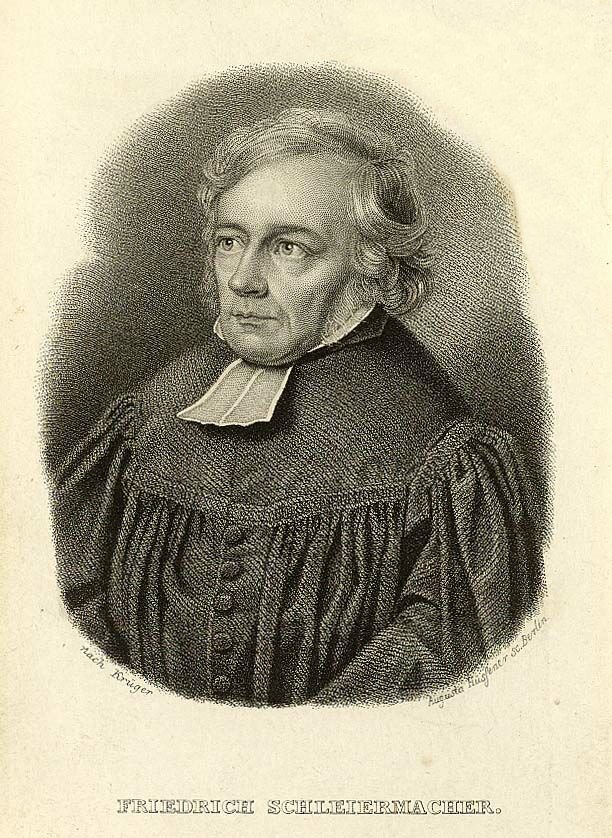
Friedrich Schleiermacher (1768–1834) explored the nature of understanding in relation not just to the problem of deciphering sacred texts but to all human texts and modes of communication.
The interpretation of a text must proceed by framing its content in terms of the overall organization of the work. Schleiermacher distinguished between grammatical interpretation and psychological interpretation. The former studies how a work is composed from general ideas; the latter studies the peculiar combinations that characterize the work as a whole. He said that every problem of interpretation is a problem of understanding and even defined hermeneutics as the art of avoiding misunderstanding. Misunderstanding was to be avoided by means of knowledge of grammatical and psychological laws.
During Schleiermacher's time, a fundamental shift occurred from understanding not merely the exact words and their objective meaning, to an understanding of the writer's distinctive character and point of view.
Nineteenth- and twentieth-century hermeneutics emerged as a theory of understanding (Verstehen) through the work of Friedrich Schleiermacher (Romantic hermeneutics and methodological hermeneutics), August Böckh (methodological hermeneutics), Wilhelm Dilthey (epistemological hermeneutics), Martin Heidegger (ontological hermeneutics, hermeneutic phenomenology, and transcendental hermeneutic phenomenology), Hans-Georg Gadamer (ontological hermeneutics), Leo Strauss (Straussian hermeneutics), Paul Ricœur (hermeneutic phenomenology), Walter Benjamin (Marxist hermeneutics), Ernst Bloch (Marxist hermeneutics), Jacques Derrida (radical hermeneutics, namely deconstruction), Richard Kearney (diacritical hermeneutics), Fredric Jameson (Marxist hermeneutics), and John Thompson (critical hermeneutics).
Regarding the relation of hermeneutics with problems of analytic philosophy, there has been, particularly among analytic Heideggerians and those working on Heidegger's philosophy of science, an attempt to try and situate Heidegger's hermeneutic project in debates concerning realism and anti-realism: arguments have been presented both for Heidegger's hermeneutic idealism (the thesis that meaning determines reference or, equivalently, that our understanding of the being of entities is what determines entities as entities) and for Heidegger's hermeneutic realism (the thesis that (a) there is a nature in itself and science can give us an explanation of how that nature works, and (b) that (a) is compatible with the ontological implications of our everyday practices).
Philosophers that worked to combine analytic philosophy with hermeneutics include Georg Henrik von Wright and Peter Winch. Roy J. Howard termed this approach analytic hermeneutics.
Other contemporary philosophers influenced by the hermeneutic tradition include Charles Taylor (engaged hermeneutics) and Dagfinn Føllesdal.
Dilthey (1833–1911)
Wilhelm Dilthey broadened hermeneutics even more by relating interpretation to historical objectification. Understanding moves from the outer manifestations of human action and productivity to the exploration of their inner meaning. In his last important essay, "The Understanding of Other Persons and Their Manifestations of Life" (1910), Dilthey made clear that this move from outer to inner, from expression to what is expressed, is not based on empathy, understood as a direct identification with the Other. Interpretation, on a hermeneutical conception of empathy involves an indirect or mediated understanding that can only be attained by placing human expressions in their historical context. Thus, understanding is not a process of reconstructing the state of mind of the author, but one of articulating what is expressed in his work.
Dilthey divided sciences of the mind (human sciences) into three structural levels: experience, expression, and comprehension.
Experience means to feel a situation or thing personally. Dilthey suggested that we can always grasp the meaning of unknown thought when we try to experience it. His understanding of experience is very similar to that of phenomenologist Edmund Husserl.
Expression converts experience into meaning because the discourse has an appeal to someone outside of oneself. Every saying is an expression. Dilthey suggested that one can always return to an expression, especially to its written form, and this practice has the same objective value as an experiment in science. The possibility of returning makes scientific analysis possible, and therefore the humanities may be labeled as science. Moreover, he assumed that an expression may be "saying" more than the speaker intends because the expression brings forward meanings which the individual consciousness may not fully understand.
The last structural level of the science of the mind, according to Dilthey, is comprehension, which is a level that contains both comprehension and incomprehension. Incomprehension means, more or less, wrong understanding. He assumed that comprehension produces coexistence: "he who understands, understands others; he who does not understand stays alone."
Heidegger (1889–1976)
In the 20th century, Martin Heidegger's philosophical hermeneutics shifted the focus from interpretation to existential understanding as rooted in fundamental ontology, which was treated more as a direct—and thus more authentic—way of being-in-the-world (In-der-Welt-sein) than merely as "a way of knowing." For example, he called for a "special hermeneutic of empathy" to dissolve the classic philosophic issue of "other minds" by putting the issue in the context of the being-with of human relatedness. (Heidegger himself did not complete this inquiry.)
Advocates of this approach claim that some texts, and the people who produce them, cannot be studied by means of using the same scientific methods that are used in the natural sciences, thus drawing upon arguments similar to those of antipositivism. Moreover, they claim that such texts are conventionalized expressions of the experience of the author. Thus, the interpretation of such texts will reveal something about the social context in which they were formed, and, more significantly, will provide the reader with a means of sharing the experiences of the author.
The reciprocity between text and context is part of what Heidegger called the hermeneutic circle. Among the key thinkers who elaborated this idea was the sociologist Max Weber.
Gadamer (1900–2002)
Hans-Georg Gadamer's hermeneutics is a development of the hermeneutics of his teacher, Heidegger. Gadamer asserted that methodical contemplation is opposite to experience and reflection. We can reach the truth only by understanding or mastering our experience. According to Gadamer, our understanding is not fixed but rather is changing and always indicating new perspectives. The most important thing is to unfold the nature of individual understanding.
Gadamer pointed out that prejudice is an element of our understanding and is not per se without value. Indeed, prejudices, in the sense of pre-judgements of the thing we want to understand, are unavoidable. Being alien to a particular tradition is a condition of our understanding. He said that we can never step outside of our tradition—all we can do is try to understand it. This further elaborates the idea of the hermeneutic circle.
New hermeneutic
New hermeneutic is the theory and methodology of interpretation to understand Biblical texts through existentialism. The essence of new hermeneutic emphasizes not only the existence of language but also the fact that language is eventualized in the history of individual life. This is called the event of language. Ernst Fuchs, Gerhard Ebeling, and James M. Robinson are the scholars who represent the new hermeneutics.
Marxist hermeneutics
The method of Marxist hermeneutics has been developed by the work of, primarily, Walter Benjamin and Fredric Jameson. Benjamin outlines his theory of the allegory in his study Ursprung des deutschen Trauerspiels ("Trauerspiel" literally means "mourning play" but is often translated as "tragic drama"). Fredric Jameson draws on Biblical hermeneutics, Ernst Bloch, and the work of Northrop Frye, to advance his theory of Marxist hermeneutics in his influential The Political Unconscious. Jameson's Marxist hermeneutics is outlined in the first chapter of the book, titled "On Interpretation" Jameson re-interprets (and secularizes) the fourfold system (or four levels) of Biblical exegesis (literal; moral; allegorical; anagogical) to relate interpretation to the mode of production, and eventually, history.
Objective hermeneutics
Karl Popper first used the term "objective hermeneutics" in his Objective Knowledge (1972).
In 1992, the Association for Objective Hermeneutics (AGOH) was founded in Frankfurt am Main by scholars of various disciplines in the humanities and social sciences. Its goal is to provide all scholars who use the methodology of objective hermeneutics with a means of exchanging information.
In one of the few translated texts of this German school of hermeneutics, its founders declared:
Adapted from the Wikipedia article Hermeneutics, available under CC BY-SA 4.0.
Connections
Proposed by
4


Members
7


Key contributors
2You might also explore
 Consciousness★Subjective experience — the felt "what-it-is-like" of being a mind.Literary criticismModern EuropeanA genre of arts criticism, literary criticism or literary studies is the study, evaluation, and interpretation of…VerstehenModern EuropeanVerstehen (German pronunciation: [fɛɐˈʃteːən], lit. 'to understand'), in the context of German philosophy and social…
 Religion★Modern EuropeanReligion is a range of social-cultural systems, including designated behaviors and practices, ethics, morals, beliefs…
 Natural science★Modern EuropeanNatural science or empirical science is a branch of science concerned with the description, understanding, and…