Philosophy of history
Philosophy of history is the philosophical study of history and its discipline. The term was coined by the French philosopher Voltaire.
Philosophy of history is the philosophical study of history and its discipline. The term was coined by the French philosopher Voltaire.
In contemporary philosophy a distinction has developed between the speculative philosophy of history and the critical philosophy of history, now referred to as analytic. The split between these approaches may be approximately compared, by analogy and on the strength of regional and academic influences, to the schism in commitments between analytic and continental philosophy wherein the analytic approach is pragmatic and the speculative approach attends more closely to a metaphysics (or anti-metaphysics) of determining forces like language or the phenomenology of perception at the level of background assumptions.
At the level of practice, the analytic approach questions the meaning and purpose of the historical process whereas the speculative approach studies the foundations and implications of history and the historical method. The names of these are derived from C. D. Broad's distinction between critical philosophy and speculative philosophy.
The divergence between these approaches crystallizes in the disagreements between Hume and Kant on the question of causality. Hume and Kant may be viewed in retrospect—by expressive anachronism—as analytic and speculative, respectively. Historians like Foucault or Hannah Arendt, who tend to be spoken of as theorists or philosophers before they are acknowledged as historians, may largely be identified with the speculative approach whereas generic academic history tends to be cleave to analytic and narrative approaches.
Origins
In his Poetics, Aristotle (384–322 BCE) maintained the superiority of poetry over history because poetry speaks of what ought or must be true rather than merely what is true.
Herodotus, a fifth-century BCE contemporary of Socrates, broke from the Homeric tradition of passing narrative from generation to generation in his work "Investigations" (Ancient Greek: Ἱστορίαι; Istoríai), also known as Histories. Herodotus, regarded by some as the first systematic historian, and, later, Plutarch (46–120 CE) freely invented speeches for their historical figures and chose their historical subjects with an eye toward morally improving the reader. History was supposed to teach good examples for one to follow. The assumption that history "should teach good examples" influenced how writers produced history.
From the Classical period to the Renaissance, historians' focus alternated between subjects designed to improve mankind and a devotion to fact. History was composed mainly of hagiographies of monarchs and epic poetry describing heroic deeds such as The Song of Roland—about the Battle of Roncevaux Pass (778) during Charlemagne's first campaign to conquer the Iberian Peninsula.
In the fourteenth century, Ibn Khaldun, whom George Sarton considered one of the first philosophers of history, discussed his philosophy of history and society in detail in his Muqaddimah (1377). His work represents a culmination of earlier works by medieval Islamic sociologists in the spheres of Islamic ethics, political science, and historiography, such as those of al-Farabi (c. 872 – c. 950), Ibn Miskawayh, al-Dawani, and Nasir al-Din al-Tusi (1201–1274). Ibn Khaldun often criticized "idle superstition and uncritical acceptance of historical data". He introduced a scientific method to the philosophy of history (which Dawood considers something "totally new to his age") and he often referred to it as his "new science",
which is now associated with historiography. His historical method also laid the groundwork for the observation of the role of the state, communication, propaganda, and systematic bias in history.
By the eighteenth century historians had turned toward a more positivist approach—focusing on fact as much as possible, but still with an eye on telling histories that could instruct and improve. Starting with Fustel de Coulanges (1830–1889) and Theodor Mommsen (1817–1903), historical studies began to move towards a more modern scientific form. In the Victorian era, historiographers debated less whether history was intended to improve the reader, and more on what causes turned history and how one could understand historical change.
Philosophy of chronology
Many ancient cultures held mythical and theological concepts of history and of time that were not linear. Such societies saw history as cyclical, with alternating Dark and Golden Ages. Plato taught the concept of the Great Year, and other Greeks spoke of aeons. Similar examples include the ancient doctrine of eternal return, which existed in Ancient Egypt, in the Indian religions, among the Greek Pythagoreans' and in the Stoics' conceptions. In his Works and Days, Hesiod described five Ages of Man: the Golden Age, the Silver Age, the Bronze Age, the Heroic Age, and the Iron Age, which began with the Dorian invasion. Some scholars identify just four ages, corresponding to the four metals, with the Heroic age as a description of the Bronze Age. A four-age count would match the Vedic or Hindu ages known as Satya Yuga, Treta Yuga, Dvapara Yuga and Kali Yuga, which together make one Yuga Cycle that repeats. According to Jainism, this world has no beginning or end but goes through cycles of upturns (utsarpini) and downturns (avasarpini) constantly. Many Greeks believed that just as mankind went through four stages of character during each rise and fall of history so did government. They considered democracy and monarchy as the healthy régimes of the higher ages; and oligarchy and tyranny as corrupted régimes common to the lower ages.
In the East, cyclical theories of history developed in China (as a theory of dynastic cycle) and in the Islamic world in the Muqaddimah of Ibn Khaldun (1332–1406).
During the Renaissance, cyclical conceptions of history would become common, with proponents illustrating decay and rebirth by pointing to the decline of the Roman Empire. Machiavelli's Discourses on Livy (1513–1517) provide an example. The notion of Empire contained in itself ascendance and decadence, as in Edward Gibbon's The History of the Decline and Fall of the Roman Empire (1776), which the Roman Catholic Church placed on the Index Librorum Prohibitorum (List of Prohibited Books).
During the Age of Enlightenment, history began to be seen as both linear and irreversible. Condorcet's interpretations of the various "stages of humanity" and Auguste Comte's positivism were among the most important formulations of such conceptions of history, which trusted social progress. As in Jean-Jacques Rousseau's Emile (1762) treatise on education (or the "art of training men"), the Enlightenment conceived the human species as perfectible: human nature could be infinitely developed through a well-thought pedagogy.
Cyclical conceptions continued in the nineteenth and twentieth centuries in the works of authors such as Oswald Spengler (1880–1936), Correa Moylan Walsh (1862–1936), Nikolay Danilevsky (1822–1885), Claude Lévi-Strauss (1908–2009), and Paul Kennedy (1945– ), who conceived the human past as a series of repetitive rises and falls. Spengler, like Butterfield, when writing in reaction to the carnage of the First World War of 1914–1918, believed that a civilization enters upon an era of Caesarism
after its soul dies. Spengler thought that the soul of the West was dead and that Caesarism was about to begin.
Philosophy of causality
Narrative and causal approaches to history have often been contrasted or even opposed to one another, yet they can also be viewed as complementary. Some philosophers of history such as Arthur Danto have claimed that "explanations in history and elsewhere" describe "not simply an event—something that happens—but a change". Like many practicing historians, they treat causes as intersecting actions and sets of actions which bring about "larger changes", in Danto's words: to decide "what are the elements which persist through a change" is "rather simple" when treating an individual's "shift in attitude", but "it is considerably more complex and metaphysically challenging when we are interested in such a change as, say, the break-up of feudalism or the emergence of nationalism".
Much of the historical debate about causes has focused on the relationship between communicative and other actions, between singular and repeated ones, and between actions, structures of action or group and institutional contexts and wider sets of conditions. John Lewis Gaddis has distinguished between exceptional and general causes (following Marc Bloch) and between "routine" and "distinctive links" in causal relationships: "in accounting for what happened at Hiroshima on August 6, 1945, we attach greater importance to the fact that President Truman ordered the dropping of an atomic bomb than to the decision of the Army Air Force to carry out his orders." He has also pointed to the difference between immediate, intermediate and distant causes. For his part, Christopher Lloyd puts forward four "general concepts of causation" used in history: the "metaphysical idealist concept, which asserts that the phenomena of the universe are products of or emanations from an omnipotent being or such final cause"; "the empiricist (or Humean) regularity concept, which is based on the idea of causation being a matter of constant conjunctions of events"; "the functional/teleological/consequential concept", which is "goal-directed, so that goals are causes"; and the "realist, structurist and dispositional approach, which sees relational structures and internal dispositions as the causes of phenomena".
There is disagreement about the extent to which history is ultimately deterministic. Some argue that geography, economic systems, or culture prescribe laws that determine the events of history. Others see history as a sequence of consequential processes that act upon each other. Even determinists do not rule out that, from time to time, certain cataclysmic events occur to change the course of history. Their main point is, however, that such events are rare and that even apparently large shocks like wars and revolutions often have no more than temporary effects on the evolution of the society.
Philosophy of neutrality
The question of neutrality concerns itself foremost with analysis of historiography and the biases of historical sources. One prominent manifestation of this analysis is the idea that "history is written by the victors".
G. W. F. Hegel adopts the expression "Die Weltgeschichte ist das Weltgericht" ("World history is a tribunal that judges the world", a quote from Friedrich Schiller's poem Resignation, published in 1786) and asserts that history is what judges men and women, their actions, and their opinions. Since the twentieth century, Western historians have disavowed the aspiration to provide a judgement of history. The goals of historical judgements or interpretations are separate from those of legal judgements, which need to be formulated quickly after the events and be final.
In his Collège de France lectures published as Society Must Be Defended, Michel Foucault posits that the victors of a social struggle use their political dominance to suppress a defeated adversary's version of historical events in favor of their own propaganda, which may go so far as historical negationism. Wolfgang Schivelbusch's Culture of Defeat takes an opposing approach that defeat is a major driver for the defeated to reinvent himself, while the victor, confirmed in his attitudes and methods, dissatisfied by the high losses and paltry gains made, may be less creative and fall back.
Related to the issues of historical judgement are those of the pretension to neutrality and objectivity. Analytic and critical philosophers of history have debated whether historians should express judgements on historical figures, or if this would infringe on their supposed role. In general, positivists and neopositivists oppose any value-judgement as unscientific.
Narrative
Another important aspect in the philosophy or writing of history is that of constructing certain historical narratives, or intertwined events/stories describing a specific event. History can be described as a cohesive and evidence-grounded presentation of the events, people, and ideologies that have occurred over a time period/place for an extended length of time, whereas "narratives" are to give a description of how a specific event unfolded and what/who caused it. Selectivity is another big factor in constructing a narrative; what do we consider "significant" or "trivial" in making our stories of an event? Additionally, there may be many truthful, airtight, and rigorous interpretations/narratives for a single event, for which they may contradict each other.
Teleological approaches
Early teleological approaches to history can be found in theodicies, which attempted to reconcile the problem of evil with the existence of God—providing a global explanation of history with belief in a progressive directionality organized by a superior power, leading to an eschatological end, such as a Messianic Age or Apocalypse. However, this transcendent teleological approach can be thought as immanent to human history itself. Augustine of Hippo, Thomas Aquinas, Jacques-Bénigne Bossuet, in his 1679 Discourse On Universal History, and Gottfried Leibniz, who coined the term, formulated such philosophical theodicies. Leibniz based his explanation on the principle of sufficient reason, which states that anything that happens, does happen for a specific reason. Thus, if one adopts God's perspective, seemingly evil events in fact only take place in the larger divine plan. In this way theodicies explained the necessity of evil as a relative element that forms part of a larger plan of history. However, Leibniz's principles were not a gesture of fatalism. Confronted with the antique problem of future contingents, Leibniz developed the theory of compossible worlds, distinguishing two types of necessity, in response to the problem of determinism.
G. W. F. Hegel may represent the epitome of teleological philosophy of history. Hegel's teleology was taken up by Francis Fukuyama in his The End of History and the Last Man. Thinkers such as Nietzsche, Michel Foucault, Althusser, or Deleuze deny any teleological sense to history, claiming that it is best characterized by discontinuities, ruptures, and various time-scales, which the Annales School claimed to have demonstrated.
Schools of thought influenced by Hegel also see history as progressive, but they see progress as the outcome of a dialectic in which factors working in opposite directions are over time reconciled. History was best seen as directed by a Zeitgeist, and traces of the Zeitgeist could be seen by looking backward. Hegel believed that history was moving man toward civilization, and some also claim he thought that the Prussian state incarnated the end of history. In his Lessons on the History of Philosophy, he explains that each epochal philosophy is in a way the whole of philosophy; it is not a subdivision of the Whole but this Whole itself apprehended in a specific modality.
Georg Wilhelm Friedrich Hegel
Lectures on the Philosophy of World History bring together the theses of the philosophy of history that Hegel developed during his classes at the University of Berlin taught in the years 1822–1823, 1828 and 1830–1831. Editions of the work by Eduard Gans in 1837, Charles Hegel in 1840 and Georg Lasson in 1917 stand out. Hegel's work presents a complex exposition of his theses, which can lead to more than one mistake. For this reason, a series of works have been written aimed at interpreting the writings of the German philosopher, including his philosophy of history, which has been considered one of his clearest works.
Hegel's philosophy of history aimed for a philosophical reflection on world history, thinking about the history of humanity in all its spatial and temporal breadth. This Hegelian particularity, versus the works of historians, rests on the fact that the German philosopher sought to determine what the teleology of history was, particularly what the end of history was, and how that process would develop. With this end in mind, Hegel applied his philosophical system, both metaphysical and logical, to develop the thesis that the history of humanity consists of a rational process of constant progress towards freedom.
According to Hegelian philosophy, reason made a spatial transition from east to west, that is, from Asia to Europe. This transition of reason, says Hegel, is made explicit in the concept of freedom that each civilization developed in these spaces has had. Thus, in the east, the Chinese civilization, India, and the various civilizations of Mesopotamia were characterized by considering that freedom belonged to a single subject, that person being understood as the emperor or empress, the king or queen. The rest of the individuals in these civilizations are, according to Hegel, like children under the tutelage of a father. The second stage of this transition of freedom overcame the paternal stage. Greece and Rome, civilizations where freedom no longer belonged only to the head of the state, but also to a limited number of people who met certain requirements, that is, the citizens. Finally, the third stage, German-Christian Europe, reached a level of consciousness about freedom that maintains that it no longer belonged to one or a few; on the contrary, freedom was good for all human beings.
The reactions that Hegel's thesis generated have been diverse. On the one hand, it is argued that Hegel's contribution consisted of consolidating the philosophy of history as an independent and formal discipline of philosophy. On the other hand, it is argued that Hegel's philosophy of history is an example of totalitarianism, racism, and Eurocentrism, widely debated criticisms.
Thomas Carlyle
After Hegel, who insisted on the role of great men in history, with his famous statement about Napoleon, "I saw the Spirit on his horse", Thomas Carlyle argued that history was the biography of a few central individuals, heroes, such as Oliver Cromwell or Frederick the Great, writing that "The History of the world is but the Biography of great men." His view of heroes included not only political and military figures, the founders or topplers of states, but artists, poets, theologians and other cultural leaders. His history of great men, of geniuses, sought to organize change in the advent of greatness.
Explicit defenses of Carlyle's position have been rare since the late twentieth century. Most philosophers of history contend that the motive forces in history can best be described only with a wider lens than the one he used for his portraits. A.C. Danto, for example, wrote of the importance of the individual in history, but extended his definition to include social individuals, defined as "individuals we may provisionally characterize as containing individual human beings amongst their parts. Examples of social individuals might be social classes ..., national groups ..., religious organizations ..., large-scale events ..., large-scale social movements ..., etc." The great man theory of history was most popular with professional historians in the nineteenth century; a popular work of this school is the Encyclopædia Britannica Eleventh Edition (1911), which contains lengthy and detailed biographies about the great men of history.
Adapted from the Wikipedia article Philosophy of history, available under CC BY-SA 4.0.
Connections
Proposed by
1Key contributors
28 Friedrich Nietzsche1844 – 1900
 G. W. F. Hegel1770 – 1831
 Hannah Arendt1906 – 1975
 Johann Gottfried Herder1744 – 1803
 Walter Benjamin1892 – 1940
 Karl Jaspers1883 – 1969
Show 22 moreShow less
 Max Stirner1806 – 1856
 Isaiah Berlin1909 – 1997
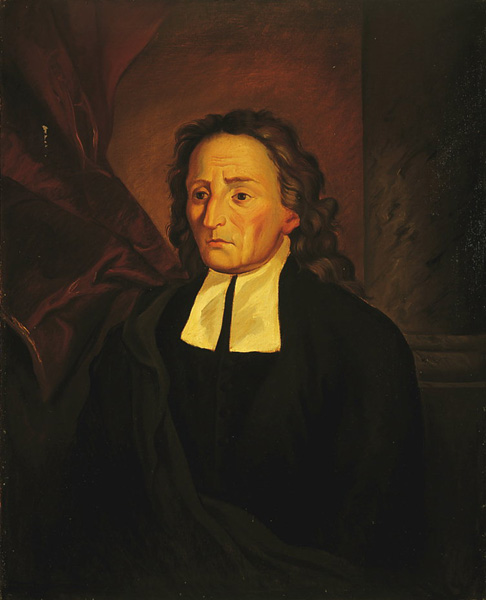 Giambattista Vico1668 – 1744
 Giovanni Pico della Mirandola1463 – 1494
 Georg Simmel1858 – 1918
 Ernst Bloch1885 – 1977
 Johann Georg Hamann1730 – 1788
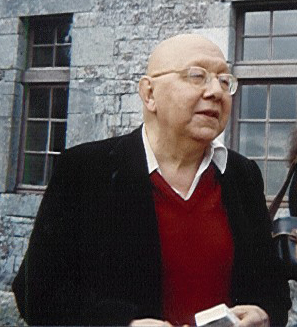 Cornelius Castoriadis1922 – 1997
 Victor Cousin1792 – 1867
- Alexandre Kojève1902 – 1968
 R. G. Collingwood1889 – 1943
 F. H. Bradley1846 – 1924
 Jacques Rancièreborn 1940
 Nicolás Gómez Dávila1913 – 1994
 Gershom Scholem1897 – 1982
 Michael Oakeshott1901 – 1990
 Jan Patočka1907 – 1977
- Karl Löwith1897 – 1973
 Arthur Coleman Danto1924 – 2013
 Ludwig Klages1872 – 1956
- Gerald Cohen1941 – 2009
 Leonard Peikoffborn 1933
You might also explore
 Counter-EnlightenmentModern EuropeanThe Counter-Enlightenment refers to a loose collection of intellectual stances that arose during the European…Dialectic★Reasoning through opposition: from Socratic dialogue to Hegel's movement of contradiction and resolution.HistoricismModern EuropeanHistoricism is an approach to understanding social, cultural, philosophical, and historical phenomena in terms of their…Anti-foundationalismModern EuropeanAnti-foundationalism (also called nonfoundationalism) is any philosophy which rejects a foundationalist approach. An…