Medieval Latin thinkers: Wodeham to Groote
- 1PhilosopherMedieval Latin1298 – 1358
Adam de Wodeham
Adam of Wodeham, OFM was a philosopher and theologian. Currently, Wodeham is best known for having been a secretary of William Ockham and for his interpretations of John Duns Scotus.
Read the full pageAdam of Wodeham, OFM (1298–1358) was a philosopher and theologian. Currently, Wodeham is best known for having been a secretary of William Ockham and for his interpretations of John Duns Scotus. But Wodeham was also an influential thinker in his own right who made valuable philosophical contributions during his life.
Wodeham was born near Southampton, England, in 1298.
- 2PhilosopherMedieval Latin1299 – 1369
Nicholas of Autrecourt
Nicholas of Autrecourt was a French medieval philosopher and Scholastic theologian.
Read the full pageNicholas of Autrecourt (French: Nicolas d'Autrécourt; Latin: Nicolaus de Autricuria or Nicolaus de Ultricuria; c. 1299, Autrecourt – 16 or 17 July 1369, Metz) was a French medieval philosopher and Scholastic theologian.
Born in Autrecourt, near Verdun, he was educated at Paris and earned bachelor's degrees in theology and law and a master's degree in arts. Nicholas is known principally for developing skepticism to extreme logical conclusions. He is sometimes considered the sole genuinely skeptic philosopher of medieval times. Nicholas founded his skeptical position on arguments that knowledge claims were not "reducible to the first principle," that is, that it was not contradictory to deny them. His views have been compared to those of David Hume, but it has been suggested that the similarities are superficial, and there is no evidence Nicholas influenced Hume, or other modern philosophers such as René Descartes. Whether Nicholas was committed to skepticism is unclear, but on 19 May 1346 his views were condemned by Pope Clement VI as heretical. Nicholas was sentenced to burn his books publicly and recant, which he did in Paris in 1347.
- 3
 PhilosopherMedieval Latin1300 – 1361
Johannes Tauler
Johannes Tauler OP was a German mystic, a Catholic priest and a theologian. He belonged to the Dominican order.
Read the full pageJohannes Tauler OP (c. 1300 – 16 June 1361) was a German mystic, a Catholic priest and a theologian. He belonged to the Dominican order. Tauler was known as one of the most important Rhineland mystics. He promoted a certain neo-platonist dimension in the Dominican spirituality of his time.
He was born about the year 1300 in Strasbourg, and seems to have been the son of Nikolus Tauler or Taweler, of Finkweiler (now Finckwiller st.), who in 1304 was a member of the Strasbourg city council. He entered the Dominican order at the age of about eighteen, and was educated at the Dominican convent in that city. Meister Eckhart, who greatly influenced him, was active in Strasbourg between about 1313 and 1326, though it is unclear what relationship they may have had. It is possible that while taking the customary eight-years' course of study at the monastery he heard Eckhart preach. From Strasbourg he went to the Dominican college of Cologne, and perhaps to St. James's College, Paris, ultimately returning to Strasbourg, but more probably he returned from Cologne to Strasbourg.
- 4
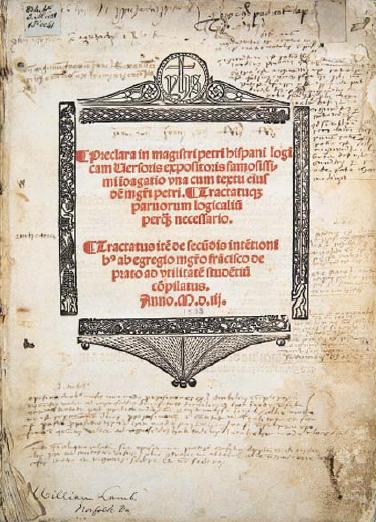 PhilosopherMedieval Latin1300 – 1300
Peter of Spain
Peter of Hispania (Latin: Petrus Hispanus; Portuguese and Spanish: Pedro Hispano; fl. 13th century) was the author of the Tractatus, later known as the Summulae Logicales, an important medieval university textbook on Aristotelian logic. As the Latin Hispania was considered to include the entire Iberian Peninsula, he is
Read the full pagePeter of Hispania (Latin: Petrus Hispanus; Portuguese and Spanish: Pedro Hispano; fl. 13th century) was the author of the Tractatus, later known as the Summulae Logicales, an important medieval university textbook on Aristotelian logic. As the Latin Hispania was considered to include the entire Iberian Peninsula, he is traditionally and usually identified with the medieval Portuguese scholar and ecclesiastic Peter Juliani, who was elected Pope John XXI in 1276. The identification is sometimes disputed, usually by Spanish authors, who claim the author of the Tractatus was a Castilian Blackfriar. He is also sometimes identified as Petrus Ferrandi Hispanus (d. 1254 x 1259).
The author of the Tractatus is assumed to have studied under John Pagus.
- 5PhilosopherMedieval Latin1300 – 1350
Thomas of Erfurt
Thomas of Erfurt was a German philosopher, the most important of the so-called Modistae. He was probably a native of Erfurt.
Read the full pageThomas of Erfurt (fl. c. 1300) was a German philosopher, the most important of the so-called Modistae. He was probably a native of Erfurt. He had some connection to the University of Paris as a teacher or student. He later taught at St Severus' Church and the Schottenkirche in Erfurt.
Thomas wrote at least six works. His major work, Tractatus de modis significandi seu Grammatica speculativa, was often misattributed to John Duns Scotus until 1922. All the early manuscript evidence supports its attribution to Thomas. It was written before 1310. Attributed to Scotus, it was one of the subjects of Martin Heidegger's 1916 doctoral thesis. Charles Sanders Peirce borrowed the name of the first branch of his system of logic, "speculative grammar", from Thomas. The Grammatica speculativa has been published with English translation and commentary by Godfrey Bursill-Hall (Longman, 1972).
- 6PhilosopherMedieval Latin1300 – 1309
Godfrey of Fontaines
Godfrey of Fontaines, was a scholastic philosopher and theologian who was designated by the title Doctor Venerandus. He made contributions to a diverse range of subjects ranging from moral philosophy to epistemology.
Read the full pageGodfrey of Fontaines (Latin: Godefridus de Fontibus, born sometime before 1250, died 29 October 1306 or 1309), was a scholastic philosopher and theologian who was designated by the title Doctor Venerandus. He made contributions to a diverse range of subjects ranging from moral philosophy to epistemology. However, he is best known today for his work on metaphysics.
Godfrey was born sometime before 1250 in the Principality of Liège, in present-day Belgium. He was likely born at Fontaines-les-Hozémont, a château owned by his noble family.
- 7
 PhilosopherMedieval Latin1303 – 1373
Bridget of Sweden
Bridget of Sweden, OSsS, also known as Birgitta Birgersdotter and Birgitta of Vadstena (Swedish: heliga Birgitta), was a Swedish Catholic mystic and the founder of the Bridgettines. Outside Sweden, she was also known as the Princess of Nericia.
Read the full pageBridget of Sweden, OSsS (c. 1304 – 23 July 1373), also known as Birgitta Birgersdotter and Birgitta of Vadstena (Swedish: heliga Birgitta), was a Swedish Catholic mystic and the founder of the Bridgettines. Outside Sweden, she was also known as the Princess of Nericia. She was the mother of Catherine of Vadstena.
Bridget is one of the six patron saints of Europe, together with Benedict of Nursia, Cyril and Methodius, Catherine of Siena and Teresa Benedicta of the Cross. Bridget of Sweden is honoured in the calendar of saints of the Catholic, Anglican, Episcopal, and Evangelical-Lutheran Churches.
- 8
 PhilosopherMedieval Latin1313 – 1372
William of Heytesbury
William of Heytesbury, or William Heytesbury, or William de Heytisbury, called in Latin Guglielmus Hentisberus or Tisberus, was an English philosopher and logician, best known as one of the Oxford Calculators of Merton College, Oxford, where he was a fellow.
Read the full pageWilliam of Heytesbury, or William Heytesbury, or William de Heytisbury, called in Latin Guglielmus Hentisberus or Tisberus (c. 1313 – 1372/1373), was an English philosopher and logician, best known as one of the Oxford Calculators of Merton College, Oxford, where he was a fellow.
Heytesbury had become a fellow of Merton by 1330. In his work he applied logical techniques to the problems of divisibility, the continuum, and kinematics. His magnum opus was the Regulae solvendi sophismata (Rules for Solving Sophisms), written about 1335.
- 9PhilosopherMedieval Latin1316 – 1390
Albertus de Saxonia
Albert of Saxony was a German philosopher and mathematician known for his contributions to logic and physics. He was bishop of Halberstadt from 1366 until his death.
- ◆Supposition theory
Read the full pageAlbert of Saxony (Latin: Albertus de Saxonia; c. 1320 – 8 July 1390) was a German philosopher and mathematician known for his contributions to logic and physics. He was bishop of Halberstadt from 1366 until his death.
Albert was born at Rickensdorf near Helmstedt, the son of a farmer in a small village. Due to his talent, he was sent to study at the University of Prague and the University of Paris.
- 10
 PhilosopherMedieval Latin1322 – 1391
Nicholas Cabasilas
Nicholas Kabasilas or Cabasilas was a Byzantine theological writer and mystic. Cabasilas is revered as a saint within the Eastern Orthodox Church.
Read the full pageNicholas Kabasilas or Cabasilas (Greek: Νικόλαος Καβάσιλας; c. 1319/1323 – c. 1392) was a Byzantine theological writer and mystic.
Cabasilas is revered as a saint within the Eastern Orthodox Church. His feast day is 20 June. The Catholic Church uses extracts from his Life in Christ as readings in the Liturgy of the Hours (Tuesday, Wednesday, and Thursday of the Fifth Week of Easter in Year II of the provisional two-year cycle for the Office of Readings).
- 11
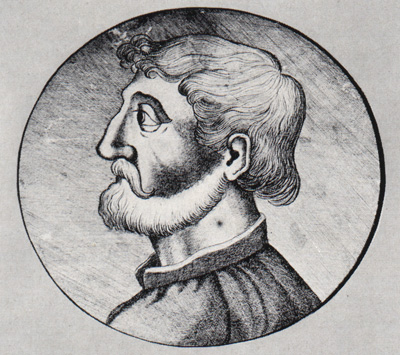 PhilosopherMedieval Latin1335 – 1396
Marsilius of Inghen
Marsilius of Inghen was a Dutch philosopher of the later Middle Ages who studied with Albert of Saxony and Nicole Oresme under Jean Buridan. He was Magister at the University of Paris as well as at the University of Heidelberg from 1386 to 1396.
- ◆Ampliation
- ◆supposition
Read the full pageMarsilius of Inghen (c. 1340 – 20 August 1396) was a Dutch philosopher of the later Middle Ages who studied with Albert of Saxony and Nicole Oresme under Jean Buridan. He was Magister at the University of Paris as well as at the University of Heidelberg from 1386 to 1396.
He was born near Nijmegen. Details about his family and early life are not well known, the first known date of his biography being 27 September 1362. On that day, he gave his Magister Artium lecture at the University of Paris. There, he received his master of arts, then took up work and was rector in 1367 and 1371. Aside from his philosophical and logical studies, he also studied theology, in which subject his lectures enjoyed large popularity. In 1378, Marsilius was the delegate of the University of Paris for the Pope Urban VI in Tivoli.
- 12
 PhilosopherMedieval Latin1340 – 1384
Geert Groote
Gerard Groote, otherwise Gerrit or Gerhard Groet, in Latin Gerardus Magnus, was a Dutch Catholic deacon, who was a popular preacher and the founder of the Brethren of the Common Life. He was a key figure in the Devotio Moderna movement.
Read the full pageGerard Groote (October 1340 – 20 August 1384), otherwise Gerrit or Gerhard Groet, in Latin Gerardus Magnus, was a Dutch Catholic deacon, who was a popular preacher and the founder of the Brethren of the Common Life. He was a key figure in the Devotio Moderna movement.
He was born in the Hanseatic city Deventer in the Bishopric of Utrecht, where his father held a good civic position. He studied at Aachen, then went to the University of Paris when only fifteen. Here he studied scholastic philosophy and theology at the Sorbonne under a pupil of William of Occam's, from whom he imbibed the nominalist conception of philosophy; in addition he studied Canon law, medicine, astronomy and even magic, and apparently some Hebrew. After a brilliant course he graduated in 1358. In 1362 he was appointed teacher at the Deventer chapter school.