Medieval Latin thinkers: Bonaventure to Viterbo
- 1
 PhilosopherMedieval Latin1221 – 1274
Bonaventure
Bonaventure was an Italian Catholic Franciscan bishop, cardinal, scholastic theologian and philosopher. The seventh Minister General of the Order of Friars Minor, he also served for a time as Bishop of Albano.
Read the full pageBonaventure (born Giovanni di Fidanza; 1221 – 15 July 1274) was an Italian Catholic Franciscan bishop, cardinal, scholastic theologian and philosopher.
The seventh Minister General of the Order of Friars Minor, he also served for a time as Bishop of Albano. He was canonised on 14 April 1482 by Pope Sixtus IV. In 1588 Pope Sixtus V declared him a Doctor of the Church named as the "Seraphic Doctor" (Latin: Doctor Seraphicus). His feast day is 15 July.
- 2
 PhilosopherMedieval Latin1225 – 1290
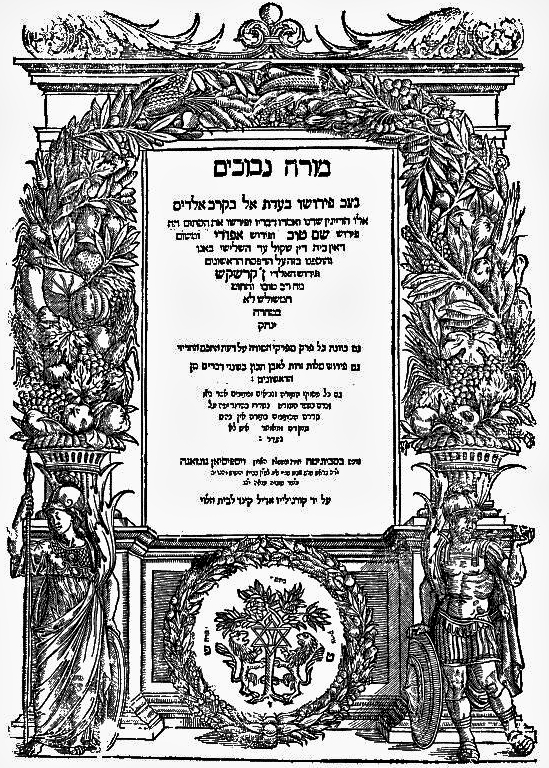
Shem-Tov ibn Falaquera
Shem-Tov ben Joseph ibn Falaquera, also spelled Palquera, was a Spanish Jewish philosopher, poet, and commentator. A vast body of work is attributed to Falaquera, including encyclopedias of Arabic and Greek philosophies, maqamas, some 20,000 poetic verses, and commentaries on Maimonides’ Guide to the Perplexed.
Read the full pageShem-Tov ben Joseph ibn Falaquera, also spelled Palquera (Hebrew: שם טוב בן יוסף אבן פלקירה; 1225 – c. 1290), was a Spanish Jewish philosopher, poet, and commentator. A vast body of work is attributed to Falaquera, including encyclopedias of Arabic and Greek philosophies, maqamas, some 20,000 poetic verses, and commentaries on Maimonides’ Guide to the Perplexed. The common theme in Falaquera’s writing was to encourage observant Jews to study philosophy and to appreciate the harmony that existed between Torah and rational truth learned in philosophy. While Falaquera did not advocate teaching the secrets of science and divine sciences to every man, he did advocate the teaching of these truths to a broader range of educated Jewish males than previous proponents of rationalist thinking. He authored a Medieval Hebrew philosophical-scientific encyclopedia, De'ot ha-Filosofim (The Opinions of the Philosophers) (ca. 1270), which consists of a detailed theoretical, and not merely descriptive, treatment of zoology, botany and mineralogy, comparable to that of Albertus Magnus.
Although not much is known about his personal life, it is believed that Falaquera’s Sefer ha-Mevakkesh, The Book of the Seeker, was a semi-autobiographical work representing a time in Falaquera’s life when he underwent a mid-life crisis and moved away from his youthful poetry towards more intellectual works. From this book and other writings it is assumed that Falaquera was never married due to the views on women he expressed. Furthermore, there is no information regarding how he supported himself, although references to poverty in the Sefer ha-Mevakkesh and other writings may signify his own personal destitution. Another note regarding the tensions that existed between the Jews and non-Jewish nations during Falaquera’s time is seen in the Megillat ha-Zikkaron and a comment in the Sefer ha-Mevakkesh about the “difficult times under the powerful hand of the non-Jewish nations who prevailed over us.”
- 3
 PhilosopherMedieval Latin1232 – 1316
Ramon Llull
Ramon Llull, sometimes anglicized as Raymond Lully, was a Catholic philosopher, theologian, poet, missionary, apologist and former knight, born in Palma de Mallorca. He invented a philosophical system known as the Art, conceived as a type of universal logic to prove the truth of Christian doctrine to interlocutors of a
Read the full pageRamon Llull (; Catalan: [rəˈmoɲ ˈʎuʎ]; c. 1232 – 1316), sometimes anglicized as Raymond Lully, was a Catholic philosopher, theologian, poet, missionary, apologist and former knight, born in Palma de Mallorca. He invented a philosophical system known as the Art, conceived as a type of universal logic to prove the truth of Christian doctrine to interlocutors of all faiths and nationalities. The Art consists of a set of general principles and combinatorial operations. It is illustrated with diagrams.
A prolific writer, he is also known for his literary works written in Catalan, which he composed to make his Art accessible to a wider audience. In addition to Catalan and Latin, he also probably wrote in Arabic (although no texts in Arabic survive). His books were translated into Occitan, French, and Castilian during his lifetime.
- 4
 PhilosopherMedieval Latin1235 – 1284
Siger of Brabant
Siger of Brabant was a 13th-century philosopher from the southern Low Countries who was an important proponent of Averroism.
Read the full pageSiger of Brabant (Sigerus, Sighier, Sigieri or Sygerius de Brabantia; c. 1240 – before 10 November 1284) was a 13th-century philosopher from the southern Low Countries who was an important proponent of Averroism.
Little is known about many of the details of his life. In 1266, he was attached to the Faculty of Arts in the University of Paris at the time when a riot erupted between the French and Picard "nations" of students—a series of loosely organized fraternities. The papal legate threatened Siger with execution as the ringleader of the Picard attack on the French, but no further action was taken.
- 5PhilosopherMedieval Latin1236 – 1306
Jacopone da Todi
Jacopone da Todi was an Italian Franciscan friar from Umbria. He wrote several laude (songs in praise of the Lord) in the local vernacular.
Read the full pageJacopone da Todi (c. 1230 – 25 December 1306) was an Italian Franciscan friar from Umbria. He wrote several laude (songs in praise of the Lord) in the local vernacular. He was an early pioneer in Italian theatre, being one of the earliest scholars who dramatised Gospel subjects.
Born Jacopo dei Benedetti, he was a member of a minor noble family. He studied law in Bologna and became a successful lawyer. At some point in his late 20s, he married a young noblewoman, Vanna di Bernardino di Guidone, who according to some accounts, was a pious and generous woman. Due to his reputation as a worldly and greedy man, she took it upon herself to mortify her flesh in atonement for his behavior.
- 6PhilosopherMedieval Latin1240 – 1284
Boetius of Dacia
Boetius de Dacia (also spelled Boethius de Dacia) was a 13th-century Danish philosopher of the Dominican Order.
Read the full pageBoetius de Dacia (also spelled Boethius de Dacia) was a 13th-century Danish philosopher of the Dominican Order.
The rendering of his name Danske Bo ("Bo the Dane") into Medieval Latin as Boetius de Dacia reflects a medieval practice of using Dacia as the Latin name for Denmark—a result of confusion between Dania (Denmark) and the antique Dacia in near the Black Sea.
- 7
 PhilosopherMedieval Latin1241 – 1298
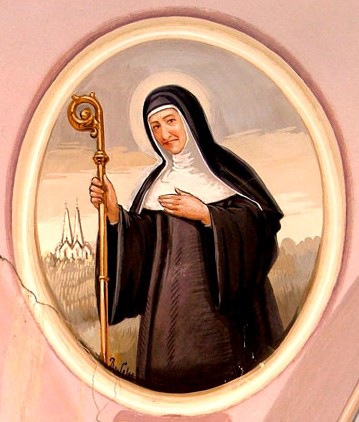
Mechtilde
Mechtilde of Hackeborn, OSB, also known as Mechtilde of Helfta, was a Saxon Benedictine nun known for her musical talents and spiritual revelations. At the age of 50, Mechtilde went through a grave spiritual crisis, as well as physical suffering.
Read the full pageMechtilde of Hackeborn, OSB, also known as Mechtilde of Helfta (born Matilda von Hackeborn-Wippra; 1240/1241 – 19 November 1298), was a Saxon Benedictine nun known for her musical talents and spiritual revelations. At the age of 50, Mechtilde went through a grave spiritual crisis, as well as physical suffering. In the modern Benedictine calendar, her feast is celebrated on the anniversary of her death, November 19. She died in the convent of Helfta, near Eisleben.
Born Matilda von Hackeborn-Wippra, in 1240 or 1241, she belonged to one of the noblest and most powerful Thuringian families; her sister was the illustrious Abbess Gertrude of Hackeborn. The family of Hackeborn belonged to a dynasty of Barons in Thuringia who were related to the Hohenstaufen family and had possessions in northern Thuringia and in the Harz Mountains. Some writers have considered that Mechtilde von Hackeborn and Mechtilde von Wippra were two distinct persons, but, as the Barons of Hackeborn were also Lords of Wippra, it was customary for members of that family to take their name indifferently from either, or both of these estates.
- 8
 PhilosopherMedieval Latin1248 – 1309
Angela of Foligno
Angela of Foligno was an Italian Franciscan tertiary who became known as a mystic from her extensive writings about her mystical revelations. Due to the respect those writings engendered in the Catholic Church she became known as Theologorum Magistra ("Teacher of Theologians"), as first used by Maximilian Sandaeus, lat
Read the full pageAngela of Foligno (1248 – 4 January 1309) was an Italian Franciscan tertiary who became known as a mystic from her extensive writings about her mystical revelations. Due to the respect those writings engendered in the Catholic Church she became known as Theologorum Magistra ("Teacher of Theologians"), as first used by Maximilian Sandaeus, later cited by Bollandus in the Acta Sanctorum.
Angela was noted not only for her spiritual writings, but also for founding a religious community which refused to become an enclosed order so that it might continue her vision of caring for those in need.
- 9PhilosopherMedieval Latin1248 – 1298
Peter Olivi
Peter John Olivi, also Pierre de Jean Olivi or Petrus Joannis Olivi, was a French Franciscan theologian and philosopher who, although he died professing the faith of the Roman Catholic Church, remained a controversial figure in the arguments surrounding poverty at the beginning of the 14th century. In large part, this
Read the full pagePeter John Olivi, also Pierre de Jean Olivi or Petrus Joannis Olivi (1248 – 14 March 1298), was a French Franciscan theologian and philosopher who, although he died professing the faith of the Roman Catholic Church, remained a controversial figure in the arguments surrounding poverty at the beginning of the 14th century. In large part, this was due to his view that the Franciscan vow of poverty also entailed usus pauper (i.e., 'poor' or 'restricted' use of goods). While contemporary Franciscans generally agreed that usus pauper was important to the Franciscan way of life, they disagreed that it was part of their vow of poverty. His support of the rigorous view of ecclesiastical poverty played a part in the ideology of the groups coming to be known as the Spiritual Franciscans or Fraticelli.
Born at Sérignan, Diocese of Béziers, 1247/48, at twelve he entered the Friars Minor at Béziers, studied at Montpellier, and later attended the University at Paris. He was present there in 1268, when Bonaventure gave his Collationes de septem donis Spiritus sancti, and was probably still there in 1273 for Bonaventure's Collationes in Hexaemeron. Returning to his native province, he taught in different places, and was probably in Narbonne around 1277–79.
- 10
 PhilosopherMedieval Latin1250 – 1315
Pietro d'Abano
Pietro d'Abano, also known as Petrus de Apono, Petrus Aponensis or Peter of Abano, was an Italian philosopher, astrologer, and professor of medicine in Padua. He was born in the Italian town from which he takes his name, now Abano Terme.
Read the full pagePietro d'Abano, also known as Petrus de Apono, Petrus Aponensis or Peter of Abano (c. 1257 – 1316), was an Italian philosopher, astrologer, and professor of medicine in Padua. He was born in the Italian town from which he takes his name, now Abano Terme. He gained fame by writing Conciliator Differentiarum, quae inter Philosophos et Medicos Versantur. He was eventually accused of heresy and atheism, and came before the Inquisition. He died in prison in 1316 (some sources say 1315) before the end of his trial.
Little is known about his early life, particularly before his studies. He lived in Greece for a period of time before he moved and commenced his studies for a long time at Constantinople (between 1270 and 1290). Here, he learned the Greek language. Around 1300 he moved to Paris, where he was promoted to the degrees of doctor in philosophy and medicine, in the practice of which he was very successful, but his fees were remarkably high. In Paris, he began to have issues with the inquisition. Here, he became known as "the Great Lombard". In 1306, he left Paris and returned to Padua. Here, he gained a reputation as a physician. In Padua he befriended an older scholar Paolo Tosetti. Also an astrologer, he was charged with practicing magic: the particular accusations being that he brought back into his purse, by the aid of the devil, all the money he paid away, and that he possessed the philosopher's stone.
- 11PhilosopherMedieval Latin1250 – 1310
Marguerite Porete
Marguerite Porete was a Beguine, a French-speaking mystic and the author of The Mirror of Simple Souls, a work of Christian mysticism dealing with the workings of agape (divine love). She was burnt at the stake for heresy in Paris in 1310 after a lengthy trial for refusing to remove her book from circulation or to reca
Read the full pageMarguerite Porete (French: [maʁɡ(ə)ʁit pɔʁɛt]; 1258 – 1 June 1310) was a Beguine, a French-speaking mystic and the author of The Mirror of Simple Souls, a work of Christian mysticism dealing with the workings of agape (divine love). She was burnt at the stake for heresy in Paris in 1310 after a lengthy trial for refusing to remove her book from circulation or to recant her views.
Today, Porete's work has been of interest to a diverse number of scholars. Those interested in medieval mysticism, more specifically Beguine mystical writing, cite The Mirror of Simple Souls in their studies. The book is also seen as a primary text regarding the medieval Brethren of the Free Spirit. Study of Eckhart (c. 1260 – c. 1328) has shown a similarity between his and Porete's ideas about union with God. Porete has also been of interest to those studying medieval women's writing.
- 12
 PhilosopherMedieval Latin1255 – 1308
James of Viterbo
James of Viterbo, born Giacomo Capocci (nicknamed Doctor speculativus), was an Italian Roman Catholic Augustinian friar and Scholastic theologian, who later became Archbishop of Naples.
Read the full pageJames of Viterbo (Italian: Giacomo da Viterbo; c. 1255 – c. 1307), born Giacomo Capocci (nicknamed Doctor speculativus), was an Italian Roman Catholic Augustinian friar and Scholastic theologian, who later became Archbishop of Naples.
James was born Giacomo Capocci in Viterbo in the Papal States around the year 1255. Little information is available regarding his early years. He joined the Order of St. Augustine around the year 1272 at the monastery of the Most Holy Trinity in Viterbo. He was then sent to pursue theological studies at the Order's General House of Studies in Paris, where he studied under Giles of Rome.