Medieval Latin thinkers: Italus to Bena
- 1PhilosopherMedieval Latin1025
John Italus
John Italus or Italos was a Byzantine Neoplatonic philosopher. He was Calabrian in origin, his father being a soldier.
- ◆Neoplatonism
Read the full pageJohn Italus or Italos (Greek: Ἰωάννης ὁ Ἰταλός, Iōánnēs ho Italós; Latin: Johannes Italus; c. 1025 – after 1082) was a Byzantine Neoplatonic philosopher.
He was Calabrian in origin, his father being a soldier. He came to Constantinople, where he became a student of Michael Psellus in classical Greek philosophy. He succeeded Psellus in his position as head of the philosophical school. Subsequently, some of his tenets were found heretic in 1076–77 by Patriarch Cosmas I of Constantinople, and in 1082 he was personally condemned, having come into conflict with Emperor Alexios I Komnenos.
- 2PhilosopherMedieval Latin1050 – 1121
Roscellinus
Roscelin of Compiègne, better known by his Latinized name Roscellinus Compendiensis or Rucelinus, was a French philosopher and theologian, often regarded as the founder of nominalism.
Read the full pageRoscelin of Compiègne (c. 1050 – c. 1121), better known by his Latinized name Roscellinus Compendiensis or Rucelinus, was a French philosopher and theologian, often regarded as the founder of nominalism.
Roscellinus was born in Compiègne, France. Little is known of his life, and knowledge of his doctrines is mainly derived from Anselm and Abelard. He studied at Soissons and Reims, was afterwards attached to the cathedral of Chartres and became canon of Compiègne. As a monk of Compiègne, he was teaching as early as 1087. He had contact with Lanfranc, Anselm, and St. Ivo of Chartres.
- 3PhilosopherMedieval Latin1070 – 1130
Bernard of Chartres
Bernard of Chartres was a twelfth-century French Neo-Platonist philosopher, scholar, and administrator.
Read the full pageBernard of Chartres (Latin: Bernardus Carnotensis; died after 1124) was a twelfth-century French Neo-Platonist philosopher, scholar, and administrator.
The date and place of his birth are unknown. He was previously believed to have been the elder brother of Thierry of Chartres and to be of Breton origin, but research has shown that this is unlikely. He is recorded at the cathedral school of Chartres by 1115 and was chancellor until 1124. There is no proof that he was still alive after 1124.
- 4
 PhilosopherMedieval Latin1080 – 1134
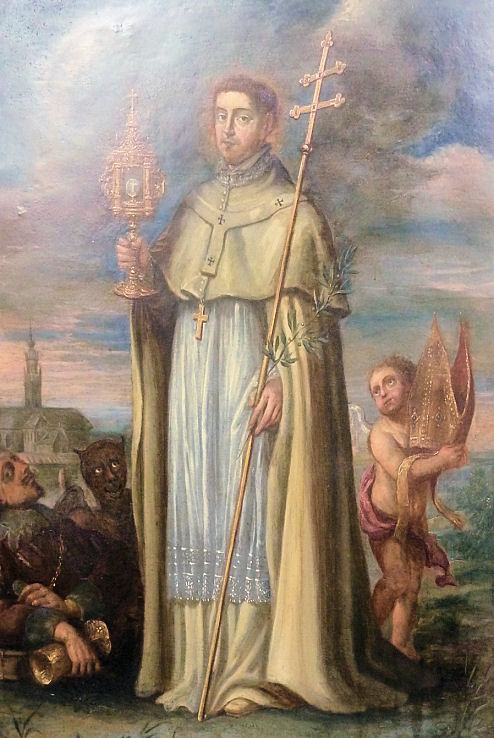
Norbert of Xanten
Norbert of Xanten, also known as Norbert Gennep, was a German Catholic bishop who was the Archbishop of Magdeburg, founder of the Premonstratensian order of canons regular, and is venerated as a saint in the Catholic Church. Norbert was canonized by Pope Gregory XIII in the year 1582, and his statue appears above the P
Read the full pageNorbert of Xanten (c. 1080 – 6 June 1134), also known as Norbert Gennep, was a German Catholic bishop who was the Archbishop of Magdeburg, founder of the Premonstratensian order of canons regular, and is venerated as a saint in the Catholic Church. Norbert was canonized by Pope Gregory XIII in the year 1582, and his statue appears above the Piazza colonnade of St. Peter's Square in Rome.
As the third son of a nobleman, Norbert's parents destined him for an ecclesiastical career. They made sure he was well educated, and he dutifully received minor orders as a subdeacon. He received a comfortable position as a canon at the church of St. Victor in Xanten. Holy Roman Emperor Henry V was impressed with Norbert and appointed him to the position of almoner. However, Norbert underwent a profound conversion after he was thrown from a horse when a bolt of lightning frightened the animal. Following this incident, he returned to Xanten and pursued a devout, penitent life.
- 5
 PhilosopherMedieval Latin1090 – 1153
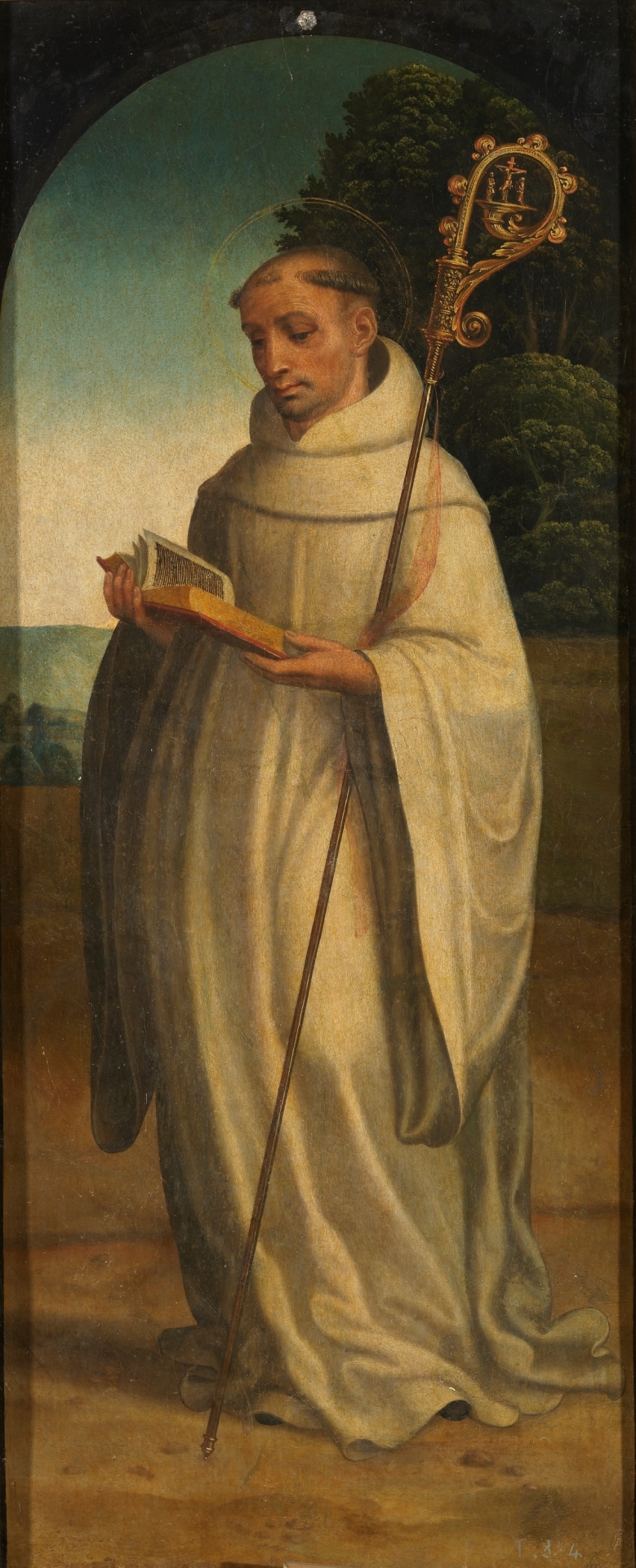
Bernard of Clairvaux
Bernard of Clairvaux, venerated as Saint Bernard, was an abbot, mystic, co-founder of the Knights Templar, and a major leader in the reform of the Benedictines through the nascent Cistercian Order. Bernard was sent to found Clairvaux Abbey only a few years after becoming a monk at Cîteaux.
Read the full pageBernard of Clairvaux (Latin: Bernardus Claraevallensis; 1090 – 20 August 1153), venerated as Saint Bernard, was an abbot, mystic, co-founder of the Knights Templar, and a major leader in the reform of the Benedictines through the nascent Cistercian Order.
Bernard was sent to found Clairvaux Abbey only a few years after becoming a monk at Cîteaux. In 1128, Bernard attended the Council of Troyes, at which he traced the outlines of the Rule of the Knights Templar, which soon became an ideal of Christian nobility.
- 6
 PhilosopherMedieval Latin1098 – 1179
Hildegard of Bingen
Abbess, visionary, composer and natural philosopher.
Read the full pageHildegard of Bingen, also known as the "Sibyl of the Rhine", was a German Benedictine abbess and polymath, active during the High Middle Ages as a writer, composer, philosopher, mystic and visionary. She is one of the best-known composers of sacred monophony, as well as the most recorded in modern history. A number of scholars have considered her to be the founder of scientific natural history in Germany.
Hildegard's convent at Disibodenberg elected her as magistra (mother superior) in 1136. She founded the monasteries of Rupertsberg in 1150 and Eibingen in 1165. Hildegard wrote theological, botanical, and medicinal works, as well as letters, hymns, and antiphons for the liturgy. She wrote poems, and supervised miniature illuminations in the Rupertsberg manuscript of her first work, Scivias. There are more surviving chants by Hildegard than by any other composer from the entire Middle Ages, and she is one of the few known composers to have written both the music and the words. One of her works, the Ordo Virtutum, is an early example of liturgical drama and arguably the oldest surviving morality play. She is noted for the invention of a constructed language known as Lingua Ignota.
- 7
 PhilosopherMedieval Latin1100 – 1181
Alexander III
Pope Alexander III, born Roland (Italian: Rolando), was head of the Catholic Church and ruler of the Papal States from 7 September 1159 until his death in 1181. A native of Siena, Alexander became pope after a contested election, but had to spend much of his pontificate outside Rome while several rivals, supported by H
Read the full pagePope Alexander III (c. 1100/1105 – 30 August 1181), born Roland (Italian: Rolando), was head of the Catholic Church and ruler of the Papal States from 7 September 1159 until his death in 1181.
A native of Siena, Alexander became pope after a contested election, but had to spend much of his pontificate outside Rome while several rivals, supported by Holy Roman Emperor Frederick I Barbarossa, claimed the papacy. Alexander rejected Byzantine Emperor Manuel I Komnenos' offer to end the East–West Schism, sanctioned the Northern Crusades, and held the Third Council of the Lateran. He canonized Thomas Becket and Bernard of Clairvaux. The city of Alessandria in Piedmont is named after him.
- 8
 PhilosopherMedieval Latin1110 – 1180
John of Salisbury
John of Salisbury, who described himself as Johannes Parvus ("John the Little"), was an English author, philosopher, educationalist, diplomat and bishop of Chartres. The historian Hans Liebeschuetz described him as one of the most notable figures of the "medieval Renaissance" of the 12th century.
Read the full pageJohn of Salisbury (late 1110s – 25 October 1180), who described himself as Johannes Parvus ("John the Little"), was an English author, philosopher, educationalist, diplomat and bishop of Chartres. The historian Hans Liebeschuetz described him as one of the most notable figures of the "medieval Renaissance" of the 12th century.
Born at Salisbury, England, he was of Anglo-Saxon rather than of Norman extraction, and therefore apparently a clerk from a modest background, whose career depended upon his education. Beyond that, and the fact that he applied to himself the cognomen of Parvus, meaning "short" or "small", few details are known regarding his early life. From his own statements it is gathered that he crossed to France about 1136, and began regular studies in Paris under Peter Abelard, who had for a brief period re-opened his famous school there on Montagne Sainte-Geneviève.
- 9
 PhilosopherMedieval Latin1110 – 1180
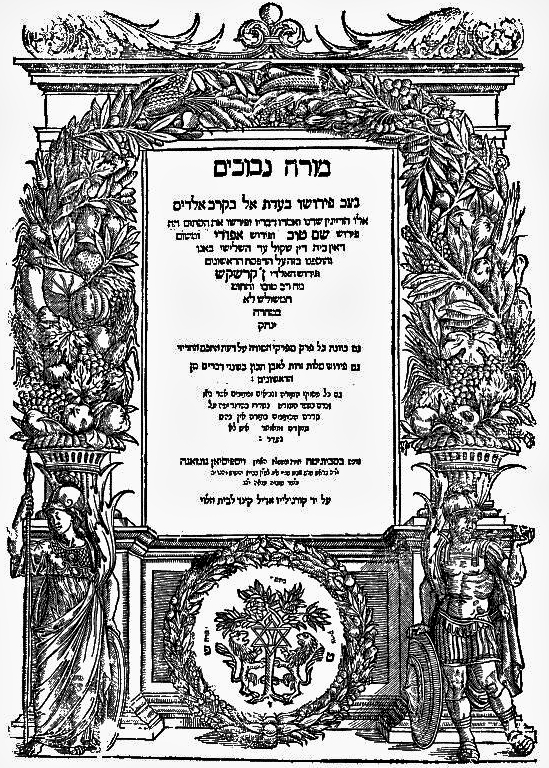
Abraham ibn Daud
Abraham ibn Daud (Judeo-Arabic: אַבְרָהָם בֶּן־דָּוִד הַלֵּוִי אִבְּן דָּאוּד, romanized: ʾAvrāhām ben-Dāvid hal-Lēvi ibn Dāʾūd; Arabic: ابراهيم بن داود, romanized: ʾIbrāhīm ibn Daʾūd) was a Spanish-Jewish astronomer, historian and philosopher born in Córdoba, Spain, in about 1110 who was said to have been killed for h
- ◆Integration of Aristotelian philosophy with Jewish thought
Read the full pageAbraham ibn Daud (Judeo-Arabic: אַבְרָהָם בֶּן־דָּוִד הַלֵּוִי אִבְּן דָּאוּד, romanized: ʾAvrāhām ben-Dāvid hal-Lēvi ibn Dāʾūd; Arabic: ابراهيم بن داود, romanized: ʾIbrāhīm ibn Daʾūd) was a Spanish-Jewish astronomer, historian and philosopher born in Córdoba, Spain, in about 1110 who was said to have been killed for his religious beliefs in Toledo, Spain, in about 1180. He is sometimes known by the abbreviation Rabad I. His maternal grandfather was Isaac Albalia. Some scholars believe he was the Arabic-into-Latin translator known as Avendauth.
Ibn Daud was the first to introduce the phase of Jewish philosophy which is generally attributed to Maimonides and which differs from former systems of philosophy mainly in its more thorough systematic form derived from Aristotle. He is considered the first Aristotelian in medieval Jewish philosophy; his work has been given less attention than Maimonides' subsequent and widely popular work The Guide for the Perplexed. Hasdai Crescas said Ibn Daud was the only Jewish philosopher among the predecessors of Maimonides.
- 10
 PhilosopherMedieval Latin1110 – 1167
Aelred of Rievaulx
Aelred of Rievaulx (Latin: Aelredus Riaevallensis), also known as Ailred, Ælred, or Æthelred; was an English Cistercian monk and writer who served as Abbot of Rievaulx from 1147 until his death. He is venerated by the Catholic Church as a saint and by some Anglicans.
Read the full pageAelred of Rievaulx (Latin: Aelredus Riaevallensis), also known as Ailred, Ælred, or Æthelred; (1110 – 12 January 1167) was an English Cistercian monk and writer who served as Abbot of Rievaulx from 1147 until his death. He is venerated by the Catholic Church as a saint and by some Anglicans.
Aelred was born in Hexham, Northumbria, in 1110, one of three sons of Eilaf, priest of St Andrew's at Hexham, himself a son of another Eilaf, treasurer of Durham. In 1095, the Council of Claremont had forbidden the ordination of the sons of priests. This was done in part to end the inheritance of benefices. He may have been partially educated by Lawrence of Durham, who sent him a hagiography of Saint Brigid.
- 11
 PhilosopherMedieval Latin1117 – 1202
Alain of Lille
Alain de Lille was a French theologian and poet. He was born in Lille some time before 1128.
Read the full pageAlain de Lille (Alan of Lille; Latin: Alanus ab Insulis; c. 1128 – 1202/1203) was a French theologian and poet. He was born in Lille some time before 1128. His exact date of death remains unclear as well, with most research pointing toward it being between 14 April 1202 and 5 April 1203. He is known for writing a number of works based upon the teachings of the liberal arts, with one of his most renowned poems, De planctu Naturae ("The Complaint of Nature"), focusing on sexual conduct among humans. Although Alain was widely known during his lifetime, little is known about his personal life.
As a theologian, Alain de Lille opposed scholasticism in the second half of the 12th century. His philosophy is characterized by rationalism and mysticism. Alain claimed that reason, guided by prudence, could discover most truths about the physical order without help; but to understand religious truth and to know God, the wise must be believers.
- 12
 PhilosopherMedieval Latin1150 – 1206
Amalric of Bena
Amalric of Bena was a French theologian. His followers were known as the Amalricians.
- ◆Amalrician
Read the full pageAmalric of Bena (French: Amaury de Bène, Amaury de Chartres; Latin: Almaricus, Amalricus, Amauricus; died c. 1204–1207) was a French theologian. His followers were known as the Amalricians.
Amalric was born in the latter part of the 12th century at Bennes, a village between Ollé and Chauffours in the diocese of Chartres.