Jewish thinkers, medieval
- 1
 PhilosopherJewish882 – 942
Saadia Gaon
Saʿadia ben Yosef Gaon or Said bin Yusuf al-Fayyumi was a prominent rabbi, gaon, Jewish philosopher, and exegete who was active in the Abbasid Caliphate. Saadia is the first important rabbinic figure to write extensively in Judeo-Arabic.
Read the full pageSaʿadia ben Yosef Gaon or Said bin Yusuf al-Fayyumi (892–942) was a prominent rabbi, gaon, Jewish philosopher, and exegete who was active in the Abbasid Caliphate.
Saadia is the first important rabbinic figure to write extensively in Judeo-Arabic. His extensive writings are one of the foundations of Judeo-Arabic literature. Known for his works on Hebrew linguistics, Halakha, and Jewish philosophy, he was a student of the philosophical school known as "Jewish Kalam". In this capacity, his philosophical work entitled The Book of Beliefs and Opinions represents the first systematic attempt to integrate Jewish theology with components of ancient Greek philosophy. Saadia was also very active in opposition to Karaite Judaism in defense of Rabbinic Judaism.
- 2PhilosopherJewish1070 – 1136
Abraham bar Hiyya Savasorda
Abraham bar Ḥiyya ha-Nasi, also known as Abraham Savasorda, Abraham Albargeloni, and Abraham Judaeus, was a Catalan Jewish mathematician, astronomer, philosopher, and translator who lived in Barcelona, then part of the County of Barcelona in what is now Spain. Bar Ḥiyya played an important role in transmitting Islamic
- ◆Quadratic equation
- ◆Hebrew calendar
Read the full pageAbraham bar Ḥiyya ha-Nasi (Hebrew: ר׳ אַבְרָהָם בַּר חִיָּיא הַנָשִׂיא; c. 1070 – c. 1136 or 1145), also known as Abraham Savasorda, Abraham Albargeloni, and Abraham Judaeus, was a Catalan Jewish mathematician, astronomer, philosopher, and translator who lived in Barcelona, then part of the County of Barcelona in what is now Spain.
Bar Ḥiyya played an important role in transmitting Islamic and Arabic science to the Christian world through translation into Latin, and was probably the earliest figure to introduce algebra from the Muslim world into Christian Europe. He also composed original works on mathematics, astronomy, Jewish philosophy, chronology, and surveying. His most influential mathematical work was Ḥibbur ha-Meshiḥah ve-ha-Tishboret, a Hebrew treatise on practical geometry and algebra that was translated into latin in 1145 as Liber embadorum. The work contains the first known complete solution of the quadratic equation x2−ax+b=c and influenced Fibonacci.
- 3
 PhilosopherJewish1075 – 1141
Judah Halevi
Judah haLevi was a Sephardic Jewish poet, physician and philosopher. HaLevi is considered one of the greatest Hebrew-language poets and is celebrated for his secular and religious poems, many of which appear in present-day Jewish liturgy.
- ◆Hebrew poetry
- ◆Jewish philosophy
Read the full pageJudah haLevi (also Yehuda Halevi or ha-Levi; Hebrew: יהודה בן שמואל הלוי, romanized: Yəhūḏā ben Šəmūʾēl ha-Lēvī; Arabic: أبو الحسن يهوذا اللاوي, romanized: Abū-l-Ḥasan Yahūḏā al-Lāwī; c. 1075–1141) was a Sephardic Jewish poet, physician and philosopher. HaLevi is considered one of the greatest Hebrew-language poets and is celebrated for his secular and religious poems, many of which appear in present-day Jewish liturgy.
Judah haLevi was born in either Tudela or Toledo in Al-Andalus, then under Almoravid rule. Although little is known about his early life or education, it is clear that he was well-versed in Arabic, Hebrew, and classical sciences, including medicine and philosophy. In his youth, he began composing Hebrew poetry, and his reputation eventually reached Moses ibn Ezra in Granada. After initial difficulties in traveling due to political shifts, haLevi was able to establish literary connections across major Jewish centers in al-Andalus.
- 4
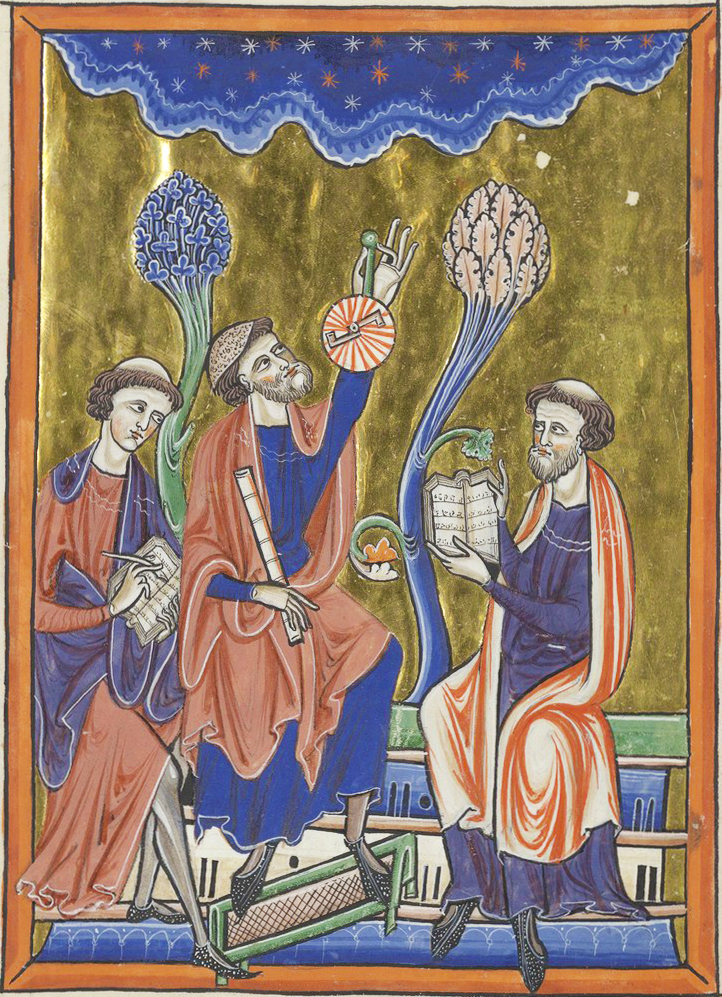 PhilosopherJewish1089 – 1167
Abraham ibn Ezra
Abraham ben Meir Ibn Ezra was one of the most distinguished Jewish biblical commentators and philosophers of the Middle Ages. He was born in Tudela, Taifa of Zaragoza (now Navarre).
- ◆Biblical commentaries
Read the full pageAbraham ben Meir Ibn Ezra was one of the most distinguished Jewish biblical commentators and philosophers of the Middle Ages. He was born in Tudela, Taifa of Zaragoza (now Navarre). Ibn Ezra is especially well-known to readers outside of the Jewish tradition as a major source of inspiration for Spinoza's early modern source-criticism on the authorship of the Law of Moses, appearing in theTheologico-Political Treatise.
Abraham Ibn Ezra was born in Tudela, one of the oldest and most important Jewish communities in Navarre. At the time, the town was under the rule of the emirs of the Muslim Taifa of Zaragoza. However, when he later moved to Córdoba, he claimed it was his birthplace. Ultimately, most scholars agree that his place of birth was Tudela.
- 5PhilosopherJewish1150 – 1230
Samuel ibn Tibbon
Samuel ben Judah ibn Tibbon, more commonly known as Samuel ibn Tibbon (Hebrew: שמואל בן יהודה אבן תבון, Arabic: ابن تبّون), was a Jewish philosopher and doctor who lived and worked in Provence, later part of France. He was born about 1150 in Lunel (Languedoc), and died about 1230 in Marseille.
Read the full pageSamuel ben Judah ibn Tibbon (c. 1150 – c. 1230), more commonly known as Samuel ibn Tibbon (Hebrew: שמואל בן יהודה אבן תבון, Arabic: ابن تبّون), was a Jewish philosopher and doctor who lived and worked in Provence, later part of France. He was born about 1150 in Lunel (Languedoc), and died about 1230 in Marseille. He is best known for his translations of Jewish rabbinic literature from Arabic to Hebrew. Samuel ibn Tibbon wrote his own philosophical works, including "Sefer ha-Mikhtav" (The Book of the Letter), which dealt with ethics and spirituality. Samuel ibn Tibbon's translations and commentaries had a significant impact on Jewish thought and scholarship during the Middle Ages. They helped to disseminate the ideas of Greek philosophy and Islamic science throughout the Jewish world, and they also contributed to the development of Jewish philosophy in their own right.
He received a Jewish education in rabbinic literature from his father Judah ben Saul ibn Tibbon. Other teachers in Lunel taught him about medicine, Arabic and the secular knowledge of his age.
- 6
 PhilosopherJewish1194 – 1270
Nahmanides
Moses ben Nachman, commonly known as Nachmanides (; Greek: Ναχμανίδης Nakhmanídēs), and also referred to by the acronym Ramban (; רמב״ן) and by the contemporary nickname Bonastruc ça Porta (Catalan: [ˌbɔnəsˈtɾuk sə ˈpɔrtə]; literally "Mazel Tov near the Gate", see astruc), was a leading medieval Jewish scholar, Spanish
Read the full pageMoses ben Nachman (Hebrew: מֹשֶׁה בֶּן־נָחְמָן Mōše ben-Nāḥmān, "Moses, son of Nachman"; 1194–1270), commonly known as Nachmanides (; Greek: Ναχμανίδης Nakhmanídēs), and also referred to by the acronym Ramban (; רמב״ן) and by the contemporary nickname Bonastruc ça Porta (Catalan: [ˌbɔnəsˈtɾuk sə ˈpɔrtə]; literally "Mazel Tov near the Gate", see astruc), was a leading medieval Jewish scholar, Spanish rabbi, philosopher, physician, kabbalist, and biblical commentator. He was raised, studied, and lived for most of his life in Girona, Catalonia. He is also considered to be an important figure in the re-establishment of the Jewish community in Jerusalem following its destruction by the Crusaders in 1099.
"Nachmanides" (Ναχμανίδης) is a Greek-influenced formation meaning "son of Nahman." He is also commonly known by the Hebrew acronym רמב״ן (Ra-M-Ba-N, for Rabbeinu Mōšeh bēn-Nāḥmān, "Our Rabbi Moses son of Nahman"). His Catalan name was Bonastruc ça Porta (also written Saporta or de Porta), literally "Mazel Tov near the Gate."
- 7PhilosopherJewish1280 – 1340
Joseph Caspi
Joseph ben Abba Meir ben Joseph ben Jacob Ibn Kaspi, also known as Yosef Caspi, was a Provençal exegete, grammarian, and philosopher, apparently influenced by Averroës.
Read the full pageJoseph ben Abba Meir ben Joseph ben Jacob Ibn Kaspi, also known as Yosef Caspi (1280 Arles – 1345 Mallorca), was a Provençal exegete, grammarian, and philosopher, apparently influenced by Averroës.
His family hailed from Largentière, from whence his Hebrew surname "Caspi" (made of silver) derived. His Provençal name was Don Bonafous de Largentera, or in French En Bonafoux de L'Argentière. He traveled much, visiting Arles, Tarascon, Aragon, Catalonia, Mallorca (where he must have foregathered with Judah Leon ben Moses Mosconi), and Egypt, where, as he says in his Tzava'ah (ethical will), he hoped to be instructed by the members of Maimonides' family. This hope was not realized, as the descendants of Maimonides were more pious than learned. At one time Caspi intended to go to Fez, where many renowned schools existed; but he seems to have abandoned this project and to have settled at Tarascon. He underwent much suffering at the time of the Pastoureaux persecution, and was threatened with punishment if he did not renounce his faith.
- 8PhilosopherJewish1288 – 1344
Gersonides
Levi ben Gershon, better known by his Graecized name as Gersonides, or by his Latinized name Magister Leo Hebraeus, or in Hebrew by the abbreviation of first letters as RaLBaG, was a medieval French Jewish philosopher, Talmudist, mathematician, physician and astronomer/astrologer. He was born at Bagnols in Languedoc, F
Read the full pageLevi ben Gershon (1288 – 20 April 1344), better known by his Graecized name as Gersonides, or by his Latinized name Magister Leo Hebraeus, or in Hebrew by the abbreviation of first letters as RaLBaG, was a medieval French Jewish philosopher, Talmudist, mathematician, physician and astronomer/astrologer. He was born at Bagnols in Languedoc, France. According to Abraham Zacuto and others, he was the son of Gerson ben Solomon Catalan.
As in the case of the other medieval Jewish philosophers, little is known of his life. His family had been distinguished for piety and exegetical skill in Talmud, but though he was known in the Jewish community by commentaries on certain books of the Bible, he never seems to have accepted any rabbinical post. It has been suggested that the uniqueness of his opinions may have put obstacles in the way of his advancement to a higher position or office. He is known to have been at Avignon and Orange during his life, and is believed to have died in 1344, though Zacuto asserts that he died at Perpignan in 1370.
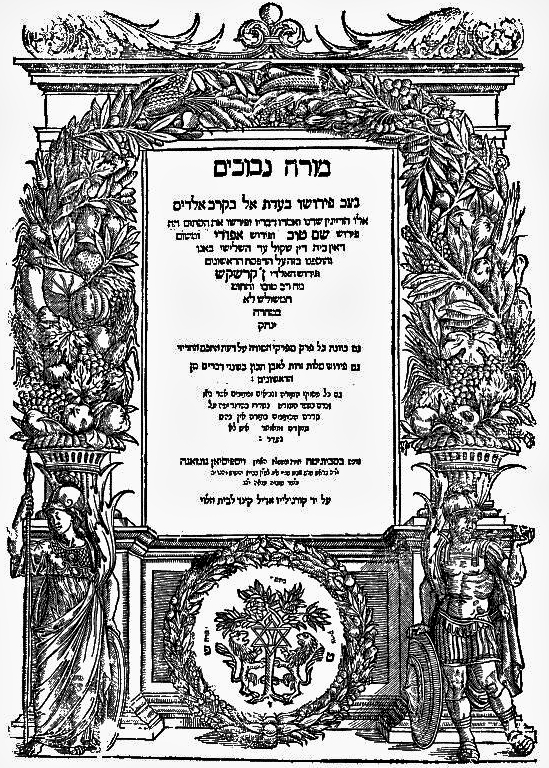
- 9PhilosopherJewish1340 – 1410
Hasdai Crescas
Hasdai ben Abraham Crescas was a Spanish-Jewish philosopher and a renowned halakhist (teacher of Jewish law). Along with Maimonides ("Rambam"), Gersonides ("Ralbag"), and Joseph Albo, he is known as one of the major practitioners of the rationalist approach to Jewish philosophy.
Read the full pageHasdai ben Abraham Crescas (Catalan: [həzˈðaj ˈβeɲ ʒuˈða ˈkɾeskəs]; Hebrew: חסדאי קרשקש; c. 1340 in Barcelona – 1410/11 in Zaragoza) was a Spanish-Jewish philosopher and a renowned halakhist (teacher of Jewish law). Along with Maimonides ("Rambam"), Gersonides ("Ralbag"), and Joseph Albo, he is known as one of the major practitioners of the rationalist approach to Jewish philosophy.
Hasdai Crescas came from a family of scholars. He was the grandson of the Talmudist Hasdai ben Judah Crescas, and a disciple of the Talmudist and philosopher Nissim of Gerona. Following his teacher's footsteps, he became a Talmudic authority and a philosopher of great originality. He is considered critical in the history of modern thought for his profound influence on Baruch Spinoza.
- 10PhilosopherJewish1380 – 1444
Joseph Albo
Joseph Albo was a 15th-century Spanish Jewish rabbi, preacher, and philosopher, best known as the author of Sefer ha-Ikkarim ("Book of Principles"), a major philosophical exposition of the fundamentals of Judaism. His thought was strongly influenced by his teacher Hasdai Crescas, while also displaying familiarity with
Read the full pageJoseph Albo (Hebrew: יוסף אלבו; c. 1380 – c. 1444, possibly 1430) was a 15th-century Spanish Jewish rabbi, preacher, and philosopher, best known as the author of Sefer ha-Ikkarim ("Book of Principles"), a major philosophical exposition of the fundamentals of Judaism. His thought was strongly influenced by his teacher Hasdai Crescas, while also displaying familiarity with Islamic philosophy, Christian scholasticism, and, to some extent, the writings of Arab Aristotelians.
Albo's birthplace is generally assumed to have been Monreal del Campo in Aragon. This identification rests on Astruc ha-Levi's account of the Disputation of Tortosa of 1413–1414, which lists Albo among the Jewish participants and describes him as the representative of the congregation of Monreal; the surviving Latin account of the disputation, however, does not associate him with that locality.
- 11
 PhilosopherJewish1437 – 1508
Isaac Abrabanel
Isaac ben Judah Abarbanel, commonly referred to as Abarbanel (Hebrew: אַבַּרבְּנְאֵל; also spelled Abravanel, Avravanel or Abrabanel), was a Portuguese Jewish statesman, philosopher, Bible commentator, and financier.
Read the full pageIsaac ben Judah Abarbanel (Hebrew: יצחק בן יהודה אברבנאל; 1437–1508), commonly referred to as Abarbanel (Hebrew: אַבַּרבְּנְאֵל; also spelled Abravanel, Avravanel or Abrabanel), was a Portuguese Jewish statesman, philosopher, Bible commentator, and financier.
Some debate exists over whether his last name should be pronounced Abarbanel or Abravanel. The traditional pronunciation is Abarbanel. Modern scholarly literature, since Graetz and Baer, has most commonly used Abravanel, but his own son Judah insisted on Abarbanel, and Sefer HaTishbi by Elijah Levita, who was a nearby contemporary, twice vowels the name as Abarbinel (אַבַּרְבִּינֵאל).