Jewish thinkers, renaissance & early modern
- 1
 PhilosopherJewish1460 – 1530
Judah Leon Abravanel
Judah Leon Abravanel or Abrabanel, otherwise known by the pen name of Leo the Hebrew (in Latin: Leo Hebraeus; in Portuguese: Leão Hebreu; in Italian: Leone Ebreo; in Spanish: León Hebreo; in French: León l'Hebreu), was a Portuguese–Jewish philosopher, physician, and poet. He served as personal physician to the Spanish
Read the full pageJudah Leon Abravanel or Abrabanel (Hebrew: יְהוּדָה בֶּן יִצְחָק אַבְּרַבַנְאֵל, romanized: Yehuda ben Yitzhak Abravanel; c. 1460 Lisbon – c. 1530? Naples?), otherwise known by the pen name of Leo the Hebrew (in Latin: Leo Hebraeus; in Portuguese: Leão Hebreu; in Italian: Leone Ebreo; in Spanish: León Hebreo; in French: León l'Hebreu), was a Portuguese–Jewish philosopher, physician, and poet. He served as personal physician to the Spanish viceroy in Naples and wrote Telunah ʿal ha-Zeman ("Complaint against Time") as well as four poems about his father, Isaac.
Abravanel's best-known work was the philosophical dialogue on love Dialoghi di amore ("Dialogues of Love"), regarded as one of the most important philosophical works of its time. In it, human beings come to know love at three levels, "of pleasure, of profit, of virtue", and from these come to recognize love as the ultimate goal of the universe, attainable in its fullest sense only through union with God. The work was widely published and translated during the latter part of the 16th century.
- 2
 PhilosopherJewish1488 – 1575
Joseph ben Ephraim Karo
Joseph ben Ephraim Karo, also spelled Yosef Caro, or Qaro, was a prominent Sephardic Jewish rabbi renowned as the author of the last great codification of Jewish law, the Beit Yosef, and its popular analogue, the Shulhan Arukh. Karo is regarded as the preeminent halakhic authority of his time, and is often referred to
Read the full pageJoseph ben Ephraim Karo, also spelled Yosef Caro, or Qaro (Hebrew: יוסף קארו; 1488 – March 24, 1575, 13 Nisan 5335 A.M.), was a prominent Sephardic Jewish rabbi renowned as the author of the last great codification of Jewish law, the Beit Yosef, and its popular analogue, the Shulhan Arukh. Karo is regarded as the preeminent halakhic authority of his time, and is often referred to by the honorific titles HaMechaber (Hebrew: הַמְחַבֵּר, lit. 'the author') and Maran (Jewish Babylonian Aramaic: מָרַן, lit. 'our master').
Joseph Karo was born in Toledo, Spain, in 1488. In 1492, aged four, he was expelled from Spain with his family as a result of the Alhambra Decree and subsequently settled in the Kingdom of Portugal. After the expulsion of the Jews from Portugal in 1497, the Ottomans invited the Jews to settle within their empire. Karo went with his parents, after a brief move to Morocco, to Nikopolis (today's Nikopol, Bulgaria), then a city under Ottoman rule. In Nikopol, he received his first instruction from his father, who was himself an eminent Talmudist. Following his father's death, Karo's uncle Isaac, an author of biblical commentary, adopted him. He was married twice, firstly to Isaac Saba's daughter, and, then after her death, to the daughter of Hayyim Albalag, both of these men being well-known Talmudists.
- 3
 PhilosopherJewish1512 – 1609
Judah Loew ben Bezalel
Judah Loew ben Bezalel, also known as Rabbi Loew (alt. Löw, Loewe, Löwe or Levai), the Maharal of Prague (Hebrew: מהר״ל מפראג), or simply the Maharal (the Hebrew acronym of "Moreinu ha-Rav Loew", "Our Teacher, Rabbi Loew"), was an important Talmudic scholar, Jewish mystic, mathematician, astronomer, and philosopher who
Read the full pageJudah Loew ben Bezalel (Hebrew: יהודה ליווא בן בצלאל; c. 1524 – 17 September 1609), also known as Rabbi Loew (alt. Löw, Loewe, Löwe or Levai), the Maharal of Prague (Hebrew: מהר״ל מפראג), or simply the Maharal (the Hebrew acronym of "Moreinu ha-Rav Loew", "Our Teacher, Rabbi Loew"), was an important Talmudic scholar, Jewish mystic, mathematician, astronomer, and philosopher who, for most of his life, served as a leading rabbi in the cities of Mikulov in Moravia and Prague in Bohemia.
Loew wrote on Jewish philosophy and Jewish mysticism. His work Gur Aryeh al HaTorah is a supercommentary on Rashi's Torah commentary. He is also the subject of a later legend that he created the Golem of Prague, an animate being fashioned from clay.
- 4
 PhilosopherJewish1632 – 1677
Baruch Spinoza
Lens-grinder of Amsterdam who identified God with Nature and wrote an Ethics in geometrical order.
- ◆Deus sive Natura — God or Nature
- ◆One substance, infinite attributes
- ◆Freedom as understanding necessity
- ◆Intellectual love of God
Read the full pageBaruch (de) Spinoza (24 November 1632 – 21 February 1677), also known under his Latinized pen name Benedictus de Spinoza, was a philosopher of Portuguese-Jewish origin who was born and lived in the Dutch Republic. A forerunner of the Enlightenment, Spinoza significantly influenced modern biblical criticism, 17th-century rationalism, and Dutch intellectual culture, establishing himself as one of the most important and radical philosophers of the early modern period. Influenced by Stoicism, Thomas Hobbes, René Descartes, and heterodox Christians, Spinoza was a leading philosopher of the Dutch Golden Age.
Spinoza was born in Amsterdam to a marrano family that fled Portugal for the more tolerant Dutch Republic. He received a traditional Jewish education, learning Hebrew and studying sacred texts within the Portuguese-Jewish community, where his father was a prominent merchant. As a young man, Spinoza challenged rabbinic authority and questioned Jewish doctrines, leading to his permanent expulsion from his Jewish community in 1656. Following that expulsion, he distanced himself from all religious affiliations and devoted himself to philosophical inquiry, supporting himself by lens grinding. Spinoza attracted a dedicated circle of followers who gathered to discuss his writings and joined him in the intellectual pursuit of truth.
- 5
 PhilosopherJewish1707 – 1746
Moshe Chaim Luzzatto
Moshe Chaim Luzzatto, also known by the Hebrew acronym RaMCHaL or RaMḤaL (רמח״ל), was a rabbi, kabbalist, and philosopher in Italy.
Read the full pageMoshe Chaim Luzzatto (Hebrew: משה חיים לוצאטו; 1707 – 16 May 1746), also known by the Hebrew acronym RaMCHaL or RaMḤaL (רמח״ל), was a rabbi, kabbalist, and philosopher in Italy.
Moshe Chaim Luzzatto was born in 1707 in the Jewish ghetto of Padua, Republic of Venice. The son of Jacob Vita and Diamente Luzzatto, he received classical Jewish and Italian education, showing a predilection for literature at a very early age. He may have attended the University of Padua and was certainly associated with a group of students there who dabbled in Jewish mysticism and alchemy. With his vast knowledge in religious lore, the arts, and science, he quickly became the dominant figure in that group. His writings demonstrate mastery of the Tanakh, the Talmud, the Rabbinic commentaries, codes of Jewish law (Halakha) and Kabbalah.
- 6
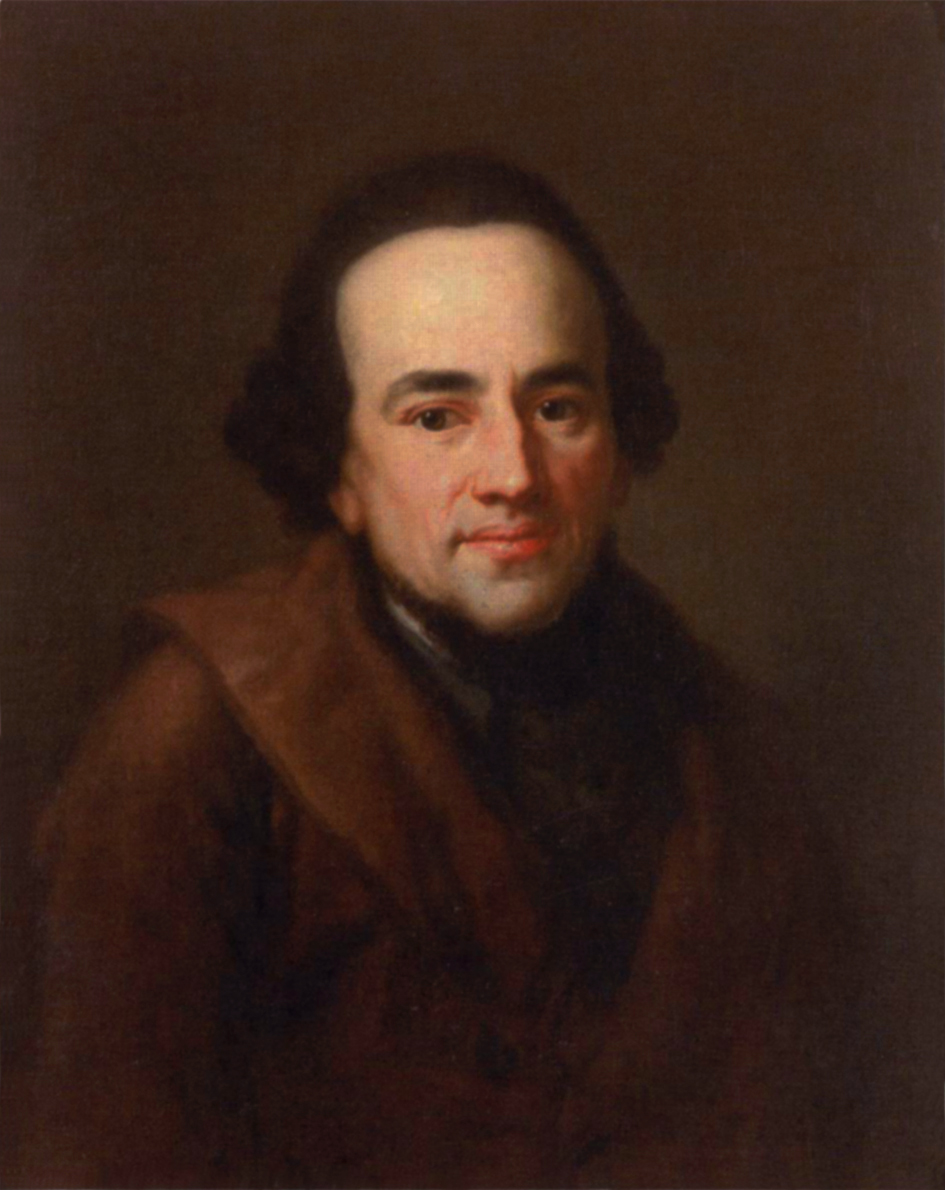 PhilosopherJewish1729 – 1786
Moses Mendelssohn
Moses Mendelssohn was a German-Jewish philosopher and theologian. His writings and ideas on Jews and the Jewish religion and identity were a central element in the development of the Haskalah, or 'Jewish Enlightenment' of the eighteenth and nineteenth centuries.
Read the full pageMoses Mendelssohn (6 September 1729 – 4 January 1786) was a German-Jewish philosopher and theologian. His writings and ideas on Jews and the Jewish religion and identity were a central element in the development of the Haskalah, or 'Jewish Enlightenment' of the eighteenth and nineteenth centuries.
Born to a poor Jewish family in Dessau, Principality of Anhalt, and originally destined for a rabbinical career, Mendelssohn educated himself in German thought and literature. Through his writings on philosophy and religion he came to be regarded as a leading cultural figure of his time by both Christian and Jewish inhabitants of German-speaking Europe and beyond. His involvement in the Berlin textile industry formed the foundation of his family's wealth.
- 7
 PhilosopherJewish1754 – 1800
Salomon Maimon
Salomon Maimon was a philosopher born of Lithuanian Jewish parentage in the Grand Duchy of Lithuania, present-day Belarus. His work was written in German and in Hebrew.
- ◆Critique of Kant's ''quid juris'' and ''quid facti''
Read the full pageSalomon Maimon (; German: [ˈmaɪmoːn]; Lithuanian: Salomonas Maimonas; Hebrew: שלמה בן יהושע מימון Shlomo ben Yehoshua Maimon; 1753 – 22 November 1800) was a philosopher born of Lithuanian Jewish parentage in the Grand Duchy of Lithuania, present-day Belarus. His work was written in German and in Hebrew.
Salomon Maimon was born Shlomo ben Joshua in the town of Zhukov Borok near Mir in the Grand Duchy of Lithuania (present-day Belarus), where his grandfather leased an estate from a Prince Karol Stanisław "Panie Kochanku" Radziwiłł. He was taught Torah and Talmud, first by his father, and later by instructors in Mir. He was recognized as a prodigy in Talmudic studies. His parents fell on hard times, and betrothed him to two separate girls in order to take advantage of their dowries, leading to a bitter rivalry. At the age of eleven he was married to one of the two prospects, a girl from Nesvizh. At the age 14 he was already a father and was making money by teaching Talmud. Later he learned some German from books and walked all the way to Slonim, where he met a rabbi named Shimshon ben Mordechai of Slonim who had studied in Germany. He borrowed German books on physics, optics and medicine from him. After that he became determined to study further.