Indian thinkers, 19th century
- 1
 PhilosopherIndian1781 – 1830
Swaminarayan
Swaminarayan, also known as Sahajanand Swami, was a yogi and ascetic believed by followers to be a manifestation of Krishna or the highest manifestation of Purushottama, around whom the Swaminarayan Sampradaya developed. In 1800, he was initiated into the Uddhava sampradaya by his guru, Swami Ramanand, and was given th
Read the full pageSwaminarayan (IAST: Svāmīnārāyaṇa; 3 April 1781 – 1 June 1830), also known as Sahajanand Swami, was a yogi and ascetic believed by followers to be a manifestation of Krishna or the highest manifestation of Purushottama, around whom the Swaminarayan Sampradaya developed.
In 1800, he was initiated into the Uddhava sampradaya by his guru, Swami Ramanand, and was given the name Sahajanand Swami. Despite opposition, in 1802, Ramanand handed over the leadership of the Uddhava Sampradaya to him before his death. According to the Swaminarayan tradition, Sahajanand Swami became known as Swaminarayan, and the Uddhava Sampradaya became known as the Swaminarayan Sampradaya, after a gathering in which he taught the Swaminarayan Mantra to his followers.
- 2
 PhilosopherIndian1817 – 1905
Debendranath Tagore
Debendranath Tagore was an Indian philosopher and religious reformer, active in the Brahmo Samaj (earlier called Brahmo Sabha) ("Society of Brahma", also translated as Society of God). He joined the Brahmo Samaj in 1842.
Read the full pageDebendranath Tagore (15 May 1817 – 19 January 1905; birth name: Debendronath Thakur) was an Indian philosopher and religious reformer, active in the Brahmo Samaj (earlier called Brahmo Sabha) ("Society of Brahma", also translated as Society of God). He joined the Brahmo Samaj in 1842. He was the founder in 1848 of the Brahmo religion, which today is synonymous with Brahmoism. Born in Shilaidaha, his father was the industrialist Dwarakanath Tagore; many of his 14 children, including Nobel Prize winning poet Rabindranath Tagore, made significant artistic or literary contributions to society.
Debendranath Tagore's father was famous industrialist Dwarakanath Tagore, who was called 'Prince' because of his extravagant lifestyle, and Digambari Devi was mother, a very pious lady, in the Tagore family in Jorasanko, popularly known as Jorasanko Thakur Bari in North-western Kolkata, which was later converted into a campus of the Rabindra Bharati University. The Tagore family, with over three hundred years of history, was one of the leading families of Calcutta, and is regarded as a key influence during the Bengal Renaissance. The family has produced several persons who have contributed substantially in the fields of business, social and religious reformation, literature, art and music. His siblings were Girindranath Tagore (b.1820) and Nagendranath Tagore (b.1829).
- 3
 PhilosopherIndian1828 – 1895
Shyama Charan Lahiri
Shyama Charan Lahiri, best known as Lahiri Mahasaya, was an Indian yogi and guru who founded the Kriya Yoga system of Yoga. He was a disciple of Mahavatar Babaji.
Read the full pageShyama Charan Lahiri (30 September 1828 – 26 September 1895), best known as Lahiri Mahasaya, was an Indian yogi and guru who founded the Kriya Yoga system of Yoga. He was a disciple of Mahavatar Babaji. Lahiri Mahasaya's life was described in Paramahansa Yogananda's Autobiography of a Yogi as a demonstration of the spiritual attainment that could be achieved by a householder "living fully in the world". A part of Lahiri Mahasaya's face is pictured on the cover of The Beatles' 1967 album Sgt. Pepper's Lonely Hearts Club Band.
Lahiri Mahasaya was born to Bengali Brahmin parents Gourmohan and Muktakeshi Lahiri on 30 September 1828, in the village of Ghurni, Dist. Nadia, West Bengal, India, according to Yogananda. In 1832, a flood killed his mother and destroyed their home, after which his family moved to Varanasi, where he received education in philosophy, Sanskrit, and English. His father arranged for him to be married to Kashimoni in 1846, and he taught her how to read. In 1851, he began working as a clerk and tutor.
- 4
 PhilosopherIndian1853 – 1920
Sarada Devi
Sri Sarada Devi, born Kshemankari / Thakurmani / Saradamani Mukhopadhyay, was the wife and spiritual consort of Ramakrishna Paramahamsa, a nineteenth-century Hindu mystic. Sarada Devi is also reverentially addressed as the Holy Mother (Sri Sri Maa) by the followers of the Sri Ramakrishna monastic order.
Read the full pageSri Sarada Devi (Bengali: সারদা দেবী; ; 22 December 1853 – 20 July 1920), born Kshemankari / Thakurmani / Saradamani Mukhopadhyay, was the wife and spiritual consort of Ramakrishna Paramahamsa, a nineteenth-century Hindu mystic. Sarada Devi is also reverentially addressed as the Holy Mother (Sri Sri Maa) by the followers of the Sri Ramakrishna monastic order. The Sri Sarada Math and Ramakrishna Sarada Mission situated at Dakshineshwar is based on the ideals and life of Sarada Devi. She was involved in an important role in the growth of the Ramakrishna Movement.
Sarada Devi was born at Joyrambati, a village that became part of Bankura District in the state of West Bengal, India. She was married to Ramakrishna in 1859 when she was only 5 years old and Ramakrishna was 23 years old, but remained with her family until she was 18 years old, when she joined Ramakrishna at Dakshineswar Kali temple. According to her biographers, both lived "lives of unbroken continence, showing the ideals of a householder and of the monastic ways of life". After Ramakrishna's death, Sarada Devi stayed most of the time either at Joyrambati or at the Udbodhan office, Calcutta. The disciples of Ramakrishna addressed her as their own mother, and after their guru's death looked to her for advice and encouragement. The followers of the Ramakrishna movement and a large section of devotees across the world worship Sarada Devi as an incarnation of the Adi Parashakti or the Divine Mother.
- 5
 PhilosopherIndian1855 – 1936
Yukteswar Giri
Swami Sri Yukteswar Giri (also written Sriyuktesvara, Sri Yukteshwar) is the monastic name of Priya Nath Karar (also spelled as Priya Nath Karada and Preonath Karar), an Indian monk and yogi, and the guru of Paramahansa Yogananda and Swami Satyananda Giri. Born in Serampore, West Bengal, Sri Yukteswar was a Kriya yogi,
Read the full pageSwami Sri Yukteswar Giri (also written Sriyuktesvara, Sri Yukteshwar) (10 May 1855 – 9 March 1936) is the monastic name of Priya Nath Karar (also spelled as Priya Nath Karada and Preonath Karar), an Indian monk and yogi, and the guru of Paramahansa Yogananda and Swami Satyananda Giri. Born in Serampore, West Bengal, Sri Yukteswar was a Kriya yogi, a Jyotishi (Vedic astrologer), a scholar of the Bhagavad Gita and the Upanishads, an educator, author, and astronomer. He was a disciple of Lahiri Mahasaya of Varanasi and a member of the Giri branch of the Swami order. As a guru, he had two ashrams, one in Serampore and another in Puri, Odisha, between which he alternated his residence throughout the year as he trained disciples.
Described by Tibetologist W.Y. Evans-Wentz as being "of gentle mien and voice, of pleasing presence," and with "high character and holiness," Sri Yukteswar was a progressive-minded figure in 19th-century Serampore society; he regularly held religious festivals throughout the year around the towns and at his ashrams, created a "Satsanga Sabha" spiritual study organisation, established syllabi for educational institutions, and re-analysed the Vedic astrological yugas. Noted for his sharp mind and insightful knowledge, he became a respected guru throughout the greater Kolkata area to his Kriya yoga students, and also regularly invited individuals from all social backgrounds to his ashrams to discuss and exchange ideas on a range of topics.
- 6
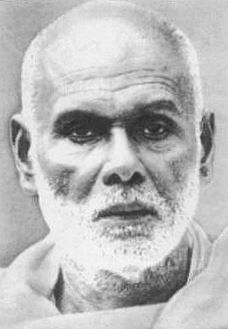 PhilosopherIndian1856 – 1928
Narayana Guru
Sree Narayana Guru was a philosopher, spiritual leader and social reformer in India. He led a reform movement against the injustice in the caste-ridden society of Kerala in order to promote spiritual enlightenment and social equality.
- ◆Kerala reformation movement
Read the full pageSree Narayana Guru (20 August 1856 – 20 September 1928) was a philosopher, spiritual leader and social reformer in India. He led a reform movement against the injustice in the caste-ridden society of Kerala in order to promote spiritual enlightenment and social equality. A quote of his that defined his movement was "one caste, one religion, and one god for all human beings". He is the author of the Advaita poem Daiva Dasakam, which is one of the most used poem in Kerala for community prayer.
French philosopher and Nobel prize laureate for literature, Romain Rolland described Narayana guru as 'Jnani of Karma', noting that he exemplified how faith could be used to bring about social change.
- 7
 PhilosopherIndian1861 – 1941
Rabindranath Tagore
Poet-philosopher of universal humanism and critic of nationalism.
Read the full pageRabindranath Tagore (Bengali: [ˈrobind̪ɾonat̪ʰ ˈʈʰakuɾ] ; 7 May 1861 – 7 August 1941) was a Bengali polymath - who worked as a poet, author, playwright, musician, composer, philosopher, social reformer, painter, and was one of the foremost figures of the Bengal Renaissance. In 1913, Tagore became the first Indian and non-European to win a Nobel Prize in any category, and also the first lyricist to win the Nobel Prize in Literature. A significant moulder of culture within Bengal and the Indian subcontinent, he wrote and composed the national anthems of India and Bangladesh.
He reshaped Bengali literature and music as well as Indian art with Contextual Modernism in the late 19th and early 20th centuries. He was the author of the "profoundly sensitive, fresh and beautiful" poetry of Gitanjali. Tagore's poetic songs were viewed as spiritual and mercurial; his elegant prose and magical poetry were widely popular in the Indian subcontinent. He was a fellow of the Royal Asiatic Society. Referred to as "the Bard of Bengal", Tagore was known by the sobriquets Gurudeb, Kobiguru, and Bishwokobi.
- 8
 PhilosopherIndian1869 – 1948
Mahatma Gandhi
Turned non-violence (ahiṃsā) and truth-force (satyāgraha) into a philosophy of political action.
- ◆Satyāgraha
- ◆Ahiṃsā
- ◆Swaraj — self-rule
Read the full pageMohandas Karamchand Gandhi (2 October 1869 – 30 January 1948) was an Indian lawyer, anti-colonial nationalist, and political ethicist who employed nonviolent resistance to lead the successful campaign for India's independence from British rule, and whose legacy would later inspire movements for civil rights and freedom across the world. The honorific Mahātmā (Sanskrit: "great-souled", "venerable"), first applied to him in 1914 in South Africa, is now used throughout the world.
Born and raised in a Hindu family in coastal Gujarat, Gandhi was trained in the law at the Inner Temple in London and was called to the bar at the age of 22. After two uncertain years in India, where he was unable to start a successful law practice, Gandhi moved to South Africa in 1893 to represent an Indian merchant in a lawsuit. He went on to live in South Africa for the next 21 years. Here, Gandhi raised a family and first employed nonviolent resistance in a campaign for civil rights. In 1915, aged 45, he returned to India and soon set about organising peasants, farmers, and urban labourers to protest against discrimination and excessive land tax.
- 9
 PhilosopherIndian1869 – 1958
Bhagwan Das
Bhagwan Das was an Indian Theosophist and public figure. For a time he served in the Central Legislative Assembly of British India.
Read the full pageBhagwan Das (12 January 1869 – 18 September 1958) was an Indian Theosophist and public figure. For a time he served in the Central Legislative Assembly of British India. He became allied with the Hindustani Culture Society and was active in opposing rioting as a form of protest. As an advocate for national freedom from the British rule, he was often in danger of reprisals from the Colonial government. He was awarded the Bharat Ratna in 1955.
Born to a Agrawal Bania family in Varanasi, India, he graduated school to become a deputy in the collections bureau, and later left to continue his academic pursuits. Das joined the Theosophical Society in 1894 inspired by a speech by Annie Besant. After the 1895 split, he sided with the Theosophical Society Adyar. Within that society, he was an opponent of Jiddu Krishnamurti and his Order of the Star in the East organisation. Das joined the Indian National Congress during the non-co-operation movement and was honoured with the Bharat Ratna in 1955.
- 10
 PhilosopherIndian1872 – 1950
Sri Aurobindo
Nationalist turned philosopher-yogi who developed "integral yoga" and an evolutionary spirituality.
- ◆Integral yoga
- ◆Supermind
- ◆Sri Aurobindo Ashram
- ◆Mirra Alfassa
- ◆Auroville
Read the full pageSri Aurobindo (born Aurobindo Ackroyd Ghosh; 15 August 1872 – 5 December 1950) was an Indian philosopher, yogi, and nationalist who is noted for his participation in the movement for India's independence from British rule; he advocated for complete autonomy through his writings and political activity. Following his imprisonment and acquittal, he withdrew to Pondicherry to devote himself to spiritual practice, eventually formulating the path of Integral Yoga. His extensive literary output includes the treatises The Life Divine and The Synthesis of Yoga and the epic poem Savitri.
Aurobindo studied for the Indian Civil Service at King's College, in Cambridge, England from 1890 until his departure in 1892. After returning to India, he took up various civil service work under the Maharaja of the princely state of Baroda. He became increasingly involved in nationalist politics in the Indian National Congress and the nascent revolutionary movement in Bengal with the Anushilan Samiti. He was arrested in the aftermath of a number of bombings linked to the revolutionary group he was associated with. He faced charges in a public trial for treason in the Alipore Conspiracy and was then released; after that, he moved to Pondicherry and developed a spiritual practice he called Integral Yoga. He wrote The Life Divine, which deals with the philosophical aspect of Integral Yoga and Synthesis of Yoga, which deals with the principles and methods of Integral Yoga. In 1926, he and Mirra Alfassa founded Sri Aurobindo Ashram.
- 11
 PhilosopherIndian1877 – 1938
Muhammad Iqbal
Sir Muhammad Iqbal was an Islamic philosopher and poet. He is regarded as one of the most influential Urdu poets of the 20th century and his vision of a cultural and political ideal for the Muslims of British India is widely regarded as having animated the impulse behind the Pakistan Movement.
- ◆Allahabad Address
Read the full pageSir Muhammad Iqbal (9 November 1877 – 21 April 1938) was an Islamic philosopher and poet. He is regarded as one of the most influential Urdu poets of the 20th century and his vision of a cultural and political ideal for the Muslims of British India is widely regarded as having animated the impulse behind the Pakistan Movement. The honorific commonly refers to him as Allama and is widely considered one of the most important and influential Muslim thinkers and Islamic religious philosophers of the 20th century.
Iqbal was born and raised in Sialkot, Punjab, British India and studied at Scotch Mission College in Sialkot and Government College University in Lahore. He taught Arabic at the Oriental College, Lahore, from 1899 until 1903, during which time he wrote prolifically. Notable among his Urdu poems from this period are "Parinde Ki Faryad" ("A Bird's Prayer"), an early contemplation on animal rights, and "Tarana-e-Hindi" ("Anthem of the Indians"), a patriotic poem—both composed for children. In 1905, he departed from India to pursue further education in Europe, first in England and later in Germany. In England, he earned a second BA at Trinity College, Cambridge, and subsequently qualified as a barrister at Lincoln's Inn. In Germany, he obtained a PhD in philosophy at the Ludwig-Maximilians-Universität München (LMU), with his thesis focusing on "The Development of Metaphysics in Persia" in 1908. Upon his return to Lahore in 1908, Iqbal established a law practice but primarily focused on producing scholarly works on politics, economics, history, philosophy, and religion. He is most renowned for his poetic compositions, including "Asrar-e-Khudi", "Rumuz-e-Bekhudi", and "Bang-e-Dara". His literary works in the Persian language garnered him recognition in Iran.
- 12
 PhilosopherIndian1877 – 1947
Ananda Coomaraswamy
Ananda Kentish Muthu Coomaraswamy was a Ceylonese metaphysician, historian and a philosopher of Indian art who was an early interpreter of Indian culture to the West. He has been described as "the groundbreaking theorist who was largely responsible for introducing ancient Indian art to the West".
Read the full pageAnanda Kentish Muthu Coomaraswamy (Tamil: ஆனந்த குமாரசுவாமி, Āṉanta Kumāracuvāmi; Sinhala: ආනන්ද කුමාරස්වාමි Ānanda Kumārasvāmī; 22 August 1877 − 9 September 1947) was a Ceylonese metaphysician, historian and a philosopher of Indian art who was an early interpreter of Indian culture to the West. He has been described as "the groundbreaking theorist who was largely responsible for introducing ancient Indian art to the West".
Ananda Kentish Coomaraswamy was born in Colombo, British Ceylon, now Sri Lanka, to the Ceylon Tamil legislator and philosopher Sir Muthu Coomaraswamy of the Ponnambalam–Coomaraswamy family and his English wife Elizabeth Beeby. His father died when Ananda was two years old, and Ananda spent much of his childhood and education abroad.