
Ananda Coomaraswamy
Ananda Kentish Muthu Coomaraswamy was a Ceylonese metaphysician, historian and a philosopher of Indian art who was an early interpreter of Indian culture to the West. He has been described as "the groundbreaking theorist who was largely responsible for introducing ancient Indian art to the West".
Ananda Kentish Muthu Coomaraswamy (Tamil: ஆனந்த குமாரசுவாமி, Āṉanta Kumāracuvāmi; Sinhala: ආනන්ද කුමාරස්වාමි Ānanda Kumārasvāmī; 22 August 1877 − 9 September 1947) was a Ceylonese metaphysician, historian and a philosopher of Indian art who was an early interpreter of Indian culture to the West. He has been described as "the groundbreaking theorist who was largely responsible for introducing ancient Indian art to the West".
Life
Ananda Kentish Coomaraswamy was born in Colombo, British Ceylon, now Sri Lanka, to the Ceylon Tamil legislator and philosopher Sir Muthu Coomaraswamy of the Ponnambalam–Coomaraswamy family and his English wife Elizabeth Beeby. His father died when Ananda was two years old, and Ananda spent much of his childhood and education abroad.
Coomaraswamy moved to England in 1879 and began attending Wycliffe College, a preparatory school in Stroud, Gloucestershire, at the age of twelve. In 1900, he graduated from University College London (UCL), with a degree in geology and botany. On 19 June 1902, Coomaraswamy married Ethel Mary Partridge, an English photographer, who then traveled with him to Ceylon. Their marriage lasted until 1913. Coomaraswamy's field work between 1902 and 1906 earned him a doctor of science for his study of Ceylonese mineralogy, and prompted the formation of the Geological Survey of Ceylon, which he initially directed. While in Ceylon, the couple collaborated on Mediaeval Sinhalese Art; Coomaraswamy wrote the text and Partridge provided the photographs. His work in Ceylon fueled Coomaraswamy's anti-Westernisation sentiments. After their divorce, Partridge returned to England, where she became a famous weaver and later married the writer Philip Mairet.
By 1906, Coomaraswamy had made it his mission to educate the West about Indian art, and was back in London with a large collection of photographs, actively seeking out artists to try to influence. He knew he could not rely on museum curators or other members of the cultural establishment – in 1908 he wrote "The main difficulty so far seems to have been that Indian art has been studied so far only by archaeologists. It is not archaeologists, but artists ... who are the best qualified to judge of the significance of works of art considered as art." By 1909, he was firmly acquainted with Jacob Epstein and Eric Gill, the city's two most important early Modernists, and soon both of them had begun to incorporate Indian aesthetics into their work. The curiously hybrid sculptures that were produced as a result can be seen to form the very roots of what is now considered British Modernism.
Coomaraswamy then met and married a British woman Alice Ethel Richardson and together they stayed on a houseboat in Srinagar in Kashmir. There, Coomaraswamy studied Rajput painting while his wife studied Indian music with Abdul Rahim of Kapurthala. When they returned to England, Richardson performed Indian song under the stage name Ratan Devi. She was successful and both went to America when Ratan Devi did a concert tour. While they were there, Coomaraswamy was invited to serve as the first Keeper of Indian art in the Boston Museum of Fine Arts in 1917. The couple had two children, a son, Narada, and daughter, Rohini.
Coomaraswamy divorced his second wife after they arrived in America. He married the American artist Stella Bloch, 20 years his junior, in November 1922. Through the 1920s, Coomaraswamy and his wife were part of the bohemian art circles in New York City, Coomaraswamy befriended Alfred Stieglitz and the artists who exhibited at Stieglitz's gallery. At the same time, he studied Sanskrit and Pali religious literature as well as Western religious works. He wrote catalogues for the Boston Museum of Fine Arts and published his History of Indian and Indonesian Art in 1927.
After the couple divorced in 1930, they remained friends. Shortly thereafter, on 18 November 1930, Coomaraswamy married Argentine Luisa Runstein, 28 years younger, who was working as a society photographer under the professional name Xlata Llamas. They had a son, Coomaraswamy's third child Rama Ponnambalam (1929-2006), who became a physician and convert at age 22 to the Roman Catholic Church. Following Vatican II, Rama became a critic of the reforms and author of Catholic Traditionalist works. He was also ordained a Traditionalist Roman Catholic priest, despite the fact that he was married and had a living wife. Rama Coomaraswamy studied in England and then in India, learning Hindi and Sanskrit.
During his long career, Coomaraswamy was instrumental in bringing Eastern art to the West. While at the Boston Museum of Fine Arts, he built the first substantial collection of Indian art in the United States. In 1933, Coomaraswamy's title there changed from curator to Fellow for Research in Indian, Persian, and Mohammedan Art.
After Coomaraswamy's death, his widow Luisa Runstein, acted as a guide and resource for students of his work.
Contributions
Coomaraswamy made important contributions to the philosophy of art, literature, and religion. In Ceylon, he applied the lessons of William Morris to Ceylonese culture and, with his wife Ethel, produced a groundbreaking study of Ceylonese crafts and culture. While in India, he was part of the literary circle around Rabindranath Tagore, and he contributed to the "Swadeshi" movement, an early phase of the struggle for Indian independence. In the 1920s, he made discoveries in the history of Indian art, particularly some distinctions between Rajput and Mughal painting, and published his book Rajput Painting. At the same time, he amassed an unmatched collection of Rajput and Mughal paintings, which he took with him to the Museum of Fine Arts, Boston, when he joined its curatorial staff in 1917. Through 1932, from his base in Boston, he produced two kinds of publications: scholarship in his curatorial field and introductions to Indian and Asian art and culture, typified by The Dance of Shiva, a collection of essays that remain in print to this day. Deeply influenced by René Guénon, he became one of the founders of the Traditionalist School. His books and essays on art and culture, symbolism and metaphysics, scripture, folklore and myth, and other topics, offer a cross-cultural perspective rooted in sources from multiple traditions. He once remarked, "I actually think in both Eastern and Christian terms—Greek, Latin, Sanskrit, Pali, and to some extent Persian and Chinese." Alongside the deep and not infrequently difficult writings of this period, he also delighted in polemical writings created for a larger audience—essays such as "Why exhibit works of art?" (1943).
In his book The Information Society: An Introduction (Sage, 2003, p. 44), Armand Mattelart credits Coomaraswamy for coining the term 'post-industrial' in 1913.
Methodology
Coomaraswamy was a firm believer in the comparative method. The analysis of both texts and symbols across a wide variety of cultures and time periods allowed him to see below the surface of local interpretations and religious exclusivism to locate the bedrock of tradition. By tradition, he meant that which has been handed down from time beyond memory.
The folk has thus preserved, without understanding, the remains of old traditions that go back sometimes to the indeterminably distant past, to which we can only refer as “prehistoric”. Had the folk beliefs not indeed been once understood, we could not now speak of them as metaphysically intelligible, or explain the accuracy of their formulations.
His extensive knowledge of ancient languages allowed him access to primary sources and his understanding of metaphysics helped him discern the deeper meanings that other scholars often missed. Given the specialisation and compartmentation of knowledge that was part of the Western academic tradition, his efforts were not always appreciated. He expressed some of his feelings in a letter to Graham Carey:
What the secular mind does is to assert that we (symbolists) are reading meaning into things that originally had none: our assertion is that they are reading out the meaning. The proof of our contention lies in the perfection, consistency and universality of the pattern in which these meanings are united.
His criticism of the academic world was centered around a number of related issues. First, the academic method, by itself, was ill-equipped to deal with the way in which ideas where transmitted in non-literate cultures, due to an over-reliance on written documentation. Coomaraswamy felt that too much was left out in this approach.
By “folklore” we mean the whole and consistent body of culture which has been handed down, not in books but by word of mouth and in practice, from time beyond the reach of historical research, in the form of legends, fairy tales, ballads, games, toys, crafts, medicine, agriculture, and other rites, and forms of social organisation, especially those that we call “tribal.” This is a cultural complex independent of national and even racial boundaries, and of remarkable similarity throughout the world.
A second point of conflict was what Coomaraswamy saw as the obsessive tendency of Western scholarship to divide cultures, religions, and time periods into discrete categories in order to fit into academic organisational and mental structures.
It is equally surprising that so many scholars, meeting with some universal doctrine in a given context, so often think of it as a local peculiarity.
As a traditionalist, Coomaraswamy emphasised the continuity of culture. He felt that the connecting elements between eras had been lost by the extreme emphasis placed on change and “progress”. In his eyes, conflict between a new religion and an older one often obscured the commonalities that linked them.
Adapted from the Wikipedia article Ananda Coomaraswamy, available under CC BY-SA 4.0.
Connections
Influenced
1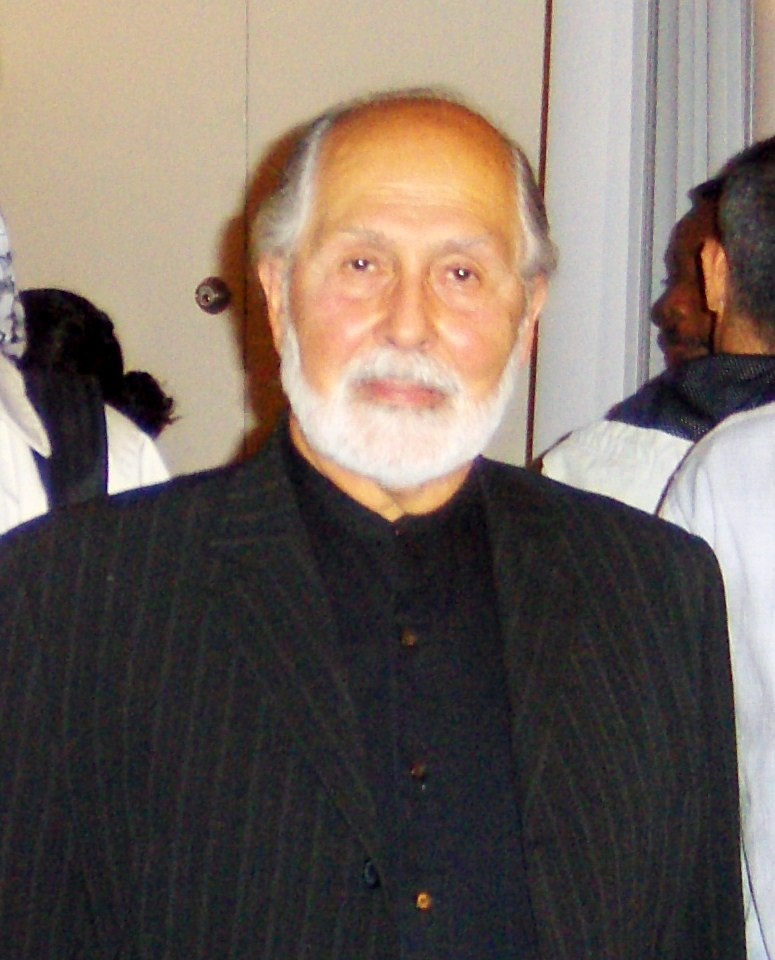
Contributed to
1
You might also explore
 Frithjof SchuonModern European1907 – 1998Frithjof Schuon was a Swiss philosopher and spiritual leader, belonging to the Traditionalist School of Perennialism.…
 Christian WolffModern European1679 – 1754Christian Wolff was a German philosopher. Wolff is characterized as one of the most eminent German philosophers between…
 René GuénonModern European1886 – 1951René Jean-Marie-Joseph Guénon, also known as Abdalwahid Yahia (Arabic: عبد الـواحد يحيی; ʿAbd al-Wāḥid Yaḥiā), was a…
 Aristotle★Greek & Roman384 – 322 BCEPlato's student and Alexander's tutor, who systematised logic, ethics, biology, metaphysics and politics — "the master…
 Plato★Greek & Romanc. 428 – 348 BCEFounder of the Academy whose dialogues defined Western philosophy's agenda: Forms, justice, the soul, knowledge and the…
 René Descartes★Modern European1596 – 1650The father of modern philosophy: he doubted everything he could and found certainty in "I think, therefore I am".