Modern European thinkers, renaissance & early modern: Fontenelle to Feijoo
- 1
 PhilosopherModern European1657 – 1757
Bernard Le Bovier de Fontenelle
Bernard Le Bovier de Fontenelle, also called Bernard Le Bouyer de Fontenelle, was a French writer and a member of three of the academies of the Institut de France, noted especially for his accessible treatment of scientific topics during the unfolding of the Age of Enlightenment.
Read the full pageBernard Le Bovier de Fontenelle (; French: [fɔ̃tənɛl]; 11 February 1657
– 9 January 1757), also called Bernard Le Bouyer de Fontenelle, was a French writer and a member of three of the academies of the Institut de France, noted especially for his accessible treatment of scientific topics during the unfolding of the Age of Enlightenment.
- 2
 PhilosopherModern European1667 – 1745
Jonathan Swift
Jonathan Swift was an Anglo-Irish writer, essayist, satirist, and Anglican cleric. He was the author of the satirical prose novel Gulliver's Travels and the creator of the fictional island of Lilliput.
Read the full pageJonathan Swift (30 November 1667 – 19 October 1745) was an Anglo-Irish writer, essayist, satirist, and Anglican cleric. He was the author of the satirical prose novel Gulliver's Travels (1726) and the creator of the fictional island of Lilliput. He is regarded by many as the greatest satirist of the Georgian era and one of the foremost prose authors in the history of English and world literature.
Swift also authored works such as A Tale of a Tub (1704) and An Argument Against Abolishing Christianity (1708). He originally published all of his works under pseudonyms—including Lemuel Gulliver, Isaac Bickerstaff, M. B. Drapier—or anonymously. He was a master of two styles of satire, the Horatian and Juvenalian styles. In 1713, he was appointed the dean of St Patrick's Cathedral, Dublin, and was given the sobriquet "Dean Swift". His trademark deadpan and ironic style of writing, particularly in later works such as A Modest Proposal (1729), has led to such satire being subsequently termed as "Swiftian". He is also credited with inventing the popular woman's name "Vanessa" through his poem Cadenus and Vanessa (1726).
- 3
 PhilosopherModern European1667 – 1752
William Whiston
William Whiston was an English theologian, historian, natural philosopher, and mathematician, a leading figure in the popularisation of the ideas of Isaac Newton. He is now probably best known for helping to instigate the Longitude Act in 1714 (and his attempts to win the rewards that it promised) and his important tra
- ◆works of Josephus
- ◆catastrophism
- ◆isoclinic maps
- ◆longitude
Read the full pageWilliam Whiston (9 December 1667 – 22 August 1752) was an English theologian, historian, natural philosopher, and mathematician, a leading figure in the popularisation of the ideas of Isaac Newton. He is now probably best known for helping to instigate the Longitude Act in 1714 (and his attempts to win the rewards that it promised) and his important translations of the Antiquities of the Jews and other works by Josephus (which are still in print). He was a prominent exponent of Arianism and wrote A New Theory of the Earth.
Whiston succeeded his mentor Newton as Lucasian Professor of Mathematics at the University of Cambridge. In 1710 he lost the professorship and was expelled from the university as a result of his unorthodox religious views. Whiston rejected the notion of eternal torment in hellfire, which he viewed as absurd, cruel, and an insult to God. What especially pitted him against church authorities was his denial of the doctrine of the Trinity, which he believed had pagan origins.
- 4
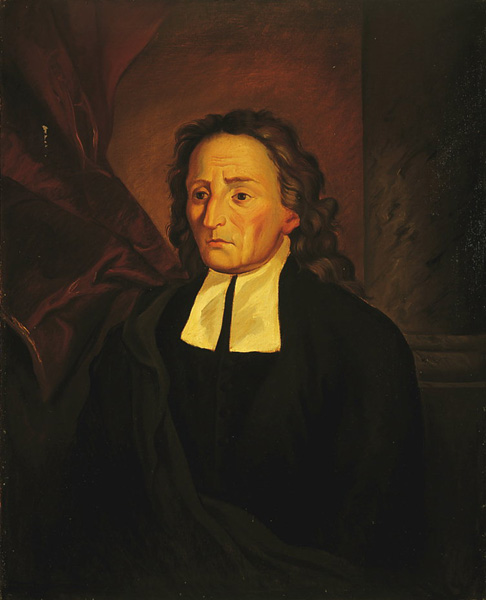 PhilosopherModern European1668 – 1744
Giambattista Vico
Giambattista Vico was an Italian philosopher, rhetorician, historian, and jurist during the Italian Enlightenment. He criticized the expansion and development of modern rationalism, finding Cartesian analysis and other types of reductionism impractical to human life, and he was an apologist for classical antiquity and
- ◆Class struggle
- ◆Criticism of rationalism
- ◆reductionism
- ◆human science
- ◆social science
- ◆Philosophy of history
Read the full pageGiambattista Vico (born Giovanni Battista Vico ; Italian: [ˈviːko]; 23 June 1668 – 23 January 1744) was an Italian philosopher, rhetorician, historian, and jurist during the Italian Enlightenment. He criticized the expansion and development of modern rationalism, finding Cartesian analysis and other types of reductionism impractical to human life, and he was an apologist for classical antiquity and the Renaissance humanities, in addition to being the first expositor of the fundamentals of social science and of semiotics. He is recognised as one of the first Counter-Enlightenment figures in history.
The Latin aphorism "Verum esse ipsum factum" ("truth is itself something made") coined by Vico is an early instance of constructivist epistemology. He inaugurated the modern field of the philosophy of history, and, although the term philosophy of history is not in his writings, Vico spoke of a "history of philosophy narrated philosophically." Although he was not an historicist, contemporary interest in Vico usually has been motivated by historicists, such as Isaiah Berlin, a philosopher and historian of ideas, and Hayden White, a metahistorian.
- 5
 PhilosopherModern European1670 – 1722
John Toland
John Toland was an Irish rationalist philosopher and freethinker, and occasional satirist, who wrote numerous books and pamphlets on political philosophy and philosophy of religion, which are early expressions of the philosophy of the Age of Enlightenment. Born in Ireland, he was educated at the universities of Glasgow
- ◆Pantheism
Read the full pageJohn Toland (30 November 1670 – 11 March 1722) was an Irish rationalist philosopher and freethinker, and occasional satirist, who wrote numerous books and pamphlets on political philosophy and philosophy of religion, which are early expressions of the philosophy of the Age of Enlightenment. Born in Ireland, he was educated at the universities of Glasgow, Edinburgh, Leiden and Oxford and was influenced by the philosophy of John Locke.
His first, and best known work, Christianity Not Mysterious (1696), opposed hierarchy in both church and state. In Ireland, copies were burned by the public hangman, and he was forced to flee the country never to return.
- 6
 PhilosopherModern European1670 – 1742
Jean-Baptiste Dubos
Jean-Baptiste Dubos, also referred to as l'Abbé Du Bos, was a French author. He was also a diplomat and an art critic.
Read the full pageJean-Baptiste Dubos (French: [dybo]; 14 December 1670 – 23 March 1742), also referred to as l'Abbé Du Bos, was a French author. He was also a diplomat and an art critic.
Dubos was born in Beauvais. He was educated in Paris and received a Master of Arts in 1688 and a Bachelor of Theology in 1692. After studying theology, he gave it up in favour of public law and politics. He was employed by M. de Torcy, minister of foreign affairs, and by the regent and Cardinal Dubois in several secret missions. He was rewarded with a pension and other advantages. Having obtained these, he retired from political life and devoted himself to history and literature. During his travels as French envoy, he cultivated connections with contemporary prominent thinkers. These included Pierre Bayle, Jean Chardin, and John Locke, who he became close friends with.
- 7
 PhilosopherModern European1672 – 1719
Joseph Addison
Joseph Addison was a British writer and politician. He was the eldest son of Lancelot Addison.
Read the full pageJoseph Addison (1 May 1672 – 17 June 1719) was a British writer and politician. He was the eldest son of Lancelot Addison. His name is usually remembered alongside that of his long-standing friend Richard Steele, with whom he founded The Spectator magazine. His simple prose style marked the end of the mannerisms and conventional classical images of the 17th century. Addison is also famous for his play Cato, a Tragedy, written in 1712.
Addison was born on 1 May 1672, in Milston, Wiltshire, but soon after his birth his father, Lancelot Addison, was appointed Dean of Lichfield and the family moved into the cathedral close. His father was a scholarly English clergyman. Joseph was educated at Charterhouse School, London, where he first met Richard Steele, and at The Queen's College, Oxford. He excelled in classics, being specially noted for his Neo-Latin verse, and became a fellow of Magdalen College.
- 8
 PhilosopherModern European1674 – 1748
Isaac Watts
Isaac Watts was an English Congregational minister, hymn writer, theologian, and logician. He was a prolific and popular hymn writer and is credited with some 750 hymns.
- ◆When I Survey the Wondrous Cross
- ◆Joy to the World
- ◆Our God, Our Help in Ages Past
Read the full pageIsaac Watts (17 July 1674 – 25 November 1748) was an English Congregational minister, hymn writer, theologian, and logician. He was a prolific and popular hymn writer and is credited with some 750 hymns. His works include "When I Survey the Wondrous Cross", "Joy to the World", and "Our God, Our Help in Ages Past". He is recognised as the "Godfather of English Hymnody"; many of his hymns remain in use today and have been translated into numerous non english languages.
Watts was born in Southampton, Hampshire, England, in 1674, the eldest of nine children of Sarah Watts and Isaac Watts Senior. He was brought up in the home of a committed religious nonconformist. His father, also Isaac Watts, had been incarcerated twice for his views. Watts had a classical education at King Edward VI School, Southampton, learning Latin, Greek, and Hebrew.
- 9
 PhilosopherModern European1674 – 1749
Catharine Trotter
Catharine Trotter Cockburn was a Scottish novelist, dramatist and philosopher who wrote on various subjects, including moral philosophy and theology, and maintained a prolific correspondence. Trotter's writings encompass a wide range of topics, such as necessity, the infinitude of space and substance.
Read the full pageCatharine Trotter Cockburn (16 August 1679 – 11 May 1749) was a Scottish novelist, dramatist and philosopher who wrote on various subjects, including moral philosophy and theology, and maintained a prolific correspondence.
Trotter's writings encompass a wide range of topics, such as necessity, the infinitude of space and substance. However, her primary focus was on moral issues. She believed that moral principles were not inherent but could be discovered by each individual through the use of reason, a faculty bestowed by God. In 1702, she published her first significant philosophical work, titled "A Defence of Mr. Lock's [sic.] An Essay Concerning Human Understanding." This defence received praise from John Locke, who expressed his appreciation by providing financial support and books to Trotter via Elizabeth Burnet, the intermediary who first acquainted Locke with Trotter's "Defence."
- 10
 PhilosopherModern European1675 – 1729
Samuel Clarke
Samuel Clarke was an English philosopher and Anglican priest. He is considered the major British figure in philosophy between John Locke and George Berkeley.
- ◆Moral fitness theory
Read the full pageSamuel Clarke (11 October 1675 – 17 May 1729) was an English philosopher and Anglican priest. He is considered the major British figure in philosophy between John Locke and George Berkeley. Clarke's altered, Nontrinitarian revision of the 1662 Book of Common Prayer continues to influence worship among modern Unitarians.
Clarke was born in Norwich, the son of Edward Clarke, an alderman of Norwich and Member of Parliament, and brother of John Clarke. He was educated at Norwich School and Gonville and Caius College, Cambridge. His tutor at Caius was John Ellis, a personal friend of Isaac Newton, but who in natural philosophy taught in line with the Cartesianism that prevailed in the university.
- 11
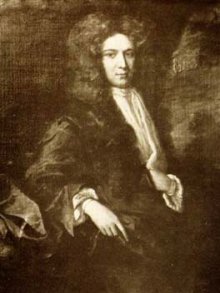 PhilosopherModern European1676 – 1729
Anthony Collins
Anthony Collins was an English philosopher and essayist, notable for being one of the early proponents of Deism in Great Britain.
Read the full pageAnthony Collins (21 June 1676 O.S. – 13 December 1729 O.S.) was an English philosopher and essayist, notable for being one of the early proponents of Deism in Great Britain.
Collins was born in Heston, near Hounslow in Middlesex, England, the son of lawyer Henry Collins (1646/7–1705) and Mary (née Dineley). He had two sisters: Anne Collins (born 1678), who married Henry Lovibond (born 1675), and Mary Collins (born 1680), who married Edward Lovibond (1675–1737), a merchant and Director of the East India Company. Mary and Edward's son was the poet Edward Lovibond.
- 12
 PhilosopherModern European1677 – 1764
Benito Jerónimo Feijoo
Friar Benito Jerónimo Feijóo y Montenegro was a Spanish monk and scholar who led the Spanish Enlightenment. He was an energetic popularizer noted for encouraging scientific and empirical thought in an effort to debunk myths and superstitions.
Read the full pageFriar Benito Jerónimo Feijóo y Montenegro (Spanish pronunciation: [beˈnito xeˈɾonimo fejˈxo(o) j monteˈneɣɾo]; 8 October 1676 – 26 September 1764) was a Spanish monk and scholar who led the Spanish Enlightenment. He was an energetic popularizer noted for encouraging scientific and empirical thought in an effort to debunk myths and superstitions.
He joined the Benedictine order at the age of 12, and had taken classes in Galicia, León, and Salamanca. He later taught theology and philosophy at the University, where he earned a professorship in theology.