Modern European thinkers, renaissance & early modern: Łyszczyński to Thomasius
- 1
 PhilosopherModern European1634 – 1689
Kazimierz Łyszczyński
Kazimierz Łyszczyński, also known in English as Casimir Liszinski, was a Polish nobleman, philosopher, and soldier in the ranks of the Sapieha family, who was accused, tried, and executed for atheism in 1689. For eight years he studied philosophy as a Jesuit and then became a podsędek (supply judge) in legal cases agai
- ◆Atheism in Poland
Read the full pageKazimierz Łyszczyński (Polish pronunciation: [kaˈʑimjɛʂ wɨˈʂt͡ʂɨj̃skʲi]; 4 March 1634 – 30 March 1689), also known in English as Casimir Liszinski, was a Polish nobleman, philosopher, and soldier in the ranks of the Sapieha family, who was accused, tried, and executed for atheism in 1689.
For eight years he studied philosophy as a Jesuit and then became a podsędek (supply judge) in legal cases against the Jesuits concerning estates. He wrote a treatise entitled On the Non-Existence of God and was later executed on charges of atheism. His trial has been criticised, and is seen as a case of legalised religious murder in Poland.
- 2
 PhilosopherModern European1635 – 1703
Robert Hooke
Robert Hooke was an English polymath who was active as a physicist ('natural philosopher'), astronomer, geologist, meteorologist, and architect. He is credited as one of the first scientists to investigate living things at microscopic scale in 1665, using a compound microscope that he designed.
- ◆Balance spring
- ◆Conical pendulum
- ◆Constant force escapement
- ◆Cymatics
- ◆Gamma Arietis
- ◆cell
Read the full pageRobert Hooke (; 18 July 1635 – 3 March 1703) was an English polymath who was active as a physicist ('natural philosopher'), astronomer, geologist, meteorologist, and architect. He is credited as one of the first scientists to investigate living things at microscopic scale in 1665, using a compound microscope that he designed. Hooke was an impoverished scientific inquirer in young adulthood who went on to become one of the most important scientists of his time. After the Great Fire of London in 1666, Hooke (as a surveyor and architect) attained wealth and esteem by performing more than half of the property line surveys and assisting with the city's rapid reconstruction. Often vilified by writers in the centuries after his death, his reputation was restored at the end of the twentieth century and he has been called "England's Leonardo [da Vinci]".
Hooke was a Fellow of the Royal Society and from 1662, he was its first Curator of Experiments. From 1665 to 1703, he was also Professor of Geometry at Gresham College. Hooke began his scientific career as an assistant to the physical scientist Robert Boyle. Hooke built the vacuum pumps that were used in Boyle's experiments on gas law and also conducted experiments. In 1664, Hooke identified the rotations of Mars and Jupiter. Hooke's 1665 book Micrographia, in which he coined the term cell, encouraged microscopic investigations. Investigating optics – specifically light refraction – Hooke inferred a wave theory of light. His is the first-recorded hypothesis of the cause of the expansion of matter by heat, of air's composition by small particles in constant motion that thus generate its pressure, and of heat as energy.
- 3
 PhilosopherModern European1635 – 1703
Johann Sturm
Johann Christoph Sturm was a German philosopher, professor at University of Altdorf and founder of a short-lived scientific academy known as the Collegium Curiosum, based on the model of the Florentine Accademia del Cimento. He edited two volumes of the academy's proceedings under the title Collegium Experimentale.
Read the full pageJohann Christoph Sturm (3 November 1635 – 26 December 1703) was a German philosopher, professor at University of Altdorf and founder of a short-lived scientific academy known as the Collegium Curiosum, based on the model of the Florentine Accademia del Cimento. He edited two volumes of the academy's proceedings under the title Collegium Experimentale (1676 and 1685). In 1670, he translated the works of Archimedes into German.
Sturm is the author of Physica Electiva (1697), a book that criticized Gottfried Wilhelm Leibniz and prompted him to publish a rebuke. Sturm's critique was aimed at Leibniz's view that Nature and/or its constituent parts possess some creative force of their own. This criticism was partly theological, in that Sturm claimed Leibniz's view of Nature undermined the sovereignty of the Christian God.
- 4
 PhilosopherModern European1644 – 1718
William Penn
William Penn was an English writer, theologian, religious thinker, and influential Quaker who founded the Province of Pennsylvania. An advocate of democracy and religious freedom, Penn was known for his amicable relations and successful treaties with the Lenape native peoples who had resided in present-day Pennsylvania
Read the full pageWilliam Penn (24 October [O.S. 14 October] 1644 – 10 August [O.S. 30 July] 1718) was an English writer, theologian, religious thinker, and influential Quaker who founded the Province of Pennsylvania. An advocate of democracy and religious freedom, Penn was known for his amicable relations and successful treaties with the Lenape native peoples who had resided in present-day Pennsylvania before European colonisation there.
Penn was expelled from the University of Oxford in 1662 for his religious nonconformity. That early break with institutional authority became central to his life. He embraced Quakerism, defended freedom of conscience, and repeatedly challenged the established Church of England's restrictions on religious dissent. Penn built a remarkable life outside conventional institutions, combining religious leadership, writing, political advocacy, and practical enterprise. Today, his legacy is commemorated at Christ Church, Oxford, where his portrait is displayed in the dining hall.
- 5
 PhilosopherModern European1645 – 1696
Jean de La Bruyère
Jean de La Bruyère was a French philosopher and moralist who was noted for his satire.
Read the full pageJean de La Bruyère (UK: , UK: ; French: [ʒɑ̃ d(ə) la bʁɥijɛʁ]; 16 August 1645 – 11 May 1696) was a French philosopher and moralist who was noted for his satire.
Jean de La Bruyère was born in Paris, in today's Essonne département, in 1645. His family was middle class, and his reference to a certain "Geoffroy de La Bruyère", a crusader, is only a satirical illustration of a method of self-ennoblement then common in France, as in some other countries. As such, he signed his surname as Delabruyère in one word, as evidence of this disdain.
- 6
 PhilosopherModern European1646 – 1684
Elena Cornaro Piscopia
Elena Lucrezia Cornaro Piscopia or Elena Lucrezia Corner (Venetian: [koɾˈnɛɾ], Italian: [korˈnɛr]), also known in English as Helen Cornaro, was an Italian philosopher of noble descent in the Republic of Venice who in 1678 became one of the first women to receive an academic degree from a university and the first appoin
Read the full pageElena Lucrezia Cornaro Piscopia (US: , Italian: [ˈɛːlena luˈkrɛttsja korˈnaːro piˈskɔːpja]; 5 June 1646 – 26 July 1684) or Elena Lucrezia Corner (Venetian: [koɾˈnɛɾ], Italian: [korˈnɛr]), also known in English as Helen Cornaro, was an Italian philosopher of noble descent in the Republic of Venice who in 1678 became one of the first women to receive an academic degree from a university and the first appointed a Doctor of Philosophy.
Elena Cornaro Piscopia was born in the Palazzo Loredan, in Venice, Republic of Venice, on 5 June 1646. She was the third child of Gianbattista Cornaro-Piscopia, a member of the Cornaro family; and his mistress Zanetta Boni. Her mother was a commoner and her parents were not married at the time of her birth.
- 7
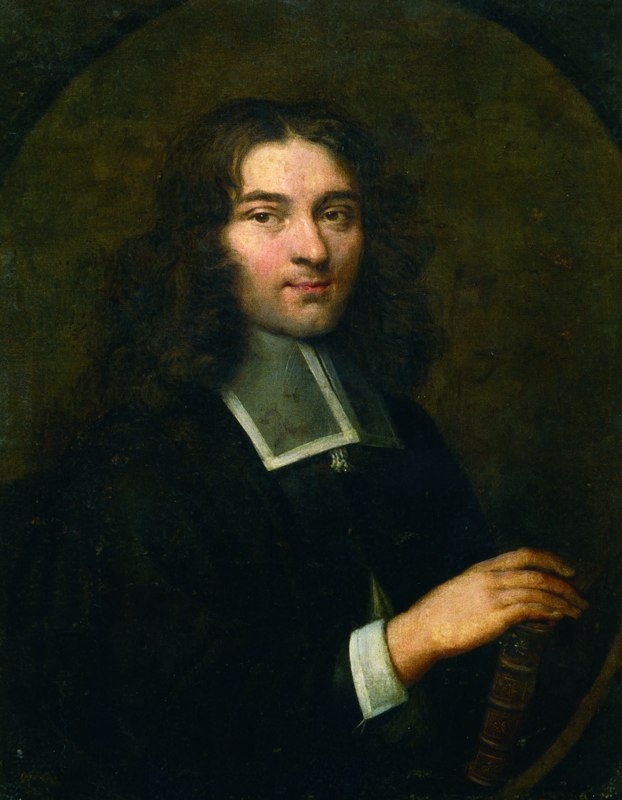 PhilosopherModern European1647 – 1706
Pierre Bayle
Pierre Bayle was a French philosopher, author, and lexicographer. He is best known for his Historical and Critical Dictionary, whose publication began in 1697.
- ◆trilemma
Read the full pagePierre Bayle (; French: [pjɛʁ bɛl]; 18 November 1647 – 28 December 1706) was a French philosopher, author, and lexicographer. He is best known for his Historical and Critical Dictionary, whose publication began in 1697. Many of the more controversial ideas in the book were hidden away in the voluminous footnotes, or they were slipped into articles on seemingly uncontroversial topics. Bayle is commonly regarded as a forerunner of the Encyclopédistes of the mid-18th century.
A Huguenot, Bayle fled to the Dutch Republic in 1681 because of religious persecution in France. Bayle was a notable advocate of religious toleration, and his skeptical philosophy had a significant influence on the subsequent growth and development of the European Age of Enlightenment.
- 8
 PhilosopherModern European1647 – 1690
Margaret Mary Alacoque
Margaret Mary Alacoque was a French Visitation nun and mystic who promoted devotion to the Sacred Heart of Jesus in its modern form.
Read the full pageMargaret Mary Alacoque (French: Marguerite-Marie Alacoque; 22 July 1647 – 17 October 1690) was a French Visitation nun and mystic who promoted devotion to the Sacred Heart of Jesus in its modern form.
Alacoque was born in 1647 in L'Hautecour, Burgundy, France, now part of the commune of Verosvres, then in the Duchy of Burgundy. She was the fifth of seven children, and the only daughter of Claude and Philiberte Lamyn Alacoque. Her father was a well-to-do notary. Her godmother was the Countess of Corcheval. Margaret was described as showing intense love for the Blessed Sacrament from early childhood.
- 9PhilosopherModern European1647 – 1723
François Poullain de la Barre
François Poullain de la Barre was an author, Catholic priest, and a Cartesian philosopher.
Read the full pageFrançois Poullain de la Barre (French: [də la baʁ]; July 1647 – 4 May 1723) was an author, Catholic priest, and a Cartesian philosopher.
François Poullain de la Barre was born during July 1647 in Paris, France, to a family with judicial nobility. He added "de la Barre" to his name later in life. After graduation in 1663 with a master of arts, he spent three years at the College of Sorbonne where he studied theology. In 1679, he became an ordained Catholic priest. From 1679 to 1688, he led two modest parishes, Versigny and La Flamengrie, in Picardy in northern France.
- 10
 PhilosopherModern European1651 – 1715
François Fénelon
François de Salignac de la Mothe-Fénelon, P.S.S. (French: [fʁɑ̃swa də saliɲak də la mɔt fenəlɔ̃]), more commonly known as François Fénelon, was a French Catholic archbishop, theologian, poet and writer. Today, he is remembered mostly as the author of The Adventures of Telemachus, first published in 1699.
Read the full pageFrançois de Salignac de la Mothe-Fénelon, P.S.S. (French: [fʁɑ̃swa də saliɲak də la mɔt fenəlɔ̃]), more commonly known as François Fénelon (6 August 1651 – 7 January 1715), was a French Catholic archbishop, theologian, poet and writer. Today, he is remembered mostly as the author of The Adventures of Telemachus, first published in 1699. He was a member of the Sulpician Fathers.
Fénelon was born on 6 August 1651 at the Château de Fénelon, in Sainte-Mondane, Périgord, Aquitaine, in the Dordogne river valley, the second of the three children of Pons de Salignac, Comte de La Mothe-Fénelon by his wife Louise de La Cropte. Reduced to the status of "impecunious old nobility" by François' time, the La Mothe-Fénelons had produced leaders in both Church and state. At the time of Fénelon's birth, his uncle Francois served as bishop of nearby Sarlat, a see in which fifteen generations of the Fénelon family had filled the episcopal chair. "In fact, so many members of the family occupied the position that it had begun to be considered as practically a familial apanage to which the Salignac-Fénelon had a right as seigneurs of the locality."
- 11
 PhilosopherModern European1651 – 1708
Ehrenfried Walther von Tschirnhaus
Ehrenfried Walther von Tschirnhaus or Tschirnhauß was a German mathematician, physicist, physician, and philosopher. He introduced the Tschirnhaus transformation and is considered by some to have been the inventor of European porcelain, an invention long accredited to Johann Friedrich Böttger, while others claim porcel
Read the full pageEhrenfried Walther von Tschirnhaus or Tschirnhauß (German: [ˈeːʁənfʁiːt ˈvaltɐ fɔn ˈtʃɪʁnhaʊs]; 10 April 1651 – 11 October 1708) was a German mathematician, physicist, physician, and philosopher. He introduced the Tschirnhaus transformation and is considered by some to have been the inventor of European porcelain, an invention long accredited to Johann Friedrich Böttger, while others claim porcelain had been made by English manufacturers at an even earlier date.
Tschirnhaus attended the Gymnasium at Görlitz. Thereafter he studied mathematics, philosophy, and medicine at the University of Leiden. He travelled considerably in France, Italy, and Switzerland, and served in the army of Holland (1672–1673). During his travels, he met Baruch de Spinoza and Christiaan Huygens in the Netherlands, Isaac Newton in England, and Gottfried Wilhelm Leibniz (with whom he maintained a lifelong correspondence) in Paris. He became a member of the Académie Royale des Sciences in Paris.
- 12
 PhilosopherModern European1655 – 1728
Christian Thomasius
Christian Thomasius was a German jurist and philosopher. The German Enlightenment "supposedly" began with him.
Read the full pageChristian Thomasius (; German: [toˈmaːzi̯ʊs]; 1 January 1655 – 23 September 1728) was a German jurist and philosopher. The German Enlightenment "supposedly" began with him.
He was born in Leipzig and was educated by his father, Jakob Thomasius (1622–1684), at that time a junior lecturer at Leipzig University (later dean and rector, as well as head master of Thomasschule zu Leipzig). Through his father's lectures, Christian came under the influence of the political philosophy of Hugo Grotius and Samuel Pufendorf, and continued the study of law at the University of Frankfurt (Oder) in 1675, completing his doctorate in 1679. In 1680, he married Anna Christine Heyland and started a legal practice in Leipzig; the following year he began teaching at the university’s law school as well. In 1684 he became professor of natural law, soon attracting attention by his abilities, and particularly by his attack on traditional prejudices, in theology and jurisprudence. In 1685 he published a provocative dissertation, De crimine bigamiae (The crime of bigamy), in which he argued that bigamy is permissible under natural law.