Modern European thinkers, renaissance & early modern: Godwin to Humboldt
- 1
 PhilosopherModern European1756 – 1836
William Godwin
William Godwin was an English journalist, political philosopher and novelist. He is often considered one of the first exponents of utilitarianism as well as the first modern proponent of contemporary anarchism.
- ◆Poet as legislator
Read the full pageWilliam Godwin (3 March 1756 – 7 April 1836) was an English journalist, political philosopher and novelist. He is often considered one of the first exponents of utilitarianism as well as the first modern proponent of contemporary anarchism.
Godwin is most famous for two books that he published within the space of a year: An Enquiry Concerning Political Justice, an attack on political institutions, and Things as They Are; or, The Adventures of Caleb Williams, an early mystery novel that criticizes aristocratic privilege. Based on the success of both works, Godwin featured prominently in the radical circles of London in the 1790s.
- 2
 PhilosopherModern European1756 – 1830
Jan Śniadecki
Jan Śniadecki was a Polish mathematician, philosopher, and astronomer at the turn of the 18th and 19th centuries.
Read the full pageJan Śniadecki (29 August 1756 – 9 November 1830) was a Polish mathematician, philosopher, and astronomer at the turn of the 18th and 19th centuries.
Born in Żnin, Śniadecki studied at Kraków Jagellonian University and in Paris. He was rector of the Imperial University of Vilnius, a member of the Commission of National Education, and director of astronomical observatories at Kraków (055) and Vilnius. He died at Jašiūnai Manor near Vilnius.
- 3
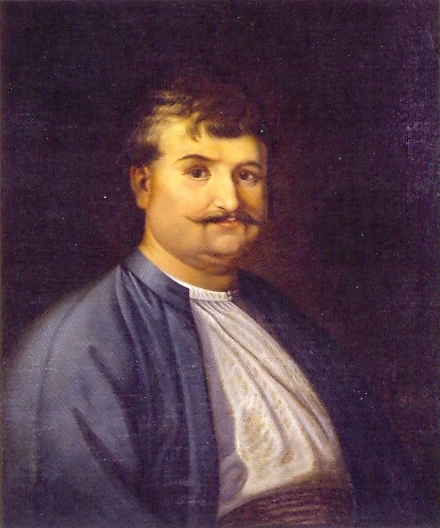 PhilosopherModern European1757 – 1798
Rigas Velestinlis
Rigas Feraios or Velestinlis, born as Antonios Rigas Velestinlis (Greek: Αντώνιος Ρήγας Βελεστινλής), was a Greek writer, political thinker and revolutionary, active in the Modern Greek Enlightenment. A victim of the Balkan uprising against the Ottoman Empire and a pioneer of the Greek War of Independence, Rigas Feraio
Read the full pageRigas Feraios or Velestinlis, born as Antonios Rigas Velestinlis (Greek: Αντώνιος Ρήγας Βελεστινλής), was a Greek writer, political thinker and revolutionary, active in the Modern Greek Enlightenment. A victim of the Balkan uprising against the Ottoman Empire and a pioneer of the Greek War of Independence, Rigas Feraios is today remembered as a national hero in Greece.
Rigas Feraios was born in 1757 as Antonios Rigas Velestinlis into a wealthy family in the village of Velestino in the Sanjak of Tirhala, Ottoman Empire (modern Thessaly, Greece). His father's name is believed to have been originally Georgios Kyratzis or Kyriazis. He later was at some point nicknamed Pheraeos or Feraios, by scholars, after the nearby ancient Greek city of Pherae, but he does not seem ever to have used this name himself; he is also sometimes known as Konstantinos or Constantine Rhigas (Greek: Κωνσταντίνος Ρήγας). He is often described as being of Aromanian ancestry, with his native village of Velestino being predominantly Aromanian. Although his family usually overwintered in Velestino, it had its roots in Perivoli, another Aromanian-inhabited village. Rigas' grandfather Konstantinos Kyriazis or Kyratzis relocated with his family to Velestino which had been transformed into a Perivoli parish. Some historians state that Rigas was a Greek, as Leandros Vranoussis, who assumes that his Greek family was long-time residing in Velestino.
- 4
 PhilosopherModern European1757 – 1808
Pierre Jean George Cabanis
Pierre Jean Georges Cabanis was a French physiologist, Freemason, materialist philosopher and leading idéologue.
Read the full pagePierre Jean Georges Cabanis (French: [kabanis]; 5 June 1757 – 5 May 1808) was a French physiologist, Freemason, materialist philosopher and leading idéologue.
Cabanis was born at Cosnac (Limousin), the son of Jean Baptiste Cabanis (1723–1786), a lawyer and agronomist. At the age of ten, he attended the college of Brives, where he showed great aptitude for study, but his independence of spirit was so great that he was almost constantly in a state of rebellion against his teachers and was finally expelled. He was then taken to Paris by his father and left to carry on his studies at his own discretion for two years. From 1773 to 1775 he travelled in Poland and Germany, and on his return to Paris he devoted himself mainly to poetry. About this time he sent to the Académie française a translation of the passage from Homer proposed for their prize, and, though he did not win, he received so much encouragement from his friends that he contemplated translating the whole of the Iliad.
- 5
 PhilosopherModern European1757 – 1820
Constantin-François Chassebœuf
Constantin-François Chassebœuf de La Giraudais [French: [kɔ̃stɑ̃tɛ̃ fʁɑ̃swa ʃasəbœf də la ʒiʁodɛ]], known by his pen name Volney, was a French philosopher, historian, orientalist, and politician. As a young man, he was a regular at the salon of Madame Helvétius in Paris, where he met Benjamin Franklin during the Americ
Read the full pageConstantin-François Chassebœuf de La Giraudais [French: [kɔ̃stɑ̃tɛ̃ fʁɑ̃swa ʃasəbœf də la ʒiʁodɛ]] (3 February 1757 – 25 April 1820), known by his pen name Volney, was a French philosopher, historian, orientalist, and politician.
As a young man, he was a regular at the salon of Madame Helvétius in Paris, where he met Benjamin Franklin during the American Revolutionary War. He first came to prominence in 1787 with the publication of an account of his travels through Ottoman Egypt and Syria. During the French Revolution, he represented the Anjou Third Estate at the Estates General of 1789 before serving in the National Constituent Assembly. In 1791, he published The Ruins, a philosophical meditation on the rise and fall of civilizations that envisioned a future "General Assembly of Nations". He was also among the earliest proponents of the Christ myth theory.
- 6
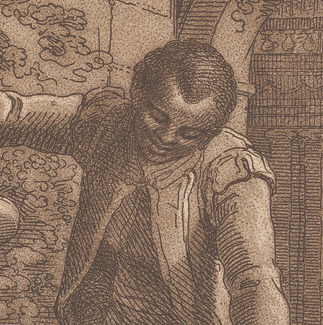 PhilosopherModern European1757 – 1791
Ottobah Cugoano
Ottobah Cugoano, also known as John Stuart, was a British abolitionist and activist who was born in the Gold Coast (modern-day Ghana). He was sold into slavery at the age of thirteen and shipped to Grenada in the West Indies.
Read the full pageOttobah Cugoano (c. 1757 – c. 1791), also known as John Stuart, was a British abolitionist and activist who was born in the Gold Coast (modern-day Ghana). He was sold into slavery at the age of thirteen and shipped to Grenada in the West Indies. In 1772, he was purchased by a merchant who took him to England, where Cugoano learned to read and write, and was emancipated. Eventually, he started working for the artists Richard and Maria Cosway, becoming acquainted with several prominent British political and cultural figures as a result. He joined the Sons of Africa, a group of Black abolitionists in Britain, and died at some point after 1791.
He was born Quobna Ottobah Cugoano in 1757 in Agimaque (Ajumako) in the Gold Coast (modern-day Ghana). He was born into a Fante family and his family was close to the local chief.
- 7
 PhilosopherModern European1759 – 1805
Friedrich Schiller
Johann Christoph Friedrich von Schiller was a German playwright, poet, philosopher and historian. Schiller is considered to be one of Germany's most important classical playwrights.
Read the full pageJohann Christoph Friedrich von Schiller (German: [ˈjoːhan ˈkʁɪstɔf ˈfʁiːdʁɪç fɔn ˈʃɪlɐ], short: [ˈfʁiːdʁɪç ˈʃɪlɐ] ; 10 November 1759 – 9 May 1805) was a German playwright, poet, philosopher and historian. Schiller is considered to be one of Germany's most important classical playwrights. He was one of the most important figures of the Sturm und Drang movement.
He was born in Marbach to a devoutly Lutheran family. Initially intended for the priesthood, in 1773 he entered a military academy in Stuttgart and ended up studying medicine. His first play, The Robbers, was written at this time and proved very successful. After a brief stint as a regimental doctor, he left Stuttgart and eventually wound up in Weimar. In 1789, he became professor of History and Philosophy at the University of Jena, where he wrote historical works.
- 8
 PhilosopherModern European1764 – 1822
Sophie de Condorcet
Sophie de Condorcet, also known as Sophie de Grouchy and best known and styled as Madame de Condorcet, was a prominent French salon hostess from 1789 to the Reign of Terror, and again from 1799 until her death in 1822. She was also a philosopher and the wife of the mathematician and philosopher Nicolas de Condorcet, wh
- ◆Translator
- ◆philosopher
Read the full pageSophie de Condorcet (French: [sɔfi də kɔ̃dɔʁsɛ]; 1764 – 8 September 1822), also known as Sophie de Grouchy and best known and styled as Madame de Condorcet, was a prominent French salon hostess from 1789 to the Reign of Terror, and again from 1799 until her death in 1822. She was also a philosopher and the wife of the mathematician and philosopher Nicolas de Condorcet, who died during the Reign of Terror. Despite his death and the exile of her brother, Marshal Emmanuel de Grouchy, between 1815 and 1821, she maintained her own identity and was well-connected and influential before, during, and after the French Revolution.
As a hostess, Madame de Condorcet was popular for her kind heart, beauty, and indifference to a person's class or social origins. Unlike that of her fellow-Girondist hostess Madame Roland, Madame de Condorcet's salon always included other women, notably Olympe de Gouges. Condorcet was also a writer and a translator, being highly educated for her day, and was fluent in English and Italian. Her most important philosophical writing is The Letters on Sympathy, which was published in 1798. She was also an influential translator of and commenter on works by Thomas Paine and Adam Smith.
- 9
 PhilosopherModern European1765 – 1841
Franz Xaver von Baader
Benedict Franz von Baader, born Benedikt Franz Xaver Baader, was a Catholic theologian, philosopher, and mining engineer from Germany. Resisting the empiricism of his day, he denounced most Western philosophy since Descartes as trending into atheism and has been considered a revival of the Scholastic school.
Read the full pageBenedict Franz von Baader (27 March 1765 – 23 May 1841), born Benedikt Franz Xaver Baader, was a Catholic theologian, philosopher, and mining engineer from Germany. Resisting the empiricism of his day, he denounced most Western philosophy since Descartes as trending into atheism and has been considered a revival of the Scholastic school.
He was one of the most influential theologians of his age but his influence on subsequent philosophy has been less marked, and tends to be submerged into the esoteric discussions of later thinkers rather than cited explicitly in major publications. Today Baader is thought to have re-introduced theological engagement with Meister Eckhart into academia and even Christianity and Theosophy more generally.
- 10
 PhilosopherModern European1766 – 1824
Maine de Biran
François-Pierre-Gontier de Biran, better known as Maine de Biran (French: [mɛn də biʁɑ̃]), was a French philosopher.
- ◆The primacy of voluntary effort (''volo
- ◆ergo sum''
- ◆"I will
- ◆therefore I am")
- ◆Horst Albert Glaser and György Mihály Vajda
- ◆p. 325.
Read the full pageFrançois-Pierre-Gontier de Biran (; 29 November 1766 – 20 July 1824), better known as Maine de Biran (French: [mɛn də biʁɑ̃]), was a French philosopher.
François-Pierre-Gontier de Biran was born in Bergerac. He assumed the name Maine (sometime before 1787) from his father's estate called Le Maine, near Mouleydier. After studying with distinction at Périgueux, he entered the life guards of King Louis XVI, and was present at Versailles during the events of October 1789.
- 11
 PhilosopherModern European1767 – 1835
Wilhelm von Humboldt
Friedrich Wilhelm Christian Karl Ferdinand von Humboldt was a German philosopher, linguist, government functionary, diplomat, and founder of the Humboldt University of Berlin. In 1949, the university was named after him and his younger brother, Alexander von Humboldt, a naturalist.
- ◆Humboldtian model of higher education
Read the full pageFriedrich Wilhelm Christian Karl Ferdinand von Humboldt (22 June 1767 – 8 April 1835) was a German philosopher, linguist, government functionary, diplomat, and founder of the Humboldt University of Berlin. In 1949, the university was named after him and his younger brother, Alexander von Humboldt, a naturalist.
He was a linguist who made contributions to the philosophy of language, ethnolinguistics, and to the theory and practice of education. He made a major contribution to the development of liberalism by envisioning education as a means of realizing individual possibility rather than a way of drilling traditional ideas into youth to suit them for an already established occupation or social role. In particular, he was the architect of the Humboldtian education ideal, which was used from the beginning in Prussia as a model for its system of public education, as well as in the United States and Japan. He was elected as a member of the American Philosophical Society in 1822.
- 12
 PhilosopherModern European1769 – 1859
Alexander von Humboldt
Friedrich Wilhelm Heinrich Alexander von Humboldt was a German polymath, geographer, naturalist, explorer, and proponent of Romantic philosophy and science. He was the younger brother of the Prussian minister, philosopher, and linguist Wilhelm von Humboldt.
- ◆Biogeography
- ◆Kosmos
- ◆Humboldt Current
- ◆magnetic storm
- ◆Humboldtian science
- ◆Berlin Romanticism
Read the full pageFriedrich Wilhelm Heinrich Alexander von Humboldt (14 September 1769 – 6 May 1859) was a German polymath, geographer, naturalist, explorer, and proponent of Romantic philosophy and science. He was the younger brother of the Prussian minister, philosopher, and linguist Wilhelm von Humboldt (1767–1835). Humboldt's quantitative work on botanical geography laid the foundation for the field of biogeography, while his advocacy of long-term systematic geophysical measurement pioneered modern geomagnetic and meteorological monitoring. Humboldt and Carl Ritter are both regarded as the founders of modern geography as they established it as an independent scientific discipline.
Between 1799 and 1804, Humboldt travelled extensively in the Americas, exploring and describing them for the first time from a non-Spanish European scientific point of view. On these travels, along with French explorer Aimé Bonpland, he traversed thousands of miles through some of the most difficult and little-known places on Earth, to include identifying the source of the Orinoco River and in 1802 climbing the highest mountain in Ecuador to a height of 19,286 feet, at the time a world record altitude for a Westerner. His description of the journey was written up and published in several volumes over 21 years.