Modern European thinkers, 19th century: Salmon to Leontiev
- 1
 PhilosopherModern European1819 – 1904
George Salmon
George Salmon was a distinguished and influential Irish mathematician and Anglican theologian. After working in algebraic geometry for two decades, Salmon devoted the last forty years of his life to theology.
Read the full pageGeorge Salmon (25 September 1819 – 22 January 1904) was a distinguished and influential Irish mathematician and Anglican theologian. After working in algebraic geometry for two decades, Salmon devoted the last forty years of his life to theology. His entire career was spent at Trinity College Dublin, having served as the 32nd Provost of the university from 1888 to 1904.
Salmon was born in Cork in 1819, to Michael Salmon and Helen Weekes (the daughter of the Reverend Edward Weekes). During his boyhood in Cork, where his father Michael was a linen merchant, he attended Hamblin and Porter's School there before starting at Trinity College Dublin in 1833.
- 2
 PhilosopherModern European1821 – 1881
Fyodor Dostoyevsky
Fyodor Mikhailovich Dostoevsky was a Russian philosopher, novelist, short-story writer, essayist, and journalist. He is regarded as one of the greatest novelists in both Russian and world literature, and many of his works are considered highly influential masterpieces.
Read the full pageFyodor Mikhailovich Dostoevsky (11 November [O.S. 30 October] 1821 – 9 February [O.S. 28 January] 1881) was a Russian philosopher, novelist, short-story writer, essayist, and journalist. He is regarded as one of the greatest novelists in both Russian and world literature, and many of his works are considered highly influential masterpieces. Dostoevsky's literary works explore the human condition in the troubled political, social and spiritual atmospheres of 19th-century Russia, and engage with a variety of philosophical and religious themes. His most acclaimed novels include Crime and Punishment (1866), The Idiot (1869), Demons (1872), The Adolescent (1875) and The Brothers Karamazov (1880). His Notes from Underground, a novella published in 1864, is considered one of the first works of existentialist literature.
Born in Moscow in 1821, Dostoevsky was introduced to literature at an early age through fairy tales and legends and through books by Russian and foreign authors. His mother died in 1837, and around the same time, he left school to enter the Nikolayevsky Engineering Academy. After graduating, he worked as an engineer and briefly enjoyed a lavish lifestyle, translating books to earn extra money. In the mid-1840s, he wrote his first novel, Poor Folk, which gained him entry into Saint Petersburg's literary circles. However, he was arrested in 1849 for belonging to a literary group, the Petrashevsky Circle, that discussed banned books critical of Tsarist Russia. Dostoevsky was sentenced to death, but the sentence was commuted at the last moment. He spent four years in a Siberian hard labour camp, which inspired him to write The House of the Dead (1860–1862). Aside from the labour camp, there also followed six years of compulsory military service in exile. In the following years, Dostoevsky worked as a journalist, publishing and editing several magazines of his own and later A Writer's Diary, a collection of his writings. He began to travel around Western Europe and developed a gambling addiction, which led to financial hardship. For a time, he had to beg for money, but he eventually became one of the most widely read and highly regarded Russian writers.
- 3
 PhilosopherModern European1822 – 1911
Francis Galton
Sir Francis Galton was an English polymath active as a statistician, anthropologist, psychologist, meteorologist, explorer, and geographer who was the originator of eugenics during the Victorian era, contributing extensively to the foundations of behavioural genetics. Galton produced over 340 papers and books.
- ◆Eugenics
- ◆Behavioural genetics
- ◆Regression toward the mean
- ◆Standard deviation
- ◆Anticyclone
- ◆Isochrone map
Read the full pageSir Francis Galton (; 16 February 1822 – 17 January 1911) was an English polymath active as a statistician, anthropologist, psychologist, meteorologist, explorer, and geographer who was the originator of eugenics during the Victorian era, contributing extensively to the foundations of behavioural genetics.
Galton produced over 340 papers and books. He also developed the statistical concept of correlation and widely promoted regression toward the mean. He was the first to apply statistical methods to the study of human differences and inheritance of intelligence, and introduced the use of questionnaires and surveys for collecting data on human communities, which he needed for genealogical and biographical works and for his anthropometric studies. He popularised the phrase "nature versus nurture". His book Hereditary Genius (1869) was the first social scientific attempt to study genius and greatness.
- 4
 PhilosopherModern European1822 – 1904
Frances Power Cobbe
Frances Power Cobbe was an Anglo-Irish writer, philosopher, religious thinker, social reformer, anti-vivisection activist and leading women's suffrage campaigner. She founded a number of animal advocacy groups, including the National Anti-Vivisection Society (NAVS) in 1875 and the British Union for the Abolition of Viv
- ◆British Union for the Abolition of Vivisection
Read the full pageFrances Power Cobbe (4 December 1822 – 5 April 1904) was an Anglo-Irish writer, philosopher, religious thinker, social reformer, anti-vivisection activist and leading women's suffrage campaigner. She founded a number of animal advocacy groups, including the National Anti-Vivisection Society (NAVS) in 1875 and the British Union for the Abolition of Vivisection (BUAV) in 1898, and was a member of the executive council of the London National Society for Women's Suffrage.
Frances Power Cobbe was a member of the prominent Cobbe family, descended from Archbishop Charles Cobbe, Primate of Ireland. She was born in Newbridge House in the family estate in present-day Donabate, County Dublin. Her niece Frances Conway Cobbe was one of the first 12 students at the newly founded women's college Somerville Hall (later Somerville College) in Oxford.
- 5
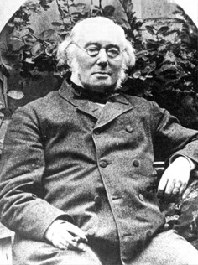 PhilosopherModern European1822 – 1889
Albrecht Ritschl
Albrecht Benjamin Ritschl was a German Protestant theologian. From 1852, Ritschl lectured on systematic theology.
Read the full pageAlbrecht Benjamin Ritschl (25 March 1822 – 20 March 1889) was a German Protestant theologian.
From 1852, Ritschl lectured on systematic theology. According to this system, faith was understood to be irreducible to other experiences, beyond the scope of reason. Faith, he said, came not from facts but from value judgments. Jesus' divinity, he argued, was best understood as expressing the "revelational value" of Christ for the community that trusts in him as God. He held that the Christ's message was to be committed to a community.
- 6
 PhilosopherModern European1824 – 1899
Ludwig Büchner
Friedrich Karl Christian Ludwig Büchner was a German philosopher, physiologist and physician who became one of the exponents of 19th-century scientific materialism.
- ◆Nature is purely physical
Read the full pageFriedrich Karl Christian Ludwig Büchner (; German: [ˈbyːçnɐ]; 29 March 1824 – 30 April 1899) was a German philosopher, physiologist and physician who became one of the exponents of 19th-century scientific materialism.
Büchner was born at Darmstadt on 29 March 1824. From 1842 to 1848 he studied physics, chemistry, botany, mineralogy, philosophy and medicine at the University of Giessen, where he graduated in 1848 with a dissertation entitled Beiträge zur Hall'schen Lehre von einem excitomotorischen Nervensystem (Contributions to the Hallian Theory of an Excito-motor Nervous System). Afterwards, he continued his studies at the University of Strasbourg, the University of Würzburg (where he studied pathology with the great Rudolf Virchow) and the University of Vienna. In 1852 he became lecturer in medicine at the University of Tübingen, where he published his magnum opus Kraft und Stoff: Empirisch-naturphilosophische Studien (Force and Matter: Empiricophilosophical Studies, 1855). Büchner was one of the founding members of the Freies Deutsches Hochstift (Free German Foundation).
- 7
 PhilosopherModern European1824 – 1907
Kuno Fischer
Ernst Kuno Berthold Fischer was a German philosopher and historian of philosophy.
- ◆empiricism
- ◆rationalism
Read the full pageErnst Kuno Berthold Fischer (; German: [ˈfɪʃɐ]; 23 July 1824 – 5 July 1907) was a German philosopher and historian of philosophy.
After studying philosophy at Leipzig and Halle,
- 8
 PhilosopherModern European1828 – 1889
Nikolay Chernyshevsky
Nikolay Gavrilovich Chernyshevsky was a Russian literary and social critic, journalist, novelist, democrat, and socialist philosopher, often identified as a utopian socialist and leading theoretician of Russian nihilism and the Narodniks. He was the dominant intellectual figure of the 1860s revolutionary democratic mov
- ◆Rational egoism
Read the full pageNikolay Gavrilovich Chernyshevsky (24 July [O.S. 12 July] 1828 – 29 October [O.S. 17 October] 1889) was a Russian literary and social critic, journalist, novelist, democrat, and socialist philosopher, often identified as a utopian socialist and leading theoretician of Russian nihilism and the Narodniks. He was the dominant intellectual figure of the 1860s revolutionary democratic movement in Russia, despite spending much of his later life in exile to Siberia, and was later highly praised by Karl Marx, Georgi Plekhanov, and Vladimir Lenin.
The son of a priest, Chernyshevsky was born in Saratov in 1828, and stayed there until 1846. He graduated at the local seminary where he learned English, French, German, Italian, Latin, Greek and Old Slavonic. It was there that he gained a love of literature, and also there that he became an atheist.
- 9
 PhilosopherModern European1828 – 1875
Friedrich Albert Lange
Friedrich Albert Lange was a German philosopher and sociologist.
- ◆Marxist materialism
Read the full pageFriedrich Albert Lange (; German: [ˈlaŋə]; 28 September 1828 – 21 November 1875) was a German philosopher and sociologist.
Lange was born in Wald, near Solingen, the son of the theologian, Johann Peter Lange. He was educated at Duisburg, Zurich and the University of Bonn, where he distinguished himself in gymnastics as much as academically. In 1852, he became a schoolmaster at Cologne; in 1853 Privatdozent in philosophy at Bonn; and in 1858, schoolmaster at Duisburg, resigning when the government forbade schoolmasters to take part in political activities.
- 10
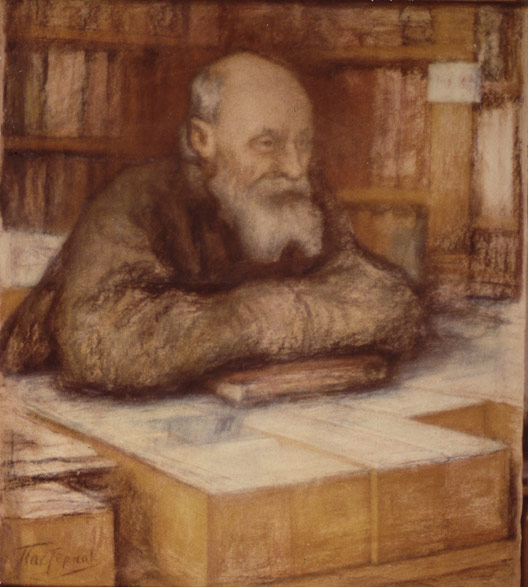 PhilosopherModern European1829 – 1903
Nikolai Fyodorovich Fyodorov
Nikolai Fyodorovich Fyodorov was a Russian religious philosopher, futurologist, library scientist, and educator. He started the movement of Russian cosmism which was a precursor of transhumanism.
- ◆pantheism
- ◆panpsychism
- ◆personalism
- ◆transhumanism
- ◆immortality
- ◆resurrection of the dead
Read the full pageNikolai Fyodorovich Fyodorov (Russian: Николай Фёдорович Фёдоров; 9 June 1829 – 28 December 1903) was a Russian religious philosopher, futurologist, library scientist, and educator. He started the movement of Russian cosmism which was a precursor of transhumanism.
Fyodorov advocated radical life extension, physical immortality and even resurrection of the dead, using scientific methods.
- 11
 PhilosopherModern European1830 – 1902
Clémence Royer
Clémence Royer was a self-taught French scholar who lectured and wrote on economics, philosophy, science and feminism. She is best known for her controversial 1862 French translation of Charles Darwin's On the Origin of Species.
Read the full pageClémence Royer (21 April 1830 – 6 February 1902) was a self-taught French scholar who lectured and wrote on economics, philosophy, science and feminism. She is best known for her controversial 1862 French translation of Charles Darwin's On the Origin of Species.
Augustine-Clémence Audouard was born on 21 April 1830 in Nantes, Brittany, the only daughter of Augustin-René Royer and Joséphine-Gabrielle Audouard. When her parents married seven years later her name was changed to Clémence-Auguste Royer. Her mother was a seamstress from Nantes while her father came from Le Mans and was an army captain and a royalist legitimist. After the failure of a rebellion in 1832 to restore the Bourbon monarchy the family were forced to flee to Switzerland where they spent 4 years in exile before returning to Orléans. There her father gave himself up to the authorities and was tried for his part in the rebellion but was eventually acquitted.
- 12
 PhilosopherModern European1831 – 1891
Konstantin Leontiev
Konstantin Nikolayevich Leontiev, monastic name: Clement was a conservative tsarist and imperial monarchist Russian philosopher who advocated closer cultural ties between Russia and the East against what he believed to be the West's catastrophic egalitarian, utilitarian and revolutionary influences. He also advocated R
Read the full pageKonstantin Nikolayevich Leontiev, monastic name: Clement (Russian: Константи́н Никола́евич Лео́нтьев; 25 January 1831 – 24 November 1891) was a conservative tsarist and imperial monarchist Russian philosopher who advocated closer cultural ties between Russia and the East against what he believed to be the West's catastrophic egalitarian, utilitarian and revolutionary influences. He also advocated Russia's cultural and territorial expansion eastward to India, Tibet and China.
Leontiev was born and grew up on his father's estate in Kudinovo, Kaluga Governorate. His father, a nobleman, was a military officer but was discharged for "riotous behaviour". Still, the intervention of the Russian empress in behalf of the Leontiev brothers made him able to enter the Imperial Corps of Pages. He was engaged at 23 but broke off the relationship for the sake of "freedom and art" – a decision that made things difficult for him. After completing medical school in Moscow, Leontiev saw service as a doctor during the Crimean War.