Modern European thinkers, 19th century: Croce to Otto
- 1
 PhilosopherModern European1866 – 1952
Benedetto Croce
Benedetto Croce was an Italian idealist philosopher, historian, and politician who wrote on numerous topics, including philosophy, history, historiography, and aesthetics. A political liberal in most regards, he formulated a distinction between liberalism (as support for civil liberties) and "liberism" (as support for
Read the full pageBenedetto Croce ( KROH-chay; Italian: [beneˈdetto ˈkroːtʃe]; 25 February 1866 – 20 November 1952)
was an Italian idealist philosopher, historian, and politician who wrote on numerous topics, including philosophy, history, historiography, and aesthetics. A political liberal in most regards, he formulated a distinction between liberalism (as support for civil liberties) and "liberism" (as support for laissez-faire economics and capitalism). Croce had considerable influence on other Italian intellectuals, from Marxists to Italian fascists, such as Antonio Gramsci and Giovanni Gentile, respectively.
- 2
 PhilosopherModern European1866 – 1949
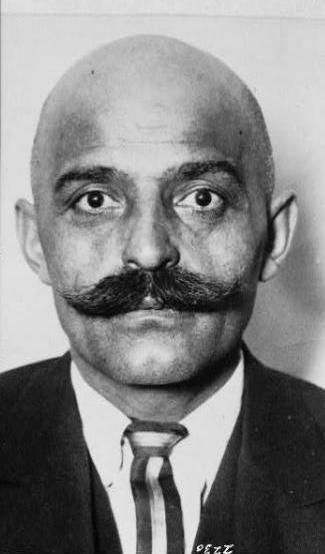
George Gurdjieff
George Ivanovich Gurdjieff was a philosopher, mystic, spiritual teacher, composer, and movements teacher. Gurdjieff taught that people are not conscious of themselves and thus live their lives in a state of hypnotic "waking sleep", but that it is possible to awaken to a higher state of consciousness to "remember oursel
- ◆Fourth Way
- ◆enneagram
- ◆centers
Read the full pageGeorge Ivanovich Gurdjieff (c. 1866–1877 – 29 October 1949) was a philosopher, mystic, spiritual teacher, composer, and movements teacher.
Gurdjieff taught that people are not conscious of themselves and thus live their lives in a state of hypnotic "waking sleep", but that it is possible to awaken to a higher state of consciousness to "remember ourselves" and serve our purpose as human beings. The aim of his teaching is that people should become aware of the meaning of their presence on earth and of their place in the scale of being. His student P. D. Ouspensky referred to Gurdjieff's teachings as the "Fourth Way".
- 3
 PhilosopherModern European1866 – 1938
Lev Shestov
Lev Isaakovich Shestov, born Yeguda Lev Shvartsman (Russian: Иегуда Лейб Шварцман), was a Russian existentialist and religious philosopher. He is best known for his critiques of both philosophical rationalism and positivism.
- ◆Despair as "the penultimate word"
Read the full pageLev Isaakovich Shestov (Russian: Лев Исаакович Шестов; 5 February [O.S. 24 January] 1866 – 19 November 1938), born Yeguda Lev Shvartsman (Russian: Иегуда Лейб Шварцман), was a Russian existentialist and religious philosopher. He is best known for his critiques of both philosophical rationalism and positivism. His work advocated a movement beyond reason and metaphysics, arguing that these are incapable of conclusively establishing truth about ultimate problems, including the nature of God or existence. Contemporary scholars have associated his work with the label "anti-philosophy".
Shestov wrote extensively on philosophers such as Nietzsche and Kierkegaard, as well as Russian writers such as Dostoyevsky, Tolstoy, and Chekhov. His published books include Apotheosis of Groundlessness (1905) and his magnum opus Athens and Jerusalem (1930–1937). After emigrating to France in 1921, he befriended and influenced thinkers such as Edmund Husserl, Benjamin Fondane, Rachel Bespaloff, and Georges Bataille. He lived in Paris until his death in 1938.
- 4
 PhilosopherModern European1866 – 1938
Kazimierz Twardowski
Kazimierz Jerzy Skrzypna-Twardowski was a Polish philosopher, psychologist, logician, and rector of the Lwów University. He was initially affiliated with Alexius Meinong's Graz school of object theory.
- ◆Content–object distinction
- ◆Lwów–Warsaw school
Read the full pageKazimierz Jerzy Skrzypna-Twardowski (Polish: [tfarˈdɔfskʲi]; 20 October 1866 – 11 February 1938) was a Polish philosopher, psychologist, logician, and rector of the Lwów University.
He was initially affiliated with Alexius Meinong's Graz school of object theory. Twardowski emphasized "small philosophy" or the detailed, systematic analysis of specific problems.
- 5
 PhilosopherModern European1867 – 1956
Julien Benda
Julien Benda was a French philosopher and novelist, known as an essayist and cultural critic. He is best known for his short book La Trahison des clercs, from 1927 (The Treason of the Intellectuals or The Betrayal by the Intellectuals).
Read the full pageJulien Benda (French: [ʒyljɛ̃ bɛ̃da]; 26 December 1867 – 7 June 1956) was a French philosopher and novelist, known as an essayist and cultural critic. He is best known for his short book La Trahison des clercs, from 1927 (The Treason of the Intellectuals or The Betrayal by the Intellectuals).
Born into a Jewish family in Paris, Benda had a secular upbringing. He was educated at the Lycée Louis-le-Grand. After a period at the École Centrale Paris, he turned to history, and graduated at the Sorbonne in 1894.
- 6
 PhilosopherModern European1867 – 1941
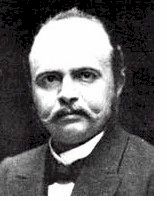
Hans Adolf Eduard Driesch
Hans Adolf Eduard Driesch was a German biologist and philosopher from Bad Kreuznach. He is most noted for his early experimental work in embryology and for his neo-vitalist philosophy of entelechy.
- ◆Developmental biology
- ◆vitalist
- ◆entelechy
- ◆Lebensphilosophie
- ◆Equifinality
Read the full pageHans Adolf Eduard Driesch (28 October 1867 – 17 April 1941) was a German biologist and philosopher from Bad Kreuznach. He is most noted for his early experimental work in embryology and for his neo-vitalist philosophy of entelechy. He has also been credited with performing the first artificial 'cloning' of an animal in the 1880s, although this claim is dependent on how one defines cloning.
Driesch was educated at the Gelehrtenschule des Johanneums. He began to study medicine in 1886 under August Weismann at the University of Freiburg. In 1887, he attended the University of Jena under Ernst Haeckel, Oscar Hertwig and Christian Ernst Stahl. In 1888, he studied physics and chemistry at the Ludwig-Maximilians-Universität München. He received his doctorate in 1889. He travelled widely on field and study trips and lecture-tours, visiting Plymouth, India, Zurich and Leipzig where, in 1894, he published his Analytische Theorie der organischen Entwicklung or Analytic Theory of Organic Development. His interests encompassed mathematics, philosophy and physics as well as biology. He married Margarete Relfferschneidt, and the couple had two children.
- 7
 PhilosopherModern European1867 – 1931
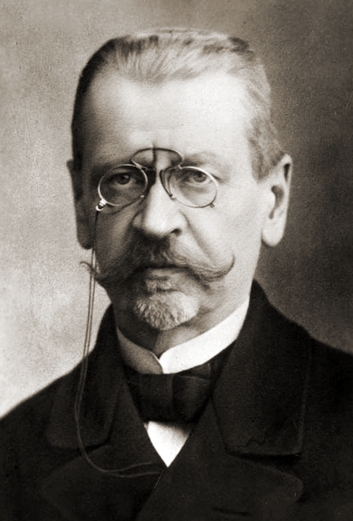
Leon Petrażycki
Leon Petrażycki was a Russian and Polish philosopher, legal scholar, and sociologist, deputy of the first State Duma of Russian Empire. He is considered an important forerunner of the sociology of law and the founder of St.
- ◆Psychological theory of law
- ◆Психологическая теория права
Read the full pageLeon Petrażycki (Polish: Leon Petrażycki; Russian: Лев Ио́сифович Петражи́цкий, romanized: Lev Iosifovich Petrazhitsky; 13 April 1867 – 15 May 1931) was a Russian and Polish philosopher, legal scholar, and sociologist, deputy of the first State Duma of Russian Empire. He is considered an important forerunner of the sociology of law and the founder of St. Petersburg School of Philosophy of Law.
Leon Petrażycki was born into the Polish gentry of the Mogilev Governorate in the Russian Empire. In 1890 he graduated from Kiev University, then spent two years on a scholarship in Berlin, and in 1896 received a doctorate from the University of St. Petersburg. At the latter university, he served from 1897 to 1917 as a professor of the philosophy of law.
- 8
 PhilosopherModern European1868 – 1914
Louis Couturat
Louis Couturat was a French logician, mathematician, philosopher, and linguist. Couturat was a pioneer of the constructed language Ido.
- ◆Ido
Read the full pageLouis Couturat (French: [kutyʁa]; 17 January 1868 – 3 August 1914) was a French logician, mathematician, philosopher, and linguist. Couturat was a pioneer of the constructed language Ido.
Born in Paris. In 1887 he entered École Normale Supérieure to study philosophy and mathematics. In 1895 he lectured in philosophy at the University of Toulouse and 1897 lectured in philosophy of mathematics at the University of Caen Normandy, taking a stand in favor of transfinite numbers. After a time in Hanover studying the writings of Leibniz, he became an assistant to Henri-Louis Bergson at the Collège de France in 1905.
- 9
 PhilosopherModern European1868 – 1953
Vydūnas
Wilhelm Storost, artistic name Vilius Storostas-Vydūnas, mostly known as Vydūnas, was a Prussian-Lithuanian teacher, poet, humanist, philosopher and Lithuanian writer, a leader of the Prussian Lithuanian national movement in Lithuania Minor, and one of leaders of the theosophical movement in East Prussia.
Read the full pageWilhelm Storost, artistic name Vilius Storostas-Vydūnas (22 March 1868 – 20 February 1953), mostly known as Vydūnas, was a Prussian-Lithuanian teacher, poet, humanist, philosopher and Lithuanian
writer, a leader of the Prussian Lithuanian national movement in Lithuania Minor, and one of leaders of the theosophical movement in East Prussia.
- 10
 PhilosopherModern European1868 – 1943
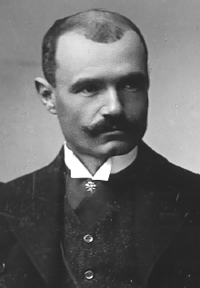
Mihailo Petrović
Mihailo Petrović Alas was a Serbian mathematician, inventor, university professor and academic. He was a distinguished professor at Belgrade University, an academic, philosopher, writer, publicist, musician, businessman, traveler and volunteer in the Balkan Wars, the First and Second World Wars and licensed fisherman b
- ◆Differential equations
- ◆Phenomenology
Read the full pageMihailo Petrović Alas (Serbian Cyrillic: Михаило Петровић Алас; also Michel Pétrovitch; 6 May 1868 – 8 June 1943) was a Serbian mathematician, inventor, university professor and academic. He was a distinguished professor at Belgrade University, an academic, philosopher, writer, publicist, musician, businessman, traveler and volunteer in the Balkan Wars, the First and Second World Wars and licensed fisherman by trade – hence his nickname "Alas" ("fisherman on the rivers").
He was a student of Henri Poincaré, Paul Painlevé, Charles Hermite and Émile Picard. Petrović contributed significantly to the study of differential equations and phenomenology, founded engineering mathematics in Serbia, and invented one of the first prototypes of a hydraulic analog computer.
- 11
 PhilosopherModern European1869 – 1916
Grigori Rasputin
Grigori Yefimovich Rasputin was a Russian mystic and faith healer. He is best known for having befriended the imperial family of Nicholas II, the last emperor of Russia, through whom he gained considerable influence in the final years of the Russian Empire.
Read the full pageGrigori Yefimovich Rasputin (21 January [O.S. 9 January] 1869 – 30 December [O.S. 17 December] 1916) was a Russian mystic and faith healer. He is best known for having befriended the imperial family of Nicholas II, the last emperor of Russia, through whom he gained considerable influence in the final years of the Russian Empire.
Rasputin was born to a family of peasants in the Siberian village of Pokrovskoye, located within Tyumensky Uyezd in Tobolsk Governorate. He had a religious conversion experience after embarking on a pilgrimage to a monastery in 1897 and has been described as a monk or as a strannik (wanderer or pilgrim), though he held no official position in the Russian Orthodox Church. Eventually gaining a reputation as a starets, in 1903 or in the winter of 1904–1905, he travelled to Saint Petersburg and captivated several religious and social leaders, eventually becoming a prominent figure in Russian society. In November 1905, Rasputin met Nicholas II and his empress consort, Alexandra Feodorovna.
- 12
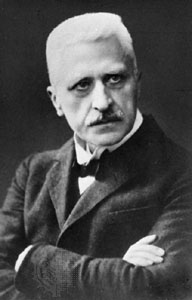 PhilosopherModern European1869 – 1937
Rudolf Otto
Rudolf Otto was a German Lutheran theologian, philosopher, and comparative religionist. He is regarded as one of the most influential scholars of religion in the early twentieth century and is best known for his concept of the numinous, a profound emotional experience he argued was at the heart of the world's religions
- ◆numinous
Read the full pageRudolf Otto (25 September 1869 – 7 March 1937) was a German Lutheran theologian, philosopher, and comparative religionist. He is regarded as one of the most influential scholars of religion in the early twentieth century and is best known for his concept of the numinous, a profound emotional experience he argued was at the heart of the world's religions. While his work started in the domain of liberal Christian theology, its main thrust was always apologetical, seeking to defend religion against naturalist critiques, making him a more conservative figure. Otto eventually came to conceive of his work as part of a science of religion, which was divided into the philosophy of religion, the history of religion, and the psychology of religion.
Born in Peine near Hanover, Otto was raised in a pious Christian family. He attended the Gymnasium Andreanum in Hildesheim and studied at the universities of Erlangen and Göttingen, where he wrote his dissertation on Martin Luther's understanding of the Holy Spirit (Die Anschauung von heiligen Geiste bei Luther: Eine historisch-dogmatische Untersuchung), and his habilitation on Kant (Naturalistische und religiöse Weltansicht). By 1906, he held a position as extraordinary professor, and in 1910 he received an honorary doctorate from the University of Giessen.