Chinese thinkers, medieval
- 1
 PhilosopherChinese768 – 824
Han Yu
Han Yu, courtesy name Tuizhi (Chinese: 退之), and commonly known by his posthumous name Han Wengong (韓文公), was an essayist, Confucian scholar, poet, and government official during the Tang dynasty who significantly influenced the development of Neo-Confucianism. Described as "comparable in stature to Dante, Shakespeare o
Read the full pageHan Yu (Chinese: 韓愈; 768 – 25 December 824), courtesy name Tuizhi (Chinese: 退之), and commonly known by his posthumous name Han Wengong (韓文公), was an essayist, Confucian scholar, poet, and government official during the Tang dynasty who significantly influenced the development of Neo-Confucianism. Described as "comparable in stature to Dante, Shakespeare or Goethe" for his influence on the Chinese literary tradition, Han Yu stood for strong central authority in politics and orthodoxy in cultural matters.
He is often considered to be among China's finest prose writers. Ming dynasty scholar Mao Kun (茅坤) ranked him first among the "Eight Great Prose Masters of the Tang and Song".
- 2
 PhilosopherChinese772 – 842
Liu Yuxi
Liu Yuxi was a Chinese essayist, philosopher, and poet active during the Tang dynasty.
Read the full pageLiu Yuxi (Wade-Giles: Liu Yü-hsi; Chinese: 劉禹錫; pinyin: Liú Yǔxī, Liú Yǔxí; 772–842) was a Chinese essayist, philosopher, and poet active during the Tang dynasty.
His ancestors were Xiongnu nomadic people. The putative ‘seventh generation’ family head, Liu Liang, was an official of the Northern Wei (386–534), who followed the Emperor Xiaowen (471–499) when he established the capital at Luoyang in 494. Following the government sinification policy, he became Han and registered his surname as Liu. From then on the family was based in Luoyang.
- 3
 PhilosopherChinese1012 – 1097
Marpa Chokyi Lodro
Marpa Lotsāwa, sometimes known fully as Marpa Chökyi Lodrö (Wylie: mar pa chos kyi blo gros) or commonly as Marpa the Translator (Marpa Lotsāwa), was a Tibetan Buddhist teacher credited with the transmission of many Vajrayana teachings from India, including the teachings and lineages of Mahamudra. Due to this, the Kagy
Read the full pageMarpa Lotsāwa (མར་པ་ལོ་ཙཱ་བ་ཆོས་ཀྱི་བློ་གྲོས་, 1012–1097), sometimes known fully as Marpa Chökyi Lodrö (Wylie: mar pa chos kyi blo gros) or commonly as Marpa the Translator (Marpa Lotsāwa), was a Tibetan Buddhist teacher credited with the transmission of many Vajrayana teachings from India, including the teachings and lineages of Mahamudra. Due to this, the Kagyu lineage, which he founded, is often called Marpa Kagyu in his honour.
Although some accounts relate that the Mahasiddha Naropa was the personal teacher of Marpa, other accounts suggest that Marpa held Naropa's lineage through intermediary disciples only. Either way, Marpa was a personal student of the Mahasiddha Maitripa and of the dakini Niguma.
- 4
 PhilosopherChinese1020 – 1101
Su Song
Su Song, courtesy name Zirong (Chinese: 子容; Pe̍h-ōe-jī: Chú-iông), was a Chinese polymathic scientist and statesman who lived during the Song dynasty. He excelled in numerous fields including but not limited to mathematics, astronomy, cartography, geography, metallurgy, mechanical engineering, hydraulic engineering, po
Read the full pageSu Song (Chinese: 蘇頌; Pe̍h-ōe-jī: So͘ Siōng, Hanyu Pinyin: Sū Sòng, 1020–1101), courtesy name Zirong (Chinese: 子容; Pe̍h-ōe-jī: Chú-iông), was a Chinese polymathic scientist and statesman who lived during the Song dynasty (960–1279). He excelled in numerous fields including but not limited to mathematics, astronomy, cartography, geography, metallurgy, mechanical engineering, hydraulic engineering, poetry, and statesmanship.
Su Song was the engineer for a hydro-mechanical astronomical clock tower located in Kaifeng. It employed an early escapement mechanism. The escapement mechanism of Su's clock tower was invented by the Tang dynasty Buddhist monk Yi Xing and government official Liang Lingzan in 725 AD to operate a water-powered armillary sphere, however Su's armillary sphere was the first to utilize a mechanical clock drive. Su's clock tower also featured the oldest known endless power-transmitting chain drive, called the tian ti (天梯), or "celestial ladder", as depicted in his horological treatise. The clock tower had 133 different clock jacks to indicate and sound the hours. The clock was dismantled and moved north to Beijing in 1127 AD, and although attempts were made to reassemble it, the tower was never successfully reinstated.
- 5
 PhilosopherChinese1020 – 1077
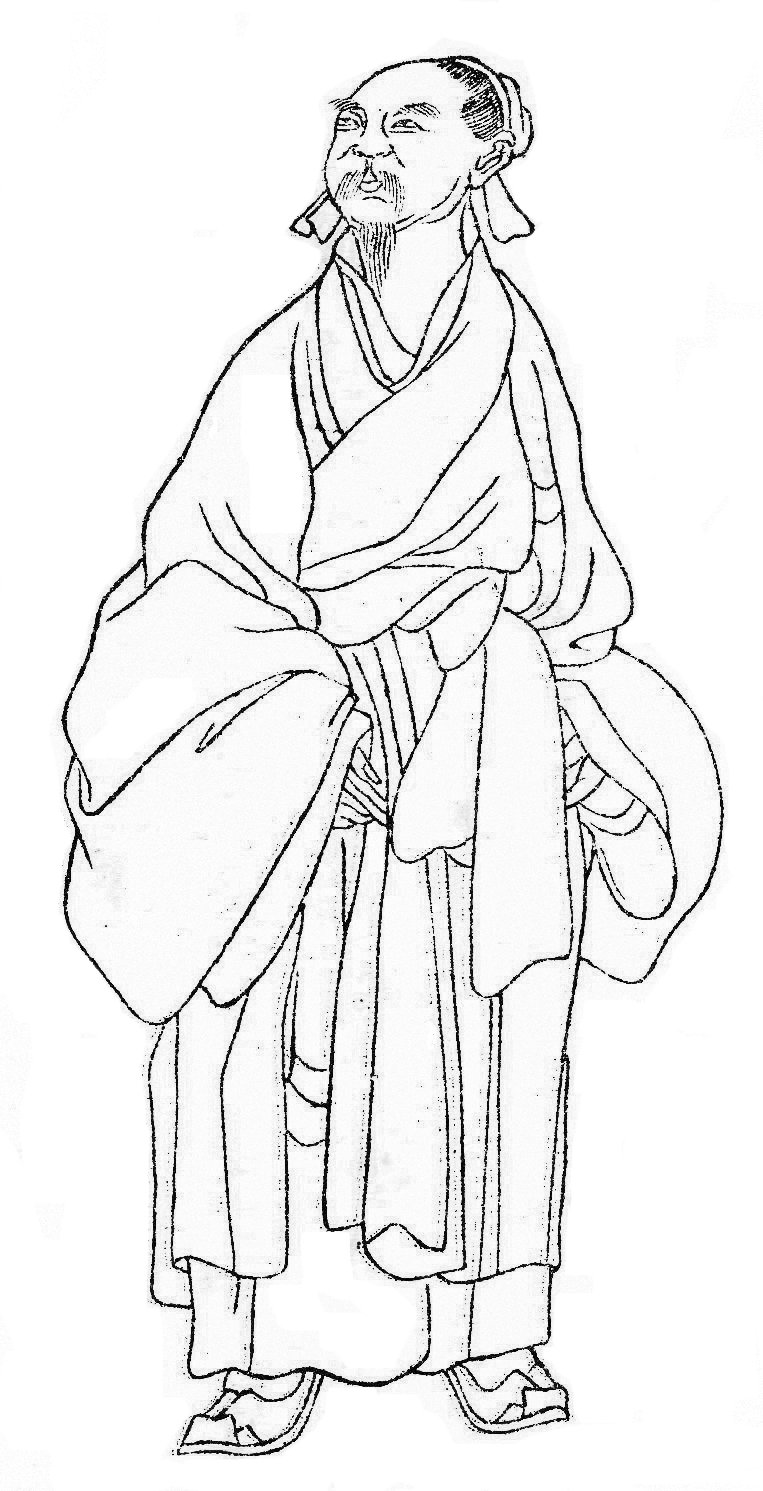
Zhang Zai
Zhang Zai (simplified Chinese: 张载; traditional Chinese: 張載; pinyin: Zhāng Zài; Wade–Giles: Chang Tsai) was a Chinese philosopher and politician. He is best known for laying out four ontological goals for intellectuals: to build up the manifestations of Heaven and Earth's spirit, to build up good life for the populace,
Read the full pageZhang Zai (simplified Chinese: 张载; traditional Chinese: 張載; pinyin: Zhāng Zài; Wade–Giles: Chang Tsai) (1020–1077) was a Chinese philosopher and politician. He is best known for laying out four ontological goals for intellectuals: to build up the manifestations of Heaven and Earth's spirit, to build up good life for the populace, to develop past sages' endangered scholarship, and to open up eternal peace.
Zhang Zai was born in 1020 CE in Hengqu, in the province of Shaanxi. During his childhood he showed an interest in military affairs, but began to study the Confucian texts. Like many Song philosophers, Zhang was initially frustrated with Confucian thought and studied Buddhism along with Daoism for a number of years. But he decided that "The Way" could not be found in Buddhism or Daoism and returned to Confucian texts. His exploration of diverse religious thought had a major impact on his own ideals. In 1056 CE Zhang lectured on the Classic of Changes, which is one of his most best known works. It is possible that around this time Zhang first met the Cheng brothers. After passing the highest level of the civil service examinations, he held several minor government posts.
- 6
 PhilosopherChinese1033 – 1107
Cheng Yi
Cheng Yi, also known by various other names and romanizations, was a Chinese classicist, essayist, philosopher, and politician of the Song Dynasty. He worked with his older brother Cheng Hao.
Read the full pageCheng Yi (1033–1107), also known by various other names and romanizations, was a Chinese classicist, essayist, philosopher, and politician of the Song Dynasty. He worked with his older brother Cheng Hao. Like his brother, he was a student of Zhou Dunyi, a friend of Shao Yong, and a nephew of Zhang Zai. The five of them, along with Sima Guang, are called the Six Great Masters by his follower Zhu Xi. He became a prominent figure in neo-Confucianism, and the philosophy of Cheng Yi, Cheng Hao and Zhu Xi is referred to as the Cheng–Zhu school or the Rationalistic School.
Cheng was born in Luoyang, Henan in 1033. Cheng entered the national university in 1056, and received the "presented scholar" degree in 1059. He lived and taught in Luoyang, and declined numerous appointments to high offices. He campaigned against the reformist policies of Wang Anshi, and after the reformers were dismissed from office, he was appointed expositor-in-waiting in 1086 to begin lecturing the emperor on Confucianism. He was more aggressive and obstinate than his brother, and made several enemies, including Su Shi, the leader of the Sichuan group. In 1097, his enemies were able to ban his teachings, confiscate his properties, and banish him. He was pardoned three years later, but was blacklisted and his work was once more banned in 1103. He was finally pardoned in 1106, one year before his death.
- 7
 PhilosopherChinese1182 – 1251
Sakya Pandita
Sakya Pandita Kunga Gyeltsen (Tibetan: ས་སྐྱ་པཎ་ཌི་ཏ་ཀུན་དགའ་རྒྱལ་མཚན, Wylie: Sa skya Paṇḍita Kun dga’ rgyal mtshan ) who lived from was a Tibetan spiritual leader and Buddhist scholar and the fourth of the Five Sakya Forefathers (Wylie: sa skya gong ma lnga). Künga Gyeltsen is generally known simply as Sakya Pandita
Read the full pageSakya Pandita Kunga Gyeltsen (Tibetan: ས་སྐྱ་པཎ་ཌི་ཏ་ཀུན་དགའ་རྒྱལ་མཚན, Wylie: Sa skya Paṇḍita Kun dga’ rgyal mtshan ) who lived from (1 April 1182 – 28 December 1251) was a Tibetan spiritual leader and Buddhist scholar and the fourth of the Five Sakya Forefathers (Wylie: sa skya gong ma lnga). Künga Gyeltsen is generally known simply as Sakya Pandita (or Sapan for short), a title given to him in recognition of his scholarly achievements and knowledge of Sanskrit. He is held in the tradition to have been an emanation of Manjusri, the embodiment of the wisdom of all the Buddhas.
Sakya Pandita was also known as a great scholar in Tibet, India, Mongolia and China and was proficient in the five great sciences of Buddhist philosophy, medicine, grammar, dialectics and sacred Sanskrit literature as well as the minor sciences of rhetoric, synonymies, poetry, music, dancing and astrology. He is considered to be the fourth Sakya Forefather and sixth Sakya Trizin and one of the most important figures in the Sakya lineage.