Chinese thinkers, renaissance & early modern
- 1
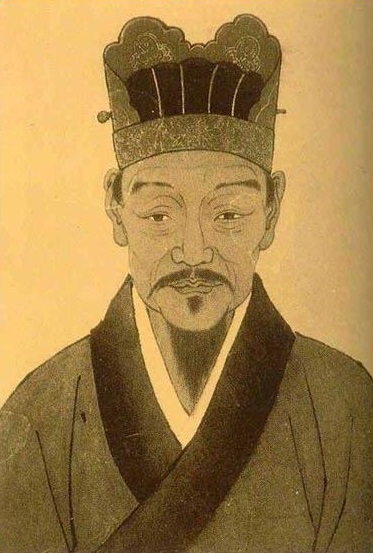 PhilosopherChinese1527 – 1602
Li Zhi
Li Zhi, often known by his pseudonym Zhuowu (which means, "I who am smart"), was a Chinese philosopher, historian and writer of the late Ming dynasty. A critic of the Neo-Confucianist views espoused by Zhu Xi, which was then the orthodoxy of the Ming government, he was persecuted and committed suicide in prison.
Read the full pageLi Zhi (1527–1602), often known by his pseudonym Zhuowu (which means, "I who am smart"), was a Chinese philosopher, historian and writer of the late Ming dynasty. A critic of the Neo-Confucianist views espoused by Zhu Xi, which was then the orthodoxy of the Ming government, he was persecuted and committed suicide in prison.
Li Zhi was born in Jinjiang, Fujian province (in modern Quanzhou). His ancestor by seven generations was Lin Nu, the son of Li Lü, a maritime merchant. Lin Nu visited Hormuz in Persia in 1376, converted to Islam upon marriage to a Semu girl (娶色目女) (who was most likely either Persian or Arab), and brought her back to Quanzhou. This was recorded in the Lin and Li genealogy (林李宗譜). However, the new faith did not take root in his lineage and the family stopped practising Islam during the time of his grandfather. His father made a living by teaching, and Li Zhi was therefore educated from an early age.
- 2
 PhilosopherChinese1619 – 1692
Wang Fuzhi
Wang Fuzhi, courtesy name Ernong (而農), pseudonym Chuanshan (船山), was a Chinese essayist, historian, and philosopher of the late Ming and early Qing dynasties.
Read the full pageWang Fuzhi (Chinese: 王夫之; pinyin: Wáng Fūzhī; Wade–Giles: Wang² Fu¹-chih¹; 1619–1692), courtesy name Ernong (而農), pseudonym Chuanshan (船山), was a Chinese essayist, historian, and philosopher of the late Ming and early Qing dynasties.
Born to a scholarly family in Hengyang in Hunan province in 1619, Wang Fuzhi began his education in the Chinese classic texts when very young. He passed his civil-service examination at the age of twenty-four, but his projected career was diverted by the invasion of China by the Manchus, the founders of the Qing dynasty.