American thinkers, early 20th century: Hartshorne to Gödel
- 1PhilosopherAmericas1897 – 2000
Charles Hartshorne
Charles Hartshorne was an American philosopher who concentrated primarily on the philosophy of religion and metaphysics, but also contributed to ornithology. He developed the neoclassical idea of God and produced a modal proof of the existence of God that was a development of Anselm of Canterbury's ontological argument
- ◆Process theology
- ◆Modal
- ◆proof of the existence of God
- ◆Dipolar theism
Read the full pageCharles Hartshorne (; June 5, 1897 – October 9, 2000) was an American philosopher who concentrated primarily on the philosophy of religion and metaphysics, but also contributed to ornithology. He developed the neoclassical idea of God and produced a modal proof of the existence of God that was a development of Anselm of Canterbury's ontological argument, which influenced Gödel's ontological proof.
Hartshorne is also noted for developing Alfred North Whitehead's process philosophy into process theology.
- 2PhilosopherAmericas1900 – 1982
Haskell Curry
Haskell Brooks Curry was an American mathematician and computer scientist. Curry is best known for his seminal work in combinatory logic.
- ◆Curry's paradox
- ◆Currying
- ◆Curry–Howard correspondence
- ◆Scott–Curry theorem
- ◆B, C, K, W system
- ◆Combinatory logic
Read the full pageHaskell Brooks Curry ( HAS-kəl; September 12, 1900 – September 1, 1982) was an American mathematician and computer scientist. Curry is best known for his seminal work in combinatory logic. Although its initial concept was based on a paper by Moses Schönfinkel, Curry did much of the development. Curry is also known for Curry's paradox and the Curry–Howard correspondence. Named for him are the programming languages Haskell, Brook and Curry, and the concept of currying, a method to transform functions, used in mathematics and computer science.
Curry was born on (1900-09-12)September 12, 1900 in Millis, Massachusetts, to Samuel Silas Curry and Anna Baright Curry, who ran a school for elocution. He entered Harvard University in 1916 to study medicine but switched to mathematics before graduating in 1920. After two years of graduate work in electrical engineering at Massachusetts Institute of Technology (MIT), he returned to Harvard to study physics, earning a Master of Arts (M.A.) in 1924. Curry's interest in mathematical logic began during this period when he was introduced to the Principia Mathematica, the attempt by Alfred North Whitehead and Bertrand Russell to ground mathematics in symbolic logic. Remaining at Harvard, Curry pursued a Doctor of Philosophy (Ph.D.) in mathematics. While he was directed by George David Birkhoff to work on differential equations, his interests continued to shift to logic. In 1927, while an instructor at Princeton University, he discovered the work of Moses Schönfinkel in combinatory logic. Schönfinkel's work had anticipated much of Curry's own research, and as a consequence, he moved to University of Göttingen where he could work with Heinrich Behmann and Paul Bernays, who were familiar with Schönfinkel's work. Curry was supervised by David Hilbert and worked closely with Bernays, receiving a Ph.D. in 1930 with a dissertation on combinatory logic.
- 3
 PhilosopherAmericas1901 – 1983
Alfred Tarski
Alfred Tarski was a Polish logician and mathematician. A prolific author best known for his work on model theory, metamathematics, and algebraic logic, he also contributed to abstract algebra, topology, geometry, measure theory, mathematical logic, set theory, type theory, and analytic philosophy.
- ◆logic
- ◆Semantic theory of truth
- ◆Convention T
- ◆Tarski's undefinability theorem
- ◆model theory
- ◆Logic of relations
Read the full pageAlfred Tarski (; Polish: [ˈtarskʲi]; born Alfred Teitelbaum; January 14, 1901 – October 26, 1983) was a Polish logician and mathematician. A prolific author best known for his work on model theory, metamathematics, and algebraic logic, he also contributed to abstract algebra, topology, geometry, measure theory, mathematical logic, set theory, type theory, and analytic philosophy.
Educated in Poland at the University of Warsaw, and a member of the Lwów–Warsaw school of logic and the Warsaw school of mathematics, in 1939 he immigrated to the United States, where in 1945 he became a naturalized citizen. Tarski taught and carried out research in mathematics at the University of California, Berkeley, from 1942 until his death in 1983.
- 4
 PhilosopherAmericas1901 – 1985
Eric Voegelin
Eric Voegelin was a German and American political philosopher. He was born in Cologne, and educated in political science at the University of Vienna, where he became an associate professor of political science in the law faculty.
- ◆Metaxy
- ◆Ellis Sandoz
- ◆Gnosticism
- ◆Don't immanentize the eschaton
Read the full pageEric Voegelin (born Erich Hermann Wilhelm Vögelin, German: [ˈføːgəliːn]; January 3, 1901 – January 19, 1985) was a German and American political philosopher. He was born in Cologne, and educated in political science at the University of Vienna, where he became an associate professor of political science in the law faculty. In 1938, he and his wife fled from the Nazi forces which had entered Vienna. They emigrated to the United States, where they became citizens in 1944. He spent most of his academic career at Louisiana State University, the Ludwig-Maximilians-Universität München, and the Hoover Institution of Stanford University.
Voegelin was born in Cologne on January 3, 1901. His parents moved to Vienna in 1910, and he eventually studied at the University of Vienna. The advisers on his dissertation were Hans Kelsen and Othmar Spann. After his habilitation there in 1928, he taught political theory and sociology. In Austria, Voegelin began lasting friendships with Alfred Schütz and with Friedrich Hayek.
- 5
 PhilosopherAmericas1901 – 1990
Manly P. Hall
Manly Palmer Hall was a Canadian writer, lecturer, astrologer, and mystic. Over his 70-year career he gave thousands of lectures and published over 150 volumes, of which the best known is The Secret Teachings of All Ages.
Read the full pageManly Palmer Hall (18 March 1901 – 29 August 1990) was a Canadian writer, lecturer, astrologer, and mystic. Over his 70-year career he gave thousands of lectures and published over 150 volumes, of which the best known is The Secret Teachings of All Ages (1928). In 1934, he founded the Philosophical Research Society in Los Angeles.
Hall was born in 1901 in Peterborough, Ontario, Canada, to Louise Antist (née Palmer) Hall (1877–1953), a chiropractor and member of the Rosicrucian Fellowship, and William S. Hall, a dentist. Hall is said to have never known his father. In 1919, Hall moved to Los Angeles to reunite with his birth mother who was living in Santa Monica. After moving in with her, he very soon after became drawn to mysticism, esoteric philosophies and their underlying principles.
- 6PhilosopherAmericas1901 – 1979
Charles W. Morris
Charles William Morris was an American philosopher and semiotician.
Read the full pageCharles William Morris (May 23, 1901 – January 15, 1979) was an American philosopher and semiotician.
A son of Charles William and Laura (Campbell) Morris, Charles William Morris was born on May 23, 1901, in Denver, Colorado.
- 7
 PhilosopherAmericas1902 – 1983
Eric Hoffer
Eric Hoffer was an American philosopher and social critic. A moderate with an atypical working-class background, Hoffer wrote ten books over his career and was awarded the Presidential Medal of Freedom in February 1983.
Read the full pageEric Hoffer (July 25, 1902 – May 21, 1983) was an American philosopher and social critic. A moderate with an atypical working-class background, Hoffer wrote ten books over his career and was awarded the Presidential Medal of Freedom in February 1983. His first book, The True Believer (1951), was widely recognized as a classic, receiving critical acclaim from both scholars and laymen, although Hoffer believed that The Ordeal of Change (1963) was his finest work. The Eric Hoffer Book Award is an international literary prize established in his honor. The University of California, Berkeley awards an annual literary prize named jointly for Hoffer.
Many elements of Hoffer's early life are unverified, but in autobiographical statements, Hoffer claimed to have been born in 1902 in The Bronx, New York City, New York, to Knut and Elsa (Goebel) Hoffer. His parents were immigrants from Alsace, then part of Imperial Germany. By age five, Hoffer could already read in both English and his parents' native German. He also spoke Hebrew. When he was five, his mother fell down the stairs with him in her arms. He later recalled, "I lost my sight at the age of seven. Two years before, my mother and I fell down a flight of stairs. She did not recover and died in that second year after the fall. I lost my sight and, for a time, my memory." Hoffer spoke with a pronounced German accent all his life, and spoke the language fluently. He was raised by a live-in relative or servant, a German immigrant named Martha. His eyesight inexplicably returned when he was 15. Fearing he might lose it again, he seized on the opportunity to read as much as he could. His recovery proved permanent, but Hoffer never abandoned his reading habit.
- 8PhilosopherAmericas1903 – 1995
Alonzo Church
Alonzo Church was an American computer scientist, mathematician, logician, and philosopher who made major contributions to mathematical logic and the foundations of theoretical computer science. He is best known for the lambda calculus, the Church–Turing thesis, proving the unsolvability of the Entscheidungsproblem ("d
- ◆Lambda calculus
- ◆Simply typed lambda calculus
- ◆Church encoding
- ◆Church's theorem
- ◆Church–Kleene ordinal
- ◆Church–Turing thesis
Read the full pageAlonzo Church (June 14, 1903 – August 11, 1995) was an American computer scientist, mathematician, logician, and philosopher who made major contributions to mathematical logic and the foundations of theoretical computer science. He is best known for the lambda calculus, the Church–Turing thesis, proving the unsolvability of the Entscheidungsproblem ("decision problem"), the Frege–Church ontology, and the Church–Rosser theorem. Alongside his doctoral student Alan Turing, Church is considered one of the founders of computer science.
Alonzo Church was born on June 14, 1903, in Washington, D.C., where his father, Samuel Robbins Church, was a justice of the peace and the judge of the Municipal Court for the District of Columbia. He was the grandson of Alonzo Webster Church (1829-1909), United States Senate Librarian from 1881 to 1901, and great-grandson of Alonzo Church, a professor of Mathematics and Astronomy and 6th President of the University of Georgia. As a young boy, Church was partially blinded by an air gun accident. The family later moved to Virginia after his father lost his position at the university because of failing eyesight. With help from his uncle, also named Alonzo Church, the son attended the private Ridgefield School for Boys in Ridgefield, Connecticut. After graduating from Ridgefield in 1920, Church attended Princeton University, where he was an exceptional student. He published his first paper on Lorentz transformations in 1924 and graduated the same year with a degree in mathematics. He stayed at Princeton for graduate work, earning a Ph.D. in mathematics in three years under Oswald Veblen.
- 9
 PhilosopherAmericas1905 – 1982
Ayn Rand
Novelist-philosopher of Objectivism: rational self-interest and laissez-faire capitalism.
- ◆Objectivism
- ◆Rational egoism
Read the full pageAlice O'Connor (born Alisa Zinovyevna Rosenbaum; February 2 [O.S. January 20], 1905 – March 6, 1982), better known by her pen name Ayn Rand ( ), was a Russian-American writer and philosopher. She is known for her fiction and for developing a philosophical system which she named Objectivism.
Born and educated in Russia, she moved to the United States in 1926. After two early novels that were initially unsuccessful and two Broadway plays, Rand achieved fame with her 1943 novel The Fountainhead. In 1957, she published her best-selling work, the novel Atlas Shrugged. Afterward, until her death in 1982, she turned to non-fiction to promote her philosophy, publishing her own periodicals and releasing several collections of essays.
- 10
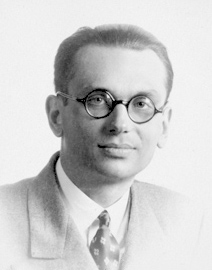 PhilosopherAmericas1906 – 1978
Kurt Gödel
Kurt Friedrich Gödel was a logician, mathematician, cosmologist, and philosopher. Considered along with Aristotle and Gottlob Frege to be one of the most significant logicians in history, Gödel profoundly influenced scientific and philosophical thinking in the 20th century (at a time when Bertrand Russell, Alfred North
- ◆Gödel's incompleteness theorems
- ◆Gödel's completeness theorem
- ◆Gödel's constructible universe
- ◆Gödel metric
- ◆closed timelike curve
- ◆Gödel logic
Read the full pageKurt Friedrich Gödel ( GUR-dəl, GUH-dəl; German: [ˈkʊʁt ˈɡøːdl̩] ; April 28, 1906 – January 14, 1978) was a logician, mathematician, cosmologist, and philosopher. Considered along with Aristotle and Gottlob Frege to be one of the most significant logicians in history, Gödel profoundly influenced scientific and philosophical thinking in the 20th century (at a time when Bertrand Russell, Alfred North Whitehead, and David Hilbert were using logic and set theory to investigate the foundations of mathematics), building on earlier work by Frege, Richard Dedekind, and Georg Cantor.
Gödel's discoveries in the foundations of mathematics led to the proof of his completeness theorem in 1929 as part of his dissertation to earn a doctorate at the University of Vienna, and the publication of Gödel's incompleteness theorems two years later, in 1931. The incompleteness theorems address limitations of formal axiomatic systems. In particular, they imply that a formal axiomatic system satisfying certain technical conditions cannot decide the truth value of all statements about the natural numbers, and cannot prove that it is itself consistent. To prove this, Gödel developed a technique now known as Gödel numbering, which codes formal expressions as natural numbers.