
Eric Voegelin
Eric Voegelin was a German and American political philosopher. He was born in Cologne, and educated in political science at the University of Vienna, where he became an associate professor of political science in the law faculty.
Eric Voegelin (born Erich Hermann Wilhelm Vögelin, German: [ˈføːgəliːn]; January 3, 1901 – January 19, 1985) was a German and American political philosopher. He was born in Cologne, and educated in political science at the University of Vienna, where he became an associate professor of political science in the law faculty. In 1938, he and his wife fled from the Nazi forces which had entered Vienna. They emigrated to the United States, where they became citizens in 1944. He spent most of his academic career at Louisiana State University, the Ludwig-Maximilians-Universität München, and the Hoover Institution of Stanford University.
Early life
Voegelin was born in Cologne on January 3, 1901. His parents moved to Vienna in 1910, and he eventually studied at the University of Vienna. The advisers on his dissertation were Hans Kelsen and Othmar Spann. After his habilitation there in 1928, he taught political theory and sociology. In Austria, Voegelin began lasting friendships with Alfred Schütz and with Friedrich Hayek.
Career
As a result of the Anschluss in 1938, Voegelin was fired from his job. Narrowly avoiding arrest by the Gestapo and after a brief stay in Switzerland, he arrived in the United States. He taught at various universities before he joined Louisiana State University's Department of Government in 1942. Voegelin remained in Baton Rouge until 1958, when he accepted an offer by Munich's Ludwig-Maximilians-Universität München to fill Max Weber's former chair in political science, which had been unoccupied since Weber's death in 1920. In Munich, he founded the Institut für Politische Wissenschaft. Voegelin returned to the United States in 1969 to join Stanford University's Hoover Institution on War, Revolution, and Peace as Henry Salvatori Fellow. There he continued his work until his death. He was a member of the Philadelphia Society.
Although some have found his books obscure, according to his student Ellis Sandoz, he was a "wonderfully lucid lecturer with the gift of explaining with complete intelligibility the most abstruse theories to the comprehension and fascination" of his students.
Work
In his later life Voegelin worked to account for the endemic political violence of the twentieth century, in an effort variously referred to as a philosophy of politics, history, or consciousness. In Voegelin's Weltanschauung, he "blamed a flawed utopian interpretation of Christianity for spawning totalitarian movements like Nazism and Communism." Voegelin eschewed any ideological labels or categorizations that readers and followers attempted to impose on his work. Nevertheless, his work came to the forefront during the Cold War and was adopted mainly by conservatives.
Voegelin published scores of books, essays, and reviews in his lifetime. An early work was Die politischen Religionen (1938; The Political Religions), on totalitarian ideologies as political religions due to their structural similarities to religion. He wrote the multi-volume (English-language) Order and History, which began publication in 1956 and remained incomplete at the time of his death 29 years later. His 1951 Charles Walgreen lectures, published as The New Science of Politics, is sometimes seen as a prolegomenon to this series, and remains his best known work. He left many manuscripts unpublished, including a history of political ideas, which has since been published in eight volumes.
Order and History was originally conceived as a five-volume examination of the history of order occasioned by Voegelin's personal experience of the disorder of his time. The first three volumes, Israel and Revelation, The World of the Polis, and Plato and Aristotle, appeared in rapid succession in 1956 and 1957, and focused on the evocations of order in the ancient Near East and Greece.
Voegelin then encountered difficulties which slowed down the publication. This, combined with his university administrative duties and work related to the new institute, meant that seventeen years separated the fourth from the third volume. His new concerns were indicated in the 1966 German collection Anamnesis: Zur Theorie der Geschichte und Politik. The fourth volume, The Ecumenic Age, appeared in 1974. It broke with the chronological pattern of the previous volumes by investigating symbolizations of order ranging in time from the Sumerian King List to Hegel. Work on the final volume, In Search of Order, occupied Voegelin's final days and it was published posthumously in 1987.
One of Voegelin's main points in his later work is that our experience of transcendence conveys a sense of order. Although transcendence can never be fully defined or described, it may be conveyed in symbols. A particular sense of transcendent order serves as a basis for a particular political order. A philosophy of consciousness can therefore become a philosophy of politics. Insights may become fossilised as dogma.
Voegelin is more interested in the ontological issues that arise from these experiences than the epistemological questions of how we know that a vision of order is true or not. Nevertheless, for Voegelin the essence of truth is trust. All philosophy begins with experience of the divine. Since God is experienced as good, one can be confident that reality is knowable. Here Voegelin is simply repeating the classical Greek argument (See "Science, Politic, and Gnosticism"), which was also taken up by Descartes in the Second Meditation. Given the possibility of knowledge, Voegelin holds there are two modes: intentionality and luminosity. Intentionality is like a spotlight focusing on a single element on a stage, and luminosity is like a floodlight showing the context. Visions of order belong to the latter category. The truth of any vision is confirmed by its orthodoxy, by what Voegelin jokingly calls its lack of originality. ("Equivalences of Experience and Symbolization In History") A further crucial element of Voegelin's epistemology is the distinction between an experience of reality and its symbolization. Experiences may be "equivalent", but the symbolization will be inferior if it belies a deformed existence under God. (See "On Hegel: A Study in Sorcery" and "Immortality: Experience and Symbol") This is clear, for example, in the differing accounts of anxiety given by Kierkegaard and Sartre, or in the different interpretations of the experience of isness given by Ekhart and Heidegger.
Voegelin's work does not fit in any standard classifications, although some of his readers have found similarities in it to contemporaneous works by, for example, Hans Jonas, Ernst Cassirer, Martin Heidegger, and Hans-Georg Gadamer. Voegelin often invents terms or uses old ones in new ways. However, there are patterns in his work with which the reader can quickly become familiar.
According to Ellis Sandoz, Voegelin may well be America's leading philosopher, and is rightly compared with the premier minds of our century and, perhaps, of the millennia. Thomas Altizer has said that Order and History "may someday be perceived as the most important work of Old Testament scholarship ever written in the United States," adding that it is noteworthy that it was written by a political scientist and philosopher.
Among indications of growing engagement with Voegelin's work are the 305 page international bibliography published in 2000 by Munich's Wilhelm Fink Verlag; the presence of dedicated research centers at universities in the United States, Germany, Italy, and the United Kingdom; the appearance of recent translations in languages ranging from Portuguese to Japanese; and the publishing of a 34 volume collection of his primary works by the University of Missouri Press and various primary and secondary works offered by the Eric-Voegelin-Archiv of LMU Munich (Ludwig-Maximilians-Universität München).
On gnosticism
In his The New Science of Politics, Order and History, and Science, Politics and Gnosticism, Voegelin opposed what he believed to be unsound Gnostic influences in politics.
Eugene Webb stated that Voegelin understood "gnosis" as
a purported direct, immediate apprehension or vision of truth without the need for critical reflection; the special gift of a spiritual and cognitive elite
and "gnosticism" as
A type of thinking that claims absolute cognitive mastery of reality. Relying as it does on a claim to gnosis, gnosticism considers its knowledge not subject to criticism. Gnosticism may take transcendentalizing (as in the case of the Gnostic movement of late antiquity) or immanentizing forms (as in the case of Marxism).
Accordingly, Voegelin distinguished between ancient and modern gnosticisms: whereas the former sought salvation in a realm transcending the actual world, the "modern" form aimed to change it immanently (see below).
Apart from the Classical Christian writers against heresy, his sources on Gnosticism were secondary since the texts of the Nag Hammadi library were not yet widely available. For example, Voegelin used Hans Urs von Balthasar, Henri de Lubac, and Hans Jonas.
Voegelin perceived similarities between ancient Gnosticism and modernist political theories, particularly Communism and Nazism. He identified the root of the Gnostic impulse as alienation, that is, a sense of disconnection from society and a belief that this lack is the result of the inherent disorder, or even evil, of the world. That alienation has two effects:
The first is the belief that the disorder of the world can be transcended by extraordinary insight, learning, or knowledge, called a Gnostic Speculation by Voegelin (he claimed that the Gnostics themselves referred to that as gnosis).
The second is the desire to implement and or create a policy to actualize the speculation, or Immanentize the eschaton: to create a sort of heaven on earth within history.
Adapted from the Wikipedia article Eric Voegelin, available under CC BY-SA 4.0.
Connections
Ideas & arguments
3Contributed to
2
You might also explore
 Jean-Paul Sartre★Modern European1905 – 1980Existentialist who declared that existence precedes essence and that we are condemned to be free.
 Simone WeilModern European1909 – 1943French philosopher-mystic of attention, affliction and the needs of the soul.
 Hans-Georg GadamerModern European1900 – 2002Hans-Georg Gadamer was a German philosopher of the continental tradition best known for his work on hermeneutics…
 Meister EckhartMedieval Latin1260 – 1328Eckhart von Hochheim, commonly known as Meister Eckhart (German: [ˈmaɪstɐ ˈʔɛkaʁt]), was a German Catholic priest…
 Max SchelerModern European1874 – 1928Max Ferdinand Scheler was a German philosopher known for his work in phenomenology, ethics, and philosophical…
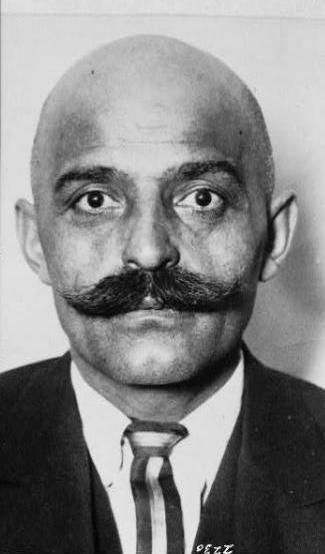 George GurdjieffModern European1866 – 1949George Ivanovich Gurdjieff was a philosopher, mystic, spiritual teacher, composer, and movements teacher. Gurdjieff…