American thinkers, early 20th century: Vasconcelos to Post
- 1
 PhilosopherAmericas1881 – 1959
José Vasconcelos
José Vasconcelos Calderón, called the "cultural caudillo" of the Mexican Revolution, was an important Mexican writer, philosopher, lawyer, and politician. He is one of the most influential and controversial personalities in the development of modern Mexico.
Read the full pageJosé Vasconcelos Calderón (28 February 1882 – 30 June 1959), called the "cultural caudillo" of the Mexican Revolution, was an important Mexican writer, philosopher, lawyer, and politician. He is one of the most influential and controversial personalities in the development of modern Mexico. His philosophy of the "cosmic race" affected all aspects of Mexican sociocultural, political, and economic policies.
Vasconcelos was born in Oaxaca, Oaxaca, on February 28, 1882, the son of a customs official. José's mother, a pious Catholic, died when José was 16. The family moved to the border town of Piedras Negras, Coahuila, where he grew up attending school in Eagle Pass, Texas. He became bilingual in English and Spanish, which opened doors to the English-speaking world. The family also lived in Campeche while the northern border area was unstable. His time living on the Texas border likely contributed to fostering his idea of the Mexican "cosmic race" and rejection of Anglo culture.
- 2
 PhilosopherAmericas1885 – 1981
Will Durant
William James Durant was an American historian and philosopher, best known for his eleven-volume work, The Story of Civilization, which contains and details the history of Eastern and Western civilizations. It was written in collaboration with his wife, Ariel Durant, and published between 1935 and 1975.
Read the full pageWilliam James Durant (; November 5, 1885 – November 7, 1981) was an American historian and philosopher, best known for his eleven-volume work, The Story of Civilization, which contains and details the history of Eastern and Western civilizations. It was written in collaboration with his wife, Ariel Durant, and published between 1935 and 1975. He was earlier noted for The Story of Philosophy (1926), described as "a groundbreaking work that helped to popularize philosophy".
Durant conceived of philosophy as total perspective or seeing things sub specie totius (i.e., "from the perspective of the whole")—a phrase inspired by Spinoza's sub specie aeternitatis, roughly meaning "from the perspective of the eternal". He sought to unify and humanize the great body of historical knowledge, which had grown voluminous and become fragmented into esoteric specialties, and to vitalize it for contemporary application. As a result of their success, he and his wife were jointly awarded the Pulitzer Prize for General Nonfiction in 1968 and the Presidential Medal of Freedom in 1977.
- 3
 PhilosopherAmericas1885 – 1954
Alain LeRoy Locke
Alain LeRoy Locke was an American writer, philosopher, and educator. Distinguished in 1907 as the first African American Rhodes Scholar, Locke became known as the philosophical architect—the acknowledged "Dean"—of the Harlem Renaissance.
Read the full pageAlain LeRoy Locke (; September 13, 1885 – June 9, 1954) was an American writer, philosopher, and educator. Distinguished in 1907 as the first African American Rhodes Scholar, Locke became known as the philosophical architect—the acknowledged "Dean"—of the Harlem Renaissance. He is frequently included in listings of influential African Americans. On March 19, 1968, Martin Luther King Jr. proclaimed: "We're going to let our children know that the only philosophers that lived were not Plato and Aristotle, but W. E. B. Du Bois and Alain Locke came through the universe."
He was born Arthur Leroy Locke in Philadelphia, Pennsylvania, on September 13, 1885, to parents Pliny Ishmael Locke (1850–1892) and Mary (née Hawkins) Locke (1853–1922), both of whom were descended from prominent families of free blacks. Called "Roy" as a boy, he was their only surviving child. His father was one of the first black employees of the U.S. Postal Service, and his paternal grandfather taught at Philadelphia's Institute for Colored Youth. His mother Mary was a teacher and inspired Locke's passion for education and literature. Mary's grandfather, Charles Shorter, fought as a soldier and was a hero in the War of 1812.
- 4
 PhilosopherAmericas1886 – 1965
Paul Tillich
Paul Johannes Tillich was a German and American Christian existentialist philosopher, religious socialist, and Lutheran theologian who was one of the most influential theologians of the twentieth century. Tillich taught at German universities before migrating to the United States in 1933, where he taught at Union Theol
- ◆Theology of culture
- ◆Kairos
Read the full pagePaul Johannes Tillich (; German: [ˈtɪlɪç]; August 20, 1886 – October 22, 1965) was a German and American Christian existentialist philosopher, religious socialist, and Lutheran theologian who was one of the most influential theologians of the twentieth century. Tillich taught at German universities before migrating to the United States in 1933, where he taught at Union Theological Seminary, Harvard University, and the University of Chicago.
For the general public, Tillich wrote the well-received The Courage to Be (1952) and Dynamics of Faith (1957). His major three-volume Systematic Theology (1951–1963) was well-received among theologians, and in many points it was an answer to existentialist critique of Christianity.
- 5
 PhilosopherAmericas1888 – 1973
Eugen Rosenstock-Huessy
Eugen Rosenstock-Huessy was a historian and social philosopher, whose work spanned the disciplines of history, theology, sociology, linguistics and beyond. Born in Berlin, Germany into a non-observant Jewish family, the son of a prosperous banker, he converted to Christianity in his late teens, and thereafter the inter
- ◆social philosophy
Read the full pageEugen Rosenstock-Huessy (German pronunciation: [ˈɔʏɡeːn ˈʁoːzn̩ʃtɔk ˈhʏsi, ˈɔʏɡn̩ -]; July 6, 1888 – February 24, 1973) was a historian and social philosopher, whose work spanned the disciplines of history, theology, sociology, linguistics and beyond. Born in Berlin, Germany into a non-observant Jewish family, the son of a prosperous banker, he converted to Christianity in his late teens, and thereafter the interpretation and reinterpretation of Christianity was a consistent theme in his writings. After graduating from High School, he served as a voluntary teacher at the Samsonschule in Wolfenbuettel. He met and married Margrit Hüssy in 1914. In 1925, the couple legally combined their names. They had a son, Hans, in 1921.
Rosenstock-Huessy served as an officer in the German army during World War I. His experience caused him to reexamine the foundations of liberal Western culture. He then pursued an academic career in Germany as a specialist in medieval law, which was disrupted by the rise of Nazism. In 1933, after Adolf Hitler became Chancellor of Germany, he emigrated to the United States where he began a new academic career, initially at Harvard University and then at Dartmouth College, where he taught from 1935 to 1957.
- 6
 PhilosopherAmericas1889 – 1959
Alfonso Reyes
Alfonso Reyes Ochoa was a Mexican writer, philosopher and diplomat. He was nominated for the Nobel Prize in Literature five times and has been acclaimed as one of the greatest authors in the Spanish language.
- ◆Ambassador
Read the full pageAlfonso Reyes Ochoa (17 May 1889 – 27 December 1959) was a Mexican writer, philosopher and diplomat. He was nominated for the Nobel Prize in Literature five times and has been acclaimed as one of the greatest authors in the Spanish language. He served as ambassador of Mexico to Argentina and Brazil.
Born in Monterrey, Nuevo León, Alfonso Reyes was the ninth of the twelve children of General Bernardo Reyes Ogazón, Governor of Nuevo León and Secretary of War and Navy under President Porfirio Díaz (considered by some to be his natural successor), and his wife Aurelia Ochoa-Garibay y Sapién, a member of a prominent family from Jalisco, direct descendants of Conquistador Diego de Ochoa-Garibay, as documented by Reyes in his Parentalia.
- 7
 PhilosopherAmericas1892 – 1971
Reinhold Niebuhr
Karl Paul Reinhold Niebuhr was an American Mainline Protestant theologian in the Reformed tradition, ethicist, commentator on politics and public affairs, and professor at Union Theological Seminary for more than 30 years. Niebuhr was one of America's leading public intellectuals for several decades of the 20th century
Read the full pageKarl Paul Reinhold Niebuhr (June 21, 1892 – June 1, 1971) was an American Mainline Protestant theologian in the Reformed tradition, ethicist, commentator on politics and public affairs, and professor at Union Theological Seminary for more than 30 years. Niebuhr was one of America's leading public intellectuals for several decades of the 20th century and received the Presidential Medal of Freedom in 1964. A public theologian, he wrote and spoke frequently about the intersection of religion, politics, and public policy, with his most influential books including Moral Man and Immoral Society and The Nature and Destiny of Man.
Starting as a minister with working-class sympathies in the 1920s and sharing with many other ministers a commitment to pacifism and socialism, his thinking evolved during the 1930s to neo-orthodox realist theology as he developed the philosophical perspective known as Christian realism. He attacked utopianism as ineffectual for dealing with reality. Niebuhr's realism deepened after 1945 and led him to support American efforts to confront Soviet communism around the world. A powerful speaker, he was one of the most influential thinkers of the 1940s and 1950s in public affairs. Niebuhr battled with religious liberals over what he called their naïve views of the contradictions of human nature and the optimism of the Social Gospel, and battled with religious conservatives over what he viewed as their naïve view of scripture and their narrow definition of "true religion". During this time he was viewed by many as the intellectual rival of John Dewey.
- 8
 PhilosopherAmericas1895 – 1990
Lewis Mumford
Lewis Mumford was an American historian, sociologist, philosopher of technology, and literary critic. Particularly noted for his study of cities and urban architecture, he had a broad career as a writer.
Read the full pageLewis Mumford (October 19, 1895 – January 26, 1990) was an American historian, sociologist, philosopher of technology, and literary critic. Particularly noted for his study of cities and urban architecture, he had a broad career as a writer. He made significant contributions to social philosophy, American literary and cultural history, and the history of technology.
Mumford was influenced by the work of Scottish theorist Sir Patrick Geddes and worked closely with his associate the British sociologist Victor Branford. Mumford was also a contemporary and friend of Frank Lloyd Wright, Clarence Stein, Frederic Osborn, Edmund N. Bacon, and Vannevar Bush.
- 9PhilosopherAmericas1895 – 1985
Susanne Langer
Susanne Katherina Langer was an American philosopher, writer, and educator known for her theories on the influences of art on the mind. She was one of the earliest American women to achieve an academic career in philosophy.
- ◆Distinction between discursive and presentational symbols
Read the full pageSusanne Katherina Langer (; née Knauth; December 20, 1895 – July 17, 1985) was an American philosopher, writer, and educator known for her theories on the influences of art on the mind. She was one of the earliest American women to achieve an academic career in philosophy. Langer is best remembered for her 1942 book Philosophy in a New Key, which was followed by a sequel, Feeling and Form: A Theory of Art, in 1953. In 1960, Langer was elected a Fellow of the American Academy of Arts and Sciences.
Born Susanne Katherina Knauth, Langer was raised in Manhattan's West Side in New York City. She was the daughter of Antonio Knauth, an attorney, and Else Uhlich, both immigrants from Germany. Though she was American born, Langer's primary language was German, as it was strictly spoken in her household throughout her youth, and her German accent remained for her entire life. She was exposed thoroughly to creativity and art, most specifically through music. She was taught to play the cello and the piano, and she continued with the cello for the rest of her life. As a girl, Langer enjoyed reciting the works of great poets as well as traditional children's rhymes and tales. This formed her love for reading and writing, and she would often write her own poems and stories to entertain her younger siblings. Her love of nature began during the summers her family spent in their cottage on Lake George. She married William Leonard Langer, a fellow student at Harvard, in 1921, and in the same year the couple took their studies to Vienna, Austria. They had two sons and moved back to Cambridge, Massachusetts before they divorced in 1942. She died July 17, 1985.
- 10
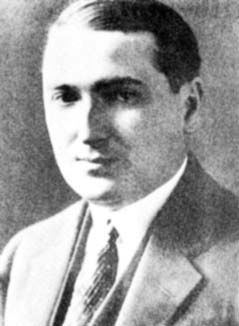 PhilosopherAmericas1897 – 1954
Emil Leon Post
Emil Leon Post was an American mathematician and logician. He is best known for his work in the field that eventually became known as computability theory.
- ◆Formulation 1
- ◆Post correspondence problem
- ◆Principia
- ◆propositional calculus
- ◆Post's inversion formula
- ◆Post's lattice
Read the full pageEmil Leon Post (; February 11, 1897 – April 21, 1954) was an American mathematician and logician. He is best known for his work in the field that eventually became known as computability theory.
Post was born in Augustów, Suwałki Governorate, Congress Poland, Russian Empire (now Poland) into a Polish-Jewish family that immigrated to New York City in May 1904. His parents were Arnold and Pearl Post.