Phenomenology: Husserl to Arendt
Describe experience exactly as it is lived, "back to the things themselves".
- 1
 SchoolModern European1900 – present
Phenomenology
Describe experience exactly as it is lived, "back to the things themselves".
Read the full pagePhenomenology is a philosophical study and movement largely associated with the early 20th century that seeks to objectively investigate the nature of subjective, conscious experience. It attempts to describe the universal features of consciousness while avoiding assumptions about the external world, aiming to describe phenomena as they appear, and to explore the meaning and significance of lived experience.
This approach, while philosophical, has found many applications in qualitative research across different scientific disciplines, especially in the social sciences, humanities, psychology, and cognitive science, but also in fields as diverse as health sciences, architecture, and human-computer interaction, among many others. The application of phenomenology in these fields aims to gain a deeper understanding of subjective experience, rather than focusing on behavior.
- 2PhilosopherModern European1859 – 1938
Edmund Husserl
Founder of phenomenology: bracket assumptions and describe consciousness as it presents itself.
- ◆Phenomenology
- ◆Phenomenological reduction
- ◆eidetic reduction
- ◆Noesis
- ◆noema
- ◆Formal ontology
Read the full pageEdmund Gustav Albrecht Husserl (Austrian German: [ˈɛdmʊnd ˈhʊsɐl]; 8 April 1859 – 27 April 1938) was an Austrian and German philosopher and mathematician who established the school of phenomenology.
In his early work, he elaborated critiques of historicism and of psychologism in logic based on analyses of intentionality. In his mature work, he sought to develop a systematic foundational science based on the so-called phenomenological reduction. Arguing that transcendental consciousness sets the limits of all possible knowledge, Husserl redefined phenomenology as a transcendental idealist philosophy. Husserl's thought profoundly influenced 20th-century philosophy, and he remains a notable figure in contemporary philosophy and beyond.
- 3
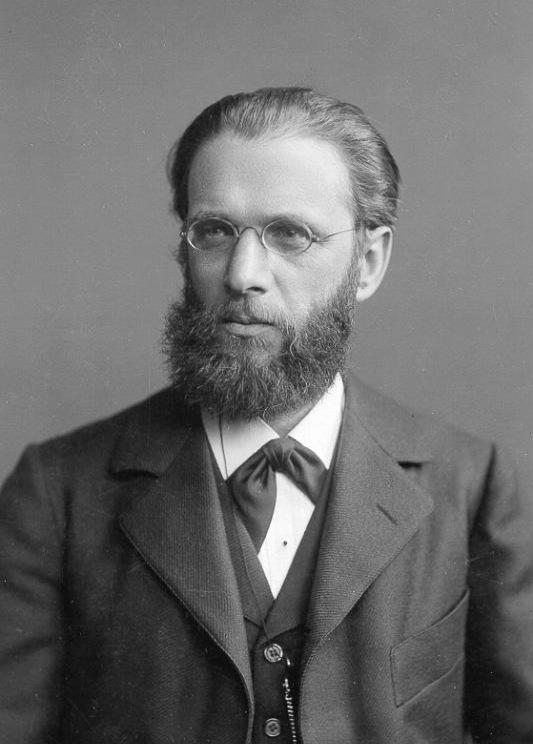 PhilosopherModern European1848 – 1936
Carl Stumpf
Carl Stumpf was a German philosopher, psychologist and musicologist. He is noted for founding the Berlin school of experimental psychology.
- ◆Tone psychology
Read the full pageCarl Stumpf (German: [ʃtʊmpf]; 21 April 1848 – 25 December 1936) was a German philosopher, psychologist and musicologist. He is noted for founding the Berlin school of experimental psychology.
He studied with Franz Brentano at the University of Würzburg before receiving his doctorate at the University of Göttingen in 1868. He also tutored the modernist literature writer Robert Musil at the University of Berlin, and worked with Hermann Lotze, who is famous for his work in perception, at Göttingen. Stumpf is known for his work on the psychology of tones. He had an important influence on his students Wolfgang Köhler and Kurt Koffka who were instrumental in the founding of Gestalt psychology as well as Kurt Lewin, who was also a part of the Gestalt group and was key in the establishment of experimental social psychology in America.
- 4PhilosopherModern European1859 – 1938
Edmund Husserl
Founder of phenomenology: bracket assumptions and describe consciousness as it presents itself.
- ◆Phenomenology
- ◆Phenomenological reduction
- ◆eidetic reduction
- ◆Noesis
- ◆noema
- ◆Formal ontology
Read the full pageEdmund Gustav Albrecht Husserl (Austrian German: [ˈɛdmʊnd ˈhʊsɐl]; 8 April 1859 – 27 April 1938) was an Austrian and German philosopher and mathematician who established the school of phenomenology.
In his early work, he elaborated critiques of historicism and of psychologism in logic based on analyses of intentionality. In his mature work, he sought to develop a systematic foundational science based on the so-called phenomenological reduction. Arguing that transcendental consciousness sets the limits of all possible knowledge, Husserl redefined phenomenology as a transcendental idealist philosophy. Husserl's thought profoundly influenced 20th-century philosophy, and he remains a notable figure in contemporary philosophy and beyond.
- 5
 PhilosopherModern European1874 – 1928
Max Scheler
Max Ferdinand Scheler was a German philosopher known for his work in phenomenology, ethics, and philosophical anthropology. Considered in his lifetime one of the most prominent German philosophers, Scheler developed the philosophical method of Edmund Husserl, the founder of phenomenology.
- ◆Value-ethics
- ◆Ressentiment
- ◆ethical personalism
- ◆ordo amoris
Read the full pageMax Ferdinand Scheler (German: [ˈʃeːlɐ]; 22 August 1874 – 19 May 1928) was a German philosopher known for his work in phenomenology, ethics, and philosophical anthropology. Considered in his lifetime one of the most prominent German philosophers, Scheler developed the philosophical method of Edmund Husserl, the founder of phenomenology.
After Scheler's death in 1928, Martin Heidegger affirmed, with Ortega y Gasset, that all philosophers of the century were indebted to Scheler and praised him as "the strongest philosophical force in modern Germany, nay, in contemporary Europe and in contemporary philosophy as such."
- 6
 PhilosopherModern European1889 – 1976
Martin Heidegger
Asked the question of the meaning of Being; analysed human existence (Dasein) as being-in-the-world and being-toward-death.
- ◆Dasein
- ◆Being-in-the-world
- ◆Being-toward-death
- ◆Authenticity
- ◆The question concerning technology
Read the full pageMartin Heidegger (26 September 1889 – 26 May 1976) was a German philosopher whose work was central to the development of phenomenology, hermeneutics, and existentialism. He has had significant influence within subsequent philosophy, social sciences and humanities, and theology.
Heidegger's magnum opus, Being and Time (1927), is widely considered one of the most significant works of modern philosophy. In it, he introduced the concept of Dasein ("being-there") to describe the distinctive character of human existence, arguing that humans possess a "pre-ontological" understanding of being that shapes how they live and act, which he analyzed in terms of the unitary structure of "being-in-the-world". Through his analysis of Dasein, Heidegger sought to reawaken what he called "the question of being": the fundamental inquiry into what makes entities intelligible as the entities they are. In other words, Heidegger's governing "question of being" is concerned with what makes beings intelligible as beings. This question, he believed, had been neglected or obscured throughout the history of Western philosophy since the ancient Greeks.
- 7
 PhilosopherModern European1889 – 1977
Dietrich von Hildebrand
Dietrich Richard Alfred von Hildebrand was a German Catholic philosopher and religious writer. Hildebrand was called "the twentieth-century Doctor of the Church" by Pope Pius XII.
- ◆Human and divine affectivity
Read the full pageDietrich Richard Alfred von Hildebrand (German: [ˈhɪldəbʁant]; 12 October 1889 – 26 January 1977) was a German Catholic philosopher and religious writer.
Hildebrand was called "the twentieth-century Doctor of the Church" by Pope Pius XII. He was a leading philosopher in the realist phenomenological and personalist movements, producing works in every major field of philosophy, including ethics, metaphysics, epistemology, philosophical anthropology, social philosophy, and aesthetics. Pope John Paul II greatly admired the philosophical work of Hildebrand, remarking once to his widow, Alice von Hildebrand, "Your husband is one of the great ethicists of the twentieth century." Pope Benedict XVI also had a particular admiration and regard for Hildebrand, who knew Ratzinger as a young priest in Munich: "When the intellectual history of the Catholic Church in the twentieth century is written, the name of Dietrich von Hildebrand will be most prominent among the figures of our time."
- 8PhilosopherModern European1892 – 1964
Alexandre Koyré
Alexandre Koyré, also anglicized as Alexander Koyre, was a French philosopher of Russian origin who wrote on the history and philosophy of science.
- ◆positivist
- ◆philosophy of science
Read the full pageAlexandre Koyré (; French: [kwaʁe]; born Alexandr Vladimirovich (or Volfovich) Koyra; 29 August 1892 – 28 April 1964), also anglicized as Alexander Koyre, was a French philosopher of Russian origin who wrote on the history and philosophy of science.
Koyré was born in the city of Taganrog, in the Russian Empire, on 29 August 1892 into a Jewish family. His original name was Alexandr Vladimirovich (or Volfovich) Koyra. In Imperial Russia he studied in Tiflis, Rostov-on-Don and Odessa, before pursuing his studies abroad.
- 9PhilosopherModern European1897 – 1973
Karl Löwith
Karl Löwith was a German philosopher best known for his critiques of historicism and his analysis of secularization in modern thought. A student of Martin Heidegger and Edmund Husserl during the Weimar Republic, Löwith developed a distinctive philosophical position that questioned the progressivist assumptions underlyi
Read the full pageKarl Löwith (German: [ˈløːvɪt]; 9 January 1897 – 26 May 1973) was a German philosopher best known for his critiques of historicism and his analysis of secularization in modern thought. A student of Martin Heidegger and Edmund Husserl during the Weimar Republic, Löwith developed a distinctive philosophical position that questioned the progressivist assumptions underlying much of nineteenth and twentieth-century European philosophy, and is considered one of the most influential philosophers of the twentieth century.
His most influential work, Meaning in History (1949), argued that Enlightenment philosophies of history from Giambattista Vico to Karl Marx represented secularised versions of Christian eschatology, transforming theological concepts of divine providence and salvation into immanent historical processes whilst retaining their underlying structure, which he argues is incoherent without their providential origin. This analysis established him as a major humanist critic of the notion that history possesses inherent meaning or direction (telos).
- 10PhilosopherAmericas1899 – 1959
Alfred Schütz
Alfred Schutz was an Austrian philosopher and social phenomenologist whose work bridged sociological and phenomenological traditions. Schutz is gradually being recognized as one of the 20th century's leading philosophers of social science.
- ◆Social phenomenology
Read the full pageAlfred Schutz (; born Alfred Schütz, German: [ʃʏts]; 1899–1959) was an Austrian philosopher and social phenomenologist whose work bridged sociological and phenomenological traditions. Schutz is gradually being recognized as one of the 20th century's leading philosophers of social science. He related Edmund Husserl's work to the social sciences, using it to develop the philosophical foundations of Max Weber's sociology, in his major work Phenomenology of the Social World. However, much of his influence arose from the publication of his Collected Papers in the 1960s.
Schutz was born on 13 April 1899 in Vienna, Austria, as the only child in an upper-middle-class Jewish family. Following his graduation from high school, he was drafted into the Austrian Army where he quickly rose to the American equivalent rank of second lieutenant. His army regiment was dispatched to fight in a series of heavy battles on the Italian front of the First World War.
- 11
 PhilosopherModern European1902 – 1992
Günther Anders
Günther Anders was a German-born philosopher, journalist and critical theorist. Trained as a philosopher in the phenomenological tradition, he obtained his doctorate under Edmund Husserl in 1923 and worked then as a journalist at the Berliner Börsen-Courier.
- ◆Philosophy of discrepancy
Read the full pageGünther Anders (German: [ˈɡʏntɐ ˈandɐs]; born Günther Siegmund Stern, 12 July 1902 – 17 December 1992) was a German-born philosopher, journalist and critical theorist.
Trained as a philosopher in the phenomenological tradition, he obtained his doctorate under Edmund Husserl in 1923 and worked then as a journalist at the Berliner Börsen-Courier. At that time, he changed his name from Stern to Anders. He unsuccessfully tried to get a university tenure in the early 1930s and ultimately fled Nazism to the United States. Back in Europe in the 1950s, he published his major book, The Obsolescence of Man, in 1956.
- 12
 PhilosopherModern European1906 – 1975
Hannah Arendt
Political theorist of totalitarianism, action and the "banality of evil".
- ◆Banality of evil
- ◆Vita activa: labour, work, action
- ◆Natality
Read the full pageHannah Arendt (born Johanna Arendt; 14 October 1906 – 4 December 1975) was a German and American philosopher, political theorist, and public historian. She was one of the most influential political theorists of the twentieth century.
Her works cover a broad range of topics, but she is best known for those dealing with the nature of wealth, power, fame, and evil, as well as politics, direct democracy, authority, tradition, and totalitarianism. She is also remembered for the controversy surrounding the trial of Adolf Eichmann, for her attempt to explain how ordinary people become actors in totalitarian systems, and for the phrase "the banality of evil". Her name appears in the names of journals, schools, scholarly prizes, humanitarian prizes, think-tanks, and streets; appears on stamps and monuments; and is attached to other cultural and institutional markers that commemorate her thought.
