Continental philosophy: Cousin to Alain
Phenomenology, existentialism, hermeneutics, critical theory and post-structuralism.
- 1SchoolModern European1900 – present
Continental philosophy
Phenomenology, existentialism, hermeneutics, critical theory and post-structuralism.
Read the full pageContinental philosophy is a group of Western philosophies first prominent in 20th-century continental Europe that derive from a broadly Kantian tradition of focusing on the individual and society. Continental philosophy includes German idealism, phenomenology, philosophical pessimism, existentialism (and its antecedents, such as the thought of Kierkegaard and Nietzsche), hermeneutics, structuralism, post-structuralism, deconstruction, French feminism, psychoanalytic theory, posthumanism, speculative realism, and the critical theory of the Frankfurt School as well as some Freudian, Hegelian, and Western Marxist views.
There is no academic consensus on the definition of continental philosophy. Prior to the twentieth century, the term "continental" was used broadly to refer to philosophy from continental Europe. A slightly narrower use of the term originated among English-speaking philosophers since the second half of the 20th century, who use it as a convenient catch-all term to refer to a range of thinkers and traditions outside the movement known as analytic philosophy. The term continental philosophy may mark merely a family resemblance across disparate philosophical views; a similar argument has been made for analytic philosophy.
- 2
 PhilosopherModern European1792 – 1867
Victor Cousin
Victor Cousin was a French philosopher. He was the founder of "eclecticism", a briefly influential school of French philosophy that combined elements of German idealism and Scottish Common Sense Realism.
- ◆reason
- ◆cause
- ◆substance
- ◆psychology
- ◆ontology
Read the full pageVictor Cousin (; French: [kuzɛ̃]; 28 November 1792 – 14 January 1867) was a French philosopher. He was the founder of "eclecticism", a briefly influential school of French philosophy that combined elements of German idealism and Scottish Common Sense Realism. As the administrator of public instruction for over a decade, Cousin also had an important influence on French educational policy.
The son of a watchmaker, he was born in Paris, in the Quartier Saint-Antoine. At the age of ten, he was sent to the local grammar school, the Lycée Charlemagne, where he studied until he was eighteen. Lycées, being organically linked to the University of France and its Faculties since their Napoleonic institution (the baccalauréat was awarded by juries made of university professors), Cousin was "crowned" in the ancient hall of the Sorbonne for a Latin oration he wrote, which earned him a first prize at the concours général, a competition of the best pupils at lycées (established under the Ancien Régime and reinstated under the First French Empire, and still extant). The classical training of the lycée strongly disposed him to literature, or éloquence as it was then called. He was already known among his fellow students for his knowledge of Greek. From the lycée, he graduated to the most prestigious of higher education schools, École Normale Supérieure (then called École Normale), where Pierre Laromiguière was then lecturing on philosophy.
- 3
 PhilosopherModern European1806 – 1856
Max Stirner
Johann Caspar Schmidt, known by the pen name Max Stirner (; German: [ˈʃtɪʁnɐ]), was a German philosopher, dealing mainly with the Hegelian notion of social alienation and self-consciousness. Stirner is often seen as one of the forerunners of nihilism, existentialism, psychoanalytic theory, postmodernism, individualist
- ◆Personalism
- ◆Union of egoists
Read the full pageJohann Caspar Schmidt (25 October 1806 – 26 June 1856), known by the pen name Max Stirner (; German: [ˈʃtɪʁnɐ]), was a German philosopher, dealing mainly with the Hegelian notion of social alienation and self-consciousness. Stirner is often seen as one of the forerunners of nihilism, existentialism, psychoanalytic theory, postmodernism, individualist anarchism, and egoism.
Born in 1806 in Bayreuth, Bavaria, Stirner's life and work are known largely through a biography written by John Henry Mackay. Following the death of his father, he was raised in West Prussia after his mother's remarriage. Stirner studied at the University of Berlin, where he attended Hegel's lectures. He then moved into teaching and became involved with the Young Hegelians in Berlin. Although he struggled to secure a permanent academic post, Stirner became a fixture in intellectual circles and wrote his most famous work, The Ego and Its Own (1844), while supporting himself as a teacher.
- 4
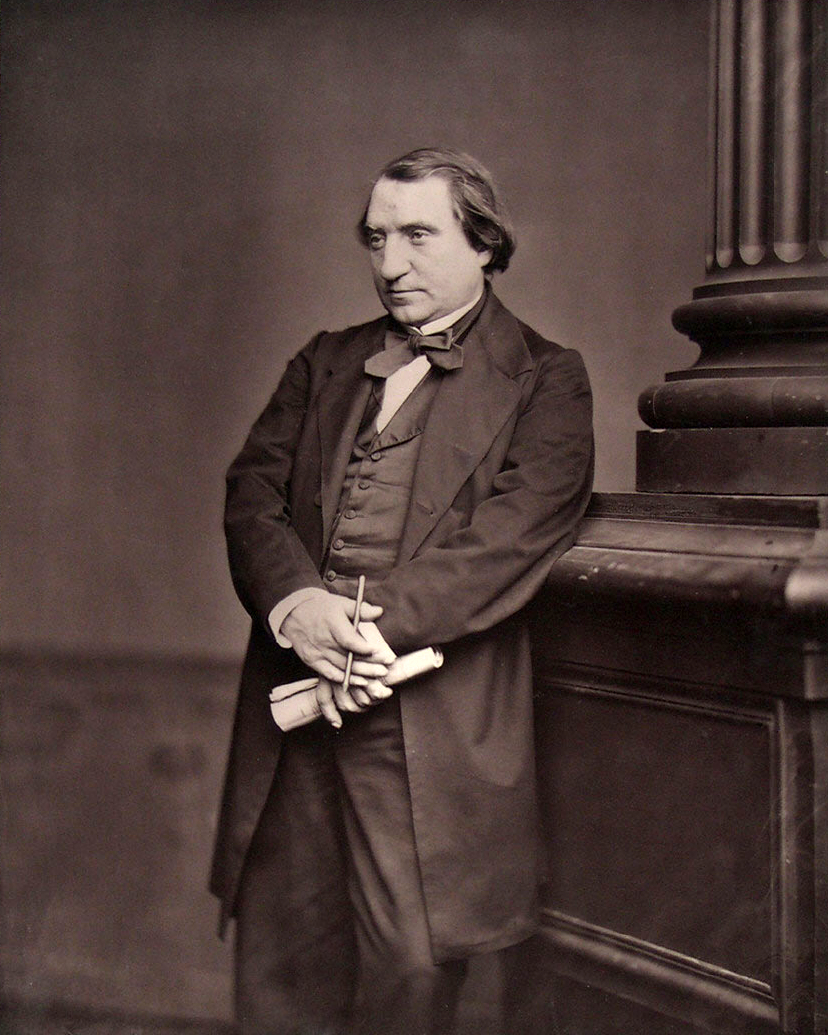 PhilosopherModern European1823 – 1892
Ernest Renan
Joseph Ernest Renan was a French Orientalist and Semitic scholar, writing on Semitic languages and civilizations, historian of religion, philologist, philosopher, biblical scholar, and critic. He wrote works on the origins of early Christianity, and espoused popular political theories especially concerning nationalism,
- ◆Civic nationalism
- ◆What is a Nation?
Read the full pageJoseph Ernest Renan ( ruh-NAHN; French: [ʒozɛf ɛʁnɛst ʁənɑ̃]; 27 February 1823 – 2 October 1892) was a French Orientalist and Semitic scholar, writing on Semitic languages and civilizations, historian of religion, philologist, philosopher, biblical scholar, and critic. He wrote works on the origins of early Christianity, and espoused popular political theories especially concerning nationalism, national identity, and the supposed superiority of white people over other human races.
Renan is among the first scholars to advance the Khazar theory, which held that Ashkenazi Jews were descendants of the Khazars, Turkic peoples who had adopted the Jewish religion and allegedly migrated to central and eastern Europe following the collapse of their khanate. On this basis he alleged that the Jews were "an incomplete race."
- 5
 PhilosopherModern European1833 – 1911
Wilhelm Dilthey
Wilhelm Dilthey was a German philosopher who held Georg Wilhelm Friedrich Hegel's Chair in Philosophy at the University of Berlin. As a polymathic philosopher working in the emerging modern research university, Dilthey aimed to establish the methodological foundations of the human sciences, including history, hermeneut
- ◆hermeneutics
- ◆explanatory
- ◆descriptive
- ◆explanatory
- ◆Weltanschauung
Read the full pageWilhelm Dilthey (; German: [ˈvɪlhɛlm ˈdɪltaɪ]; 19 November 1833 – 1 October 1911) was a German philosopher who held Georg Wilhelm Friedrich Hegel's Chair in Philosophy at the University of Berlin. As a polymathic philosopher working in the emerging modern research university, Dilthey aimed to establish the methodological foundations of the human sciences, including history, hermeneutics, and nascent psychology, in relation to the natural sciences.
Dilthey's account of what constitutes the empirical and experiential is drawn from the traditions of German philosophy and literature, and differs from British empiricism and positivism in its central epistemological and ontological assumptions. But he emphasized experience and historical evidence, and has sometimes been styled an empiricist by contrast to then prevailing idealism.
- 6
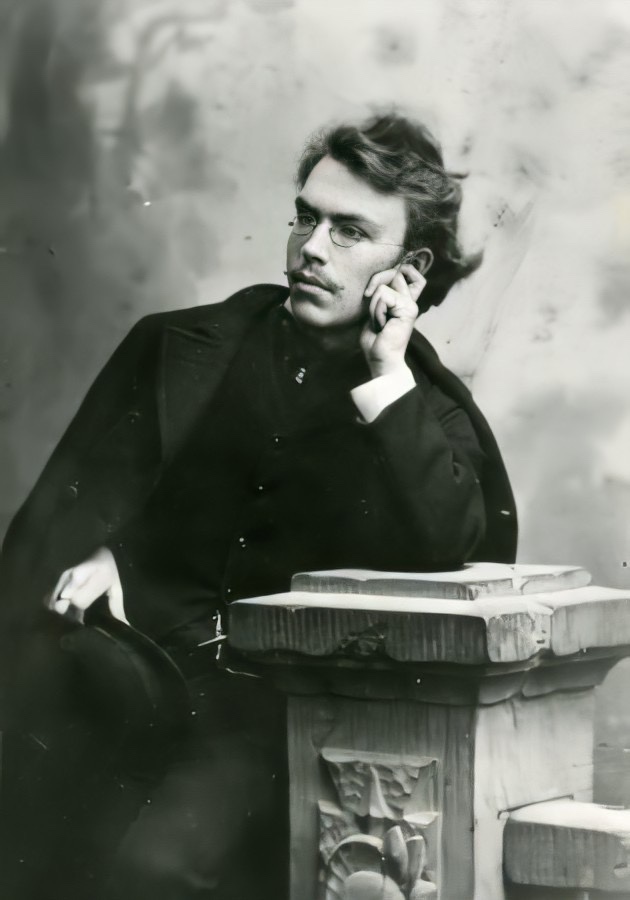 PhilosopherModern European1841 – 1876
Philipp Mainländer
Philipp Mainländer was a German philosopher and poet. Born Philipp Batz, he later changed his name to "Mainländer" in homage to his hometown, Offenbach am Main.
- ◆Critique of the Schopenhauerian philosophy
- ◆God is dead
Read the full pagePhilipp Mainländer (German: [ˈmaɪ̯nlɛndɐ]; 5 October 1841 – 1 April 1876) was a German philosopher and poet. Born Philipp Batz, he later changed his name to "Mainländer" in homage to his hometown, Offenbach am Main. Mainländer is best known for his pessimistic cosmic philosophy, deeply influenced by Arthur Schopenhauer.
In his central work, The Philosophy of Redemption (Die Philosophie der Erlösung, 1876), Mainländer argued that non-existence is preferable to existence, positing that the universe originated from a primordial divine fragmentation, that God committed cosmic suicide by shattering himself into the time-bound, fragmented physical matter. Mainländer believed that everything in life, matter, and celestial bodies is the decaying corpse of this original entity driven by a cosmic "will to die", challenging Schopenhauer's "will to live" and is steadily progressing toward absolute nothingness.
- 7
 PhilosopherModern European1847 – 1922
Georges Sorel
Georges Eugène Sorel was a French social thinker, political theorist, historian, and later journalist. He has inspired theories and movements grouped under the name of Sorelianism.
- ◆Political myth
- ◆Anti-elitism
Read the full pageGeorges Eugène Sorel (; French: [ʒɔʁʒ øʒɛn sɔʁɛl]; 2 November 1847 – 29 August 1922) was a French social thinker, political theorist, historian, and later journalist. He has inspired theories and movements grouped under the name of Sorelianism. His social and political philosophy owed much to his reading of Proudhon, Fernand Pelloutier, Karl Marx, Giambattista Vico, Henri Bergson (whose lectures at the Collège de France he attended), and later William James. His notion of the power of myth in collective agency inspired socialists, anarchists, Marxists, and fascists. Together with his defense of violence, the power of myth is the contribution for which he is most often remembered.
Politically he evolved from his early liberal-conservative positions towards Marxism, social-democracy, and eventually syndicalism. Between 1909 and 1910 he was marginally involved with Charles Maurras' Action Française, and between 1911 and 1913 he wrote for the politically transversal L'Indépendance, established together with Édouard Berth – one of Sorel's main disciples – and Georges Valois, closer to Maurrassian circles. After a long silence during the war, Sorel came out in favour of Lenin and moved towards Bolshevist positions until his death in 1922.
- 8
 PhilosopherModern European1856 – 1919
Vasilij Vasilʹevič Rozanov
Vasily Vasilievich Rozanov was one of the most controversial Russian writers and a significant philosopher among the symbolists of the pre-revolutionary epoch.
Read the full pageVasily Vasilievich Rozanov (Russian: Василий Васильевич Розанов; 2 May [O.S. 20 April] 1856 – 5 February 1919) was one of the most controversial Russian writers and a significant philosopher among the symbolists of the pre-revolutionary epoch.
Rozanov tried to reconcile Christian teachings with ideas of healthy sex and family life, but as his adversary Nikolai Berdyaev put it, he 'set up sex in opposition to the Word'. His interest in these matters, as in matters of religion, brought Rozanov close to Russian Symbolism. Because of references to the phallus in Rozanov's writings, Klaus von Beyme called him the Rasputin of the Russian intelligentsia.
- 9
 PhilosopherModern European1859 – 1941
Henri Bergson
Henri-Louis Bergson was a French philosopher who was influential in the traditions of analytic philosophy and continental philosophy, especially during the first half of the 20th century until the Second World War, but also after 1966 when Gilles Deleuze published Le Bergsonisme. Bergson is known for his arguments that
- ◆Duration
- ◆intuition
- ◆affection
- ◆élan vital
- ◆immediate data of consciousness
- ◆open society
Read the full pageHenri-Louis Bergson (; French: [bɛʁksɔn]; 18 October 1859 – 4 January 1941) was a French philosopher who was influential in the traditions of analytic philosophy and continental philosophy, especially during the first half of the 20th century until the Second World War, but also after 1966 when Gilles Deleuze published Le Bergsonisme.
Bergson is known for his arguments that processes of immediate experience and intuition are more significant than abstract rationalism and science for understanding reality. Bergson was awarded the 1927 Nobel Prize in Literature "in recognition of his rich and vitalizing ideas and the brilliant skill with which they have been presented". In 1930, France awarded him its highest honour, the Grand-Croix de la Legion d'honneur. Bergson's great popularity created a controversy in France, where his views were seen as opposing the "secular and scientific" attitude adopted by the Republic's officials.
- 10
 PhilosopherModern European1864 – 1920
Max Weber
Maximilian Carl Emil Weber was a German sociologist, historian, jurist, and political economist who was one of the central figures in the development of sociology and the social sciences more generally. His ideas continue to influence social theory and research.
- ◆Bureaucracy
- ◆Charisma
- ◆Disenchantment
- ◆Ethic of ultimate ends
- ◆Ideal type
- ◆Inner-worldly asceticism
Read the full pageMaximilian Carl Emil Weber ( VAY-ber; German: [ˈveːbɐ] ; 21 April 1864 – 14 June 1920) was a German sociologist, historian, jurist, and political economist who was one of the central figures in the development of sociology and the social sciences more generally. His ideas continue to influence social theory and research.
Born in Erfurt in 1864, Weber studied law and history in Berlin, Göttingen, and Heidelberg. After earning his doctorate in law in 1889 and habilitation in 1891, he taught in Berlin, Freiburg, and Heidelberg. He married his cousin Marianne Schnitger two years later. In 1897, he had a breakdown after his father died following an argument. Weber ceased teaching and travelled until the early 1900s. He recovered and wrote The Protestant Ethic and the Spirit of Capitalism. During the First World War, he initially supported Germany's war effort but became critical of it and supported democratisation. He also gave the lectures "Science as a Vocation" and "Politics as a Vocation". After the war, Weber co-founded the German Democratic Party, unsuccessfully ran for office, and advised the drafting of the Weimar Constitution. Meanwhile, he resumed teaching in Vienna and Munich. He died of pneumonia in 1920 at the age of 56, possibly as a result of the Spanish flu. A book, Economy and Society, was left unfinished.
- 11
 PhilosopherModern European1868 – 1951
Alain
Émile-Auguste Chartier, commonly known as Alain ([alɛ̃]), was a French philosopher, journalist, essayist, pacifist, and teacher of philosophy.
Read the full pageÉmile-Auguste Chartier (French: [emil oɡyst ʃaʁtje]; 3 March 1868 – 2 June 1951), commonly known as Alain ([alɛ̃]), was a French philosopher, journalist, essayist, pacifist, and teacher of philosophy.
Alain was born in 1868 in the rural town of Mortagne-au-Perche, Normandy, the son of a veterinary surgeon. After attending the local Catholic school, in 1881, he entered the lycée of Alençon, where he passed the examinations of the baccalauréat in literature (and failed the science baccalaureat). He proceeded to the Lycée Michelet in Vanves, a suburb of Paris, where he came under the influence of the philosopher Jules Lagneau. His exceptional intelligence led him to the École Normale Supérieure in 1889, and to the agrégation in philosophy in 1892. This qualified him for a career as a teacher of philosophy, which he pursued in schools in Lorient, Rouen, Paris and, in particular, the Lycée Henri IV from 1909, where he taught the prestigious preparatory classes to the École Normale. Sartre's career would begin in a similar way, forty years later. Alain taught at the Lycée Henri IV, with an interruption for the First World War, until his retirement in 1933, having chosen not to pursue a Ph.D. and teach in the university system. In these years he gained a reputation as an inspiring teacher; his students included major philosophers such as Simone Weil and Georges Canguilhem, writers such as André Maurois, Julien Gracq, and Roger Judrin, and even great political leaders like Maurice Schuman, a founding father of modern Europe. Alain's influence was felt beyond his class: Jean-Paul Sartre, and Simone de Beauvoir attended his public lectures, and Raymond Aron became a close acquaintance.