Continental philosophy: Klages to Marcuse
- 1
 PhilosopherModern European1872 – 1956
Ludwig Klages
Friedrich Konrad Eduard Wilhelm Ludwig Klages was a German philosopher, psychologist, graphologist, poet, writer, and lecturer, who was a two-time nominee for the Nobel Prize in Literature. In the Germanosphere, he is considered one of the most important thinkers of the 20th century.
- ◆Biocentric ethics
- ◆logocentrism
- ◆Id
- ◆Geist
Read the full pageFriedrich Konrad Eduard Wilhelm Ludwig Klages (German: [ˈklaːɡəs]; 10 December 1872 – 29 July 1956) was a German philosopher, psychologist, graphologist, poet, writer, and lecturer, who was a two-time nominee for the Nobel Prize in Literature. In the Germanosphere, he is considered one of the most important thinkers of the 20th century. He began his career as a research chemist according to his family's wishes, though soon returned to his passions for poetry, philosophy and classical studies. He held a post at the Ludwig-Maximilians-Universität München, where in 1905 he founded the Psychodiagnostisches Seminar; the latter was forced to close in 1914 with the outbreak of World War I. In 1915, Klages moved to neutral Switzerland, where over the following decades much of his mature philosophical works were written. Klages died in 1956.
Klages was a central figure of characterological psychology and the Lebensphilosophie school of thought. Prominent elements of his philosophy include: the opposition between life-affirming Seele and life-denying Geist; reality as the ongoing creation and interpretation of sensory images, rather than feelings; a biocentric ethics in response to modern ecological issues and militarism; an affirmation of eroticism in critique of both Christian patriarchy and the notion of the "sexual"; a theory of psychology focused on expression, including handwriting analysis; and a science of character aimed at reconciling the human ego to the divide it effectuates between living beings. Central to Klages's thought is a linguistic opposition to logocentrism, a term introduced by Klages to diagnose a fixation on language or words to the detriment of the things to which they refer. His formulation of this concept came to be of significant importance to semiotic studies of Western science and philosophy, namely within Derridean deconstruction. Klages is similarly seen as a forebear to critical theory, deep ecology, and existential phenomenology.
- 2
 PhilosopherModern European1882 – 1950
Nicolai Hartmann
Paul Nicolai Hartmann was a German philosopher. He is regarded as a key representative of critical realism and as one of the most important twentieth-century metaphysicians.
- ◆Strata of Being
- ◆categorial novum
Read the full pagePaul Nicolai Hartmann (German: [ˈhaʁtman]; 20 February 1882 – 9 October 1950) was a German philosopher. He is regarded as a key representative of critical realism and as one of the most important twentieth-century metaphysicians. His early work in the philosophy of biology has been cited in modern discussions of genomics and cloning.
Hartmann was born a Baltic German in Riga, which was then the capital of the Governorate of Livonia in the Russian Empire, and which is now in Latvia. He was the son of the engineer Carl August Hartmann and his wife Helene, born Hackmann. He attended from 1897 the German-language high school in Saint Petersburg. In the years 1902–03 he studied Medicine at the Imperial University of Yuryev (now Tartu), and 1903–05 classical philology and philosophy at the Saint Petersburg Imperial University with his friend Vasily Sesemann. In 1905 he went to the University of Marburg, where he studied with the neo-Kantians Hermann Cohen and Paul Natorp. In Marburg began a lifelong friendship with Heinz Heimsoeth. In 1907 he received his doctorate from Marburg with the thesis Das Seinsproblem in der griechischen Philosophie vor Plato (The Problem of Being in Greek Philosophy Before Plato). In 1909 he published the book Platos Logik des Seins (The Logic of Being in Plato). The same year he completed his habilitation on Proclus: Des Proklus Diadochus philosophische Anfangsgründe der Mathematik (Proclus Diadochus' Philosophical Elements of Mathematics).
- 3
 PhilosopherModern European1883 – 1969
Karl Jaspers
Karl Theodor Jaspers was a German-Swiss psychiatrist and philosopher who had a strong influence on modern theology, psychiatry, and philosophy. His 1913 work General Psychopathology influenced many later diagnostic criteria, and argued for a distinction between "primary" and "secondary" delusions.
- ◆Axial Age
- ◆Existenzphilosophie
- ◆Dasein
- ◆Existenz
- ◆being
- ◆Spaltung
Read the full pageKarl Theodor Jaspers (; German: [kaʁl ˈjaspɐs] ; 23 February 1883 – 26 February 1969) was a German-Swiss psychiatrist and philosopher who had a strong influence on modern theology, psychiatry, and philosophy. His 1913 work General Psychopathology influenced many later diagnostic criteria, and argued for a distinction between "primary" and "secondary" delusions.
After being trained in and practising psychiatry, Jaspers turned to philosophical inquiry and attempted to develop an innovative philosophical system. He was often viewed as a major exponent of existentialism in Germany, though he did not accept the label.
- 4
 PhilosopherModern European1883 – 1955
José Ortega y Gasset
José Ortega y Gasset was a Spanish philosopher and essayist. He worked during the first half of the 20th century while Spain oscillated between monarchy, republicanism and dictatorship.
- ◆ratiovitalism
- ◆Ortega hypothesis
Read the full pageJosé Ortega y Gasset ( or-TAY-gə; Spanish: [xoˈse oɾˈteɣa j ɣaˈset]; 9 May 1883 – 18 October 1955) was a Spanish philosopher and essayist. He worked during the first half of the 20th century while Spain oscillated between monarchy, republicanism and dictatorship. His philosophy has been characterized as a "philosophy of life" (Lebensphilosophie) that comprised "a long-hidden beginning in a pragmatist metaphysics" inspired by William James and with a general method from a realist phenomenology imitating Edmund Husserl, which served both his proto-existentialism (prior to Martin Heidegger's), and his realist historicism, which has been compared to both Wilhelm Dilthey and Benedetto Croce.
José Ortega y Gasset was born 9 May 1883 in Madrid. His father was director of the newspaper El Imparcial, which belonged to the family of his mother, Dolores Gasset. The family was definitively of Spain's end-of-the-century liberal and educated bourgeoisie. The liberal tradition and journalistic engagement of his family had a profound influence in Ortega y Gasset's activism in politics.
- 5
 PhilosopherModern European1884 – 1962
Gaston Bachelard
Gaston Louis Pierre Bachelard was a French philosopher. He made contributions in the fields of poetics and the philosophy of science.
- ◆Epistemological break
- ◆materialism
- ◆technoscience
- ◆Ophelia complex
Read the full pageGaston Louis Pierre Bachelard (; French: [baʃlaʁ]; 27 June 1884 – 16 October 1962) was a French philosopher. He made contributions in the fields of poetics and the philosophy of science. To the latter, he introduced the concepts of epistemological obstacle and epistemological break (obstacle épistémologique and rupture épistémologique). He influenced many subsequent French philosophers, among them Michel Foucault, Louis Althusser, Dominique Lecourt and Jacques Derrida, as well as the sociologists Pierre Bourdieu and Bruno Latour.
For Bachelard, the scientific object should be constructed and therefore different from the positivist sciences; in other words, information is in continuous construction. Empiricism and rationalism are not regarded as dualism or opposition but complementary, therefore studies of a priori and a posteriori, or in other words reason and dialectic, are part of scientific research.
- 6
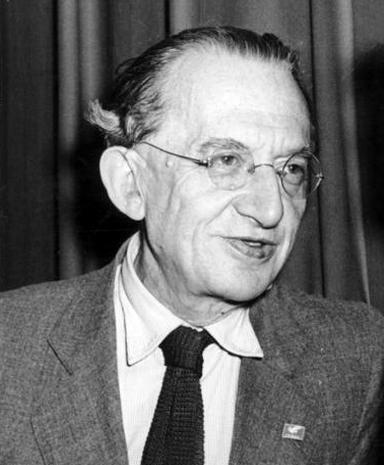 PhilosopherModern European1885 – 1971
Georg Lukács
György Lukács was a Hungarian Marxist philosopher, literary historian, literary critic, and aesthetician. He was one of the founders of Western Marxism, an interpretive tradition that departed from the Soviet Marxist ideological orthodoxy.
- ◆Reification
- ◆class consciousness
- ◆transcendental homelessness
- ◆tragedy
Read the full pageGyörgy Lukács (born Bernát György Löwinger; Hungarian: Lukács György; German: Georg Bernard Lukács; 13 April 1885 – 4 June 1971) was a Hungarian Marxist philosopher, literary historian, literary critic, and aesthetician. He was one of the founders of Western Marxism, an interpretive tradition that departed from the Soviet Marxist ideological orthodoxy. He developed the theory of reification, and contributed to Marxist theory with developments of Karl Marx's theory of class consciousness. He was also a philosopher of Leninism. He ideologically developed and organised Vladimir Lenin's pragmatic revolutionary practices into the formal philosophy of vanguard-party revolution.
Lukács was especially influential as a critic due to his theoretical developments of literary realism and of the novel as a literary genre. In 1919, he was appointed the Hungarian Minister of Culture of the government of the short-lived Hungarian Soviet Republic (March–August 1919). Lukács has been described as the preeminent Marxist intellectual of the Stalinist era, though assessing his legacy can be difficult as Lukács seemed both to support Stalinism as the embodiment of Marxist thought, and yet also to champion a return to pre-Stalinist Marxism.
- 7
 PhilosopherModern European1888 – 1985
Carl Schmitt
Carl Schmitt was a German jurist and political philosopher. An authoritarian conservative, he was noted as a critic of parliamentary democracy, liberalism, and cosmopolitanism.
- ◆State of exception
- ◆Friend–Enemy distinction
- ◆Legality
- ◆legitimacy
Read the full pageCarl Schmitt (11 July 1888 – 7 April 1985) was a German jurist and political philosopher. An authoritarian conservative, he was noted as a critic of parliamentary democracy, liberalism, and cosmopolitanism.
In 1933, Schmitt joined the Nazi Party and used his legal and political theories to provide ideological justification for the regime. He held various positions on Nazi councils, including the Prussian State Council and the Academy for German Law, and served as president of the National Socialist Association of Legal Professionals. By 1936, he had lost favour among senior Nazi officials and was removed from most of his official positions within the party. Schmitt and his work remain controversial for their association with Nazism.
- 8
 PhilosopherModern European1889 – 1973
Gabriel Marcel
Gabriel Honoré Marcel was a French philosopher, playwright, music critic and leading Christian existentialist. The author of over a dozen books and at least thirty plays, Marcel's work focused on the modern individual's struggle in a technologically dehumanizing society.
- ◆"The Other"
Read the full pageGabriel Honoré Marcel (7 December 1889 – 8 October 1973) was a French philosopher, playwright, music critic and leading Christian existentialist. The author of over a dozen books and at least thirty plays, Marcel's work focused on the modern individual's struggle in a technologically dehumanizing society. Though often regarded as the first French existentialist, he dissociated himself from figures such as Jean-Paul Sartre, preferring the term philosophy of existence or neo-Socrateanism to define his own thought. The Mystery of Being is a well-known two-volume work authored by Marcel.
Gabriel Honoré Marcel was born on 7 December 1889 in Paris, France. His mother, Laure Meyer, who was Jewish, died when he was young, and he was brought up by his aunt and father, Henry Marcel.
- 9
 PhilosopherModern European1891 – 1937
Antonio Gramsci
Antonio Francesco Gramsci was an Italian Marxist philosopher, journalist and politician. He was a founding member and one-time leader of the Italian Communist Party.
- ◆Cultural hegemony
- ◆Americanism
- ◆Fordist
- ◆bourgeoisie
- ◆organic crisis
- ◆passive revolution
Read the full pageAntonio Francesco Gramsci (UK: GRAM-shee, US: GRAHM-shee; Italian: [anˈtɔːnjo franˈtʃesko ˈɡramʃi] ; 22 January 1891 – 27 April 1937) was an Italian Marxist philosopher, journalist and politician. He was a founding member and one-time leader of the Italian Communist Party. A vocal critic of Benito Mussolini and fascism, he was imprisoned in 1926, and remained in prison until shortly before his death in 1937.
During his imprisonment, Gramsci wrote more than 30 notebooks and 3,000 pages of history and analysis. His Prison Notebooks are considered a highly original contribution to 20th-century political theory. Gramsci drew insights from varying sources—not only other Marxists but also thinkers such as Niccolò Machiavelli, Vilfredo Pareto, Charles Darwin, Sigmund Freud, Friedrich Nietzsche, Georg Hegel, Pierre Joseph Proudhon, Georges Sorel, and Benedetto Croce. The notebooks cover a wide range of topics, including the history of Italy and Italian nationalism, the French Revolution, fascism, Taylorism and Fordism, civil society, the state, historical materialism, folklore, religion, and high and popular culture.
- 10
 PhilosopherModern European1895 – 1973
Max Horkheimer
Max Horkheimer was a German Marxist philosopher and sociologist best known for his role in developing critical theory as director of the Institute for Social Research, commonly associated with the Frankfurt School. Advancing a Historical materialist theory of reason and society, Horkheimer analyzed the rise of instrume
- ◆Critical theory
- ◆culture industry
- ◆authoritarian personality
- ◆eclipse of reason
- ◆instrumental reason
Read the full pageMax Horkheimer ( HORK-hy-mər; German: [ˈhɔɐ̯kˌhaɪmɐ]; 14 February 1895 – 7 July 1973) was a German Marxist philosopher and sociologist best known for his role in developing critical theory as director of the Institute for Social Research, commonly associated with the Frankfurt School.
Advancing a Historical materialist theory of reason and society, Horkheimer analyzed the rise of instrumental reason, the erosion of the concept of truth, the decline of individual autonomy, the social-psychological roots of authoritarianism, and the reproduction of domination under modern capitalism. He attributed these negative outcomes to the societal effects of the division of labor, and criticized "traditional theory" for its clinical and detached "way of knowing". These perspectives became fundamental to critical theory.
- 11
 PhilosopherModern European1898 – 1979
Herbert Marcuse
Herbert Marcuse was a German and American philosopher, social critic, and political theorist, associated with the Frankfurt School of critical theory. Born in Berlin, Marcuse studied at the Friedrich Wilhelm University of Berlin and then at the University of Freiburg, where he received his PhD under the supervision of
- ◆Technological rationality
- ◆great refusal
- ◆free play
- ◆repressive tolerance
- ◆repressive desublimation
- ◆negative thinking
Read the full pageHerbert Marcuse ( mar-KOO-zə; German: [maʁˈkuːzə]; July 19, 1898 – July 29, 1979) was a German and American philosopher, social critic, and political theorist, associated with the Frankfurt School of critical theory. Born in Berlin, Marcuse studied at the Friedrich Wilhelm University of Berlin and then at the University of Freiburg, where he received his PhD under the supervision of Martin Heidegger. He was a prominent figure in the Frankfurt-based Institute for Social Research, which later became known as the Frankfurt School. In his written works, he criticized capitalism, modern technology, Soviet Communism, and popular culture, arguing that they represent new forms of social control.
In the 1960s and the 1970s, he became known as the pre-eminent theorist of the New Left and the student movements of West Germany, France, and the United States; some consider him "the Father of the New Left".