Buddhist philosophy
From the Buddha's Four Noble Truths: suffering arises from craving and ignorance and can end through insight into impermanence, no-self and dependent origination.
- 1
 SchoolIndian500 BCE – present
Buddhist philosophy
From the Buddha's Four Noble Truths: suffering arises from craving and ignorance and can end through insight into impermanence, no-self and dependent origination.
- ◆Four Noble Truths
- ◆No-self (anātman)
- ◆Impermanence (anicca)
- ◆Dependent origination
- ◆The Middle Way
Read the full pageBuddhist philosophy begins with a diagnosis. Life as ordinarily lived is marked by duḥkha — unsatisfactoriness, suffering. Its cause is craving rooted in ignorance; it can cease; and there is a path to its cessation. These are the Four Noble Truths of the Buddha's first sermon at Sarnath.
The ignorance in question is philosophical. We take ourselves and things to be permanent, independent substances, when in fact everything arises in dependence on conditions (pratītyasamutpāda), is impermanent, and lacks a fixed self (anātman). The "self" is a convenient label for a changing stream of physical and mental events.
- 2
 PhilosopherIndianc. 563 – 483 BCE
Gautama Buddha
The awakened one: a prince who renounced his life to find the cause of suffering and taught the Middle Way to its end.
- ◆Four Noble Truths
- ◆Noble Eightfold Path
- ◆No-self (anattā)
- ◆Impermanence
- ◆Dependent origination
- ◆The Middle Way between indulgence and asceticism
Read the full pageSiddhārtha Gautama was born into the Śākya clan in the foothills of the Himalayas. According to tradition, he left a sheltered princely life after encountering old age, sickness and death, and spent years as a wandering ascetic before rejecting extreme self-denial. Meditating under a tree at Bodh Gaya he attained awakening (bodhi) and became the Buddha, "the awakened one".
His teaching is famously practical. He refused to answer metaphysical questions — whether the world is eternal, whether an awakened person exists after death — that do not lead to the end of suffering, comparing someone who demands such answers to a man struck by a poisoned arrow who will not have it removed until he knows who shot it.
- 3PhilosopherIndianc. 480 – 540
Dignāga
Founder of Buddhist logic and epistemology; only perception and inference are valid sources of knowledge.
Read the full pageDignāga was an Indian Buddhist philosopher and logician. He is credited as one of the Buddhist founders of Indian logic (hetu vidyā) and atomism. Dignāga's work laid the groundwork for the development of deductive logic in India and created the first system of Buddhist logic and epistemology (pramāṇa).
According to Georges B. Dreyfus, his philosophical school brought about an Indian "epistemological turn" and became the "standard formulation of Buddhist logic and epistemology in India and Tibet." Dignāga's thought influenced later Buddhist philosophers like Dharmakīrti and also Hindu thinkers of the Nyāya school. Dignāga's epistemology accepted only "perception" (pratyaksa) and "inference" (anumāṇa) as valid instruments of knowledge and introduced the widely influential theory of "exclusion" (apoha) to explain linguistic meaning. His work on language, inferential reasoning and perception were also widely influential among later Indian philosophers. According to Richard P. Hayes "some familiarity with Dinnaga's arguments and conclusions is indispensable for anyone who wishes to understand the historical development of Indian thought."
- 4
 PhilosopherIndianc. 600 – 660
Dharmakīrti
The most influential Buddhist epistemologist; refined Dignāga's logic and theory of perception.
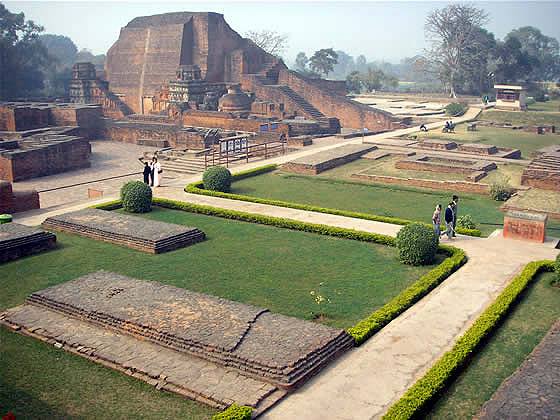
Read the full pageDharmakīrti (fl. c. 600–670 CE) was an influential Indian Buddhist philosopher who worked at Nālandā. He was one of the key scholars of epistemology (pramāṇa) in Buddhist philosophy, and is associated with the Yogācāra and Sautrāntika schools. His works influenced the scholars of Mīmāṃsā, Nyaya and Shaivism schools of Hindu philosophy as well as scholars of Jainism.
Dharmakīrti's Pramāṇavārttika, his largest and most important work, was very influential in India and Tibet as a central text on pramana ('valid knowledge instruments'), and was widely commented on by various Indian and Tibetan scholars. His texts remain part of studies in the monasteries of Tibetan Buddhism.