Bhakti movement
A devotional revolution across India that put loving devotion above caste, ritual and priesthood — through poet-saints like Kabir, Mirabai and Tulsidas.
- 1
 SchoolIndian600 – 1800
Bhakti movement
A devotional revolution across India that put loving devotion above caste, ritual and priesthood — through poet-saints like Kabir, Mirabai and Tulsidas.
- ◆Love of God over ritual
- ◆Equality before the divine
- ◆Poetry in the people's languages
Read the full pageThe Bhakti movement was a significant religious movement in medieval Hinduism that sought to bring religious reforms to all strata of society by adopting the method of devotion to achieve salvation. Originating in Tamilakam during the 6th century CE, it gained prominence through the poems and teachings of the Vaishnava Alvars and Shaiva Nayanars in early medieval South India, before spreading northwards. It swept over east and north India from the 15th century onwards, reaching its zenith between the 15th and 17th century CE.
The Bhakti movement regionally developed around different Hindu gods and goddesses, and some sub-sects were Vaishnavism (Vishnu), Shaivism (Shiva), Shaktism (Shakti goddesses), and Smartism. The Bhakti movement preached using the local languages so that the message reached the masses. The movement was inspired by many poet-saints, who championed a wide range of philosophical positions ranging from theistic dualism of Dvaita to absolute monism of Advaita Vedanta.
- 2
 PhilosopherIndianc. 700 – 750
Ādi Śaṅkara
The great systematiser of Advaita Vedānta: the self is Brahman, and the world of plurality is appearance.
- ◆Ātman = Brahman
- ◆Māyā and superimposition (adhyāsa)
- ◆Liberation by knowledge alone
- ◆Two levels of truth
Read the full pageŚaṅkara (often Ādi Śaṅkara, "the first Śaṅkara") was a philosopher-monk from Kerala who, in a short life, wrote commentaries on the Upaniṣads, the Bhagavad Gītā and the Brahma Sūtras that made Advaita Vedānta the most influential school of Hindu thought.
His central claim is that there is only one reality, Brahman — pure, undifferentiated consciousness — and that the innermost self (ātman) is identical with it. Our experience of a world of many separate things and selves arises from adhyāsa, superimposition: like mistaking a rope for a snake, we project limitations onto the limitless. The world is not a mere fantasy — it is real at the empirical level (vyāvahārika) — but at the ultimate level (pāramārthika) only Brahman is.
- 3
 PhilosopherIndian1017 – 1137
Rāmānuja
Founder of Viśiṣṭādvaita: the world and souls are real, forming the "body" of a personal God.
- ◆Qualified non-dualism
- ◆Devotion (bhakti)
- ◆Critique of māyā
Read the full pageRamanuja ([ɾaːmaːnudʑɐ]; Middle Tamil: Rāmāṉujam; Classical Sanskrit: Rāmānuja; c. 1077 – 1157), also known as Rāmānujācārya, was an Indian Hindu philosopher, guru and social reformer. He is one of the most important exponents of the Sri Vaishnavism tradition in Hinduism. His philosophical foundations for devotional practice were influential in the Bhakti movement. Traditional accounts associate Ramanuja with hostility towards Jainism and Buddhism, and the persecution and killing of Jains in the Hoysala Empire and with persuading the Hoysala ruler to destroy Jain temples and replace them with Vaishnava temples.
Ramanuja's guru was Yādava Prakāśa, a scholar who, traditionally, is said to have belonged to the Advaita Vedānta tradition, but probably was a Bhedabheda scholar. Sri Vaishnava tradition holds that Ramanuja disagreed with his guru and the non-dualistic Advaita Vedānta, and instead followed in the footsteps of Tamil Alvārs tradition, the scholars Nāthamuni and Yamunāchārya. Ramanuja is famous as the chief proponent of Vishishtadvaita school of Vedānta, and his disciples were likely authors of texts such as the Shatyayaniya Upanishad. Ramanuja himself wrote influential texts, such as Sanskrit bhāsyas on the Brahma Sutras and the Bhagavad Gita.
- 4
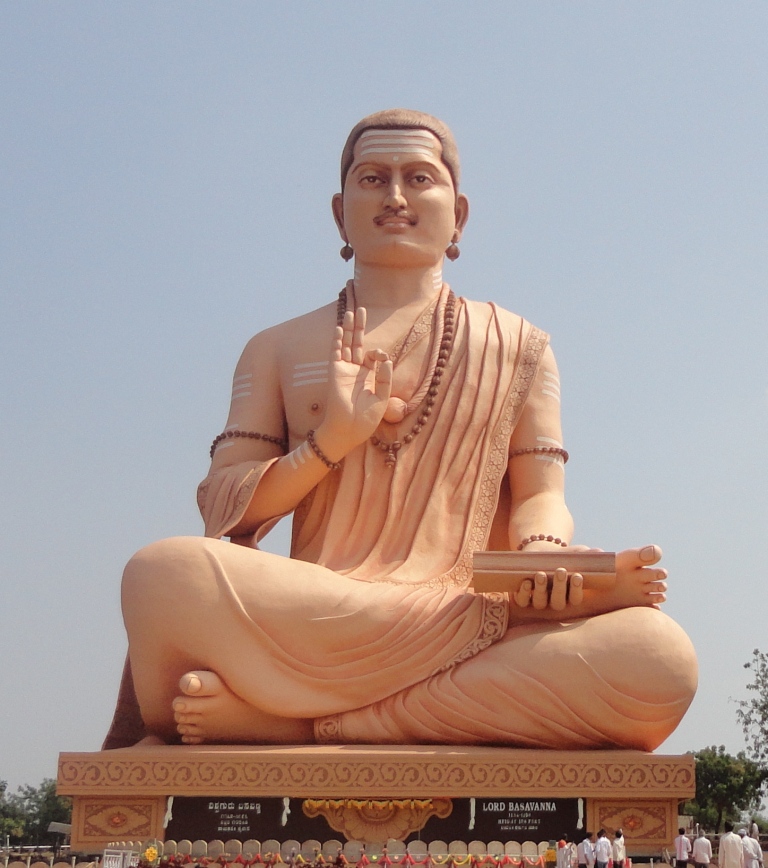 PhilosopherIndianc. 1105 – 1167
Basavanna
Kannada philosopher-reformer of the Lingayat movement who preached that "work is worship" and rejected caste.
- ◆Kayakave Kailasa — work is worship
- ◆Anubhava Mantapa: a hall of open debate
- ◆Against caste and gender hierarchy
Read the full pageBasava (1131–1196), also called Basavēśvara and Basavaṇṇa, was a controversial Indian philosopher, poet, Lingayat social reformer in the Shiva-focused bhakti movement, and a Hindu Shaivite social reformer during the reign of the Kalyani Chalukya and the Kalachuri Dynasty. Basava was active during the rule of both dynasties, but his influence peaked during the reign of King Bijjala II in Karnataka, India. The rise of the Vīraśaiva movement under Basava was also associated with religious persecution of Jains in Karnataka, including the destruction, desecration and appropriation of Jain temples.
Basava spread social awareness through his poetry, popularly known as Vachanaas. He rejected gender or social discrimination, superstitions and rituals but introduced Ishtalinga necklace, with an image of the lingam, to every person regardless of their birth, to be a constant reminder of one's bhakti (devotion) to Shiva. The traditional legends and hagiographic texts state Basavanna to be the founder of the Lingayats. However, modern scholarship relying on historical evidence such as the Kalachuri inscriptions state that Basava was the poet philosopher who revived, refined and energized an already existing tradition. The Basavarajadevara Ragale (13 out of 25 sections are available) by the Kannada poet Harihara (c. 1180) is the earliest available account on the life of the social reformer and is considered important because the author was a near contemporary of his protagonist. A full account of Basava's life and ideas are narrated in a 13th-century Telugu text, the Basava Purana by Palkuriki Somanatha.
- 5
 PhilosopherIndianc. 1398 – 1518
Kabir
Weaver-poet of Varanasi whose sharp, simple verses mocked both Hindu and Muslim ritual and found God within.
- ◆God is within, not in temple or mosque
- ◆Against caste and empty ritual
- ◆Love as the only true scripture
Read the full pageKabir (fl. 15th century) was an Indian devotional mystic poet and saint. His writings influenced Hinduism's Bhakti movement, and his verses are found in Sikhism's scripture Guru Granth Sahib, the Satguru Granth Sahib of Saint Garib Das, and Kabir Sagar of Dharamdas. Today, Kabir is an important personality in Hinduism, Sikhism and in Sufism. He was a disciple of Ramananda, the founder of the Ramanandi Sampradaya.
He was born in the city of Varanasi in what is now Uttar Pradesh, he is known for being critical of organised religions. He questioned what he regarded to be the meaningless and unethical practices of all religions, primarily what he considered to be the wrong practices in Hinduism and Islam. During his lifetime, he was threatened by both Hindus and Muslims for his views. When he died, several Hindus and the Muslims he had inspired claimed him as theirs.
- 6
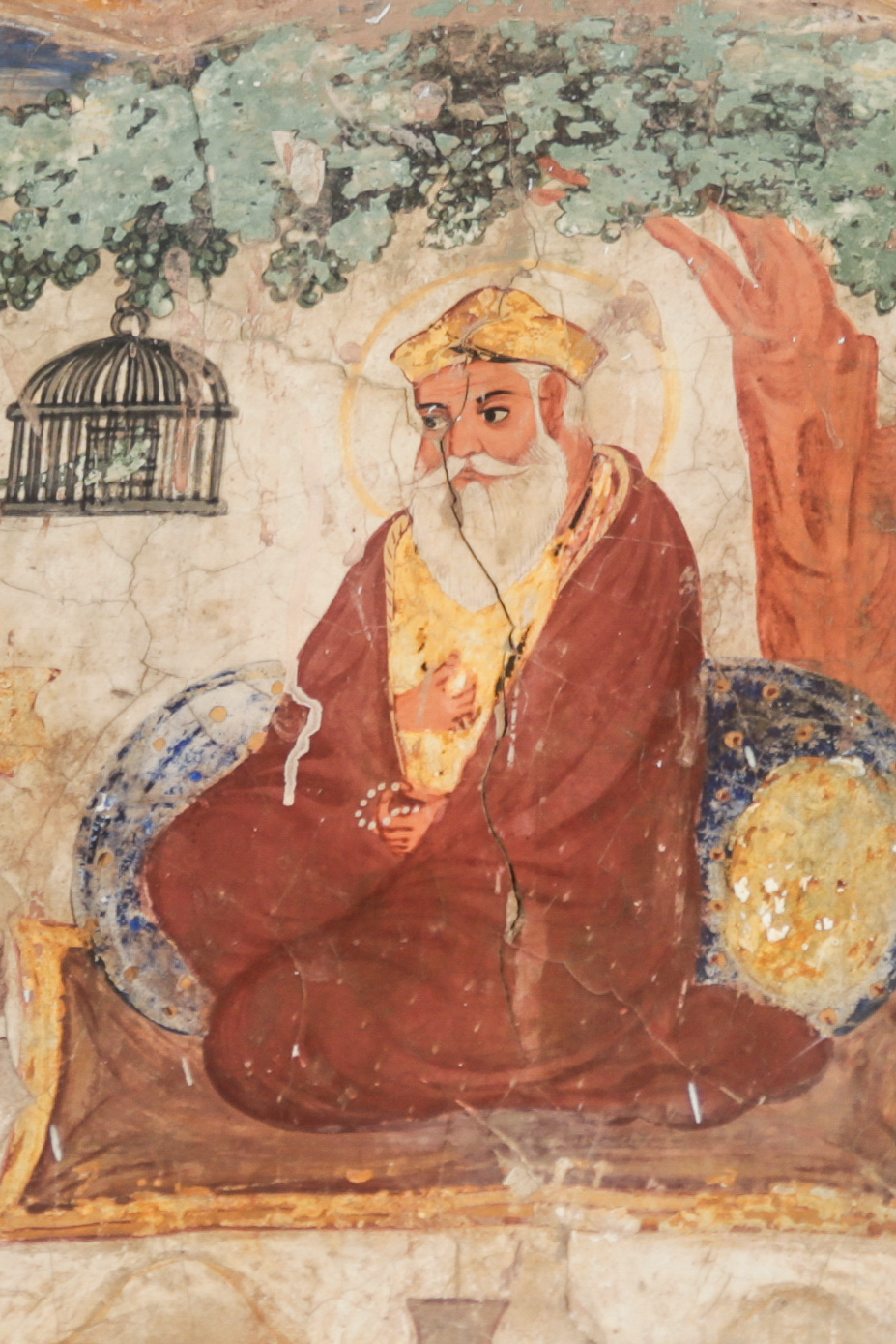 PhilosopherIndian1469 – 1539
Guru Nanak
Founder of Sikhism, who taught one formless God, honest work, sharing with others and the equality of all.
- ◆Ik Onkar — there is one God
- ◆Honest work and sharing
- ◆Equality of all castes and genders
Read the full pageGurū Nānak (15 April 1469 – 22 September 1539; Gurmukhi: ਗੁਰੂ ਨਾਨਕ), also known as Bābā Nānak (Father Nanak), was an Indian spiritual teacher, mystic and poet, who is regarded as the founder of Sikhism and is the first of the ten Sikh gurus.
Nanak is said to have travelled far and wide across Asia teaching people the message of Ik Onkar (ੴ, 'One God'), who dwells in every one of his creations and constitutes the eternal Truth. With this concept, he would set up a unique spiritual, social, and political platform based on equality, fraternal love, goodness, and virtue.
- 7
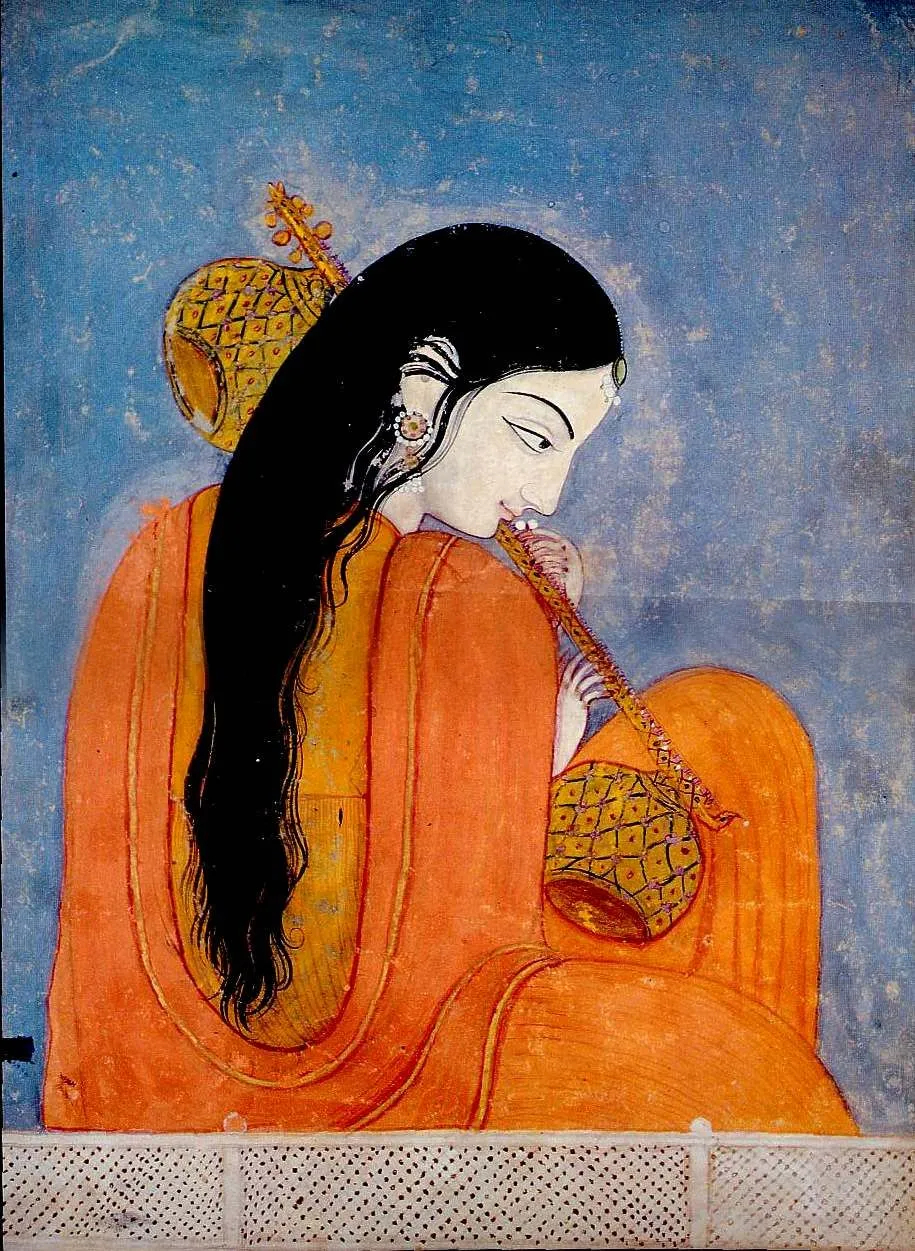 PhilosopherIndianc. 1498 – 1547
Mirabai
Rajput princess and poet-saint whose devotion to Krishna defied caste and royal convention.
- ◆Bhakti
- ◆Krishna
Read the full pageMeera, better known as Meera bai, and venerated as Sant Meerabai, was a 16th-century Hindu mystic poet and devotee of Krishna. She is a celebrated Bhakti saint, particularly in the North Indian Hindu tradition. She is mentioned in Bhaktamal, confirming that she was widely known and a cherished figure in the Bhakti movement by about 1600. In her poems, she expressed the madhurya bhava towards Krishna.
Most legends about Mirabai mention her fearless disregard for social and family conventions, her devotion to Krishna, and her persecution by her in-laws for her religious devotion. Her in-laws never liked her passion for music, through which she expressed her devotion, and they considered it an insult to the upper-caste people. It is said that amongst her in-laws, her husband was the only one to love and support her in her Bhakti, while some believed him to have opposed it. She has been the subject of numerous folk tales and hagiographic legends, which are inconsistent or widely different in details. According to legend, when her in-laws attempted to murder her with poison, Mirabai tied a sacred thread on a murti of Krishna, trusting in His divine protection, through which she was saved by divine intervention. This legend is sometimes cited as the origin of the ritual of tying rakhi on Krishna's murti.
- 8
 PhilosopherIndian1532 – 1623
Tulsidas
Rambola Dubey, popularly known as Goswami Tulsīdās, was a Ramanandi Vaishnava Hindu saint, devotee, and poet renowned for his devotion to the deities Rama, Sita, and Hanuman. He wrote several popular works in Sanskrit, Awadhi, and Braj Bhasha, but is best known as the author of the Hanuman Chalisa and of the epic Ramch
- ◆Ramlila
- ◆Valmiki
Read the full pageRambola Dubey (c. 1532 – c. 1623), popularly known as Goswami Tulsīdās, was a Ramanandi Vaishnava Hindu saint, devotee, and poet renowned for his devotion to the deities Rama, Sita, and Hanuman. He wrote several popular works in Sanskrit, Awadhi, and Braj Bhasha, but is best known as the author of the Hanuman Chalisa and of the epic Ramcharitmanas, a retelling of the Sanskrit Ramayana, based on Rama's life, in the vernacular Awadhi language.
Tulsidas spent most of his life in the cities of Banaras (modern Varanasi) and Ayodhya. The Tulsi Ghat on the Ganges in Varanasi is named after him. He founded the Sankat Mochan Hanuman Temple in Varanasi, believed to stand at the place where he had the sight of the deity. Tulsidas started the Ramlila plays, a folk-theatre adaptation of the Ramayana.