Advaita Vedānta
Non-dualism: the individual self (ātman) is identical with Brahman, and the world of many things is appearance (māyā).
- 1
 SchoolIndian700 – present
Advaita Vedānta
Non-dualism: the individual self (ātman) is identical with Brahman, and the world of many things is appearance (māyā).
- ◆Ātman is Brahman
- ◆The world as māyā (appearance)
- ◆Liberation through knowledge (jñāna)
- ◆Levels of reality: conventional and ultimate
Read the full pageAdvaita — literally "not-two" — is the most famous school of Vedānta. Systematised by Śaṅkara in the 8th century, it reads the Upaniṣads' great sayings, such as tat tvam asi ("you are that"), literally: the innermost self is not a part or servant of ultimate reality but identical with it.
The everyday world of separate persons and things is not simply unreal, but neither is it ultimately real; it is māyā, an appearance superimposed on Brahman through ignorance (avidyā), as a rope in dim light may be mistaken for a snake. Liberation (mokṣa) comes not from ritual or action but from knowledge that dissolves this misperception.
- 2
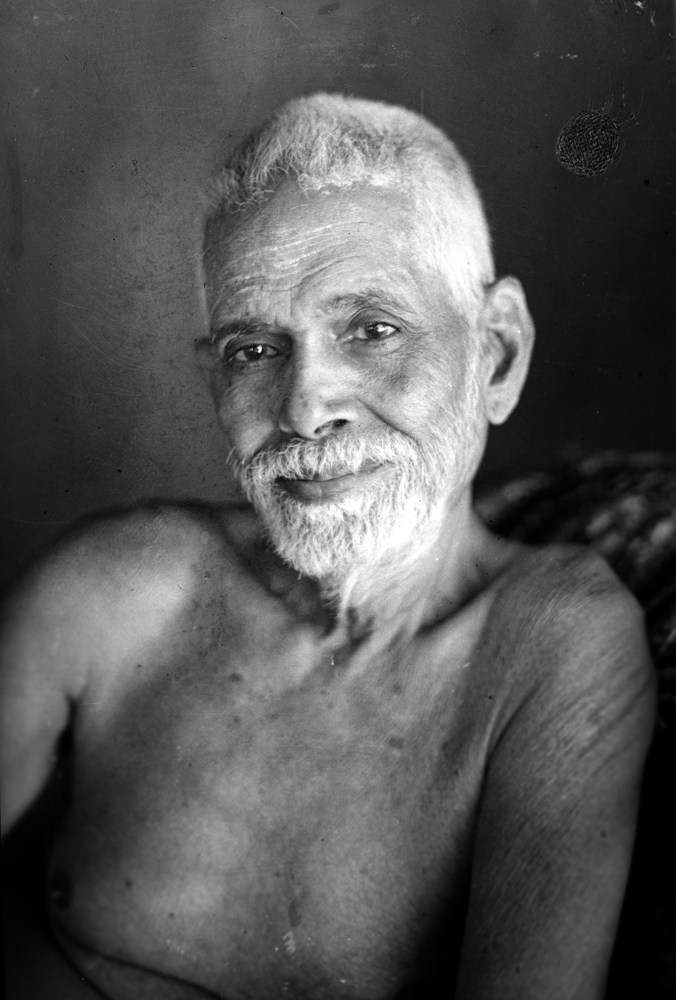 PhilosopherIndian1879 – 1950
Ramana Maharshi
Sage of Arunachala whose method of self-enquiry — asking "Who am I?" — became one of the best-known paths of Advaita in modern times.
- ◆Self-enquiry: "Who am I?"
- ◆Silence as the highest teaching
- ◆The Self is ever-present awareness
Read the full pageRamana Maharshi was an Indian Hindu sage widely regarded by his followers and by "most advocates of Advaita" as a jivanmukta (liberated being). He was born Venkataraman Iyer, but is mostly known by the name Bhagavan Sri Ramana Maharshi.
He was born in Tiruchuli, Tamil Nadu, India in 1879. In 1895, an attraction to the sacred hill Arunachala and the 63 Nayanmars was aroused in him, and in 1896, at the age of 16, he had a "death-experience" in which he became aware of a "current" or "force" (avesam) which he recognised as his true "I" or "self", and which he later identified with "the personal God, or Iswara", that is, Shiva. This resulted in a state that he later described as "the state of mind of Iswara or the jnani". Six weeks later he left his uncle's home in Madurai, and journeyed to the holy mountain Arunachala, in Tiruvannamalai, where he took on the role of a sannyasin (though not formally initiated), and remained for the rest of his life.
