Greek & Roman ideas, A–C
- 1
 ConceptGreek & Roman
Academic skepticism
Academic skepticism was the philosophy of the skeptical period of the Academy dating from around 266 BC, when Arcesilaus became scholarch, until around 90 BC, when Antiochus of Ascalon rejected skepticism, although individual philosophers, such as Favorinus and his teacher Plutarch, continued to defend skepticism after
Read the full pageAcademic skepticism was the philosophy of the skeptical period of the Academy dating from around 266 BC, when Arcesilaus became scholarch, until around 90 BC, when Antiochus of Ascalon rejected skepticism, although individual philosophers, such as Favorinus and his teacher Plutarch, continued to defend skepticism after this date. Unlike the existing school of skepticism, the Pyrrhonists, they maintained that knowledge of things is impossible. Ideas or notions are never true; nevertheless, there are degrees of plausibility, and hence degrees of belief, which allow one to act. The school was characterized by its attacks on the Stoics, particularly their dogma that convincing impressions led to true knowledge. The most important Academics were Arcesilaus, Carneades, and Philo of Larissa. The most extensive ancient source of information about Academic skepticism is Academica, written by the Academic skeptic philosopher Cicero.
Greek philosophical skepticism, as a distinct philosophical movement, began with Pyrrho of Elis (c. 360 – c. 270 BC), with antecedents in Xenophanes and Democritus. His followers, the Pyrrhonists, pointed out the problem of the criterion: that our theories and our sense impressions are unable to accurately distinguish truth from falsehood; therefore we must suspend judgment (epoche). They were consistent enough to extend their doubt even to their own principle of doubt, making their skepticism universal, thus escaping reproach for basing it upon a fresh dogmatism. Mental imperturbability (ataraxia) was the result to be attained by cultivating such a frame of mind.
- 2ConceptGreek & Roman
Accident (philosophy)
An accident (Greek συμβεβηκός), in metaphysics and philosophy, is a property that the entity or substance has contingently, without which the substance can still retain its identity. An accident does not affect its essence, according to many philosophers.
Read the full pageAn accident (Greek συμβεβηκός), in metaphysics and philosophy, is a property that the entity or substance has contingently, without which the substance can still retain its identity. An accident does not affect its essence, according to many philosophers. It does not mean an "accident" as used in common speech, a chance incident, normally harmful. Examples of accidents are color, taste, movement, and stagnation. Accident is contrasted with essence: a designation for the property or set of properties that make an entity or substance what it fundamentally is, and which it has by necessity, and without which it loses its identity.
Aristotle made a distinction between the essential and accidental properties of a thing. Thomas Aquinas and other Catholic theologians have employed the Aristotelian concepts of substance and accident in articulating the theology of the Eucharist, particularly the transubstantiation of bread and wine into body and blood.
- 3ConceptGreek & Roman
Air (classical element)
Air or Wind is one of the four classical elements along with water, earth and fire in ancient Greek philosophy and in Western alchemy.
Read the full pageAir or Wind is one of the four classical elements along with water, earth and fire in ancient Greek philosophy and in Western alchemy.
According to Plato, it is associated with the octahedron; air is considered to be both hot and wet. The ancient Greeks used two words for air: aer meant the dim lower atmosphere, and aether meant the bright upper atmosphere above the clouds. Plato, for instance writes that "So it is with air: there is the brightest variety which we call aether, the muddiest which we call mist and darkness, and other kinds for which we have no name...." Among the early Greek Pre-Socratic philosophers, Anaximenes (mid-6th century BCE) named air as the arche. A similar belief was attributed by some ancient sources to Diogenes Apolloniates (late 5th century BCE), who also linked air with intelligence and soul (psyche), but other sources claim that his arche was a substance between air and fire. Aristophanes parodied such teachings in his play The Clouds by putting a prayer to air in the mouth of Socrates.
- 4ConceptGreek & Roman
Allegorical interpretation of the Bible
Allegorical interpretation of the Bible is an interpretive method (exegesis) that assumes that the Bible has various levels of meaning and tends to focus on the spiritual sense, which includes the allegorical sense, the moral (or tropological) sense, and the anagogical sense, as opposed to the literal sense. It is some
Read the full pageAllegorical interpretation of the Bible is an interpretive method (exegesis) that assumes that the Bible has various levels of meaning and tends to focus on the spiritual sense, which includes the allegorical sense, the moral (or tropological) sense, and the anagogical sense, as opposed to the literal sense. It is sometimes referred to as the quadriga, a reference to the Roman chariot that was drawn by four horses.
In the Middle Ages, allegorical interpretation was used by Bible commentators of Christianity.
- 5ConceptGreek & Roman
Aristotelian physics
Aristotelian physics is the form of natural philosophy described in the works of the Greek philosopher Aristotle. In his work Physics, Aristotle intended to establish general principles of change that govern all natural bodies, both living and inanimate, celestial and terrestrial – including all motion (change with res
Read the full pageAristotelian physics is the form of natural philosophy described in the works of the Greek philosopher Aristotle (384–322 BC). In his work Physics, Aristotle intended to establish general principles of change that govern all natural bodies, both living and inanimate, celestial and terrestrial – including all motion (change with respect to place), quantitative change (change with respect to size or number), qualitative change, and substantial change ("coming to be" [coming into existence, 'generation'] or "passing away" [no longer existing, 'corruption']). To Aristotle, 'physics' was a broad field including subjects which would now be called the philosophy of mind, sensory experience, memory, anatomy and biology. It constitutes the foundation of the thought underlying many of his works.
Key concepts of Aristotelian physics include the structuring of the cosmos into concentric spheres, with the Earth at the centre and celestial spheres around it. The terrestrial sphere was made of four elements, namely earth, air, fire, and water, subject to change and decay. The celestial spheres were made of a fifth element, an unchangeable aether. Objects made of these elements have natural motions: those of earth and water tend to fall; those of air and fire, to rise. The speed of such motion depends on their weights and the density of the medium. Aristotle argued that a vacuum could not exist as speeds would become infinite.
- 6
 ConceptGreek & Roman
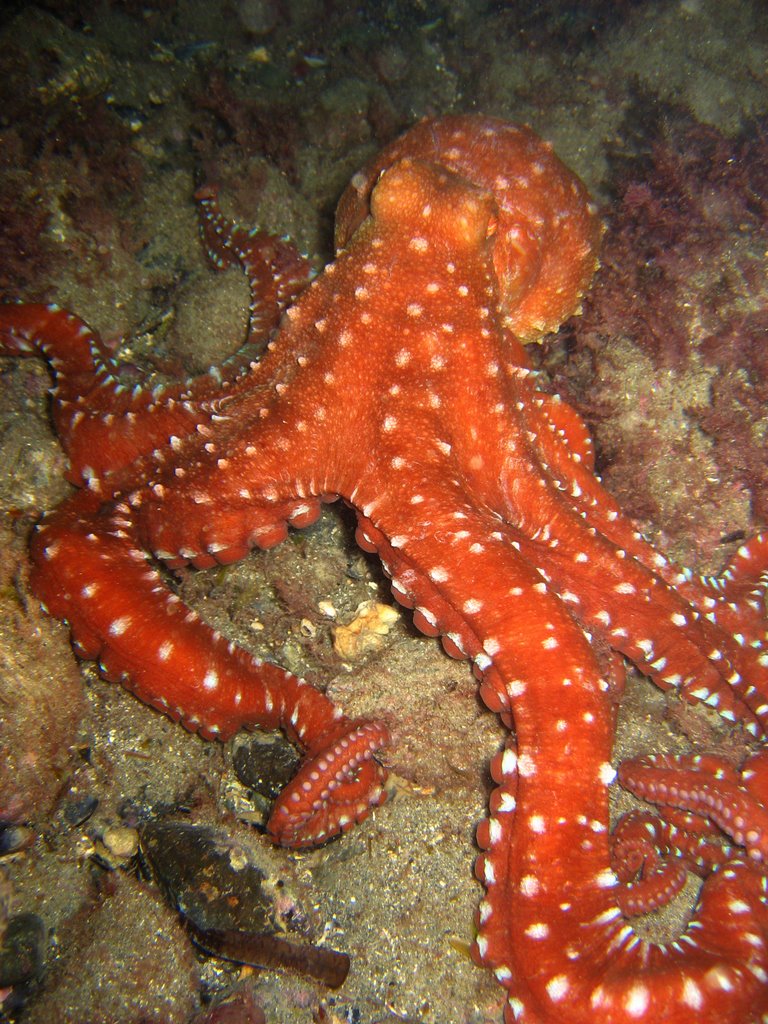
Aristotle's biology
Aristotle's biology is the theory of biology, grounded in systematic observation and collection of data, mainly zoological, embodied in Aristotle's books on the science. Many of his observations were made during his stay on the island of Lesbos, including especially his descriptions of the marine biology of the Pyrrha
Read the full pageAristotle's biology is the theory of biology, grounded in systematic observation and collection of data, mainly zoological, embodied in Aristotle's books on the science. Many of his observations were made during his stay on the island of Lesbos, including especially his descriptions of the marine biology of the Pyrrha lagoon, now the Gulf of Kalloni. His theory is based on his concept of form, which derives from but is markedly unlike Plato's theory of Forms.
The theory describes five major biological processes, namely metabolism, temperature regulation, information processing, embryogenesis, and inheritance. Each was defined in detail, in some cases enough allowing modern biologists to construct mathematical models of the mechanisms described. Aristotle's method, too, resembled the style of science used by modern biologists when exploring a new area, with systematic data collection, discovery of patterns, and inference of possible causal explanations from these. He did not perform experiments in the modern sense, but made observations of living animals and carried out dissections. He names some 500 species of bird, mammal, and fish; and he distinguishes dozens of insects and other invertebrates. He describes the internal anatomy of over a hundred animals, and dissected around 35 of these.
- 7
 ConceptGreek & Roman
Aristotle's theory of universals
Aristotle's theory of universals is Aristotle's classical solution to the problem of universals, sometimes known as the hylomorphic theory of immanent realism. Universals are the characteristics or qualities that ordinary objects or things have in common.
Read the full pageAristotle's theory of universals is Aristotle's classical solution to the problem of universals, sometimes known as the hylomorphic theory of immanent realism. Universals are the characteristics or qualities that ordinary objects or things have in common. They can be identified in the types, properties, or relations observed in the world. For example, imagine there is a bowl of red apples resting on a table. Each apple in that bowl will have many similar qualities, such as their red coloring or "redness". They will share some degree of the quality of "ripeness" depending on their age. They may also be at varying degrees of age, which will affect their color, but they will all share a universal "appleness". These qualities are the universals that the apples hold in common.
The problem of universals asks three questions. Do universals exist? If they exist, where do they exist? Also, if they exist, how do we obtain knowledge of them? In Aristotle's view, universals are incorporeal and universal, but only exist only where they are instantiated; they exist only in things. Aristotle said that a universal is identical in each of its instances. All red things are similar in that there is the same universal, redness, in each thing. There is no Platonic Form of redness, standing apart from all red things; instead, each red thing has a copy of the same property, redness. For the Aristotelian, knowledge of the universals is not obtained from a supernatural source. It is obtained from experience by means of active intellect.
- 8
 ConceptGreek & Roman
Asceticism
Asceticism is a lifestyle characterized by abstinence from worldly pleasures through self-discipline, self-imposed poverty, and simple living, often for the purpose of pursuing spiritual goals. Ascetics may withdraw from the world or continue to be part of their society, but typically adopt a frugal lifestyle, characte
Read the full pageAsceticism is a lifestyle characterized by abstinence from worldly pleasures through self-discipline, self-imposed poverty, and simple living, often for the purpose of pursuing spiritual goals. Ascetics may withdraw from the world or continue to be part of their society, but typically adopt a frugal lifestyle, characterized by the renunciation of material possessions and physical pleasures, and also spend time fasting while concentrating on religion, prayer, or meditation. Some individuals have also attempted an ascetic lifestyle to free themselves from addictions to things such as alcohol, smoking, drugs, sex, pornography, lavish food, and entertainment.
Asceticism has been historically observed in many religious and philosophical traditions, most notably among Ancient Greek philosophical schools (Epicureanism, Cynicism, Stoicism, and Pythagoreanism), Indian religions (Buddhism, Hinduism, Jainism), Abrahamic religions (Christianity, Judaism, Islam), and contemporary practices continue amongst some of their followers. Practitioners abandon sensual pleasures and lead an abstinent lifestyle, in the pursuit of redemption, salvation, or spirituality. Many ascetics believe the action of purifying the body helps to purify the body and soul, and that in doing so, they will obtain a greater connection with the Divine or find inner peace. This may take the form of rituals, the renunciation of wealth and sensual pleasures, or self-mortification in order to pursue spiritual goals.
- 9
 ConceptGreek & Roman
Cardinal virtues
The cardinal virtues are four virtues of mind and character in classical philosophy. They are prudence, justice, fortitude, and temperance.
Read the full pageThe cardinal virtues are four virtues of mind and character in classical philosophy. They are prudence, justice, fortitude, and temperance. They form a virtue theory of ethics. The term cardinal comes from the Latin cardo (hinge); these four virtues are called "cardinal" because all other virtues fall under them and hinge upon them.
These virtues derive initially from Plato in Republic Book IV, 426–435. Aristotle expounded them systematically in the Nicomachean Ethics. They were also recognized by the Stoics and Cicero expanded on them. In the Christian tradition, they are also listed in the Deuterocanonical books in Wisdom 8:7 and 4 Maccabees 1:18–19, and the Doctors Ambrose, Augustine, and Aquinas expounded their supernatural counterparts, the three theological virtues of faith, hope, and charity.
- 10ConceptGreek & Roman
Christian apologetics
Christian apologetics (Ancient Greek: ἀπολογία, "verbal defense, speech in defense") is a branch of Christian theology that defends Christianity. It is potentially first seen in 1 Peter 3:15–16, in which Christians should respond in a well manner to those who ask about their faith.
Read the full pageChristian apologetics (Ancient Greek: ἀπολογία, "verbal defense, speech in defense") is a branch of Christian theology that defends Christianity. It is potentially first seen in 1 Peter 3:15–16, in which Christians should respond in a well manner to those who ask about their faith.
Christian apologetics have taken many forms over the centuries, starting with Paul the Apostle in the early church and Patristic writers such as Origen, Augustine of Hippo, Justin Martyr and Tertullian, then continuing with writers such as Thomas Aquinas, Duns Scotus, William of Ockham and Anselm of Canterbury during Scholasticism.
- 11
 ConceptGreek & Roman
Christian pacifism
Christian pacifism is the theological and the ethical position according to which pacifism and non-violence have a scriptural and a rational basis for Christians, and it is based on the affirmation that any form of violence is incompatible with the Christian faith. Christian pacifists state that Jesus himself was a pac
Read the full pageChristian pacifism is the theological and the ethical position according to which pacifism and non-violence have a scriptural and a rational basis for Christians, and it is based on the affirmation that any form of violence is incompatible with the Christian faith. Christian pacifists state that Jesus himself was a pacifist who taught and practiced pacifism and that his followers must do likewise. Notable Christian pacifists include Martin Luther King Jr., Leo Tolstoy, Adin Ballou, Dorothy Day, Ammon Hennacy, and brothers Daniel and Philip Berrigan.
Christian anarchists, such as Ballou and Hennacy, believe that adherence to Christianity requires not just pacifism but, because governments inevitably threatened or used force to resolve conflicts, anarchism. Most Christian pacifists, including the peace churches, Christian Peacemaker Teams, and individuals like John Howard Yoder, make no claim to be anarchists.
- 12
 ConceptGreek & Roman
Counter-Earth
The Counter-Earth is a hypothetical body of the Solar System that orbits on the other side of the Solar System from Earth, e.g. at the L3 Lagrange point of the Sun–Earth system. A Counter-Earth, or Antichthon (Greek: Ἀντίχθων), was hypothesized by the pre-Socratic Greek philosopher Philolaus to support his non-geocentr
Read the full pageThe Counter-Earth is a hypothetical body of the Solar System that orbits on the other side of the Solar System from Earth, e.g. at the L3 Lagrange point of the Sun–Earth system. A Counter-Earth, or Antichthon (Greek: Ἀντίχθων), was hypothesized by the pre-Socratic Greek philosopher Philolaus (c. 470 – c. 385 BC) to support his non-geocentric cosmology, in which all objects in the universe revolve around a Central Fire (πῦρ μέσον, pŷr méson) unseen from Earth and distinct from the Sun which also revolves around it.
In modern times, a hypothetical planet always on the other side of the Sun from Earth has been called a Counter-Earth, and has been a recurring theme in UFO claims, as well as in fiction (particularly science fiction).
- 13ConceptGreek & Roman
Creatio ex materia
Creatio ex materia is the notion that the universe was formed out of eternal, pre-existing matter. This is in contrast to the notion of creatio ex nihilo, where the universe is created out of nothing.
Read the full pageCreatio ex materia is the notion that the universe was formed out of eternal, pre-existing matter. This is in contrast to the notion of creatio ex nihilo, where the universe is created out of nothing. The idea of creatio ex materia is found in ancient near eastern cosmology, early Greek cosmology such as is in the works of Homer and Hesiod, and across the board in ancient Greek philosophy. It was also held by a few early Christians, although creatio ex nihilo was the dominant concept among such writers. After the King Follet discourse, creatio ex materia came to be accepted in Mormonism.
Greek philosophers came to widely frame the notion of creatio ex materia with the philosophical dictum "nothing comes from nothing" (Greek: οὐδὲν ἐξ οὐδενός; Latin: ex nihilo nihil fit). Although it is not clear whether the dictum originated with Parmenides (5th century BC) or predates him among the Milesian philosophers, a more common version of the expression was coined by Lucretius, who stated in his De rerum natura that "nothing can be created out of nothing".


