
Asceticism
Asceticism is a lifestyle characterized by abstinence from worldly pleasures through self-discipline, self-imposed poverty, and simple living, often for the purpose of pursuing spiritual goals. Ascetics may withdraw from the world or continue to be part of their society, but typically adopt a frugal lifestyle, characte
Asceticism is a lifestyle characterized by abstinence from worldly pleasures through self-discipline, self-imposed poverty, and simple living, often for the purpose of pursuing spiritual goals. Ascetics may withdraw from the world or continue to be part of their society, but typically adopt a frugal lifestyle, characterized by the renunciation of material possessions and physical pleasures, and also spend time fasting while concentrating on religion, prayer, or meditation. Some individuals have also attempted an ascetic lifestyle to free themselves from addictions to things such as alcohol, smoking, drugs, sex, pornography, lavish food, and entertainment.
Asceticism has been historically observed in many religious and philosophical traditions, most notably among Ancient Greek philosophical schools (Epicureanism, Cynicism, Stoicism, and Pythagoreanism), Indian religions (Buddhism, Hinduism, Jainism), Abrahamic religions (Christianity, Judaism, Islam), and contemporary practices continue amongst some of their followers. Practitioners abandon sensual pleasures and lead an abstinent lifestyle, in the pursuit of redemption, salvation, or spirituality. Many ascetics believe the action of purifying the body helps to purify the body and soul, and that in doing so, they will obtain a greater connection with the Divine or find inner peace. This may take the form of rituals, the renunciation of wealth and sensual pleasures, or self-mortification in order to pursue spiritual goals.
However, ascetics maintain that self-imposed constraints bring them greater freedom in various areas of their lives, such as increased clarity of thought and the ability to resist potentially destructive temptations. Asceticism is seen in some ancient theologies as a journey towards spiritual transformation, where the simple is sufficient, the bliss is within, and the frugal is plenty. Inversely, several ancient religious traditions, such as Zoroastrianism, Ancient Egyptian religion, the Dionysian Mysteries, and vāmācāra (left-handed Hindu Tantrism), abstain from ascetic practices and focus on various types of good deeds in the world and the importance of family life.
Etymology and meaning
The adjective "ascetic" derives from the ancient Greek term áskēsis, which means "training" or "exercise". The original usage did not refer to self-denial, but to the physical training required for athletic events. Its usage later extended to rigorous practices used in many major religious traditions, in varying degrees, to attain redemption and higher spirituality.
Edward Cuthbert Butler classified asceticism into natural and unnatural forms:
"Natural asceticism" involves a lifestyle that reduces material aspects of life to the utmost simplicity and to a minimum. This may include minimal, simple clothing, sleeping on a floor or in caves, and eating a simple, minimal amount of food. Natural asceticism, stated Wimbush and Valantasis, does not include maiming the body or harsher austerities that make the body suffer.
"Unnatural asceticism", in contrast, covers practices that go further, including body mortification, punishing one's own flesh, and habitual self-infliction of pain, such as sleeping on a bed of nails.
Religion
Self-discipline, abstinence, and renunciation of material goods and worldly concerns, to various degrees, are parts of religious practice within many religious and spiritual traditions. Ascetic lifestyle is associated particularly with monks, nuns, and fakirs in Abrahamic religions, and bhikkhus, munis, sannyasis/vairagis, siddhas, goswamis, and yogis in Indian religions.
Bahá'í Faith
In the Baháʼí Faith, according to Shoghi Effendi, the maintenance of a high standard of moral conduct is neither to be associated nor confused with any form of extreme asceticism, nor of excessive and bigoted puritanism. The religious standard set by Baháʼu'lláh, founder of the Baháʼí Faith, seeks under no circumstances to deny anyone the legitimate right and privilege to derive the fullest advantage and benefit from the manifold joys, beauties, and pleasures with which the world has been so plentifully enriched by God, who Baháʼís regard as an all-loving creator.
Christianity
Notable Christian authors of Late Antiquity such as Origen, Jerome, John Chrysostom, and Augustine of Hippo, interpreted meanings of the Christian Bible within a highly asceticized religious environment. Scriptural examples of asceticism could be found in the lives of John the Baptist, Jesus, the twelve apostles, and Paul the Apostle. The Dead Sea Scrolls revealed ascetic practices of the ancient Jewish sect of the Essenes, who took vows of abstinence to prepare for a holy war. An emphasis on an ascetic religious life was evident in both early Christian writings (e.g., the Philokalia) and practices (e.g., Hesychasm). Christian saints, including Paul the Hermit, Simeon Stylites, David of Wales, John of Damascus, Peter Waldo, Tamar of Georgia, and Francis of Assisi, practiced asceticism as well.
According to British historian and Roman Catholic theologian Richard Finn, much of early Christian asceticism has been traced to early Judaism, not to Ancient Greek asceticism. Some of the ascetic thought in Christianity nevertheless, Finn states, has roots in Ancient Greek philosophy. Virtuous living is often considered incompatible with a strong craving for bodily pleasures driven by desire and passion. In ancient theology, morality was typically viewed not merely as a balance between right and wrong, but as a form of spiritual transformation. In this perspective, simplicity is regarded as sufficient, inner bliss is valued, and frugality is seen as abundant.
Middle Eastern deserts were at one time inhabited by thousands of male and female Christian ascetics, hermits, and anchorites, including Anthony the Great (a.k.a. St. Anthony of the Desert), Mary of Egypt, and Simeon Stylites, collectively known as the Desert Fathers and Desert Mothers. In 963 CE, an association of monasteries called Lavras was formed on Mount Athos, according Eastern Orthodox tradition. This became the most important center of Orthodox Christian ascetic groups in the centuries that followed. In the modern era, Mount Athos and Meteora have remained significant centers.
Sexual abstinence, as practiced by Encratites sect of Christianity, for example, was only one aspect of ascetic renunciation, and both natural and unnatural asceticism have been part of Christian asceticism. Other ascetic practices have included simple living, begging, and fasting, as well as ethical practices like humility, compassion, meditation, patience, and prayer. Evidence of extreme asceticism in Christianity appears in second-century texts and thereafter in both Eastern and Western Christian traditions, including the practices of chaining one's body to rocks, eating only grass, praying seated on a pillar in the elements (e.g., the monk Simeon Stylites, solitary confinement inside a cell, abandoning personal hygiene and adopting lifestyle of a beast, mortification of the flesh, and voluntary suffering. Nevertheless, said practices were often rejected as beyond acceptable by ascetics like Barsanuphius of Gaza and John the Prophet. Ascetic practices were linked to the Christian concepts of sin and redemption.
The ascetic literature of early Christianity was influenced by pagan Greek philosophical traditions, especially those of Plato and Aristotle, which sought the perfect spiritual way of life. According to Clement of Alexandria, philosophy and scriptures can be seen as "double expressions of one pattern of knowledge". According to Evagrius, "body and the soul are there to help the intellect and not to hinder it". Evagrius Ponticus (345–399 CE) was a highly educated monastic teacher who produced a large theological body of work, mainly ascetic, including the Gnostikos (Ancient Greek: γνωστικός, gnōstikos, "learned", from γνῶσις, gnōsis, "knowledge"), also known as The Gnostic: To the One Made Worthy of Gnosis.
The Gnostikos is the second volume of a trilogy containing the Praktikos, intended for young monks seeking apatheia (i.e., "a state of calm which is the prerequisite for love and knowledge"), which would purify their intellect and make it impassible, revealing the truth hidden in every being. The third book, Kephalaia Gnostika, was meant for meditation by advanced monks. Those writings made him one of the most recognized ascetic teachers and scriptural interpreters of his time, which included Clement of Alexandria and Origen.
Between the Middle Ages and the Protestant Reformation, Christian asceticism became more focused on communal life of studying and translating the Bible, prayer, preaching the Gospel, and other spiritual practices. The proto-Protestant Lollards and Waldensians originated as ascetic lay movements within medieval Western Christianity, and both were persecuted by the Roman Catholic Church throughout several centuries. Notable examples of Protestant asceticism are the Anabaptist Churches (Amish, Hutterites, Mennonites, Schwarzenau Brethren), Quakers, and Shakers, which espouse their pacifist ethics and separation from the world by simple living, which includes plain dressing and preference for antiquated technology.
Certain Christian monasteries and convents, such as the Evangelical-Lutheran Sisters of the Holy Spirit at Alsike Convent, allow Christians to commit a certain period of time (such as the summer period) to living as a hermit in a hermitage. While living as a hermit, individuals reside in desolated cabins that do not contain running water, and focus on prayer (particularly the Divine Office). In the Orthodox, Catholic, Lutheran and Anglican traditions of Christianity, individuals may be called to the lifetime vocation of being a hermit or solitary. The Catholic Church continues to commend to its priests "an asceticism becoming to a shepherd of souls".
Islam
The Arabic term for "asceticism" is zuhd. Accorting to some traditions the Islamic prophet Muhammad and his immediate followers practiced asceticism. Contemporary mainstream Islam has not had a tradition of asceticism, but its Sufi groups have cherished their own ascetic tradition for several centuries. Islamic literary sources and historians report that during the early Muslim conquests of the Middle East and North Africa (7th–10th centuries), some of the Muslim warriors guarding the frontier settlements were also ascetics; numerous historical accounts also report of some Christian monks that apostatized from Christianity, converted to Islam, and joined the jihad, and of several Muslim warriors that repudiated Islam, converted to Christianity, and became Christian monks. Monasticism is forbidden in Islam. Scholars in the field of Islamic studies have argued that asceticism (zuhd) served as a precursor to the later doctrinal formations of Sufis that began to emerge in the tenth century through the works of individuals such as al-Junayd, al-Qushayrī, al-Sarrāj, and al-Hujwīrī, among others.
Sufism emerged and grew as a mystical, somewhat hidden tradition in the mainstream Sunni and Shia denominations of Islam, state Eric Hanson and Karen Armstrong, likely in reaction to "the growing worldliness of Umayyad and Abbasid societies". Acceptance of asceticism emerged in Sufism slowly because it was contrary to the sunnah, states Nile Green, and early Sufis condemned "ascetic practices as unnecessary public displays of what amounted to false piety". The ascetic Sufis were hunted and persecuted both by Sunni and Shia rulers, in various centuries.
Sufis were highly influential and greatly successful in spreading Islam between the 10th and 19th centuries, particularly to the furthest outposts of the Muslim world in the Middle East and North Africa, the Balkans and Caucasus, the Indian subcontinent, and finally Central, Eastern, and Southeast Asia. Some scholars have argued that Sufi Muslim ascetics and mystics played a decisive role in converting the Turkic peoples to Islam between the 10th and 12th centuries and Mongol invaders in Persia during the 13th and 14th centuries, mainly because of the similarities between the extreme, ascetic Sufis (fakirs and dervishes) and the Shamans of the traditional Turco-Mongol religion.
Sufism was adopted and then grew particularly in the frontier areas of Islamic states, where the asceticism of its fakirs and dervishes appealed to populations already used to the monastic traditions of Hinduism, Buddhism, and medieval Christianity. Ascetic practices of Sufi fakirs have included celibacy, fasting, and self-mortification. Sufi ascetics also participated in mobilizing Muslim warriors for holy wars, helping travelers, dispensing blessings through their perceived magical powers, and in helping settle disputes. Ritual ascetic practices, such as self-flagellation (Tatbir), have been practiced by Shia Muslims annually at the Mourning of Muharram.
Judaism
Asceticism has not been a dominant theme within Judaism, but minor to significant ascetic traditions have been a part of Jewish spirituality. The history of Jewish asceticism is traceable to the 1st millennium BCE with the references of the Nazirites, whose rules of practice are found in Book of Numbers 6:1–21. The ascetic practices included not cutting the hair, abstaining from eating meat or grapes, abstention from wine, or fasting and hermit style living conditions for a period of time.
Literary evidence suggests that this tradition continued for a long time, well into the common era, and both Jewish men and women could follow the ascetic path, with examples such as the ascetic practices for fourteen years by Queen Helena of Adiabene, and by Miriam of Tadmor. After the Jews returned from the Babylonian exile and the Mosaic institution was done away with, a different form of asceticism arose when Antiochus IV Epiphanes threatened the Jewish religion in 167 BCE. The Essene tradition of the Second Temple period is described as one of the movements within historic Jewish asceticism between 2nd century BCE and 1st century CE.
The Ashkenazi Hasidim (Chassidei Ashkenaz) were a Jewish mystical, ascetic movement in medieval France and the German Rhineland, whose practices are documented in the Jewish religious texts of the 12th and 13th centuries. Peter Meister states that this Jewish asceticism emerged in the 10th century, grew much wider with prevalence in Southern Europe and the Middle East through the Jewish pietistic movement. According to Shimon Shokek, these ascetic practices were the result of an influence of medieval Christianity on Ashkenazi Hasidism. The Jewish faithful of this Hasidic tradition practiced the punishment of the body, self-torture by starvation, sitting in the open in freezing snow, or in the sun with fleas in summer, all with the goal of purifying the soul and turning one's attention away from the body unto the soul.
Jewish sects who practiced asceticism existed both in ancient and medieval times, most notably the Essenes. According to Allan Nadler, Professor Emeritus of Religious Studies and Former Director of the Jewish Studies Program at Drew University, two most significant examples of medieval Jewish asceticism have been the Ashkenazi Hasidim and Havoth ha-Levavoth. Pious self-deprivation was a part of the dualism and mysticism in these ascetic groups. This voluntary separation from the world was called Perishuth, and the Jewish society widely accepted this tradition in the late medieval era. Extreme forms of ascetic practices have been opposed or controversial in the Hasidic movement.
Another significant school of Jewish asceticism appeared in the 16th century, led from Safed. These mystics engaged in radical material abstentions and self-mortification with the belief that this helps them transcend the created material world, reach and exist in the mystical spiritual world. A studied example of this group was Hayyim ben Joseph Vital, and their rules of ascetic lifestyle (Hanhagoth) are documented.
Indian religions
Asceticism is found in both non-theistic and theistic traditions within Indian religions. The origins of the practice are ancient, and a heritage shared by the three major Indian religions: Buddhism, Hinduism, and Jainism. They are referred to by many names, such as Sadhu, Pravrajita, Bhikshu, Yati, etc.
Asceticism in Indian religions includes a spectrum of diverse practices, ranging from the mild self-discipline, self-imposed poverty, and simple living typical of Buddhism, Hinduism, and Jainism, to more severe austerities and self-mortification practices of monks in Jainism and now extinct Ajivikas in the pursuit of salvation.
Some ascetics live as hermits relying on whatever food they can find in the forests, then sleep and meditate in caves; others travel from one holy site to another while sustaining their body by begging for food; yet others live in monasteries as monks or nuns. Some ascetics live like priests and preachers, other ascetics are armed and militant, to resist any persecution—a phenomenon that emerged after the Muslim invasions of India during the Middle Ages. Self-torture is a relatively uncommon practice but one that attracts public attention. In Indian traditions such as Buddhism and Hinduism, self-mortification is typically criticized. However, Indian mythologies also describe numerous ascetic gods or demons who pursued harsh austerities for decades or centuries that helped each gain special powers.
Buddhism
Buddhism is devoted primarily to awakening or enlightenment (bodhi), Nirvāṇa ("blowing out"), and liberation (vimokṣa) from all causes of suffering (duḥkha) due to the existence of sentient beings in saṃsāra (the cycle of compulsory birth, death, and rebirth) through the threefold trainings (ethical conduct, meditative absorption, and wisdom). Classical Indian Buddhism emphasized the importance of the individual's self-cultivation (through numerous spiritual practices like keeping ethical precepts, Buddhist meditation, and worship) in the process of liberation from the defilements which keep us bound to the cycle of rebirth. According to the standard Buddhist scholastic understanding, liberation arises when the proper elements (dhārmata) are cultivated and when the mind has been purified of its attachment to fetters and hindrances that produce unwholesome mental factors (various called defilements, poisons, or fluxes).
The historical Buddha (c. 5th century BCE) initially adopted an extreme ascetic life in search of enlightenment. After enlightenment he rejected extreme asceticism in favor of a more moderate path, the "Middle Way". The Buddha defined his teaching as "the Middle Way" (Pāli: majjhimāpaṭipadā). In the Dharmacakrapravartana Sūtra, this is used to refer to the fact that his teachings steer a middle course between the extremes of asceticism and bodily denial (as practiced by the Jains and other Indian ascetic groups) and sensual hedonism or indulgence.
Many Śramaṇa ascetics of the Buddha's time placed great emphasis on the denial of the body, using practices such as fasting, to liberate the mind from the body. Gautama Buddha realized that the mind was embodied and causally dependent on the body, and therefore that a malnourished body did not allow the mind to be trained and developed. Thus, Buddhism's main concern is not with luxury or poverty, but instead with the human response to circumstances.
Another related teaching of the historical Buddha is "the teaching through the middle" (majjhena dhammaṃ desana), which claims to be a metaphysical middle path between the extremes of eternalism and annihilationism, and the extremes of existence and non-existence. This idea became central to later Buddhist metaphysics, as all Buddhist philosophies would claim to steer a metaphysical middle course.
Adapted from the Wikipedia article Asceticism, available under CC BY-SA 4.0.
Connections


You might also explore
 Free will★Are our choices genuinely up to us, or determined by prior causes?AqidahIslamicAqidah is an Islamic term of Arabic origin that means "creed". It is also called Islamic creed or Islamic theology.Christian theologyModern EuropeanChristian theology is the theology – the systematic study of the divine and religion – of Christian belief and…
 ChristiansMedieval LatinA Christian ( ) is a person who follows or adheres to Christianity, a monotheistic Abrahamic religion based on the life…
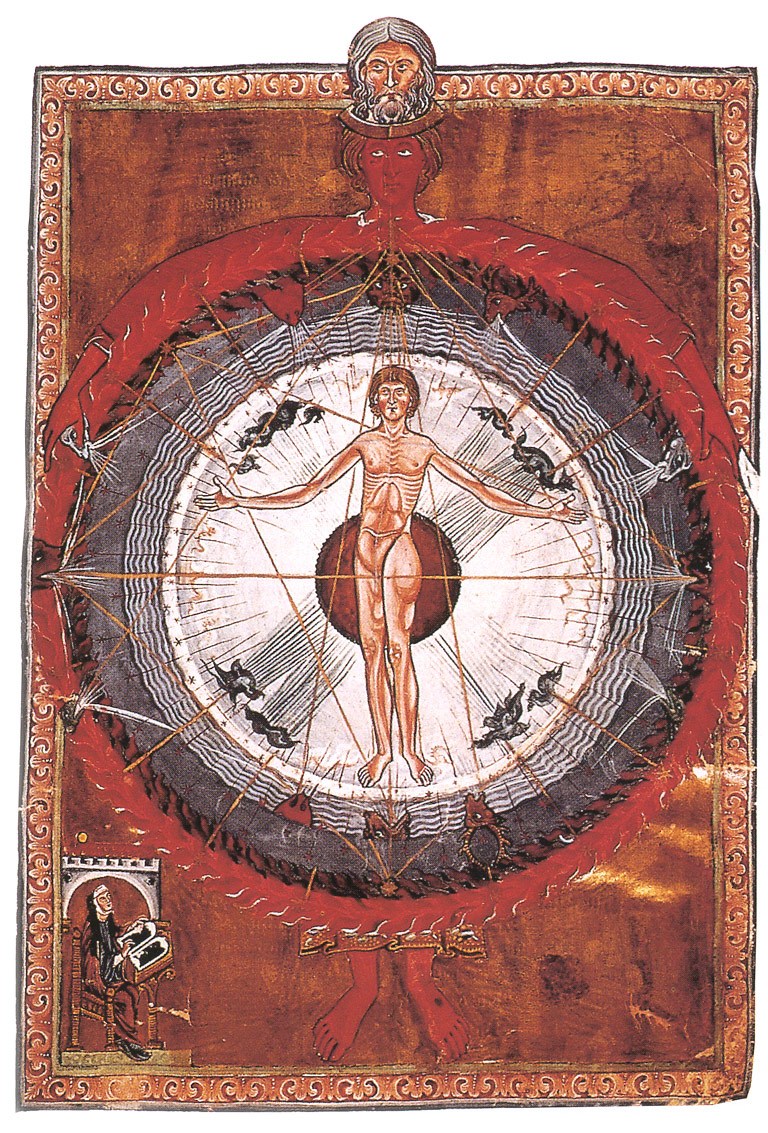 MysticismAmericasMysticism encompasses religious traditions of human transformation aided by various practices and religious…
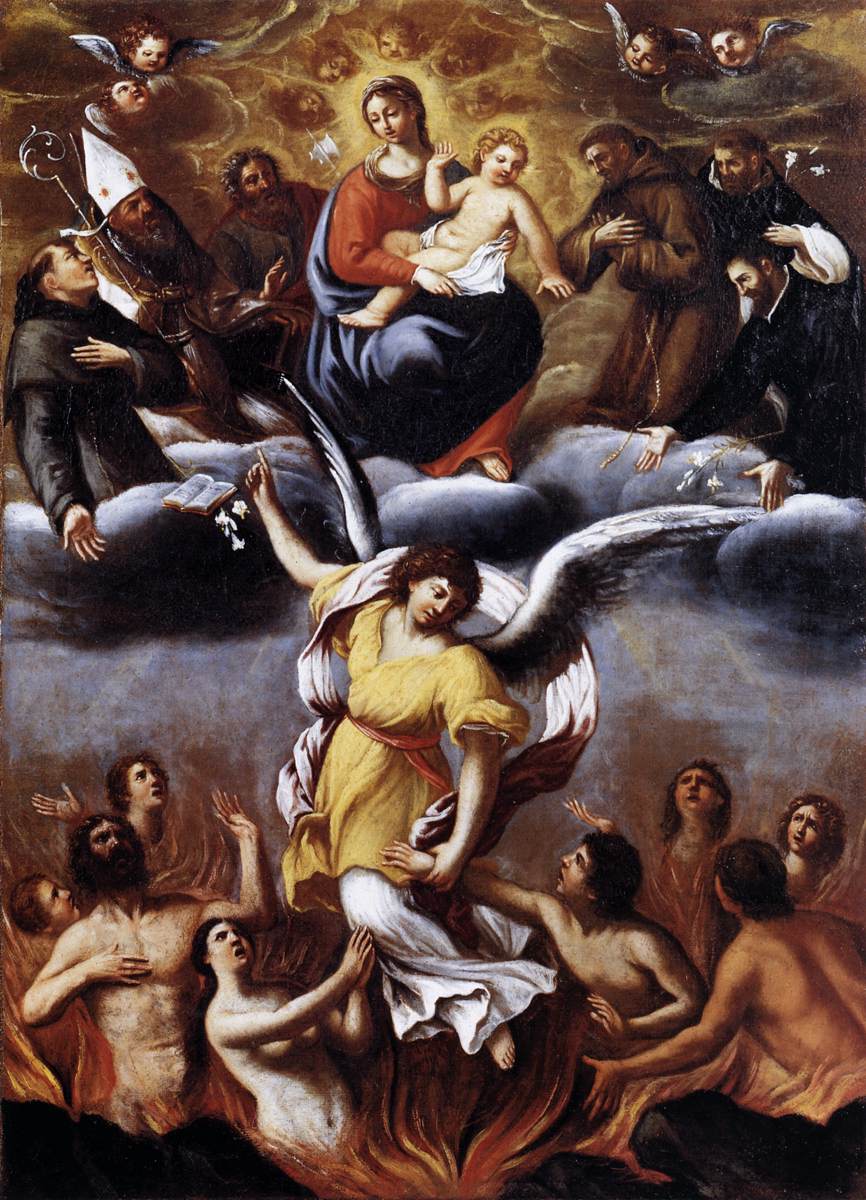 PurgatoryGreek & RomanPurgatory (Latin: purgatorium, borrowed into English via Anglo-Norman and Old French) is a belief in Catholic theology.…