American ideas, F–G
- 1ConceptAmericas
Feminist epistemology
Feminist epistemology is an examination of epistemology from a feminist standpoint.
Read the full pageFeminist epistemology is an examination of epistemology from a feminist standpoint.
Feminist epistemology claims that ethical and political values are important in shaping epistemic practices, and interpretations of evidence. Feminist epistemology has been in existence for over 40 years. Feminist epistemology studies how gender influences our understanding of knowledge, justification and theory of knowledge; it describes how knowledge and justification disadvantage women. Feminist epistemology is derived from the terms feminism and epistemology. Feminism is concerned with the abolition of gender and sex inequalities rooted in discrimination, while epistemology is the inquiry into knowledge's meaning. Scholars of feminist epistemology claim that some theories of knowledge discriminate against women by disbarring them from inquiry, unfairly criticizing their cognitive styles, and producing theories of women and social phenomena that reinforce gender hierarchies and represent women as inferior. The easy and uncontroversial point is that much of what has been recognised as knowledge and passed on in academic and industrial circles has been produced by men. Consequently their experiences and concerns have served to determine its direction. According to feminist epistemologists, these failures in dominant knowledge result from faulty scientific methodologies and knowledge conceptions. Therefore, feminist epistemologists attempt to propagate theories that aid liberation and egalitarian causes and protect these endeavors as advances in knowledge.
- 2ConceptAmericas
Figure and ground (media)
Figure and ground is a concept drawn from Gestalt psychology by media theorist Marshall McLuhan in the early 1970s. This concept underpins the meaning of his famous phrase, "The medium is the message".
Read the full pageFigure and ground is a concept drawn from Gestalt psychology by media theorist Marshall McLuhan in the early 1970s. This concept underpins the meaning of his famous phrase, "The medium is the message". The concept was an approach to what was called "perceptual organization." He began to use the terms figure and ground as a way "to describe the parts of a situation" and "to help explain his ideas about media and human communication." The concept was later employed to explain how a communications technology, the medium or figure, necessarily operates through its context, or ground.
To McLuhan, "'figure' refers to something that jumps out at us, something that grabs our attention, [whereas] ‘ground’ refers to something that supports or contextualizes a situation and is usually an area of unattention." When we first experience a new image or sensation, there are certain aspects of the object that grab our attention and engage us and certain aspects that we unintentionally ignore. We should not focus on just the "figure" or the "ground" though, as McLuhan believed that both were equally as important to understanding the full meaning of the situation. "This distinction between that which is perceived and that which is blocked out in order to focus perception is central for McLuhan."
- 3ConceptAmericas
Formal system
A formal system (or deductive system) is an abstract structure and formalization of an axiomatic system used for deducing, using rules of inference, theorems from axioms. In 1921, David Hilbert proposed to use formal systems as the foundation of knowledge in mathematics.
Read the full pageA formal system (or deductive system) is an abstract structure and formalization of an axiomatic system used for deducing, using rules of inference, theorems from axioms.
In 1921, David Hilbert proposed to use formal systems as the foundation of knowledge in mathematics.
- 4ConceptAmericas
Functional psychology
Functional psychology or functionalism refers to a psychological school of thought that was a direct outgrowth of Darwinian thinking, which focuses attention on the utility and purpose of behavior that has been modified over years of human existence. Edward L.
Read the full pageFunctional psychology or functionalism refers to a psychological school of thought that was a direct outgrowth of Darwinian thinking, which focuses attention on the utility and purpose of behavior that has been modified over years of human existence. Edward L. Thorndike, best known for his experiments with trial-and-error learning, came to be known as the leader of the loosely defined movement. This movement arose in the U.S. in the late 19th century in direct contrast to Edward Titchener's structuralism, which focused on the contents of consciousness rather than the motives and ideals of human behavior. Functionalism denies the principle of introspection, which tends to investigate the inner workings of human thinking rather than understanding the biological processes of the human consciousness.
While functionalism eventually became its own formal school, it built on structuralism's concern for the anatomy of the mind and led to greater concern over the functions of the mind and later to the psychological approach of behaviorism.
- 5ConceptAmericas
Functionalism (philosophy of mind)
In philosophy of mind, functionalism is the thesis that each and every mental state (for example, the state of having a belief, of having a desire, or of being in pain) is constituted solely by its functional role, which means its causal relation to other mental states, sensory inputs, and behavioral outputs. Functiona
Read the full pageIn philosophy of mind, functionalism is the thesis that each and every mental state (for example, the state of having a belief, of having a desire, or of being in pain) is constituted solely by its functional role, which means its causal relation to other mental states, sensory inputs, and behavioral outputs. Functionalism developed largely as an alternative to type physicalism and behaviorism.
Functionalism is a theoretical level between the physical implementation and behavioral output. Therefore, it is different from its predecessors of Cartesian dualism (advocating independent mental and physical substances) and Skinnerian behaviorism and physicalism (declaring only physical substances) because it is only concerned with the effective functions of the brain, through its organization or its "software programs".
- 6ConceptAmericas
Further facts
In philosophy, further facts are facts that do not logically follow from the physical facts of the world. Reductionists who argue that at bottom there is nothing more than the physical facts thus argue against the existence of further facts.
Read the full pageIn philosophy, further facts are facts that do not logically follow from the physical facts of the world. Reductionists who argue that at bottom there is nothing more than the physical facts thus argue against the existence of further facts. The concept of further facts plays a key role in some of the major works in analytic philosophy of the late 20th century, including in Derek Parfit's Reasons and Persons and David Chalmers's The Conscious Mind.
One context in which the existence of further facts is debated is that of personal identity across time: in what sense is Alice today the same person as Alice yesterday, given that across the two days the state of her brain is different and the atoms that constitute her are different? On the one hand, we may believe that at bottom, there is nothing more than the atoms and their arrangement at different points in time; while we may for practical purposes come up with some notion of sameness of a person, this notion does not reflect anything deeper about reality. Under such a view there would be no further facts. On the other hand, we may believe that there is an additional fact of the matter whether Alice yesterday and Alice today really are the same person. For example, if we believe in Cartesian souls, we may believe that Alice yesterday and Alice today are the same person if and only if they correspond to the same soul. Or we may not believe in Cartesian souls, but yet believe that whether Alice yesterday and Alice today are the same person is a question about something other than facts about which atoms constitute them and how they are arranged. These would both be further-fact views.
- 7ConceptAmericas
General frame
In logic, general frames (or simply frames) are Kripke frames with an additional structure, which are used to model modal and intermediate logics. The general frame semantics combines the main virtues of Kripke semantics and algebraic semantics: it shares the transparent geometrical insight of the former, and robust co
Read the full pageIn logic, general frames (or simply frames) are Kripke frames with an additional structure, which are used to model modal and intermediate logics. The general frame semantics combines the main virtues of Kripke semantics and algebraic semantics: it shares the transparent geometrical insight of the former, and robust completeness of the latter.
A modal general frame is a triple 𝐅=⟨F,R,V⟩, where ⟨F,R⟩ is a Kripke frame (i.e., R is a binary relation on the set F), and V is a set of subsets of F that is closed under the following:
- 8ConceptAmericas
General semantics
General semantics is a school of thought that incorporates philosophic and scientific aspects. Although it does not stand on its own as a separate school of philosophy, a separate science, or an academic discipline, it describes itself as a scientifically empirical approach to cognition and problem solving.
Read the full pageGeneral semantics is a school of thought that incorporates philosophic and scientific aspects. Although it does not stand on its own as a separate school of philosophy, a separate science, or an academic discipline, it describes itself as a scientifically empirical approach to cognition and problem solving. It has been described by nonproponents as a self-help system, and it has been criticized as having pseudoscientific aspects, but it has also been favorably viewed by various scientists as a useful set of analytical tools albeit not its own science.
General semantics is concerned with how phenomena (observable events) translate to perceptions, how they are further modified by the names and labels we apply to them, and how we might gain a measure of control over our own cognitive, emotional, and behavioral responses. Proponents characterize general semantics as an antidote to certain kinds of delusional thought patterns in which incomplete and possibly warped mental constructs are projected onto the world and treated as reality itself. Accurate map–territory relations are a central theme.
- 9ConceptAmericas
Gnosticism
Gnosticism is a collection of different religious and philosophical ideas and systems that fully developed by the mid-second century among sects of early Christianity and other faiths. It is not a singular, homogeneous tradition or religion, but an umbrella term used by modern scholars to describe different groups and
Read the full pageGnosticism is a collection of different religious and philosophical ideas and systems that fully developed by the mid-second century among sects of early Christianity and other faiths. It is not a singular, homogeneous tradition or religion, but an umbrella term used by modern scholars to describe different groups and beliefs that shared certain characteristics.
These diverse Gnostic groups generally emphasized personal spiritual knowledge (gnosis) above the authority, traditions, and proto-orthodox teachings of organized religious institutions. The Gnostic worldview typically distinguished between a hidden, uncorrupted supreme being and an inherently corrupt or flawed demiurge (identified and equivalent with Yahweh in the Hebrew Bible, via the Apocryphon of John), responsible for creating material reality and the observable universe. Gnostics held this material existence to be corrupted and believed the principal element of salvation was direct knowledge of your own divine origin, attained via mystical or esoteric insight. Many Gnostic texts deal not in concepts of sin and repentance, but with ignorance, illusion and enlightenment.
- 10ConceptAmericas
Gödel logic
In mathematical logic, Gödel logics, sometimes referred to as Dummett logics or Gödel–Dummett logics, is a family of finite- or infinite-valued logics in which the sets of truth values V are closed subsets of the unit interval [0,1] containing both 0 and 1. Different such sets V in general determine different Gödel log
Read the full pageIn mathematical logic, Gödel logics, sometimes referred to as Dummett logics or Gödel–Dummett logics, is a family of finite- or infinite-valued logics in which the sets of truth values V are closed subsets of the unit interval [0,1] containing both 0 and 1. Different such sets V in general determine different Gödel logics.
Gödel logics have several alternative definitions. Specifically, Gödel logics are:
- 11ConceptAmericas
Gödel numbering
In mathematical logic, a Gödel numbering is a function that assigns to each symbol and well-formed formula of some formal language a unique natural number, called its Gödel number. Kurt Gödel developed the concept for the proof of his incompleteness theorems.
Read the full pageIn mathematical logic, a Gödel numbering is a function that assigns to each symbol and well-formed formula of some formal language a unique natural number, called its Gödel number. Kurt Gödel developed the concept for the proof of his incompleteness theorems.
A Gödel numbering can be interpreted as an encoding in which a number is assigned to each symbol of a mathematical notation, so that a sequence of symbols is represented by a sequence of natural numbers. Such a sequence can in turn be coded as a single natural number, which allows formulas, and properties of formulas, to be handled within formal theories of arithmetic. The technique is also known as the arithmetization of syntax.
- 12ConceptAmericas
Gödel's incompleteness theorems
Gödel's incompleteness theorems are two theorems of mathematical logic that are concerned with the limits of provability in formal axiomatic theories. These results, published by Kurt Gödel in 1931, are important both in mathematical logic and in philosophy of mathematics.
Read the full pageGödel's incompleteness theorems are two theorems of mathematical logic that are concerned with the limits of provability in formal axiomatic theories. These results, published by Kurt Gödel in 1931, are important both in mathematical logic and in philosophy of mathematics. The theorems are interpreted as showing that Hilbert's program to find a complete and consistent set of axioms for all mathematics is impossible.
The first incompleteness theorem states that no consistent system of axioms whose theorems can be listed by an effective procedure (i.e. an algorithm) is capable of proving all truths about the arithmetic of natural numbers. For any such consistent formal system, there will always be statements about natural numbers that are true, but that are unprovable within the system. Equivalently, there will always be statements about natural numbers that are false, but that cannot be proved false within the system.
- 13
 ConceptAmericas
Gödel's loophole
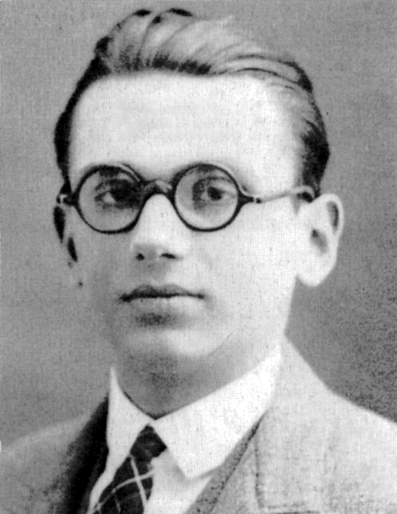
Gödel's loophole is a supposed "inner contradiction" in the Constitution of the United States postulated in 1947 by the Austrian-American logician, mathematician, and analytic philosopher Kurt Gödel. It would permit the republican structure of the United States to be legally turned into a dictatorship.
Read the full pageGödel's loophole is a supposed "inner contradiction" in the Constitution of the United States postulated in 1947 by the Austrian-American logician, mathematician, and analytic philosopher Kurt Gödel. It would permit the republican structure of the United States to be legally turned into a dictatorship. Gödel told his friend Oskar Morgenstern about the flaw and Morgenstern told Albert Einstein, but Morgenstern, in his recollection of the incident in 1971, never reported the exact problem. This has led to speculation about what is now called "Gödel's loophole". John Nowak, a scholar of US constitutional law, has called it "one of the great unsolved problems of constitutional law".
When Gödel was studying to take his US citizenship test in 1947, he came across what he called an "inner contradiction" in the U.S. Constitution. At the time, he was at the Institute for Advanced Study in Princeton, New Jersey, where he was good friends with Albert Einstein and Oskar Morgenstern. Gödel told Morgenstern about the flaw in the constitution, which, he said, would allow the U.S. to legally become a fascist state. Morgenstern tried to convince Gödel that this was very unlikely, but Gödel remained very concerned about it. He was an Austrian by birth and, having lived through the 1933 coup d'état and escaped from Nazi Germany after the Anschluss, was concerned about living in a fascist dictatorship. Morgenstern had secret discussions with Gödel about his concerns and told Einstein about them.
- 14ConceptAmericas
Guerrilla ontology
Guerrilla ontology is a practice described by author Robert Anton Wilson in his 1980 book The Illuminati Papers as "the basic technique of all my books. Ontology is the study of being; the guerrilla approach is to so mix the elements of each book that the reader must decide on each page 'How much of this is real and ho
Read the full pageGuerrilla ontology is a practice described by author Robert Anton Wilson in his 1980 book The Illuminati Papers as "the basic technique of all my books. Ontology is the study of being; the guerrilla approach is to so mix the elements of each book that the reader must decide on each page 'How much of this is real and how much is a put-on?'"
The goal of guerrilla ontology is to expose an individual or individuals to radically unique ideas, thoughts, and words, in order to invoke cognitive dissonance, which can cause a degree of discomfort in some individuals as they find their belief systems challenged by new concepts.