General semantics
General semantics is a school of thought that incorporates philosophic and scientific aspects. Although it does not stand on its own as a separate school of philosophy, a separate science, or an academic discipline, it describes itself as a scientifically empirical approach to cognition and problem solving.
General semantics is a school of thought that incorporates philosophic and scientific aspects. Although it does not stand on its own as a separate school of philosophy, a separate science, or an academic discipline, it describes itself as a scientifically empirical approach to cognition and problem solving. It has been described by nonproponents as a self-help system, and it has been criticized as having pseudoscientific aspects, but it has also been favorably viewed by various scientists as a useful set of analytical tools albeit not its own science.
General semantics is concerned with how phenomena (observable events) translate to perceptions, how they are further modified by the names and labels we apply to them, and how we might gain a measure of control over our own cognitive, emotional, and behavioral responses. Proponents characterize general semantics as an antidote to certain kinds of delusional thought patterns in which incomplete and possibly warped mental constructs are projected onto the world and treated as reality itself. Accurate map–territory relations are a central theme.
After partial launches under the names human engineering and humanology, Polish-American originator Alfred Korzybski (1879–1950) fully launched the program as general semantics in 1933 with the publication of Science and Sanity: An Introduction to Non-Aristotelian Systems and General Semantics.
In Science and Sanity, general semantics is presented as both a theoretical and a practical system whose adoption can reliably alter human behavior in the direction of greater sanity. In the 1947 preface to the third edition of Science and Sanity, Korzybski wrote: "We need not blind ourselves with the old dogma that 'human nature cannot be changed', for we find that it can be changed." While Korzybski considered his program to be empirically based and to strictly follow the scientific method, general semantics has been described as veering into the domain of pseudoscience.
Starting around 1940, university English professor S. I. Hayakawa (1906–1992), speech professor Wendell Johnson, speech professor Irving J. Lee, and others assembled elements of general semantics into a package suitable for incorporation into mainstream communications curricula. The Institute of General Semantics, which Korzybski and co-workers founded in 1938, continues today. General semantics as a movement has waned considerably since the 1950s, although many of its ideas live on in other movements, such as media literacy, neuro-linguistic programming and rational emotive behavior therapy.
"Identification" and "the silent level"
In the 1946 "Silent and Verbal Levels" diagram, the arrows and boxes denote ordered stages in human neuro-evaluative processing that happens in an instant. Although newer knowledge in biology has more sharply defined what the text in these 1946 boxes labels "electro-colloidal", the diagram remains, as Korzybski wrote in his last published paper in 1950, "satisfactory for our purpose of explaining briefly the most general and important points". General semantics postulates that most people "identify," or fail to differentiate the serial stages or "levels" within their own neuro-evaluative processing. "Most people," Korzybski wrote, "identify in value levels I, II, III, and IV and react as if our verbalizations about the first three levels were 'it.' Whatever we may say something 'is' obviously is not the 'something' on the silent levels."
By making it a 'mental' habit to find and keep one's bearings among the ordered stages, general semantics training seeks to sharpen internal orientation much as a GPS device may sharpen external orientation. Once trained, general semanticists affirm, a person will act, respond, and make decisions more appropriate to any given set of happenings. Although producing saliva constitutes an appropriate response when lemon juice drips onto the tongue, a person has inappropriately identified when an imagined lemon or the word "l–e–m–o–n" triggers a salivation response.
"Once we differentiate, differentiation becomes the denial of identity," Korzybski wrote in Science and Sanity. "Once we discriminate among the objective and verbal levels, we learn 'silence' on the unspeakable objective levels, and so introduce a most beneficial neurological 'delay'—engage the cortex to perform its natural function." British-American philosopher Max Black, an influential critic of general semantics, called this neurological delay the "central aim" of general semantics training, "so that in responding to verbal or nonverbal stimuli, we are aware of what it is that we are doing".
Abstracting and consciousness of abstracting
Identification prevents what general semantics seeks to promote: the additional cortical processing experienced as a delay. Korzybski called his remedy for identification "consciousness of abstracting." The term "abstracting" occurs ubiquitously in Science and Sanity. Korzybski's use of the term is somewhat unusual and requires study to understand his meaning. He discussed the problem of identification in terms of "confusions of orders of abstractions" and "lack of consciousness of abstracting". To be conscious of abstracting is to differentiate among the "levels" described above; levels II–IV being abstractions of level I (whatever level I "is"—all we really get are abstractions). The techniques Korzybski prescribed to help a person develop consciousness of abstracting he called "extensional devices".
Extensional devices
Satisfactory accounts of general semantics extensional devices can be found easily. This article seeks to explain briefly only the "indexing" devices. Suppose you teach in a school or university. Students enter your classroom on the first day of a new term, and, if you identify these new students to a memory association retrieved by your brain, you under-engage your powers of observation and your cortex. Indexing makes explicit a differentiating of studentsthis term from studentsprior terms. You survey the new students, and indexing explicitly differentiates student1 from student2 from student3, etc. Suppose you recognize one student—call her Anna—from a prior course in which Anna either excelled or did poorly. Again, you escape identification by your indexed awareness that Annathis term, this course is different from Annathat term, that course. Not identifying, you both expand and sharpen your apprehension of "students" with an awareness rooted in fresh silent-level observations.
Language as a core concern
Autoassociative memory in the memory-prediction model describes neural operations in mammalian brains generally. A special circumstance for humans arises with the introduction of language components, both as fresh stimuli and as stored representations. Language considerations figure prominently in general semantics, and three language and communications specialists who embraced general semantics, university professors and authors Hayakawa, Wendell Johnson and Neil Postman, played major roles in framing general semantics, especially for non-readers of Science and Sanity.
Criticism
Korzybski wrote in the preface to the third edition of Science and Sanity (1947) that general semantics "turned out to be an empirical natural science". But the type of existence, if any, of universals and abstract objects is an issue of serious debate within metaphysical philosophy. So Black summed up general semantics as "some hypothetical neurology fortified with dogmatic metaphysics". And in 1952, two years after Korzybski died, American skeptic Martin Gardner wrote, "[Korzybski's] work moves into the realm of cultism and pseudo-science."
Former Institute of General Semantics executive director Steve Stockdale has compared GS to yoga. "First, I'd say that there is little if any benefit to be gained by just knowing something about general semantics. The benefits come from maintaining an awareness of the principles and attitudes that are derived from GS and applying them as they are needed. You can sort of compare general semantics to yoga in that respect... knowing about yoga is okay, but to benefit from yoga you have to do yoga." Similarly, Kenneth Burke explains Korzybski's kind of semantics contrasting it, in A Grammar of Motives, with a kind of Burkean poetry by saying "Semantics is essentially scientist, an approach to language in terms of knowledge, whereas poetic forms are kinds of action".
Early attempts at validation
Adapted from the Wikipedia article General semantics, available under CC BY-SA 4.0.
Connections
Proposed by
1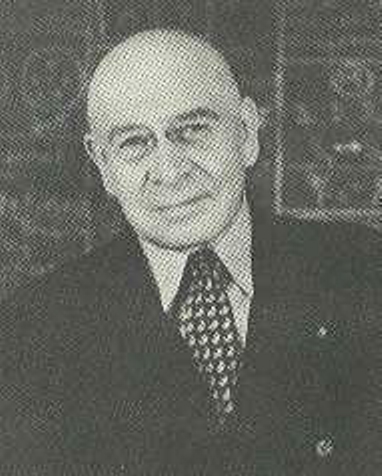
You might also explore
 Map–territory relationAmericasThe map–territory relation is the relationship between an object and a representation of that object, as in the…23 enigmaAmericasThe 23 enigma is a belief in the significance of the number 23. The concept of the 23 enigma has been popularized by…A Defense of AbortionAmericas"A Defense of Abortion" is a moral philosophy essay by Judith Jarvis Thomson first published in Philosophy & Public…A posteriori necessityAmericasA posteriori necessity is a thesis in metaphysics and the philosophy of language, that some statements of which we must…A priori and a posterioriAmericasIn epistemology, a priori (‘from the earlier’) and a posteriori (‘from the later’) are the two categories of knowledge…
 Abductive reasoningAmericasAbductive reasoning (also called abduction, abductive inference, or retroduction) is a form of logical inference that…