Apokatastasis
In theology, apokatastasis (Greek: ἀποκατάστασις, romanized: apokatástasis, also spelled apocatastasis) is the restoration of creation to a condition of perfection. In Christianity, the term refers to a form of Christian universalism, often associated with Origen, that includes the ultimate salvation of everyone, inclu
In theology, apokatastasis (Greek: ἀποκατάστασις, romanized: apokatástasis, also spelled apocatastasis) is the restoration of creation to a condition of perfection. In Christianity, the term refers to a form of Christian universalism, often associated with Origen, that includes the ultimate salvation of everyone, including the damned and the Devil. The New Testament (Acts 3:21), speaks of the "apokatastasis of all things". The dogmatic status of apokatastasis is disputed, and some orthodox fathers such as Gregory of Nyssa taught apokatastasis and were never condemned.
Origen was condemned as a heretic at the Synod of Constantinople of 543. However, it is disputed whether the condemnation was about apokatastasis.
Ilaria Ramelli, states the doctrine has a long history and was the Christological and Biblical foundation for many Christian thinkers, stemming from Greek philosophy and Jewish-Christian scriptures.
Etymology and definition
While apokatastasis is derived from the Greek verb apokathistemi, which means "to restore", it first emerged as a doctrine in Zoroastrianism where it is the third time of creation. This period was referred to as wizarishn or the end of history—the time of separation and resolution when evil is destroyed and the world is restored to its original state. The idea of apokatastasis may have been derived from the ancient concept of cosmic cycle, which involves the notion of celestial bodies returning to their original positions after a period of time.
The entry in A Greek–English Lexicon (i.e. Liddell–Scott–Jones, with expansion of definitions and references), gives the following examples of usage:
ἀποκατάστᾰσις, εως, ἡ, restoration, re-establishment;
"τοῦ ἐνδεοῦς" Aristotle MM, 1205a4; into its nature εἰς φύσιν id. 1204b 36, 1205b 11;
return to a position, Epicurus, Epistolae, 1, p.8 U.;
especially of military formations, reversal of a movement, Asclepiodotus, Tacticus, 10.1, 10:6, etc.; generally
of all things "πάντων" Acts of the Apostles, 3.21;
of souls, Proclus, Institutio Theologica, 199.
of the body back into its old form "τῆς φύσιος ἐς τὸ ἀρχαῖον" Aretaeus of Cappadocia CD 1.5; recovery from sickness, SA 1.10;
"τῶν ὁμήρων εἰς τὰς πατρίδας" Polybius 3.99.6; εἰς ἀ. ἐλθεῖν, into the restoration of the affairs of a city, 4.23.1;
Astrological uses:
ἀ. ἄστρων return of the stars to the same place in the heavens as in the former year, Plutarch 2.937f, Diodorus Siculus 12.36, etc., particularly the restoration of the wandering Egyptian New Year to the heliacal rising of Sirius at the completion of the Sothic cycle;
periodic return of the cosmic cycle, Stoicorum Veterum Fragmenta 2.184,190; that is, completion of the c. 26,000 year cycle of the precession of the equinoxes, the so called "Great Year";
of a planet, return to a place in the heavens occupied at a former epoch, Antiochus of Athens ap. Cat.Cod.Astr. 7.120,121; but, zodiacal revolution, Paulus Alexandrinus Paul.Al.T.1; opposite: antapocatastasis ἀνταπ. (q. v.), Dorotheus of Sidon Doroth. ap. Cat.Cod.Astr.2.196.9;
restoration of sun and moon after eclipse, Plato Axiochus 370b.
The word is reasonably common in papyri.
Stoicism
According to Edward Moore, apokatastasis was first properly conceptualized in early Stoic thought, particularly by Chrysippus. The return (apokatastasis) of the planets and stars to their proper celestial signs, namely their original positions, would spark a conflagration of the universe (ekpyrosis). The original position was believed to consist of an alignment of celestial bodies with Cancer. Thereafter, from fire, rebirth would commence, and this cycle of alternate destruction and recreation was correlated with a divine Logos. Antapokatastasis is a counter-recurrence when the stars and planets align with Capricorn, which would mark destruction by a universal flood.
The Stoics identified Zeus with an alternately expanding and contracting fire constituting the universe. Its expansion was described as Zeus turning his thoughts outwards, resulting in the creation of the material cosmos, and its contraction, the apokatastasis, as Zeus returning to self-contemplation. Leibniz explored both Stoic and his understanding of Origen's philosophy in two essays written shortly before his death, Apokatastasis and Apokatastasis panton (1715).
Judaism
The concept of "restore" or "return" in the Hebrew Bible is the common Hebrew verb שוב, as used in Malachi 4:6, the only use of the verb form of apokatastasis in the Septuagint. This is used in the "restoring" of the fortunes of Job, and is also used in the sense of rescue or return of captives, and in the restoration of Jerusalem.
This is similar to the concept of tikkun olam in Hasidic Judaism.
New Testament
The word, apokatastasis, appears only once in the New Testament, in Acts 3:21. Peter healed a beggar with a disability and then addressed the astonished onlookers. His sermon set Jesus in the Jewish context, the fulfiller of the Abrahamic Covenant, and says:
[19] Repent ye therefore, and be converted, that your sins may be blotted out, when the times of refreshing shall come from the presence of the Lord; [20] And he shall send Jesus Christ, which before was preached unto you: [21] Whom the heaven must receive until the times of restitution of all things, which God hath spoken by the mouth of all his holy prophets since the world began.
Grammatically, the relative pronoun "ὧν" ("of which", genitive plural), could refer either to "χρόνων" ("of times") or to "πάντων" ("of all" or "of all things"), which means that it is either the times of which God spoke or the all things of which God spoke.
The usual view taken of Peter's use of the "apokatastasis of all the things about which God spoke" is that it refers to the restoration of the Kingdom of Israel and/or the Garden of Eden and not "all things that ever existed".
The verbal form of apokatastasis is found in the Septuagint: Malachi 3:23 (i.e. Malachi 4:6); a prophecy of Elijah turning back the hearts of the children to their fathers; in Matthew 17:11 ("he will restore all things"), echoing Malachi, and in Hebrews 13:19 ("that I may be restored to you the sooner").
Nineteenth-century German theologian Jakob Eckermann interpreted "the 'apokatastasis of all things' to mean the universal emendation of religion by the doctrine of Christ, and the 'times of refreshing' to be the day of renewal, the times of the Messiah."
Patristic Christianity
The significance of apokatastasis in early Christianity is currently something of a disputed question. In particular, some question whether Origen, often listed as the most notable advocate of universal salvation, did in fact teach or believe in such a doctrine.
Frederick W. Norris argues that the positions that Origen took on the issue of universal salvation have often seemed contradictory. He then writes that Origen never decided to stress exclusive salvation or universal salvation, to the strict exclusion of either case, therefore concludes that Origen probably kept his view of salvation economically 'open' for a greater effectiveness. On the other hand, Brian E. Daley in his handbook of patristic eschatology argued that Origen strongly believed in the final salvation of all humans and sometimes referred to it as apokatastasis. More recently, leading Patristic scholar Ilaria Ramelli has concluded that not only did Origen embrace the doctrine of apokatastasis, but that it was central to all his theological and philosophical thought. She remarks, "In Origen's thought, the doctrine of apokatastasis is interwoven with his anthropology, eschatology, theology, philosophy of history, theodicy, and exegesis; for anyone who takes Origen's thought seriously and with a deep grasp of it, it is impossible to separate the apokatastasis theory from all the rest, so as to reject it but accept the rest."
The Alexandrian school, the first Christian educational center, seems to have generally affirmed apokatastasis and adapted some Platonic terminology and ideas to Christianity while explaining and differentiating the new faith from all the others. Gregory of Nyssa is also understood to have espoused a universally salvific apokatastasis, though Maspero argues that Gregory spoke solely of universal resurrection and not of universal salvation. Universal salvation in the form of apokatastasis is also seen in the Ambrosiaster, attributed to Ambrose of Milan. Gregory of Nazianzus discussed it without reaching a decision.
Adapted from the Wikipedia article Apokatastasis, available under CC BY-SA 4.0.
Connections

You might also explore
 Free will★Are our choices genuinely up to us, or determined by prior causes?
 PantheismGod and the universe are identical.
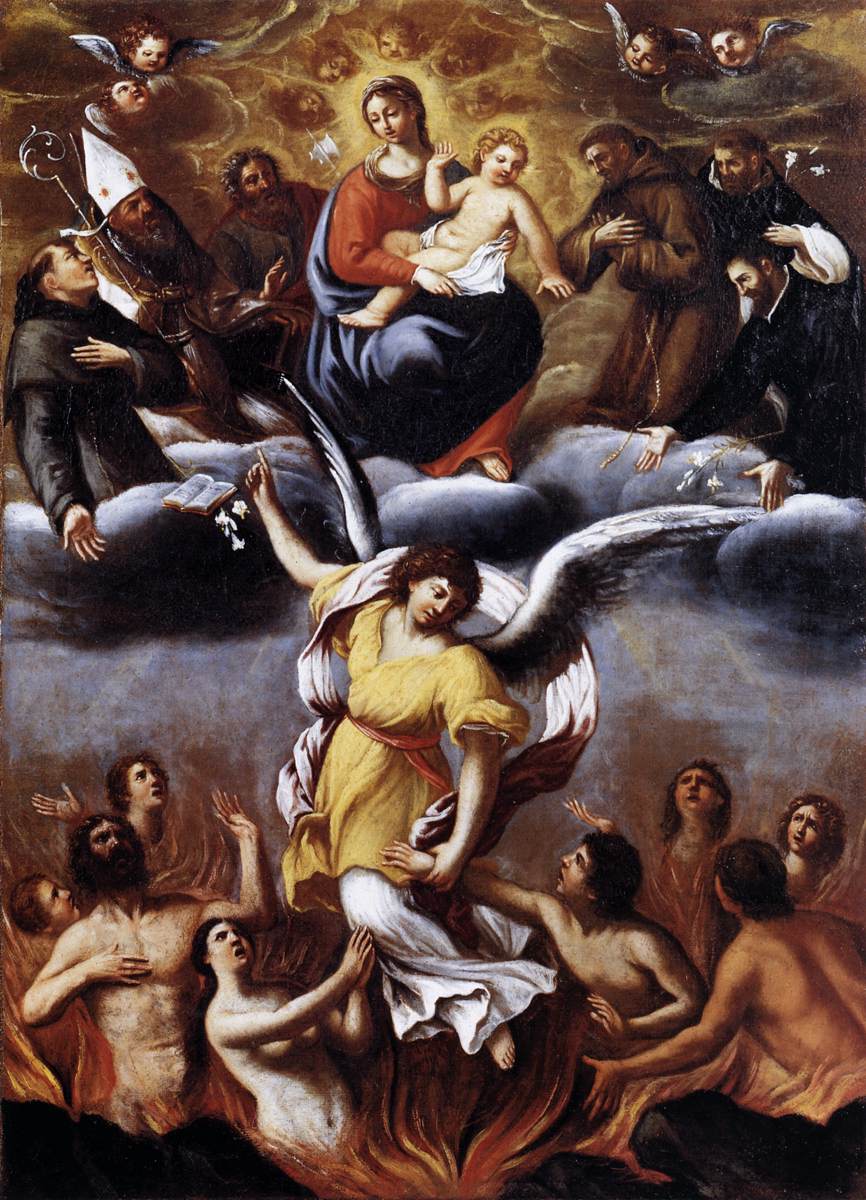 PurgatoryGreek & RomanPurgatory (Latin: purgatorium, borrowed into English via Anglo-Norman and Old French) is a belief in Catholic theology.…
 AsceticismGreek & RomanAsceticism is a lifestyle characterized by abstinence from worldly pleasures through self-discipline, self-imposed…
 ImmortalityModern EuropeanImmortality is the concept of eternal life and permanent resistance to death from natural causes. Some species possess…Christian theologyModern EuropeanChristian theology is the theology – the systematic study of the divine and religion – of Christian belief and…