
Confucianism
儒家
Moral self-cultivation through ritual, learning and humane relationships — the backbone of East Asian ethics and politics.
Key ideas
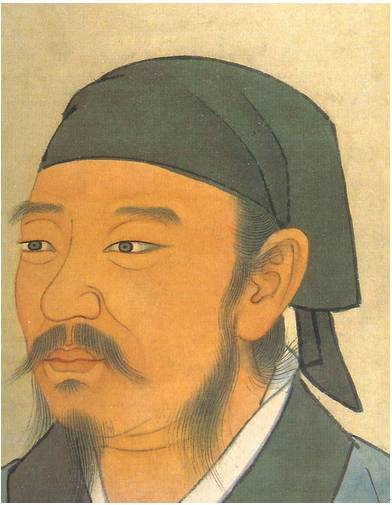
Confucianism grew from the teachings of Kongzi (Confucius), a minor official of the state of Lu who believed that the decline of his age could be reversed by reviving the rituals and virtues of the early Zhou dynasty.
At its heart is ren — humaneness or benevolence — expressed through li, the ritual forms that structure family, social and political life. The ideal person is the junzi, the exemplary or noble person, whose nobility comes from character rather than birth. Government should rule through virtue and example, not force and punishment.
Mencius argued that human nature is good and needs only nourishment; Xunzi that it is bad and needs ritual reform. Later Neo-Confucians such as Zhu Xi built a full metaphysics around these ethics. For two thousand years Confucian texts formed the curriculum of the imperial examinations, shaping China, Korea, Japan and Vietnam.
Confucianism, also known as Ruism or Ru classicism, is a system of thought and behavior originating in ancient China, and is variously described as a tradition, philosophy, religion, theory of government, or way of life. Founded by Confucius in the Hundred Schools of Thought era (c. 500 BCE), Confucianism integrates philosophy, ethics, and social governance, with a core focus on virtue, social harmony, and familial responsibility.
Confucianism emphasizes virtue through self-cultivation and communal effort. Key virtues include rén (仁, "benevolence"), yì (義; "righteousness"), lǐ (禮; "propriety"), zhì (智; "wisdom"), and xìn (信; "sincerity"). These values, deeply tied to the notion of tiān (天; "Heaven"), present a worldview where human relationships and social order are manifestations of sacred moral principles. Although Confucianism does not emphasize an omnipotent deity, it upholds tiān as a transcendent moral order.
Confucius regarded himself as a transmitter of cultural values from the preceding Xia, Shang, and Western Zhou dynasties. Suppressed during the Legalist Qin dynasty (c. 200 BCE), Confucianism flourished under the Han dynasty (c. 130 BCE), displacing the proto-Taoist Huang–Lao tradition to become the dominant ideological framework, while blending with the pragmatic teachings of Legalism. The Tang dynasty (c. 600 CE) witnessed a response to the rising influence of Buddhism and Taoism in the development of Neo-Confucianism, a reformulated philosophical system that became central to the imperial examination system and the scholar-official class of the Song dynasty (c. 1000 CE).
The abolition of the imperial examination system in 1905 marked the decline of state-endorsed Confucianism. In the early 20th century, Chinese reformers came to associate Confucianism with China's "Century of Humiliation", and instead embraced alternative ideologies such as Sun Yat-sen's "Three Principles of the People" and later Maoism. Nevertheless, Confucianism endured as a cultural force, influencing East Asian economic and social structures into the modern era. Confucian work ethic was credited with the rise of the East Asian economy in the late twentieth century.
Confucianism remains influential in China, Korea, Japan, Vietnam, and regions with significant Chinese diaspora. A modern Confucian revival has gained momentum in academic and cultural circles, culminating in the establishment of a national Confucian Church in China in 2015, reflecting renewed interest in Confucian ideals as a foundation for social and moral values.
American philosopher Herbert Fingarette describes Confucianism as a philosophical system which regards "the secular as sacred".
Terminology
There is no term in Chinese which directly corresponds to "Confucianism". The closest catch-all term for Confucianism is the word rú (儒). Its literal meanings in modern Chinese include 'scholar', 'learned', or 'refined man'. In Old Chinese the word had a distinct set of meanings, including 'to tame', 'to mould', 'to educate', and 'to refine'. Several different terms, some of which with modern origin, are used in different situations to express different facets of Confucianism, including:
儒家; Rújiā – "the ru school of thought";
儒教; Rújiào – "ru religious doctrine";
儒学; 儒學; Rúxué – "ru studies";
孔教; Kǒngjiào – "Confucius's religious doctrine";
孔家店; Kǒngjiādiàn – "Confucius's family's business", a pejorative phrase used during the New Culture Movement and the Cultural Revolution.
The terms that use ru do not use the name "Confucius" at all, but instead focus on the ideal of the Confucian man. The use of the term "Confucianism" has been avoided by some modern scholars, who favor "Ruism" and "Ruists" instead. Robert Eno argues that the term has been "burdened ... with the ambiguities and irrelevant traditional associations". Ruism, as he states, is more faithful to the original Chinese name for the school.
The term "Traditionalist" has been suggested by David Schaberg to emphasize the connection to the past, its standards, and inherited forms, in which Confucius himself placed so much importance. This translation of the word ru is followed by e.g. Yuri Pines.
According to Zhou Youguang, ru originally referred to shamanic methods of holding rites and existed before Confucius's times, but with Confucius it came to mean devotion to propagating such teachings to bring civilisation to the people.
Five Classics and the Confucian vision
Traditionally, Confucius was thought to be the author or editor of the Five Classics which were the basic texts of Confucianism, all edited into their received versions around 500 years later by Imperial Librarian Liu Xin. The scholar Yao Xinzhong allows that there are good reasons to believe that Confucian classics took shape in the hands of Confucius, but that "nothing can be taken for granted in the matter of the early versions of the classics". The sixth classic similar to the Classic of Poetry was the Classic of Music. It was lost during the Han dynasty. Music carried an invaluable tool to induce focus in performing rituals. These were the internal (music) and external (rites) keys to harmonizing society. Yao suggests that most modern scholars hold the "pragmatic" view that Confucius and his followers did not intend to create a system of classics, but nonetheless "contributed to their formation".
The scholar Tu Weiming explains these classics as embodying "five visions" which underlie the development of Confucianism:
I Ching (Classic of Change or Book of Changes), generally held to be the earliest of the classics, shows a metaphysical vision which combines divinatory art with numerological technique and ethical insight; philosophy of change sees cosmos as interaction between the two energies yin and yang; universe always shows organismic unity and dynamism.
Classic of Poetry or Book of Songs is the earliest anthology of Chinese poems and songs, with the earliest strata antedating the Zhou conquest. It shows the poetic vision in the belief that poetry and music convey common human feelings and mutual responsiveness.
Book of Documents or Book of History is a compilation of speeches of major figures and records of events in ancient times, embodying the political vision and addressing the kingly way in terms of the ethical foundation for humane government. The documents show the sagacity, filial piety, and work ethic of mythical sage-emperors Yao, Shun, and Yu, who established a political culture which was based on responsibility and trust. Their virtue formed a covenant of social harmony which did not depend on punishment or coercion.
Book of Rites describes the social forms, administration, and ceremonial rites of the Zhou dynasty. This social vision defined society not as an adversarial system based on contractual relations but as a network of kinship groups bound by cultural identity and ritual practice, socially responsible for one another and the transmission of proper antique forms. The four functional occupations are cooperative (farmer, scholar, artisan, merchant).
Spring and Autumn Annals chronicles the period to which it gives its name, Spring and Autumn period (771–481 BC), from the perspective of Confucius's home state of Lu. These events emphasise the significance of collective memory for communal self-identification, for reanimating the old is the best way to attain the new.
Theory and theology
Confucianism revolves around the pursuit of the unity of the individual self and tian ("heaven"), or the relationship between humanity and heaven. The principle or way of Heaven (tian li or tian tao) is the order of the world and the source of divine authority. Tian li or tian tao is monistic, meaning that it is singular and indivisible. Individuals may realise their humanity and become one with Heaven through the contemplation of such order. This transformation of the self is extended to family and society to create a harmonious community. Joël Thoraval studied Confucianism as a diffused civil religion in contemporary China, finding that it expresses itself in the widespread worship of five cosmological entities: Heaven and Earth (地; dì), the sovereign or the government (君; jūn), ancestors (親; qīn), and masters (師; shī).
According to the scholar Stephan Feuchtwang, in Chinese cosmology, which is not merely Confucian but shared by many Chinese religions, "the universe creates itself out of a primary chaos of material energy" (hundun and qi), and is organized through the polarity of yin and yang that characterises any thing and life. Creation is therefore a continuous ordering; it is not creation ex nihilo. "Yin and yang are the invisible and visible, the receptive and the active, the unshaped and the shaped; they characterise the yearly cycle (winter and summer), the landscape (shady and bright), the sexes (female and male), and even sociopolitical history (disorder and order). Confucianism is concerned with finding "middle ways" between yin and yang at every new configuration of the world."
Confucianism conciliates both the inner and outer polarities of spiritual cultivation—that is to say self-cultivation and world redemption—in the ideal of "sageliness within and kingliness without". Ren, translated as "humaneness" or the essence proper of a human being, is the character of compassionate mind; it is the virtue endowed by Heaven and at the same time the means by which a person may achieve oneness with Heaven by comprehending their origin in Heaven, and therefore divine essence. In his work The Book of Great Unity (大同書), late Qing dynasty reformer Kang Youwei considered ren as the means "to form one body with all things" and one can find ren "when the self and others are not separated... and when compassion is aroused".
"Lord Heaven" and "Jade Emperor" were terms for a Confucianist supreme deity who was an anthropomorphized tian, and some conceptions of it thought of the two names as synonymous.
Tian and the gods
Tian, a key concept in Chinese thought, refers to the God of Heaven, the northern culmen of the skies and its spinning stars, earthly nature and its laws which come from Heaven, to 'Heaven and Earth' (that is, "all things"), and to the awe-inspiring forces beyond human control. There are so many uses in Chinese thought that it is impossible to give a single English translation.
Confucius used the term in a mystical way. He wrote in the Analects (7.23) that tian gave him life, and that tian watched and judged (6.28; 9.12). In 9.5 Confucius says that a person may know the movements of tian, and this provides with the sense of having a special place in the universe. In 17.19 Confucius says that tian spoke to him, though not in words. The scholar Ronnie Littlejohn warns that tian was not to be interpreted as a personal god comparable to that of the Abrahamic faiths, in the sense of an otherworldly or transcendent creator. Rather it is similar to what Taoists meant by Dao: "the way things are" or "the regularities of the world", which Stephan Feuchtwang equates with the ancient Greek concept of physis, "nature" as the generation and regenerations of things and of the moral order. Tian may also be compared to the Brahman of Hindu and Vedic traditions. The scholar Promise Hsu, in the wake of Robert B. Louden, explained 17:19 ("What does Tian ever say? Yet there are four seasons going round and there are the hundred things coming into being. What does Tian say?") as implying that even though Tian is not a "speaking person", it constantly "does" through the rhythms of nature, and communicates "how human beings ought to live and act", at least to those who have learnt to carefully listen to it.
Duanmu Ci, a disciple of Confucius, said that Tian had set the master on the path to become a wise man (9.6). In 7.23 Confucius says that he has no doubt left that Tian gave him life, and from it he had developed right virtue (de). In 8.19, he says that the lives of the sages are interwoven with Tian.
Regarding personal gods (shen, energies who emanate from and reproduce Tian) enliving nature, in the Analects Confucius says that it is appropriate (yi) for people to worship (敬; jìng) them, although only through proper rites (li), implying respect of positions and discretion. Confucius himself was a ritual and sacrificial master.
Answering to a disciple who asked whether it is better to sacrifice to the god of the stove or to the god of the family (a popular saying), in 3.13 Confucius says that in order to appropriately pray to gods, one should first know and respect Heaven. In 3.12, he explains that religious rituals produce meaningful experiences, and one has to offer sacrifices in person, acting in presence, otherwise "it is the same as not having sacrificed at all". Rites and sacrifices to the gods have an ethical importance: they generate good life, because taking part in them leads to the overcoming of the self. Analects 10.11 tells that Confucius always took a small part of his food and placed it on the sacrificial bowls as an offering to his ancestors.
Some Confucian movements worship Confucius, although not as a supreme being or anything else approaching the power of tian or the tao, and/or gods from Chinese folk religion. These movements are not a part of mainstream Confucianism, although the boundary between Chinese folk religion and Confucianism can be blurred.
Other movements, such as Mohism which was later absorbed by Taoism, developed a more theistic idea of Heaven. Feuchtwang explains that the difference between Confucianism and Taoism primarily lies in the fact that the former focuses on the realisation of the starry order of Heaven in human society, while the latter on the contemplation of the Dao which spontaneously arises in nature. However, Confucianism does venerate many aspects of nature and also respects various tao, as well as what Confucius saw as the main tao, the "[Way] of Heaven."
The Way of Heaven involves "lifelong and sincere devotion to traditional cultural forms" and wu wei, "a state of spontaneous harmony between individual inclinations and the sacred Way".
Kelly James Clark argued that Confucius himself saw Tian as an anthropomorphic god that Clark hypothetically refers to as "Heavenly Supreme Emperor", although most other scholars on Confucianism disagree with this view.
Social morality and ethics
As explained by Stephan Feuchtwang, the order coming from Heaven preserves the world, and has to be followed by humanity finding a "middle way" between yin and yang forces in each new configuration of reality. Social harmony or morality is identified as patriarchy, which is expressed in the worship of ancestors and deified progenitors in the male line, at ancestral shrines.
Confucian ethical codes are described as humanistic. They may be practiced by all the members of a society. Confucian ethics is characterised by the promotion of virtues, encompassed by the Five Constants, elaborated by Confucian scholars out of the inherited tradition during the Han dynasty. The Five Constants are:
Ren (benevolence, humaneness)
Yi (righteousness, justice)
Li (propriety, rites)
Zhi (智; zhì: wisdom, knowledge)
Xin (sincerity, faithfulness)
These are accompanied by the classical four virtues (四字; sìzì), one of which (Yi) is also included among the Five Constants:
Yi (see above)
Loyalty (忠; zhōng)
Filial piety (孝; xiào)
Continence (节; 節; jié)
There are many other traditionally Confucian values, such as 'honesty' (诚; chéng), 'bravery' (勇; yǒng), 'incorruptibility' (廉; lián), 'kindness', 'forgiveness' (恕; shù), a 'sense of right and wrong' (耻; chǐ), 'gentleness' (温; wēn), 'kindheartenedness' (良; liáng), 'respect' (恭; gōng), 'frugality' (俭; jiǎn), and 'modesty' (让; ràng)).
Ren
Ren (仁 ) is the highest Confucian virtue meaning the good quality of a virtuous human when reaching for higher ideals or when being altruistic. According to Confucius, Ren encompasses benevolence, trustworthiness, courage, compassion, empathy, and reciprocity. It is considered the essence of the human being endowed by Heaven, and the means by which someone may act according to the principle of Heaven and become one with it.
Ren is expressed through interpersonal relationships and can be cultivated through the observance of proper Li. Li, or ritual, guides people's behaviors in nurturing and expressing Ren. Li regulates the fundamental human relationships between parents and kids, spouses, siblings, friends, and set the foundation to a harmonious society. Yan Hui, Confucius's most outstanding student, once asked his master to describe the criteria of Ren. Confucius replied, "If contrary to ritual, do not look; if contrary to ritual, do not listen; if contrary to ritual, do not speak; if contrary to ritual, do not act."
Ren is also a central principle in Confucian political theory: a ruler with the Mandate of Heaven is one of great virtue, who leads by moral example and prioritizes the well-being of the people.
Rite and centring
Li (礼; 禮) is a word which finds its most extensive use in Confucian and post-Confucian Chinese philosophy. Li can be translated as 'rite' or ritual, when referring to its realization in the context of human social behavior it has also been translated as 'customs', 'measures' and 'rules', among other terms. Li also means religious rites which establish relations between humanity and the gods.
According to Stephan Feuchtwang, rites are conceived as "what makes the invisible visible", making possible for humans to cultivate the underlying order of nature. Correctly performed rituals move society in alignment with earthly and heavenly (astral) forces, establishing the harmony of the three realms—Heaven, Earth and humanity. This practice is defined as "centering" (央; yāng or 中; zhōng). Among all things of creation, humans themselves are "central" because they have the ability to cultivate and centre natural forces.
Li embodies the entire web of interaction between humanity, human objects, and nature. Confucius includes in his discussions of li such diverse topics as learning, tea drinking, titles, mourning, and governance. Xunzi cites "songs and laughter, weeping and lamentation ... rice and millet, fish and meat ... the wearing of ceremonial caps, embroidered robes, and patterned silks, or of fasting clothes and mourning clothes ... spacious rooms and secluded halls, soft mats, couches and benches" as vital parts of the fabric of li.
Confucius envisioned proper government being guided by the principles of li. Some Confucians proposed that all human beings may pursue perfection by learning and practising li. Overall, Confucians believe that governments should place more emphasis on li and rely much less on penal punishment when they govern.
Loyalty
Loyalty (忠; zhōng) is particularly relevant for the social class to which most of Confucius's students belonged, because the most important way for an ambitious young scholar to become a prominent official was to enter a ruler's civil service.
Confucius himself did not propose that "might makes right", but rather that a superior should be obeyed because of his moral rectitude. In addition, loyalty does not mean subservience to authority. This is because reciprocity is demanded from the superior as well. As Confucius stated "a prince should employ his minister according to the rules of propriety; ministers should serve their prince with faithfulness (loyalty)."
Similarly, Mencius also said that "when the prince regards his ministers as his hands and feet, his ministers regard their prince as their belly and heart; when he regards them as his dogs and horses, they regard him as another man; when he regards them as the ground or as grass, they regard him as a robber and an enemy." Moreover, Mencius indicated that if the ruler is incompetent, he should be replaced. If the ruler is evil, then the people have the right to overthrow him. A good Confucian is also expected to remonstrate with his superiors when necessary. At the same time, a proper Confucian ruler should also accept his ministers' advice, as this will help him govern the realm better.
In later ages, however, emphasis was often placed more on the obligations of the ruled to the ruler, and less on the ruler's obligations to the ruled. Like filial piety, loyalty was often subverted by the autocratic regimes in China. Nonetheless, throughout the ages, many Confucians continued to fight against unrighteous superiors and rulers. Many of these Confucians suffered and sometimes died because of their conviction and action. During the Ming-Qing era, prominent Confucians such as Wang Yangming promoted individuality and independent thinking as a counterweight to subservience to authority. The famous thinker Huang Zongxi also strongly criticised the autocratic nature of the imperial system and wanted to keep imperial power in check.
Many Confucians also realised that loyalty and filial piety have the potential of coming into conflict with one another. This may be true especially in times of social chaos, such as during the period of the Ming-Qing transition.
Filial piety
In Confucian philosophy, "filial piety" (孝; xiào) is a virtue of respect for one's parents and ancestors, and of the hierarchies within society: father–son, elder–junior and male–female. The Confucian classic Xiaojing ("Book of Piety"), thought to be written during the Qin or Han dynasties, has historically been the authoritative source on the Confucian tenet of xiao. The book, a conversation between Confucius and his disciple Zeng Shen, is about how to set up a good society using the principle of xiao.
In more general terms, filial piety means to be good to one's parents; to take care of one's parents; to engage in good conduct not just towards parents but also outside the home so as to bring a good name to one's parents and ancestors; to perform the duties of one's job well so as to obtain the material means to support parents as well as carry out sacrifices to the ancestors; not be rebellious; show love, respect and support; the wife in filial piety must obey her husband absolutely and take care of the whole family wholeheartedly. display courtesy; ensure male heirs, uphold fraternity among brothers; wisely advise one's parents, including dissuading them from moral unrighteousness, for blindly following the parents' wishes is not considered to be xiao; display sorrow for their sickness and death; and carry out sacrifices after their death.
Filial piety is considered a key virtue in Chinese culture, and it is the main concern of a large number of stories. One of the most famous collections of such stories is "The Twenty-four Filial Exemplars". These stories depict how children exercised their filial piety in the past. While China has always had a diversity of religious beliefs, filial piety has been common to almost all of them; historian Hugh D.R. Baker calls respect for the family the only element common to almost all Chinese believers.
Relationships
Social harmony results in part from every individual knowing his or her place in the natural order, and playing his or her part well. Reciprocity or responsibility (renqing) extends beyond filial piety and involves the entire network of social relations, even the respect for rulers. This is shown in the story where Duke Jing of Qi asks Confucius about government, by which he meant proper administration so as to bring social harmony:
Particular duties arise from one's particular situation in relation to others. The individual stands simultaneously in several different relationships with different people: as a junior in relation to parents and elders, and as a senior in relation to younger siblings, students, and others. While juniors are considered in Confucianism to owe their seniors reverence, seniors also have duties of benevolence and concern toward juniors. The same is true with the husband and wife relationship where the husband needs to show benevolence towards his wife and the wife needs to respect the husband in return. This theme of mutuality still exists in East Asian cultures even to this day.
The Five Bonds are: ruler to ruled, father to son, husband to wife, elder brother to younger brother, friend to friend. Specific duties were prescribed to each of the participants in these sets of relationships. Such duties are also extended to the dead, where the living stand as sons to their deceased family. The only relationship where respect for elders is not stressed was the friend to friend relationship, where mutual equal respect is emphasised instead. All these duties take the practical form of prescribed rituals, for instance wedding and death rituals.
Junzi
The junzi is a Chinese philosophical term often translated as "gentleman" or "superior person." Junzi, which literally means "son of a lord", was redefined by Confucius in the Analects to describe a person of noble character and ethical virtue.
In Confucianism, the sage or wise is the ideal personality; however, it is very hard to become one of them. Confucius created the model of junzi, which may be achieved by any individual through the discipline of one's minds and actions. Song dynasty Confucian philosopher Zhu Xi defined junzi as second only to the sage. There are many characteristics of the junzi: he may live in poverty, he does more and speaks less, he is loyal, obedient and knowledgeable. The junzi disciplines himself. Ren is fundamental to become a junzi.
As the potential leader of a nation, a son of the ruler is raised to have a superior ethical and moral position while gaining inner peace through his virtue. The junzi enforces his rule over his subjects by acting virtuously himself. It is thought that his pure virtue would lead others to follow his example. The ultimate goal is that the government behaves much like a family, the junzi being a beacon of filial piety. To Confucius, the junzi sustained the functions of government and social stratification through his ethical values. Despite its literal meaning, any righteous man willing to improve himself may become a junzi.
In contrast to the junzi, the xiaoren (小人; xiăorén ), small-minded or morally inferior people, do not grasp the value of virtues and seeks only immediate gains. The petty person is egotistic and does not consider the consequences of his action in the overall scheme of things. Should the ruler be surrounded by xiaoren as opposed to junzi, his governance and his people will suffer due to their small-mindness. Examples of such xiaoren individuals may range from those who continually indulge in sensual and emotional pleasures all day to the politician who is interested merely in power and fame; neither sincerely aims for the long-term benefit of others.
Rectification of names
Confucius believed that social disorder often stemmed from failure to perceive, understand, and deal with reality. Fundamentally, then, social disorder may stem from the failure to call things by their proper names, and his solution to this was the "rectification of names" (正名; zhèngmíng). He gave an explanation of this concept to one of his disciples:
Zi-lu said, "The vassal of Wei has been waiting for you, in order with you to administer the government. What will you consider the first thing to be done?"
The Master replied, "What is necessary to rectify names."
"So! indeed!" said Zi-lu. "You are wide off the mark! Why must there be such rectification?"
The Master said, "How uncultivated you are, Yu! The superior man [Junzi] cannot care about the everything, just as he cannot go to check all himself!
If names be not correct, language is not in accordance with the truth of things.
If language be not in accordance with the truth of things, affairs cannot be carried on to success.
When affairs cannot be carried on to success, proprieties and music do not flourish.
When proprieties and music do not flourish, punishments will not be properly awarded.
When punishments are not properly awarded, the people do not know how to move hand or foot.
Therefore a superior man considers it necessary that the names he uses may be spoken appropriately, and also that what he speaks may be carried out appropriately. What the superior man requires is just that in his words there may be nothing incorrect."
(Analects XIII, 3, tr. Legge)
Xunzi chapter (22) "On the Rectification of Names" claims the ancient sage-kings chose names (名; míng) that directly corresponded with actualities (實; shí), but later generations confused terminology, coined new nomenclature, and thus could no longer distinguish right from wrong. Since social harmony is of utmost importance, without the proper rectification of names, society would essentially crumble and "undertakings [would] not [be] completed."
Metaphysical antecedents
According to He Guanghu, Confucianism may be identified as a continuation of the Shang-Zhou (c. 1600–256 BC) official religion, or the Chinese aboriginal religion which has lasted uninterrupted for three thousand years. Both the dynasties worshipped a supreme "godhead", called Shangdi ('Highest Deity') or Di by the Shang and Tian ('Heaven') by the Zhou. Shangdi was conceived as the first ancestor of the Shang royal house, an alternate name for him being the "Supreme Progenitor" (上甲; Shàngjiǎ). Shang theology viewed the multiplicity of gods of nature and ancestors as parts of Di. Di manifests as the Wufang Shangdi with the winds (風; fēng) as its cosmic will. With the Zhou dynasty, which overthrew the Shang, the name for the supreme godhead became tian. While the Shang identified Shangdi as their ancestor-god to assert their claim to power by divine right, the Zhou transformed this claim into a legitimacy based on moral power, the Mandate of Heaven. In Zhou theology, Tian had no singular earthly progeny, but bestowed divine favour on virtuous rulers. Zhou kings declared that their victory over the Shang was because they were virtuous and loved their people, while the Shang were tyrants and thus were deprived of power by Tian.
John C. Didier and David Pankenier relate the shapes of both the ancient Chinese characters for Di and Tian to the patterns of stars in the northern skies, either drawn, in Didier's theory by connecting the constellations bracketing the north celestial pole as a square, or in Pankenier's theory by connecting some of the stars which form the constellations of the Big Dipper and broader Ursa Major, and Ursa Minor (Little Dipper). Cultures in other parts of the world have also conceived these stars or constellations as symbols of the origin of things, the supreme godhead, divinity and royal power. The supreme godhead was also identified with the dragon, symbol of unlimited power (qi), of the protean primordial power which embodies both yin and yang in unity, associated to the constellation Draco which winds around the north ecliptic pole, and slithers between the Little and Big Dipper.
Zhou traditions wane
By the 6th century BC, the power of Tian and the symbols that represented it on earth (architecture of cities, temples, altars and ritual vessels, and the Zhou system of rites) became "diffuse" and claimed by different potentates in the Zhou states to legitimise economic, political, and military ambitions. Communication with the divine no longer was an exclusive privilege of the Zhou royal house, but might be bought by anyone able to afford the elaborate ceremonies and the old and new rites required to access the authority of Tian.
Adapted from the Wikipedia article Confucianism, available under CC BY-SA 4.0.
Connections
Founded by
1



Criticized by
4
Places
1
Related
1You might also explore
 Daoism★Chinese400 BCE – presentFollow the Dao — the nameless way of nature — through simplicity, spontaneity and effortless action (wu wei).
 Chan / Zen Buddhism★Chinese500 – presentMeditation school stressing sudden awakening, direct pointing to the mind and transmission outside the scriptures.
 LegalismChinese400 – 200 BCEStrong state power through clear laws, rewards and punishments; it unified China under the Qin.
 MohismChinese470 – 221 BCEMozi's school of impartial care (jian ai), utility and anti-war activism — a rival to Confucianism.
 Neo-ConfucianismChinese1000 – 1900Song–Ming revival uniting Confucian ethics with a metaphysics of principle (li) and vital force (qi).School of NamesChinese400 – 250 BCEChinese logicians known for paradoxes like "a white horse is not a horse".