
Osho
Provocative Indian mystic and speaker who blended Zen, Tantra, Sufism and Western psychology into a philosophy of meditation, celebration and radical freedom.
Key ideas
Chandra Mohan Jain — later Acharya Rajneesh, Bhagwan Shree Rajneesh and finally Osho — was a philosophy lecturer from Jabalpur who became one of the most widely read and most controversial spiritual teachers of the 20th century. His thousands of recorded discourses on the Buddha, Laozi, Zhuangzi, Kabir, Jesus, the Upaniṣads, Heraclitus and Nietzsche were transcribed into more than 600 books.
His central teaching is meditation understood as witnessing: watching thoughts, feelings and bodily sensations without identifying with them. Because modern people are too restless to sit silently, he devised "active" methods such as Dynamic Meditation, in which catharsis precedes stillness. His ideal was "Zorba the Buddha" — a person who fully enjoys the senses and the world like Kazantzakis's Zorba, yet has the inner silence of the Buddha.
Osho attacked organised religion, nationalism, the family as an institution and conventional morality, and argued that love, play and awareness — not obedience — make people good. His commune in Oregon in the 1980s ended in scandal and criminal charges against some leaders, and he died in Pune in 1990. His ideas remain widely read across India and the world, and his meditation centre in Pune still operates.
Osho, also known as Bhagwan Shree Rajneesh, Acharya Rajneesh, and simply Rajneesh, was an Indian godman, and founder of the new religious movement, the Rajneesh movement. He rejected institutional religions, insisting that spiritual experience could not be organized into any one system of religious dogma. As a guru, he advocated meditation and taught a unique form called dynamic meditation. Rejecting traditional ascetic practices, he encouraged his followers to embrace life fully while remaining unattached to worldly desires.
Osho said he experienced a spiritual awakening in 1953 at the age of 21. Following several years in academia, in 1966 Osho resigned his post at the University of Jabalpur as a lecturer in philosophy, and began traveling throughout India, becoming known for his criticism of the orthodoxy of mainstream religions, as well as of mainstream political ideologies and of Mahatma Gandhi. In 1970, Osho spent time in Mumbai initiating followers referred to as "neo-sannyasins". During this period, he expanded his spiritual teachings and commented extensively in discourses on the writings of religious traditions, mystics, bhakti poets, and philosophers from around the world. In 1974, Osho relocated to Pune, where an ashram was established and a variety of therapies, incorporating methods first developed by the Human Potential Movement, were offered to a growing Western following. By the late 1970s, the ruling Janata Party government of Morarji Desai curbed the ashram's development and a back tax claim estimated at $5 million.
In 1981, the Rajneesh movement shifted its focus to the United States, where Osho established a commune called Rajneeshpuram in Wasco County, Oregon. The movement ran into conflict with county residents and the state government, and a succession of legal battles concerning the ashram's construction and continued development curtailed its success. In 1985, Osho publicly asked local authorities to investigate his personal secretary Ma Anand Sheela and her close supporters for a number of crimes, including a 1984 mass food-poisoning attack intended to influence county elections, an aborted assassination plot on U.S. attorney Charles H. Turner, the attempted murder of Osho's personal physician, and the bugging of his own living quarters; authorities later convicted several members of the ashram, including Sheela. That year, Osho was deported from the United States on separate immigration-related charges in accordance with an Alford plea. After his deportation, 21 countries denied him entry.
Osho returned to Mumbai in 1986 and, after a period of public discourse, moved back to Pune in January 1987 to revive his ashram, where he died in 1990. Osho's ashram, now known as the Osho International Meditation Resort, and all associated intellectual property, is managed by the registered Osho International Foundation (formerly Rajneesh International Foundation). Osho's teachings have had an impact on Western New Age thought, and their popularity increased after his death.
Childhood and adolescence: 1931–1950
Osho, who from childhood was called Rajneesh (a nickname from the Sanskrit रजनी, rajanee, "night", and ईश, isha, "lord") was born Chandra Mohan Jain into a Jain family to Babulal and Saraswati Jain. He was the eldest of eleven children of a cloth merchant. He was born at his maternal grandparents' home in Kuchwada, a small village in the Raisen District of Madhya Pradesh state in India. His parents were followers of the Digambar Jain monk Taran Svami. They arranged for him to live with his maternal grandparents until the age of eight. According to Rajneesh, this profoundly influenced his development, as his grandmother gave him complete freedom from imposed education or restrictions.
When he was seven years old, his grandfather died, and he went to Gadarwara to live with his parents. Rajneesh was profoundly affected by his grandfather's death, and again by the death of his childhood girlfriend Shashi from typhoid when he was 15, leading to a preoccupation with death that lasted throughout much of his childhood and youth. In his school years, he was a gifted and rebellious student, and gained a reputation as a formidable debater. Rajneesh became critical of traditional religion, took an interest in many methods to expand consciousness, including breath control, yogic exercises, meditation, fasting, the occult, and hypnosis. According to Vasant Joshi, Rajneesh read widely from an early age; although he played sports as a young boy, reading was his primary interest. After showing an interest in the writings of Marx and Engels, he was branded a communist and was threatened with expulsion from school. According to Joshi, with the help of friends, he built a small library containing mostly communist literature. Rajneesh, according to his uncle Amritlal, also formed a group of young people that regularly discussed communist ideology and their opposition to religion.
Rajneesh was later to say, "I have been interested in communism from my very childhood...communist literature – perhaps there is no book that is missing from my library. I have signed and dated each book before 1950. Small details are so vivid before me, because that was my first entry into the intellectual world. First I was deeply interested in communism, but finding that it is a corpse I became interested in anarchism – that was also a Russian phenomenon – Prince Kropotkin, Bakunin, Leo Tolstoy. All three were anarchists: no state, no government in the world."
He became briefly associated with socialism and two Indian nationalist organisations: the Indian National Army and the Rashtriya Swayamsevak Sangh. However, his membership in the organisations was short-lived as he could not submit to any external discipline, ideology, or system.
University years and public speaker: 1951–1970
In 1951, aged 19, Rajneesh began his studies at Hitkarini College in Jabalpur. Asked to leave after conflicts with an instructor, he transferred to D. N. Jain College, also in Jabalpur. Having proved himself to be disruptively argumentative, he was not required to attend college classes at D. N. Jain College except for examinations and used his free time to work for a few months as an assistant editor at a local newspaper. He began speaking in public at the annual Sarva Dharma Sammelan (Meeting of all faiths) held at Jabalpur, organised by the Taranpanthi Jain community into which he was born, and participated there from 1951 to 1968. He resisted his parents' pressure to marry. Rajneesh later said that he became spiritually enlightened on 21 March 1953, when he was 21 years old, in a mystical experience while sitting under a tree in the Bhanvartal garden in Jabalpur.
Having completed his BA in philosophy at D. N. Jain College in 1955, he joined the University of Sagar, where in 1957, he earned his MA in philosophy (with distinction). He immediately secured a teaching position at Raipur Sanskrit College, but the vice-chancellor soon asked him to seek a transfer as he considered him a danger to his students' morality, character, and religion. From 1958, he taught philosophy as a lecturer at Jabalpur University, being promoted to professor in 1960. A popular lecturer, he was acknowledged by his peers as an exceptionally intelligent man who had been able to overcome the deficiencies of his early small-town education.
In parallel to his university job, he travelled throughout India under the name Acharya Rajneesh (Acharya means teacher or professor; Rajneesh was a nickname he had acquired in childhood), giving lectures critical of socialism, Gandhi, and institutional religions. He travelled so much that he would find it difficult to sleep on a normal bed, because he had grown used to sleeping amid the rocking of railway coach berths.
According to a speech given by Rajneesh in 1969, socialism is the ultimate result of capitalism, and capitalism itself, of revolution that brings about socialism. Rajneesh stated that he believed that in India, socialism was inevitable, but fifty, sixty or seventy years hence, India should apply its efforts to first creating wealth. He said that socialism would socialise only poverty, and he described Gandhi as a masochist reactionary who worshipped poverty. What India needed to escape its backwardness was capitalism, science, modern technology, and birth control. He did not regard capitalism and socialism as opposite systems, but considered it disastrous for any country to talk about socialism without first building a capitalist economy. He criticised orthodox Indian religions as dead, filled with empty rituals, oppressing their followers with fears of damnation and promises of blessings. Such statements made him controversial, but also gained him a loyal following that included a number of wealthy merchants and businessmen. These people sought individual consultations from him about their spiritual development and transforming their daily lives, in return for donations and his practice snowballed. From 1962, he began to lead 3- to 10-day meditation camps, and the first meditation centres (Jivan Jagruti Kendra) started to emerge around his teaching, then known as the Life Awakening Movement (Jivan Jagruti Andolan). After a controversial speaking tour in 1966, he resigned from his teaching post at the request of the university.
In a 1968 lecture series, later published under the title Sex Matters: From Sex to Superconsciousness, he scandalised Hindu leaders by calling for freer acceptance of sex and became known as the "sex guru" in the Indian press. When in 1969, he was invited to speak at the Second World Hindu Conference, despite the misgivings of some Hindu leaders, his statements raised controversy again when he said, "Any religion which considers life meaningless and full of misery and teaches the hatred of life, is not a true religion. Religion is an art that shows how to enjoy life." He compared the treatment of lower caste shudras and women with the treatment of animals. He characterised brahmin as being motivated by self-interest, provoking the Shankaracharya of Puri, who tried in vain to have his lecture stopped.
Mumbai: 1971–1974
At a public meditation event in early 1970, Rajneesh presented his Dynamic Meditation method for the first time. Dynamic Meditation involved breathing very fast and celebrating with music and dance. He left Jabalpur for Mumbai at the end of June. On 26 September 1970, he initiated his first group of disciples or neo-sannyasins. Becoming a disciple apparently meant assuming a new name and wearing the traditional saffron dress of ascetic Hindu holy men, including a mala (beaded necklace) carrying a locket with his picture. However, his sannyasins were encouraged to follow a celebratory rather than ascetic lifestyle. He himself was not to be worshipped but regarded as a catalytic agent, "a sun encouraging the flower to open".
He had by then, acquired a secretary, Laxmi Thakarsi Kuruwa, who as his first disciple had taken the name Ma Yoga Laxmi. Laxmi was the daughter of one of his early followers, a wealthy Jain, who had been a key supporter of the Indian National Congress during the struggle for Indian independence, with close ties to Gandhi, Nehru, and Morarji Desai. She raised the money that enabled Rajneesh to stop his travels and settle down. In December 1970, he moved to the Woodlands Apartments in Mumbai, where he gave lectures and received visitors, among them his first Western visitors. He now traveled rarely, no longer speaking at open public meetings.
In 1971, he adopted the title "Bhagwan Shree Rajneesh". Shree is a polite form of address roughly equivalent to the English "Sir"; Bhagwan means "blessed one", used in Indian tradition as a term of respect for a human being in whom the divine is no longer hidden but apparent. In Hinduism it can also be used to signify a deity or avatar. In many parts of India and South Asia, Bhagwan represents the abstract concept of a universal God to Hindus who are spiritual and religious but do not worship a specific deity.
Speaking about the name change from Acharya to Bhagwan, Rajneesh said in later years, "I loved the term. I said, 'At least for a few years that will do. Then we can drop it.'" Rajneesh also added, "I have chosen it for a specific purpose and it has been serving well, because people who used to come to gather knowledge, they stopped. The day I called myself Bhagwan, they stopped. It was too much for them, it was too much for their egos, someone calling himself Bhagwan...It hurts the ego. Now I've changed my function absolutely. I started working on a different level, in a different dimension. Now I give you being, not knowledge. I was an acharya and they were students; they were learning. Now I am no more a teacher and you are not here as students. I am here to impart being. I am here to make you awaken. I am not here to give knowledge, I am going to give you knowing- and that is a totally different dimension."Calling myself Bhagwan was simply symbolic – that now I have taken a different dimension to work. And it has been tremendously useful. All the wrong people automatically disappeared and a totally different quality of people started arriving. It worked well. It sorted out well, only those who are ready to dissolve with me, remained. All others escaped. They created space around me. Otherwise, they were crowding too much, and it was very difficult for the real seekers to come closer to me. The crowd disappeared. The word "Bhagwan" functioned like an atomic explosion. It did well. I am happy that I chose it.
Later, when he changed his name, he redefined the meaning of Bhagwan.
Pune ashram: 1974–1981
While living in Mumbai he developed diabetes, asthma, and numerous allergies. In 1974, on the 21st anniversary of his experience in Jabalpur, he moved to a property in Koregaon Park, Pune, purchased with the help of Ma Yoga Mukta (Catherine Venizelos), a Greek shipping heiress. Rajneesh spoke at the Pune ashram from 1974 to 1981. The two adjoining houses and 6 acres (2.4 ha) of land became the nucleus of an ashram, and the property is still the heart of the present-day Osho International Meditation Resort. It allowed the regular audio recording and, later, video recording and printing of his discourses for worldwide distribution, enabling him to reach far larger audiences. The number of Western visitors increased sharply. The ashram soon featured an arts-and-crafts centre producing clothes, jewellery, ceramics, and organic cosmetics and hosted performances of theatre, music, and mime. From 1975, after the arrival of several therapists from the Human Potential Movement, the ashram began to complement meditations with a growing number of therapy groups, which became a major source of income for the ashram.
The Pune ashram was by all accounts an exciting and intense place to be, with an emotionally charged, madhouse-carnival atmosphere. The day began at 6:00 a.m. with Dynamic Meditation. From 8:00 am, Rajneesh gave a 60- to 90-minute spontaneous lecture in the ashram's "Buddha Hall" auditorium, commenting on religious writings or answering questions from visitors and disciples. Until 1981, lecture series held in Hindi alternated with series held in English. During the day, various meditations and therapies took place, whose intensity was ascribed to the spiritual energy of Rajneesh's "buddhafield". In evening darshans, Rajneesh conversed with individual disciples or visitors and initiated disciples ("gave sannyas"). Sannyasins came for darshan when departing or returning or when they had anything they wanted to discuss.
To decide which therapies to participate in, visitors either consulted Rajneesh or selected according to their own preferences. Some of the early therapy groups in the ashram, such as the encounter group, were experimental, allowing a degree of physical aggression as well as sexual encounters between participants. Conflicting reports of injuries sustained in encounter group sessions began to appear in the press. Richard Price, at the time a prominent Human Potential Movement therapist and co-founder of the Esalen Institute, found the groups encouraged participants to 'be violent' rather than 'play at being violent' (the norm in encounter groups conducted in the United States), and criticized them for "the worst mistakes of some inexperienced Esalen group leaders". Price is alleged to have exited the Pune ashram with a broken arm following a period of eight hours locked in a room with participants armed with wooden weapons. Bernard Gunther, his Esalen colleague, fared better in Pune and wrote a book, Dying for Enlightenment, featuring photographs and lyrical descriptions of the meditations and therapy groups. Violence in the therapy groups eventually ended in January 1979, when the ashram issued a press release stating that violence "had fulfilled its function within the overall context of the ashram as an evolving spiritual commune".
Sannyasins who had "graduated" from months of meditation and therapy could apply to work in the ashram, in an environment that was consciously modelled on the community the Russian mystic Gurdjieff led in France in the 1930s. Key features incorporated from Gurdjieff were hard, unpaid labour, and supervisors chosen for their abrasive personality, both designed to provoke opportunities for self-observation and transcendence. Many disciples chose to stay for years. Besides the controversy around the therapies, allegations of drug use amongst sannyasin began to mar the ashram's image. Some Western sannyasins were alleged to be financing extended stays in India through prostitution and drug-running. A few people later alleged that while Rajneesh was not directly involved, they discussed such plans and activities with him in darshan and he gave his blessing.
By the latter 1970s, the Pune ashram was too small to contain the rapid growth and Rajneesh asked that somewhere larger be found. Sannyasins from around India started looking for properties: those found included one in the province of Kutch in Gujarat and two more in India's mountainous north. The plans were never implemented as mounting tensions between the ashram and the Janata Party government of Morarji Desai resulted in an impasse. Land-use approval was denied and, more importantly, the government stopped issuing visas to foreign visitors who indicated the ashram as their main destination. Besides, Desai's government cancelled the tax-exempt status of the ashram with retrospective effect, resulting in a claim estimated at $5 million. Conflicts with various Indian religious leaders aggravated the situation—by 1980 the ashram had become so controversial that Indira Gandhi, despite a previous association between Rajneesh and the Indian Congress Party dating back to the sixties, was unwilling to intercede for it after her return to power. In May 1980, during one of Rajneesh's discourses, an attempt on his life was made by Vilas Tupe, a young Hindu fundamentalist. Tupe claims that he undertook the attack because he believed Rajneesh to be an agent of the CIA.
By 1981, Rajneesh's ashram hosted 30,000 visitors per year. Daily discourse audiences were by then predominantly European and American. Many observers noted that Rajneesh's lecture style changed in the late '70s, becoming less focused intellectually and featuring an increasing number of ethnic or dirty jokes intended to shock or amuse his audience. On 10 April 1981, having discoursed daily for nearly 15 years, Rajneesh entered a three-and-a-half-year period of self-imposed public silence, and satsangs—silent sitting with music and readings from spiritual works such as Khalil Gibran's The Prophet or the Isha Upanishad—replaced discourses. Around the same time, Ma Anand Sheela (Sheela Silverman) replaced Ma Yoga Laxmi as Rajneesh's secretary.
Adapted from the Wikipedia article Osho, available under CC BY-SA 4.0.
Connections


You might also explore
 Laozi★Chinesec. 571 – 471 BCELegendary sage and reputed author of the Daodejing, the founding text of Daoism.
 ZhuangziChinesec. 369 – 286 BCEDaoist master of parable and paradox who dreamt he was a butterfly — and wondered which was the dream.
 Ādi ŚaṅkaraIndianc. 700 – 750The great systematiser of Advaita Vedānta: the self is Brahman, and the world of plurality is appearance.Alan WattsAmericas1915 – 1973British-American popularizer who interpreted Zen, Daoism and Vedānta for Western audiences with wit and clarity.
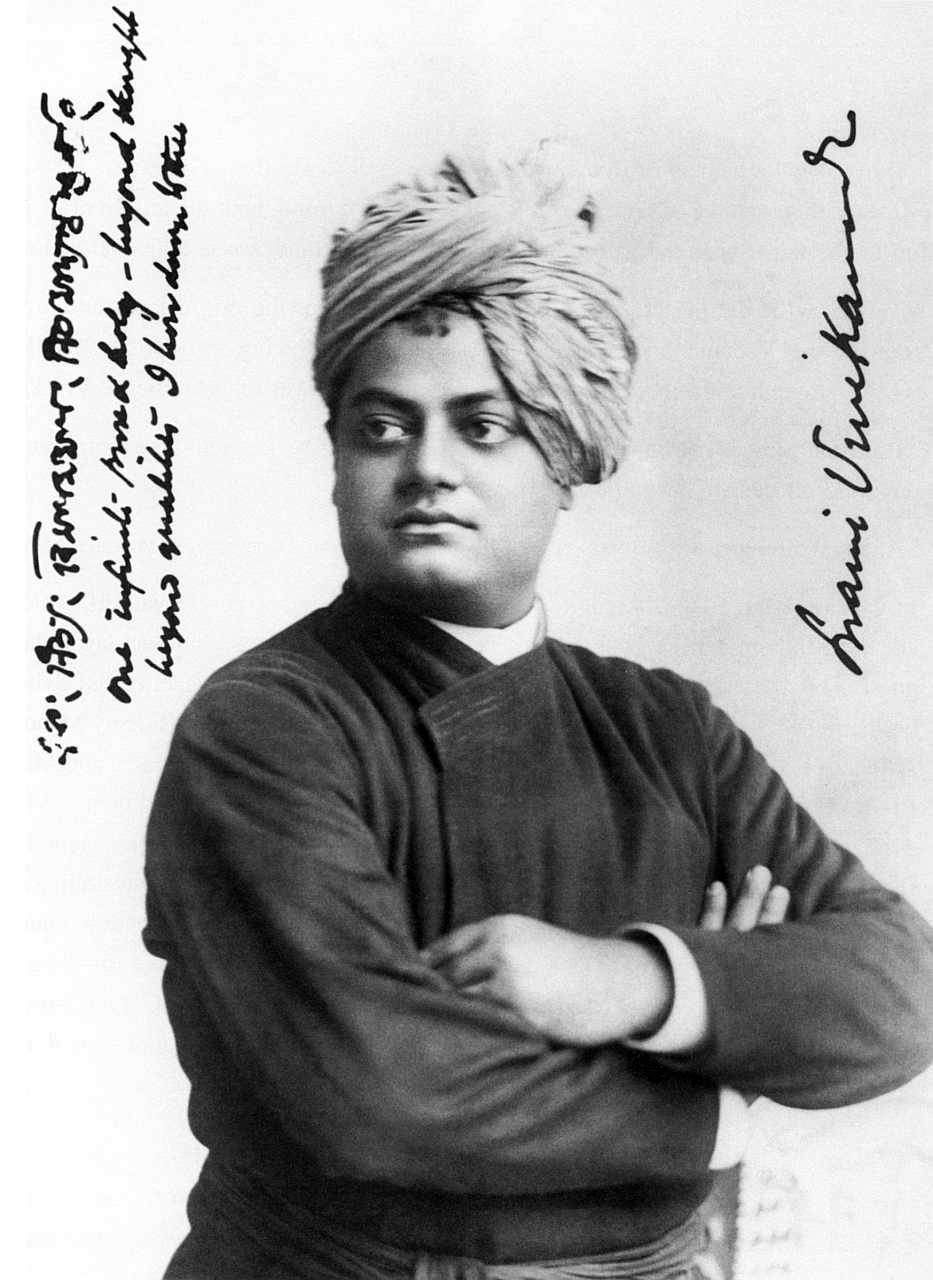 Swami Vivekananda★Indian1863 – 1902Brought Vedānta and yoga to the West at the 1893 Parliament of Religions.
 Nāgārjuna★Indianc. 150 – 250Founder of the Madhyamaka school, who argued that all things are empty of intrinsic existence — even emptiness itself.