The Islamic Golden Age
Baghdad's translators rescued Greek philosophy; al-Kindī, al-Fārābī and above all Ibn Sīnā transformed it. Al-Ghazālī attacked the philosophers; Ibn Rushd defended them. Their debates on reason, revelation and causation shaped Jewish and Christian thought too.
- 1
 TraditionIslamic800 – present
Islamic philosophy
From the Baghdad translation movement to the schools of Isfahan, Islamic philosophers absorbed Greek thought and transformed metaphysics, logic, medicine and mysticism.
- ◆Reconciling revelation and reason
- ◆The distinction between essence and existence
- ◆Necessary and contingent being
- ◆Illumination and mystical knowledge
Read the full pageWhen the Abbasid caliphs sponsored the translation of Greek texts into Arabic in 8th–10th century Baghdad, they set off one of the most productive periods in the history of philosophy. Al-Kindī, al-Fārābī and above all Ibn Sīnā (Avicenna) built rich systems from Aristotelian and Neoplatonic materials, while theologians of kalām developed rival accounts of God, atoms and causation.
Al-Ghazālī's critique of the philosophers and Ibn Rushd's (Averroes's) spirited reply became a defining debate about reason and faith. Ibn Rushd's commentaries on Aristotle, translated into Latin, helped spark medieval scholasticism in Europe. In the East the tradition never stopped: Suhrawardī's philosophy of illumination and Mullā Ṣadrā's "transcendent wisdom" carried Islamic philosophy into the modern era.
- 2
 Era750 – 1258
Islamic Golden Age
Baghdad, Cordoba and Bukhara became centres of philosophy, science and translation.
Read the full pageThe Islamic Golden Age was a period of cultural flourishing in the history of Islam, dated from the 8th century CE to the 14th century. The period is understood to have begun during the reign of the Abbasid caliph Harun al-Rashid (786–809), with the establishment of the House of Wisdom in Baghdad, one of the world's largest cities at the time. The institution attracted scholars from across the Muslim world to translate the classical knowledge of the known world into Arabic. In addition to Baghdad, the intellectual and cultural activity also flourished in other urban centers of the medieval Islamic world, including Cairo, and Umayyad Córdoba (capital of Al-Andalus), as well as Damascus, Nishapur, Samarkand, Ghazni, Kairouan, and Fez, and in later centuries, Nasrid Granada.
The period is said to have ended with the collapse of the Abbasid caliphate following the Mongol invasions and the Siege of Baghdad in 1258. Select scholars extend the end of the golden age to around 1350, thereby including the Timurid Renaissance. Others extend it to the 15th century, including the Nasrid Kingdom of Granada, whose court remained an important centre of scholarship, culture and literature, or even to the 16th century, incorporating the rise of the Islamic gunpowder empires.
The metaphor of a golden age began to be applied in 19th-century literature about Islamic history, in the context of the western aesthetic fashion known as Orientalism. The author of a Handbook for Travelers in Syria and Palestine in 1868 observed that the most beautiful mosques of Damascus were "like Mohammedanism itself, now rapidly decaying" and relics of "the golden age of Islam".
- Read the full page
The House of Wisdom (Arabic: بَيْت الْحِكْمَة Bayt al-Ḥikmah), also known as the Grand Library of Baghdad, was a major Abbasid-era public academy and intellectual center in Baghdad. In popular reference, it acted as one of the world's largest public libraries during the Islamic Golden Age, and was founded either as a library for the collections of the fifth Abbasid caliph Harun al-Rashid (r. 786–809) in the late 8th century or as a private collection of the second Abbasid caliph al-Mansur (r. 754–775) to house rare books and collections in the Arabic language. During the reign of the seventh Abbasid caliph al-Ma'mun (r. 813 – 833 AD), it was turned into a public academy and a library.
It was destroyed in 1258 during the Mongol siege of Baghdad. The primary sources behind the House of Wisdom narrative date between the late eighth century and the thirteenth century, and most importantly include the references in Ibn al-Nadim's (d. 995) al-Fihrist.
More recently, the narrative of the Abbasid House of Wisdom as a major academic institution akin to a university, with specialised departments and organised scholarly debate, has been challenged by some historians, who argue this image was constructed over the course of the nineteenth and early twentieth centuries by Orientalist scholars through translation errors and retrospective projection, and propagated into later scholarship and nationally oriented works until more recent re-examination of the primary sources.
- 4
 PhilosopherIslamicc. 801 – 873
Al-Kindī
"The philosopher of the Arabs", who launched Arabic philosophy in Baghdad.
Read the full pageAbū Yūsuf Yaʻqūb ibn ʼIsḥāq aṣ-Ṣabbāḥ al-Kindī (; Arabic: أبو يوسف يعقوب بن إسحاق الصبّاح الكندي; Latin: Alkindus; c. 801–873 AD) was a Mesopotamian Arab polymath who was active as a philosopher, mathematician, physician, and music theorist. Al-Kindi was the first of the Islamic peripatetic philosophers, and is hailed as the "father of Arab philosophy".
Al-Kindi was born in Kufa and educated in Baghdad. He became a prominent figure in the House of Wisdom (Bayt al-Hikma), an institute of translation and learning patronized by the Abbasid caliphs, in Baghdad, and a number of Abbasid caliphs appointed him to oversee the translation of Greek scientific and philosophical texts into the Arabic language. This contact with "the philosophy of the ancients" (as Hellenistic philosophy was often referred to by Muslim scholars) had a profound effect on him, as he synthesized, adapted and promoted Hellenistic and Peripatetic philosophy in the Muslim world. He subsequently wrote hundreds of original treatises of his own on a range of subjects, from metaphysics, ethics, logic and psychology, to medicine, pharmacology, mathematics, astronomy, astrology and optics, and further afield to more practical topics like perfumes, swords, jewels, glass, dyes, zoology, tides, mirrors, meteorology and earthquakes.
In the field of mathematics, al-Kindi played an important role in introducing Hindu-Arabic numerals to the Islamic world, and their further development into Arabic numerals along with al-Khwarizmi, which eventually were adopted by the rest of the world. Al-Kindi was also one of the fathers of cryptography. Building on the work of al-Khalil (717–786), Al-Kindi's book entitled Manuscript on Deciphering Cryptographic Messages gave rise to the birth of cryptanalysis, was the earliest known use of statistical inference, and introduced several new methods of breaking ciphers, notably frequency analysis. He was able to create a scale that would enable doctors to gauge the effectiveness of their medication by combining his knowledge of mathematics and medicine.
- 5
 PhilosopherIslamicc. 872 – 950
Al-Fārābī
"The Second Teacher" after Aristotle; wrote on logic, music and the virtuous city.
- ◆Islamic Neoplatonism
- ◆Islamic Political Philosophy
Read the full pageAbu Nasr Muhammad al-Farabi (Arabic: أبو نصر محمد الفارابي, romanized: Abū Naṣr Muḥammad al-Fārābī; c. 870 – 14 December 950–12 January 951), known in the Latin West as Alpharabius, was an early Islamic philosopher and music theorist. He has been designated as "Father of Islamic Neoplatonism", and the "Founder of Islamic Political Philosophy".
Al-Farabi's fields of philosophical interest included—but were not limited to—philosophy of society and religion; philosophy of language and logic; psychology and epistemology; metaphysics, political philosophy, and ethics. He was an expert in both practical musicianship and music theory, and although he was not intrinsically a scientist, his works incorporate astronomy, mathematics, cosmology, and physics.
Al-Farabi is credited as the first Muslim who presented philosophy as a coherent system in the Islamic world, and created a philosophical system of his own, which went far beyond the scholastic interests of his Greco-Roman Neoplatonism and Syriac Aristotelian precursors. That he was more than a pioneer in Islamic philosophy is evident from later writers calling him the "Second Master", with Aristotle as the first.
- 6
 PhilosopherIslamic980 – 1037
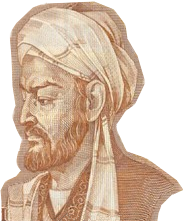
Ibn Sīnā (Avicenna)
Physician-philosopher whose Floating Man and distinction between essence and existence shaped Islamic and European thought.
- ◆Essence vs existence
- ◆The Necessary Existent
- ◆The Floating Man thought experiment
- ◆The Canon of Medicine
Read the full pageIbn Sīnā, known in Latin as Avicenna, was a prodigy from near Bukhara who claimed to have mastered every science but metaphysics by eighteen — and only understood Aristotle's Metaphysics after reading al-Fārābī's commentary. His Canon of Medicine was a standard textbook in Europe and the Islamic world for six centuries; his Book of Healing is a vast philosophical encyclopedia.
His most influential idea is the distinction between essence (what a thing is) and existence (that it is). Nothing in the essence of a horse guarantees there are horses; existence must be given to it. Everything whose existence is merely possible needs a cause, and to avoid an infinite regress there must be a Necessary Existent whose essence just is to exist — God.
In his famous Floating Man thought experiment, a person created suspended in air, with no sensory contact even with his own body, would still be aware of his own existence. Self-awareness, Ibn Sīnā concluded, does not depend on the body — anticipating Descartes by six centuries.
- 7ArgumentIslamic
The Floating Man
Ibn Sīnā's person created in mid-air, without senses, who would still know that he exists.
P1Imagine a person created fully formed, suspended in air, with no sensation even of his own body
P2He would still affirm his own existence
∴Self-awareness does not depend on awareness of the body — the soul is distinct from it.
Read the full pageThe floating man, flying man, or man suspended in air argument is a thought experiment by the Persian philosopher Ibn Sina (Avicenna) that argues for the existence of the soul. This thought experiment is used to argue in favor of knowledge by presence.
Ibn Sina wrote the argument while imprisoned in the castle of Fardajan in Hamadan Province, Iran. He concluded that the soul is immaterial and substantial. He also claimed that no human could deny their own consciousness. According to Ibn Sina, the floating man could attain the concept of being without any sense experience.
Ibn Sina saved one of the Iranian rulers, Shams al-Dawla, from death, which caused envy among the courtiers. Following Shams al-Dawla death, Ibn Sina was arrested and imprisoned in a castle between the Iranian provinces of Hamadan and Isfahan, where he supposedly wrote the floating man argument. The name of that castle is recorded in the old books as "Fardjan," "Mazdjan," or "Mazdavan."
- 8ConceptIslamic
Essence and existence
Ibn Sīnā's distinction between what a thing is and the fact that it is.
Read the full pageIbn Sīnā noticed that understanding what something is does not tell you whether it is. You can grasp the essence of a phoenix perfectly well without knowing if any phoenix exists. So existence must be something added to essence, or at least distinct from it.
For every ordinary thing, then, existence is not guaranteed by its nature — it is merely possible and needs a cause. This distinction powers Ibn Sīnā's proof of a Necessary Existent, whose essence simply is its existence. Through Latin translations it shaped Aquinas's metaphysics, and in later Islamic philosophy it sparked a centuries-long debate over whether essence or existence is primary — Mullā Ṣadrā argued for existence.
- 9
 ConceptIslamic
Necessary Existent
A being whose essence is to exist and which cannot not exist — Ibn Sīnā's God.
Read the full pageThe Proof of the Truthful (Arabic: برهان الصديقين, romanized: burhān al-ṣiddīqīn, also translated Demonstration of the Truthful or Proof of the Veracious, among others) is a formal argument for proving the existence of God introduced by the Islamic philosopher Avicenna (also known as Ibn Sina, 980–1037). Avicenna argued that there must be a "necessary existent" (Arabic: واجب الوجود, romanized: wājib al-wujūd), an entity that cannot not exist. The argument says that the entire set of contingent things must have a cause that is not contingent because otherwise it would be included in the set. Furthermore, through a series of arguments, he derived that the necessary existent must have attributes that he identified with God in Islam, including unity, simplicity, immateriality, intellect, power, generosity, and goodness.
Historian of philosophy Peter Adamson called the argument one of the most influential medieval arguments for God's existence, and Avicenna's biggest contribution to the history of philosophy. It was enthusiastically received and repeated (sometimes with modification) by later philosophers, including generations of Muslim philosophers, Western Christian philosophers such as Thomas Aquinas and Duns Scotus, and Jewish philosophers such as Maimonides.
Critics of the argument include Averroes, who objected to its methodology, Al-Ghazali, who disagreed with its characterization of God, and modern critics who state that its piecemeal derivation of God's attributes allows people to accept parts of the argument but still reject God's existence. There is no consensus among modern scholars on the classification of the argument; some say that it is ontological while others say it is cosmological.
- 10
 PhilosopherIslamic1058 – 1111
Al-Ghazālī
Theologian whose Incoherence of the Philosophers attacked Aristotelian falsafa and anticipated Hume on causation.
- ◆Critique of necessary causation
- ◆Occasionalism
- ◆Skeptical crisis and Sufi resolution
Read the full pageAl-Ghazali (Persian: ابو حامد محمد ابن محمد غزالی طوسی, romanized: Abū Ḥāmid Muḥammad ibn Muḥammad Ghazālī Ṭūsi; c. 1058 – 19 December 1111), latinized as Algazelus, was an Shafi'i Ash'ari Sunni Muslim scholar and polymath. He is known as one of the most prominent and influential jurisconsults, legal theoreticians, muftis, philosophers, theologians, logicians and mystics in Islamic history.
He is considered by Sunni Muslims to be the 11th century's mujaddid, a renewer of the faith, who, according to the prophetic hadith, appears once every 100 years to restore the faith of the Islamic community. Al-Ghazali's works were so highly acclaimed by his contemporaries that he was awarded the honorific title "Proof of Islam" (Ḥujjat al-Islām). Al-Ghazali was a prominent mujtahid in the Shafi'i school of law.
Much of al-Ghazali's work stemmed around his spiritual crises following his appointment as the head of the Nizamiyya of Baghdad, which was the most prestigious academic position in the Muslim world at the time. This led to his eventual disappearance from the Muslim world for over 10 years, realising he chose the path of status and ego over God. It was during this period where many of his great works were written. He believed that the Islamic spiritual tradition had become moribund and that the spiritual sciences taught by the first generation of Muslims had been forgotten. This belief led him to write his magnum opus entitled The Revival of the Religious Sciences. Among his other works, The Incoherence of the Philosophers is a landmark in the history of philosophy, as it advances the critique of Aristotelian science developed later in 14th-century Europe.
- 11ConceptIslamic
Occasionalism
Created things have no causal power; God directly causes every event on the "occasion" of another.
Read the full pageOccasionalism is a philosophical doctrine about causation which says that created substances cannot be efficient causes of events. Instead, all events are taken to be caused directly by God. (A related concept, which has been called "occasional causation", also denies a link of efficient causation between mundane events, but may differ as to the identity of the true cause that replaces them.) The doctrine states that the illusion of efficient causation between mundane events arises out of God's causing of one event after another. However, there is no necessary connection between the two: it is not that the first event causes God to cause the second event: rather, God first causes one and then causes the other.
The doctrine first reached prominence in the Islamic theological schools of Iraq, especially in Basra. The ninth century theologian Abu al-Hasan al-Ash'ari argued that there is no secondary causation in the created order. In his thought, the world is sustained and governed through direct intervention of a divine primary causation. As such, the world is in a constant state of recreation by God. In Arabic, this was known as Kasb.
The most famous proponent of the Asharite occasionalist doctrine was Al-Ghazali, an 11th-century theologian based in Baghdad. In The Incoherence of the Philosophers, Al-Ghazali launched a philosophical critique against Neoplatonic-influenced early Islamic philosophers such as Al-Farabi and Avicenna. In response to the philosophers' claim that the created order is governed by secondary efficient causes (God being, as it were, the primary and final cause in an ontological and logical sense), Ghazali argues that what we observe as regularity in nature based presumably upon some natural law is actually a kind of constant and continual regularity. For him, there is no independent necessitation of change and becoming, other than what God has ordained. Thus, to posit an independent causality outside of God's knowledge and action would be to deprive him of true agency, and diminish his attribute of power. In his famous example, when fire and cotton are placed in contact, the cotton is burned not because of the heat of the fire, but through God's direct intervention, a claim which he defended using logic. In the 12th century, Fakhr al-Din al-Razi expounded upon similar theories of occasionalism in his works.
- 12WorkIslamic1095
The Incoherence of the Philosophers
Al-Ghazālī's attack on twenty theses of the Aristotelian philosophers.
Read the full pageThe Incoherence of the Philosophers (Arabic: تهافت الفلاسفة, romanized: Tahāfut al-Falāsifa) is a landmark 11th-century work by the Muslim polymath al-Ghazali, a student of the Asharite school of Islamic theology, criticizing the Avicennian school of early Islamic philosophy. Muslim philosophers such as Ibn Sina (Avicenna) and al-Farabi (Alpharabius) are denounced in this book, as they follow Greek philosophy even when, in the author's perception, it contradicts Islam. The text was dramatically successful, and marked a milestone in the ascendance of the Asharite school within Islamic philosophy and theological discourse.
The book favors faith over philosophy in matters specifically concerning metaphysics or knowledge of the divine.
In July 1091, at the invitation of Nizam al-Mulk, al-Ghazali became professor of law at the Nizamiyya of Baghdad, one of the most prestigious colleges at that time. This college was intended in part to train scholars to counter the religious propaganda of the Fatimid caliphs, and al-Ghazali's appointment at the Nizamiyya was consistent with that intention.
- 13
 PhilosopherIslamic1126 – 1198
Ibn Rushd (Averroes)
"The Commentator" on Aristotle, who defended philosophy against al-Ghazālī and argued reason and revelation cannot conflict.
- ◆Truth does not contradict truth
- ◆Unity of the intellect
- ◆Commentaries on Aristotle
Read the full pageIbn Rushd (14 April 1126 – 11 December 1198), Latinized as Averroes, was an Andalusian polymath and jurist who was proficient in a variety of intellectual fields, including philosophy, theology, medicine, astronomy, physics, psychology, mathematics, neurology, Islamic jurisprudence, law, and linguistics. The author of more than 100 books and treatises, his philosophical works include numerous commentaries on Aristotle, for which he was known in the Western world as "The Commentator" and "Father of Rationalism".
Averroes was a strong proponent of Aristotelianism; he attempted to restore what he considered the original teachings of Aristotle and opposed the Neoplatonist tendencies of earlier Muslim thinkers, such as al-Farabi and Avicenna. He also defended the pursuit of philosophy against criticism by Ash'ari theologians such as Al-Ghazali. Averroes argued that philosophy was permissible in Islam and even compulsory among certain elites. He also argued scriptural text should be interpreted allegorically if it appeared to contradict conclusions reached by reason and philosophy. In Islamic jurisprudence, he wrote the Bidāyat al-Mujtahid on the differences between Islamic schools of law and the principles that caused their differences. In medicine, he proposed a new theory of stroke, described the signs and symptoms of Parkinson's disease for the first time, and might have been the first to identify the retina as the part of the eye responsible for sensing light. His medical book Al-Kulliyat fi al-Tibb, translated into Latin and known as the Colliget, became a textbook in Europe for centuries.
His legacy in the Islamic world was modest for geographical and intellectual reasons. In the West, Averroes was known for his extensive commentaries on Aristotle, many of which were translated into Latin and Hebrew. The translations of his work reignited Western European interest in Aristotle and Greek thinkers, an area of study that had been widely abandoned after the fall of the Western Roman Empire. His thoughts generated controversies in Latin Christendom and triggered a philosophical movement called Averroism based on his writings. His unity of the intellect thesis, proposing that all humans share the same intellect, became one of the best-known and most controversial Averroist doctrines in the West. His works were condemned by the Catholic Church in 1270 and 1277. Although weakened by condemnations and sustained critique from Thomas Aquinas, Latin Averroism continued to attract followers up to the sixteenth century.
- 14
 SchoolIslamic750 – present
Kalām
Islamic rational theology: atoms, God's attributes, free will and the creation of the world.
Read the full pageIlm al-kalam or ilm al-lahut, often shortened to kalam, is the scholastic, speculative, or rational study of Islamic theology (aqida). It can also be defined as the science that studies the fundamental doctrines of Islamic faith (usul al-din), proving their validity, or refuting doubts regarding them. Kalām was born out of the need to establish and defend the tenets of Islam against philosophical doubters and non-Muslims, and also to defend against heretical and religious innovations (bidʿah). A scholar of kalam is referred to as a mutakallim (plural mutakallimun), a role distinguished from those of Islamic philosophers and jurists.
While traditional Islamic sources attribute the origin of the term kalām primarily to internal disputations over the divine speech (kalām Allāh) and dialectical exchanges (idārat al-kalām), comparative religion and modern scholarship (such as Harry A. Wolfson and Josef van Ess) contextualize the formation of Ilm al-Kalām within the broader Late Antique milieu. The central debates surrounding the uncreated or created nature of the Quran closely mirror the Hellenistic and Patristic evolution of the Logos concept. Just as Christian theology grappled with the divine Word incarnate in Jesus, early Muslim mutakallimūn elevated the divine speech into an ontological and dogmatic status, shaping a unique theological framework where scripture itself assumed the absolute, uncreated authority traditionally ascribed to the Logos.
After its first beginnings in the late Umayyad period, the Kalām experienced its rise in the early Abbasid period, when the Caliph al-Mahdi commissioned Mutakallimūn to write books against the followers of Iranian religions, and the Barmakid vizier Yahya ibn Khalid held Kalām discussions with members of various religions and confessional groups in his house. By the 10th century, the Muʿtazilites were main pioneers of 'Kalam' during the early formative period of Islam. Soon after, two new important Sunni Kalām schools emerged: the Ashʿaris and the Maturidis. They positioned themselves against the growing Neoplatonic and Aristotelian philosophy within the Mu'tazilites and elevated the "Kalām science" (ʿilm al-kalām) as an acceptable ranking science in mainstream Sunni discourse. Some of the arguments of these Mutakallimūn also found their way into Jewish and Christian theological discussions in the Middle Ages. Kalām science by the early modern period was essentially limited to the study of manuals and commentaries, from the late 19th century onwards various reform thinkers appeared in British India and the Ottoman Empire who called for the founding of a "new Kalām".


