How to read philosophy
Primary texts can be daunting. A few habits make them far easier.
Read slowly, and more than once
A page of Kant or Nāgārjuna may take as long as a chapter of a novel. First read for the overall shape; second read for the argument; third for the details.
Find the question
Every text answers a question. Write it down in one sentence. "What is justice?" (Republic). "How is knowledge independent of experience possible?" (Critique of Pure Reason). "What is the right way to act on a battlefield?" (Gītā).
Map the argument
Number the premises. Mark where the conclusion appears. Ask which premise you would deny.
Know the context
Who was the author arguing against? Hume wrote against rationalists; Śaṅkara against Buddhists and Mīmāṃsakas; Ibn Rushd against al-Ghazālī. Rhea's Criticized and Responds to links show these quarrels.
Start with short texts
Good first reads: Plato's Apology, Epictetus's Enchiridion, the Daodejing, the Dhammapada, the Analects, Descartes's Meditations, Mill's On Liberty. Many are free on Rhea's work pages.
Use this site
Use the influence graph to see who argued with whom, the timeline to see who lived when, the map to see where, and the course to read it all in order. Mark lessons done as you go — your progress is saved on this device.
Go deeper
- 1WorkGreek & Romanc. 399 BCE
Apology
Socrates's defence speech at his trial: "the unexamined life is not worth living".
Read the full pageThe Apology of Socrates (Ancient Greek: Ἀπολογία Σωκράτους, Apología Sokrátous; Latin: Apologia Socratis), written by Plato, is a Socratic dialogue of the speech of legal self-defence which Socrates (469–399 BC) spoke at his trial for impiety and corruption in 399 BC.
Specifically, the Apology of Socrates is a defense against the charges of "corrupting the youth" and "not believing in the gods in whom the city believes, but in other daimonia that are novel" to Athens (24b).
Among the primary sources about the trial and death of the philosopher Socrates, the Apology of Socrates is the dialogue that depicts the trial, and is one of four Socratic dialogues, along with Euthyphro, Phaedo, and Crito, through which Plato details the final days of the philosopher Socrates. There are debates among scholars as to the reliability of the Apology's account of the trial.
- Read the full page
The Enchiridion or Handbook of Epictetus (Ancient Greek: Ἐγχειρίδιον Ἐπικτήτου, Enkheirídion Epiktḗtou) is a short manual of Stoic ethical advice compiled by Arrian, a 2nd-century disciple of the Greek philosopher Epictetus. Although the content is mostly derived from the Discourses of Epictetus, it is not a summary of the Discourses but rather a compilation of practical precepts. Eschewing metaphysics, Arrian focuses his attention on Epictetus's work applying philosophy to daily life. Thus, the book is a manual to show the way to achieve mental freedom and happiness in all circumstances.
The Enchiridion was well known in the medieval world and was specially adapted for use in Greek-speaking monasteries. In the 15th century it was translated into Latin, and then, with the advent of printing, into multiple European languages. It reached the height of popularity in the 17th century, in parallel with the Neostoicism movement.
The word "Enchiridion" (Ancient Greek: ἐγχειρίδιον) is an adjective meaning "in the hand" or "ready to hand". The word sometimes meant a handy sword, or dagger, but coupled with the word "book" (biblion, Greek: βιβλίον) it means a handy book or hand-book. Epictetus in the Discourses often speaks of principles which his pupils should have "ready to hand" (Greek: πρόχειρα). Common English translations of the title are Manual or Handbook.
- 3
 WorkChinesec. 400 BCE
Daodejing
81 short chapters on the Dao and its virtue — one of the most translated books in the world.
Read the full pageThe Tao Te Ching or Dào Dé Jīng, (traditional Chinese: 道德經; simplified Chinese: 道德经; lit. 'Classic of the Way and its Virtue') also known simply as the Laozi, is an ancient Chinese classic text traditionally attributed to the sage Laozi. It is regarded as the foundational Taoist text alongside the Zhuangzi. Central to both philosophical and religious Taoism, it has been "profoundly influential" more broadly in Chinese culture, art and medicine.
The texts' authorship and dating is debated, with several similar early versions recovered. Traceable as far back as the early to mid fourth century BCE, Alan Chan of the Stanford Encyclopedia argues that archaeology indicates that "bodies of sayings" attributed to Laozi were put into writing "probably from the second half of the fifth century B.C.E.", with different overlapping collections gradually consolidated during the fourth century BCE (400-300 BCE). Questionable as a single unified text, its oldest excavated manuscript fragments, the Guodian Chu slips, date to around 300 BCE, the latter half of the Warring States period (475 – 221 BCE). They are taken as dating back to the fourth century BCE. A conservative estimation would date relatively complete modern versions of the text to the mid third century BCE, or late Warring States period.
Terminology originating within the text has been reinterpreted and elaborated upon by Legalist thinkers, Confucianists, and particularly through Chinese Buddhism, which arrived well after the formation and wide spread societal use of this text within Chinese culture. First translated into French in the early nineteenth century, it is one of the most translated texts in world literature.
- Read the full page
The Dhammapada (Pali: धम्मपद; Sanskrit: धर्मपद, romanized: Dharmapada) is a collection of sayings of the Buddha in verse form and one of the most widely read and best known Buddhist scriptures. The original version of the Dhammapada is in the Khuddaka Nikāya, a division of the Pāli Canon of Theravāda Buddhism.
The Buddhist scholar and commentator Buddhaghosa explains that each saying recorded in the collection was made on a different occasion in response to a unique situation that had arisen in the life of the Buddha and his monastic community. His translation of the commentary, the Dhammapada Aṭṭhakatha, presents the details of these events and is a rich source of legend for the life and times of the Buddha.
The title "Dhammapada" is a compound term composed of dhamma and pada, each word having a number of denotations and connotations. Generally, dhamma can refer to the Buddha's "doctrine" or an "eternal truth" or "righteousness" or all "phenomena"; at its root, pada means "foot" and thus by extension, especially in this context, means either "path" or "verse" (cf. prosodic foot) or both. English translations of this text's title have used various combinations of these and related words.
- 5
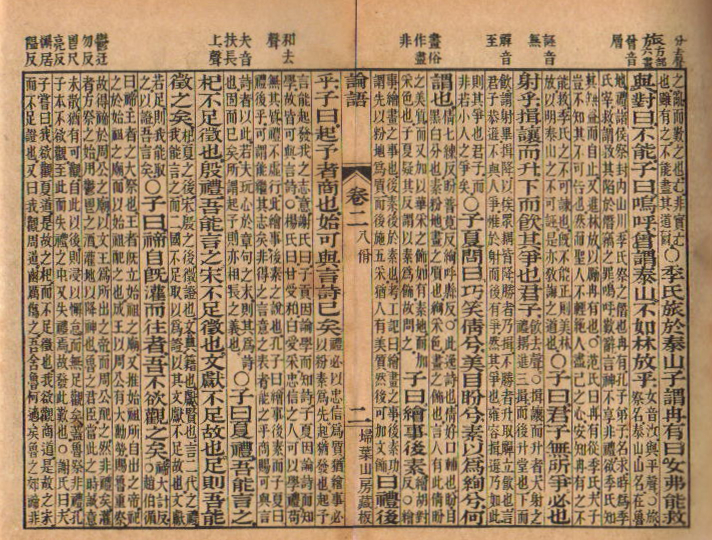 WorkChinesec. 475 – 221 BCE
Analects
Sayings of Confucius and his disciples on virtue, ritual, learning and government.
Read the full pageThe Analects, also known as the Sayings of Confucius, is an ancient Chinese philosophical text composed of sayings and ideas attributed to Confucius and his contemporaries, traditionally believed to have been compiled by his followers.
The consensus among scholars is that large portions of the text were composed during the Warring States period (475–221 BCE), and that the work achieved its final form during the mid-Han dynasty (206 BCE – 220 CE). During the early Han, the Analects was merely considered to be a commentary on the Five Classics. However, by the dynasty's end the status of the Analects had grown to become a central text of Confucianism.
During the late Song dynasty (960–1279 CE) the importance of the Analects as a Chinese philosophy work was raised above that of the older Five Classics, and it was recognized as one of the "Four Books". The Analects has been one of the most widely read and studied books in China for more than two millennia; its ideas continue to have a substantial influence on East Asian thought and values.
- 6
 WorkModern European1641
Meditations on First Philosophy
Six meditations from radical doubt to God, mind and body.
Read the full pageMeditations on First Philosophy, in which the existence of God and the immortality of the soul are demonstrated (Latin: Meditationes de Prima Philosophia, in qua Dei existentia et animæ immortalitas demonstratur), often simply called Meditations on First Philosophy or the Meditations, is a philosophical treatise by René Descartes first published in Latin in 1641. The French translation (by the Duke of Luynes with Descartes' supervision) was published in 1647 as Méditations Métaphysiques. The title may contain a misreading by the printer, mistaking animae immaterialitas for animae immortalitas, as suspected by A. Baillet.
The book is made up of six meditations, in which Descartes first discards all belief in things that are not absolutely certain, and then tries to establish what can be known for sure. He wrote the Meditations as if he had meditated for six days: each meditation refers to the last one as "yesterday". (In fact, Descartes began work on the Meditations in 1639.) One of the most influential philosophical texts ever written, it is widely read to this day.
The book consists of the presentation of Descartes' metaphysical system at its most detailed level and in the expanding of his philosophical system, first introduced in the fourth part of his Discourse on Method (1637). Descartes' metaphysical thought is also found in the Principles of Philosophy (1644), which the author intended to be a philosophical guidebook.
- Read the full page
On Liberty is an essay written by the English philosophers Harriet Taylor Mill and John Stuart Mill and published in 1859 under the latter's name. It applied their ethical system of utilitarianism to society and state. The Mills suggested standards for the relationship between authority and liberty. They emphasized the importance of individuality, which they considered a prerequisite to the higher pleasures—the summum bonum of utilitarianism. Furthermore, the Mills asserted that democratic ideals may result in the tyranny of the majority. Among the standards proposed are the Mills' three basic liberties of individuals, their three legitimate objections to government intervention, and their two maxims regarding the relationship of the individual to society.
On Liberty was a greatly influential and well-received work. Some classical liberals and libertarians have criticized it for its apparent discontinuity with Utilitarianism, and vagueness in defining the arena within which individuals can contest government infringements on their personal freedom of action. The ideas presented in On Liberty have remained the basis of much political thought. It has remained in print since its initial publication.
According to John Stuart Mill's autobiography, On Liberty was first conceived as a short essay in 1854. As the ideas developed, the essay was expanded, rewritten and "sedulously" corrected jointly by the married couple. After suffering a mental breakdown and eventually meeting and subsequently marrying Harriet, Mill had changed many of his beliefs on moral life and women's rights. Mill states that On Liberty "was more directly and literally our joint production than anything else which bears my name."


