
Daodejing
道德經
81 short chapters on the Dao and its virtue — one of the most translated books in the world.
The Tao Te Ching or Dào Dé Jīng, (traditional Chinese: 道德經; simplified Chinese: 道德经; lit. 'Classic of the Way and its Virtue') also known simply as the Laozi, is an ancient Chinese classic text traditionally attributed to the sage Laozi. It is regarded as the foundational Taoist text alongside the Zhuangzi. Central to both philosophical and religious Taoism, it has been "profoundly influential" more broadly in Chinese culture, art and medicine.
The texts' authorship and dating is debated, with several similar early versions recovered. Traceable as far back as the early to mid fourth century BCE, Alan Chan of the Stanford Encyclopedia argues that archaeology indicates that "bodies of sayings" attributed to Laozi were put into writing "probably from the second half of the fifth century B.C.E.", with different overlapping collections gradually consolidated during the fourth century BCE (400-300 BCE). Questionable as a single unified text, its oldest excavated manuscript fragments, the Guodian Chu slips, date to around 300 BCE, the latter half of the Warring States period (475 – 221 BCE). They are taken as dating back to the fourth century BCE. A conservative estimation would date relatively complete modern versions of the text to the mid third century BCE, or late Warring States period.
Terminology originating within the text has been reinterpreted and elaborated upon by Legalist thinkers, Confucianists, and particularly through Chinese Buddhism, which arrived well after the formation and wide spread societal use of this text within Chinese culture. First translated into French in the early nineteenth century, it is one of the most translated texts in world literature.
Biography
The Tao Te Ching is traditionally ascribed to Laozi, whose historical existence has been a matter of scholarly debate. His name, which means "Old Master", has only fueled controversy on this issue. Legends claim variously that Laozi was "born old" and that he lived for 996 years, with 12 previous incarnations starting around the time of the Three Sovereigns before the 13th as Laozi. Some scholars have expressed doubts about Laozi's historicity.
The first biographical reference to Laozi is in the Records of the Grand Historian, by Han dynasty historian Sima Qian (c. 145–86 BCE), which includes three stories. Though even by late estimates, A.C. Graham believed that the idea of Lao Dan as a contemporary of Confucius existed by the late Warring States period, 250 BCE.
In the first, Laozi was a contemporary of Confucius. His surname was Li (李), and his personal name was Er (耳) or Dan (聃). He was an official in the imperial archives, and at the request of the keeper of the Han-ku Pass, Yinxi, wrote a book in two parts before departing to the West, composing the Tao Te Ching. In the second story, Laozi, also a contemporary of Confucius, was Lao Laizi (老萊子), who wrote a book in 15 parts. In the third, Laozi was the grand historian and astrologer Lao Dan (老聃), who lived during the reign of Duke Xian of Qin (r. 384–362 BCE).
Feng Youlan did not consider it a significant issue for tradition if the Tao te Ching turned out to be a later work than the traditional Laozi. He did not believe the traditional account required Laozi to personally write the book named for him, or that this would therefore void him having been a real person.
Sinology
Alan Chan (SEP) finds "little reason" to doubt the "traditional claim that Laozi was a senior contemporary of Confucius (551–479 BCE)".
Thomas Michael (2021) doubts that "anyone had ever heard" of Laozi before association with a supposed late Warring States period (250 BCE~ - Graham) Tao te Ching compilation (or at least collection) drawing on earlier sources - the old late dating theory of A.C. Graham. The Analects quote Laozi material anonymously, though anonymous quotation is a typical mode of argument earlier in the Warring States period.
The Zhuangzi prefers the name Lao Dan (Old Dan). Graham took Lao Dan as originating in Confucianism, adopted by the Inner Zhuangzi "towards 300 BCE". A Lao Dan is a consultant to Confucius in the Book of Rites, advising on royal funerals. There is no anti-Daoist rhetoric in Lao Dan's funeral instructions to suggest the Confucians invented their Lao Dan in opposition to a Daoist Lao Dan.
The Inner Zhuangzi references Lao's Dan's funeral. Graham suggested that this (funerals) is the older stratum of his theming. He is a royal archivist and contemporary of Confucius in Zhuangzi chapters 13 and 14. Even so, although not part of the Book of Rites, Graham believed he was probably already known as an archivist in the fourth century BCE.
The late Xunzi's criticisms, by the middle of the third century ("230 BCE"- Graham), are the first reference to Lao Dan as a philosopher under the title Laozi. Its Tian Lun chapter says "Laozi had insight into retreat and yielding, but no insight into firmness and trustworthiness." A Lao Dan is similarly mentioned alongside other classical figures in the late Warring States Lushi Chunqiu, taken as "valuing the soft" or "yielding."
Archaeologically recovered manuscripts
Tao Te Ching scholarship has advanced from archaeological discoveries of manuscripts, some of which are older than any of the received texts. Beginning in the 1920s and 1930s, Marc Aurel Stein and others found thousands of scrolls in the Mogao Caves near Dunhuang. They included more than 50 partial and complete manuscripts. Another partial manuscript has the Xiang'er commentary, which had previously been lost.
In 1973, archaeologists discovered copies of early Chinese books, known as the Mawangdui Silk Texts, in a tomb dated to 168 BCE, the early Han dynasty. They included two nearly complete copies of the text, referred to as Text A (甲) and Text B (乙), both of which reverse the traditional ordering and put the Te Ching section before the Tao Ching, which is why the Henricks translation of them is named "Te-Tao Ching". Based on calligraphic styles and imperial naming taboo avoidances, scholars believe that Text A can be dated to about the first decade and Text B to about the third decade of the 2nd century BCE.
In 1993, the oldest known version of the text, written on bamboo slips, was found in a tomb near the town of Guodian (郭店) in Jingmen, Hubei, and dated prior to 300 BCE. The Guodian Chu Slips comprise around 800 slips of bamboo with a total of over 13,000 characters, about 2,000 of which correspond with the Tao Te Ching. Both the Mawangdui and Guodian versions are generally consistent with the received texts, excepting differences in chapter sequence and graphic variants. Several recent Tao Te Ching translations utilise these two versions, sometimes with the verses reordered to synthesize the new finds.
Political orientation
Preceding the Guodian discovery, Sinologist Hansen (1992), later of the Stanford Encyclopedia of Daoism, argued that the Mawangdui is more political and should not be assumed authoritative for its time. Found in "the tomb of a powerful member of the ruling class", a more modern intellectually oriented version would not be expected in this tomb. It intends to be less ambiguous and puts the more "political" "de" section first. Notably, the earlier Guodian Laozi materials lack the last fifteen chapters of the later "de" text, and so may not have been completed until later. However, the Guodian's "audience and purpose" also clearly developed in a political context, with most of it intended for governing. A few passages mention "being used for kings", while Chapter 15 is for the aspiring official.
While many passages "could apply to anyone", if the early Guodian Laozi is a selection from a less political text, its selection is for political power-holders and leadership, concerned "with concrete benefits". Some advice is for the conduct of war, or education, with transforming the people aimed at reducing thievery. While it has cosmology, none of it justifies political ideas based on the place of humanity in the cosmos. Chapter 59 suggests that rule, service to heaven, and a long lived state, are enabled by frugality and restraint. The Way avoids harm, blame, shame, defeat and loss. Chapter 31 opposes beatifying war because it is believed to lead to failure, rather than for ethical reasons.
The Guodian relates "action, self-cultivation and cosmology", but considers contentment important mainly to avoid harm. It is lacking in concern for mystical states of mind. However, a lack of meditation instruction in Warring States texts doesn't automatically mean that self-cultivation or even meditation didn't already exist in expected association. The Ancient Chinese do not usually bundle their texts with thorough meditation instruction. But most parties would still expect that the ruler would have to cultivate himself if he expects to be successful, even if he relies on political advice.
Principal versions
Among the many transmitted editions of the Tao Te Ching text, the three primary ones are named after early commentaries, "Yan Zun", "Heshang Gong" and "Wang Bi". From the early Tang dynasty onward, it was mainly transmitted with the commentaries of the Heshang Gong and Wang Bi.
The "Yan Zun Version", which is only extant for the Te Ching (the "virtue" half of the text), derives from a commentary attributed to Han dynasty scholar Yan Zun (巖尊, fl. 80 BCE – 10 CE).
The "Heshang Gong" version is named after the legendary Heshang Gong ("legendary sage"), who supposedly lived during the reign of Emperor Wen of Han (180–157 BCE). This commentary has a preface written by Ge Xuan (164–244 CE), granduncle of Ge Hong, and scholarship dates this version to c. the 3rd century CE.
The origins of the "Wang Bi" version have greater verification than either of the above. Wang Bi (226–249 CE) was a Three Kingdoms-period philosopher and commentator on the Tao Te Ching and I Ching.
History
The Heshang Gong has Dunhuang manuscripts dating back to 270 CE, but rose to prominence alongside Taoism in the fifth and sixth centuries with imperial patronage. Most Tang dynasty sources, such as the Qunshu zhiyao encyclopedia, excerpted the Heshang Gong, remaining dominant into the Song dynasty. Tang and Song dynasty scholars promoted Wang Bi, comparing old manuscripts and other versions to preserve what they took to be the older reading. Early modern scholars Yao Nai (1732–1815), Xu Dachun (1693–1771) and Ma Xulun (1884–1970) continued to argue Wang Bi to be the standard text.
Wang Bi's language suggests "old manuscript" readings as in the Guodian, Mawangdui, Wenzi, Huainanzi, and Zhan Guo Ce. Although famous in its own time, Wang Bi was attached to no particular school. It became famous and survived only because it was considered a superior analysis, becoming popular again in early Tang classical studies. Some scholars, such as Lu Deming (556(?)–630) preferred Wang Bi. Lu Deming considered the Heshang Gong intellectual enough, but promoted Wang Bi because he considered Heshang Gong a "fake" text more relevant for "bringing order to one’s body and to the state", and not the "true" reading of Laozi.
In 719, Liu Zhiji argued Wang Bi's superiority and that the Heshang Gong's mythological content was not worthy of the classic Laozi text. The scholarly Tang State Council considered Wang Bi more sophisticated in "probing the essentials of the way", but considered the Heshang Gong to have its own encompassing teaching and value, more "accessible" in "setting up clear arguments", "nurturing the spirit", and "spreading the Way". They did not consider it very important that "Heshang Gong" was a title for an unrecorded hermit who supposedly flew to heaven. Although Wang Bi enjoyed prominent scholarly support, the Tang State declared it would leave Heshang Gong in place because Wang Bi did not have common enough usage. In 731, Emperor Xuanzong of Tang declared himself authoritative, inheriting a claim to descend from Laozi including the last name "Li."
Text
The modern Tao te Ching is divided into two parts; part one, chapters 1–37, which came to be known as the Daojing (Classic of Dao), often considered more "metaphysical"; and part two, the Dejing (Classic of Virtue), chapters 38–81, often considered more "political". Chapter one begins with "Dao", chapter thirty eight with "de". Although Dao and de are in both parts of the work, all but four of sixteen uses of the term de virtue appear in the second de "virtue" half of the work.
The typical modern Tao te Ching has chapter numbers but no titles; alongside the recovered Huangdi Sijing, the late Warring States period texts Xunzi and Han Feizi were the first to give titles to chapters. Traditional sources report that early versions had 64, 68, or 72 chapters. The later Han dynasty Heshang Gong divided it into today's number of chapters (81) and gave it chapters titles, but it wasn't universally accepted until "perhaps" the Tang dynasty.
Amongst other missing content, in particular, the shorter Guodian Laozi materials of the Warring States period Guodian Chu slips do not have the last fifteen chapters (67–81) of the Tao te Ching. The Laozi materials are moreover undivided apart from section endings. The early Han Mawangdui versions divide the text in two parts, in opposite order, with one still lacking chapter numbers. Tao Hongjing (456–535) of the Dengzhen yinjue states that (the Celestial Master school) transmitted a 5000 character text in two parts, but no division into sections (zhang).
Title
Ancient Chinese books were commonly referenced by the name of their real or supposed author, in this case the "Old Master", Laozi. As such, the Tao Te Ching is also sometimes called the Laozi, especially in Chinese sources. The title Tao te Ching is based on the terms dao and de. Though their origins date back to at least the Western Zhou, the compound term dao-de, or "way and virtue", was not used in the time of Mencius: it emerges in the late Warring States period.
The title Tao Te Ching, designating the work's status as a classic (經; 经; jīng), was first applied during the reign of Emperor Jing of Han (157–141 BCE), but "appears not to have been widely used" until near the end of the Han dynasty. Later sources added that it was Emperor Jing himself who named it a classic, but the Shiji states that his mother the Empress Dowager Dou was a more dedicated student of the text.
Title translations
In English, the title is commonly rendered Tao Te Ching, following the Wade–Giles romanization, or as Daodejing, following pinyin. It has been translated under such titles as The Classic of the Way and its Power, The Book of the Tao and Its Virtue, The Book of the Way and of Virtue, The Tao and its Characteristics, The Canon of Reason and Virtue, The Classic Book of Integrity and the Way, or A Treatise on the Principle and Its Action.
Other titles for the work include the honorific True Classic of the Way and Virtue (道德真經; Dàodé zhēnjing), the Classic of the Way and Virtue of the Highest Profound Origins (太上玄元道德經; Taishang xuanyuan daodejing), and the informal descriptive Five Thousand Character text (五千文; Wǔqiān wén). Fu Yi was of the opinion that Sima Qian says it has "five thousand plus words" as a general volume less than six thousand, not a requirement that it have exactly five thousand words. A shorter version of the Heshang Gong (5090) comes close to this, but Wang Bi's commentary brings it over 5600.
Scholarship conventionally refers to the text of the Guodian Chu slips as the Guodian Laozi Materials (GDL), or Guodian Laozi in short. It is questionable that its three different sets of bundles represent a unified text; and are referred to as Laozi A, B, and C. A & B do only contain Laozi materials.
Middle dating
Though Alan Chan of the Stanford Encyclopedia of Laozi considers a traditional dating for a whole text unlikely, he argues that archeology (e.g. Baxter) indicates that "bodies of sayings attributed to Laozi were committed to writing probably from the second half of the fifth century B.C.E." (450), consolidating in the fourth century BCE and stabilizing in the third century BCE. Chan only supposes a late Warring States period (475 – 221 BCE) dating for a (relatively) "stable" text. A.C. Graham (1989) already agreed with dating (a relatively complete text) back from the early Han Mawangdui to at least the late Warring States period even before the Guodian discovery (1993).
Although a comparatively early dating range, this theory would still place early content after Confucius (d.479), but before Zhuangzi. Linguistic studies by William Baxter (1998) and Liu Xiaogan (who advocates a traditional, early Confucius dating) pointed to a dating before the Chuci, as dated "no earlier than the middle of the Warring States period", and (an at least substantial portion) before the Inner Zhuangzi. Baxter considered the early Warring States period sufficient as an early dating range, but concedes the possibility of a (start) date halfway closer linguistically to the Shijing (e.g. Chan's mid fifth century start date) than the Inner Zhuangzi, despite differences with the Shijing.
Debated more in earlier scholarship, Scott Cook's (2012) publication of The Bamboo Texts of Guodian affirms that an at least "substantial portion" of the text can be supposed to have been written before the time of Zhuang Zhou, who is dated to e.g. 365–285 BCE (365 tail-end of the early Warring States period), predating even the earliest chapters of the Zhuangzi. Daniel Fried's (2022) digital analysis argues that the Inner Zhuangzi's authors were familiar with a Laozi text; it just doesn't exert as strong a canonical influence as in Han dynasty era writings.
The "bulk" of it is only "traceable" as far back as the early to mid fourth century BCE. Though scholar Pei Wang primarily compares Laozi, the Huangdi Sijing and Han Feizi, at least in review with Pei Wang, Yuri Pines Dao Companion to China's fa tradition expresses openness to the "indebtedness" of early Warring States period thinkers like Shen Buhai (c. 400 BCE) to Laozi. Shen Dao arguably has more directly comparable passages, but less developed views of Dao than Laozi or Zhuangzi, and was more fatalist.
Fourth century
A traditional early dating places Laozi before Zhuang Zhou in the time of Confucius (551–479 BCE). No scholarship in the west follows traditional early theory. Before the Guodian discovery (1993), D.C. Lau (1963) hypothesized that a Laozi text likely existed by the beginning of the third century BCE. Lau greatly contributes to a late dating theory in modern Sinology, expecting a late Warring States (475 – 221 BCE) compilation for a Tao te Ching.
Because the Guodian's (c. 300 BCE) Laozi materials are shorter, they do not eliminate late dating theories for completion of the text, but do make a text (or at least "intellectual field") before the third century BCE more probable, taken as representative of a broader oral tradition. Few scholars follow old "after-Zhuangzi" late dating theories as such. Most modern scholarship holds the text to be a compilation, as typical for long-form early Chinese texts.
Alan Chan's SEP includes Bruce & Taeko Brooks (1998) as an example of early modern dating based in the Analects of Confucius, with subsequent surrounding studies as projecting the work farther back. The Brooks considered the Analects to have close relationship with Laozi ideas dating back to Lunyu 12, c. 326 BCE, with Mencius beginning his career in 320 BCE (late fourth century bce). Franklin Perkins (2019) believes that the Guodian Laozi "provides definitive evidence that the key ideas of the Laozi were in existence by the late fourth century bce," during the lifetime of Mencius.
Adapted from the Wikipedia article Tao Te Ching, available under CC BY-SA 4.0.
Quotations
“A journey of a thousand miles begins with a single step.”
“Knowing others is intelligence; knowing yourself is true wisdom.”
“Nothing in the world is softer or weaker than water, yet nothing is better at overcoming the hard and strong.”
“The Dao that can be told is not the eternal Dao.”
Connections
Author
1
About
2
You might also explore
 ZhuangziChinesec. 300 BCEWitty, paradoxical Daoist stories: the butterfly dream, Cook Ding, the useless tree.
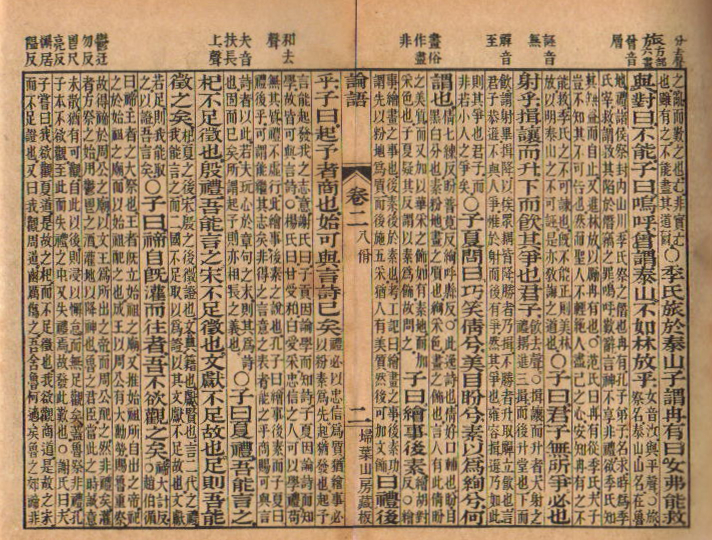 AnalectsChinesec. 475 – 221 BCESayings of Confucius and his disciples on virtue, ritual, learning and government.
 MenciusChinesec. 300 BCEDialogues of Mencius on human nature and humane government.
 The Art of War★Chinesec. 500 BCESunzi's classic of strategy: "to win without fighting is best".