Greek & Roman philosophy: an overview
The tradition that began with the Presocratics on the Ionian coast and ran through Socrates, Plato, Aristotle and the Hellenistic schools until the closing of the Athenian Academy.
- 1
 TraditionGreek & Roman600 BCE – 529 CE
Ancient Greek philosophy
The tradition that began with the Presocratics on the Ionian coast and ran through Socrates, Plato, Aristotle and the Hellenistic schools until the closing of the Athenian Academy.
- ◆Reason (logos) can explain nature without appeal to myth
- ◆The examined life as the good life
- ◆Virtue as excellence of character
- ◆Systematic logic, ethics, metaphysics and politics
Read the full pageGreek philosophy began with a question that sounds simple: what is everything made of? Thales answered water, Anaximenes air, Heraclitus fire — but what mattered was the move itself, the attempt to explain the world through principles anyone could inspect and argue about rather than through the will of the gods.
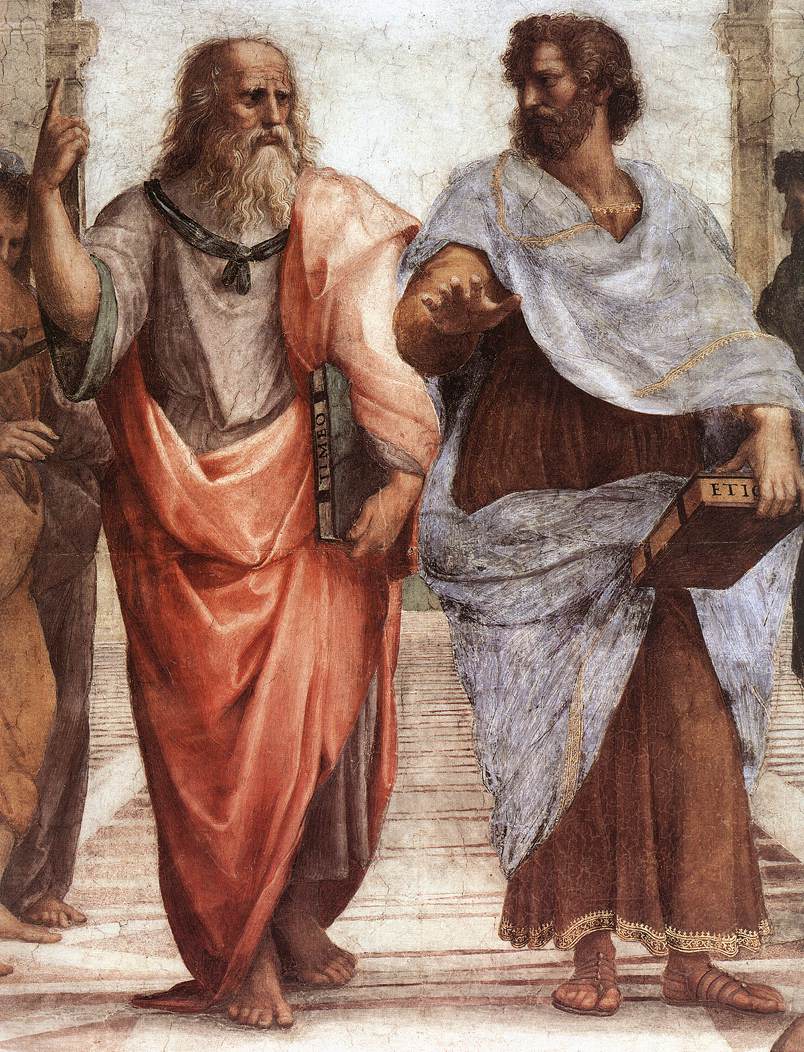
Within two centuries the questions had turned inward. Socrates, who wrote nothing, made philosophy a practice of cross-examination aimed at living well. His student Plato built the first great system around unchanging Forms, and Plato's student Aristotle mapped nearly every field of knowledge — logic, biology, ethics, politics, poetics — with a thoroughness no single thinker has matched since.