Indian thinkers, medieval: Yixuan to Gorampa
- 1
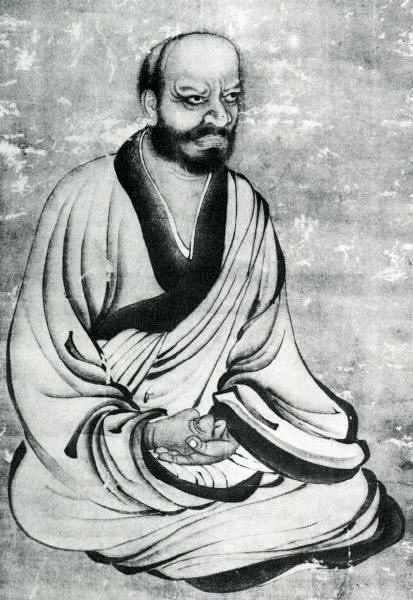 PhilosopherIndian850 – 866
Linji Yixuan
Linji Yixuan was a Tang dynasty Chinese monk and teacher of the Hongzhou school of Chinese Chan (Zen). Linji was the leading figure of Chan Buddhism in the Tang era, and the Recorded Sayings of Linji (Linji yulu), which contains his teachings, is seen as a major Chan (Zen) text which exemplifies the iconoclastic and an
Read the full pageLinji Yixuan (traditional Chinese: 臨濟義玄; simplified Chinese: 临济义玄; pinyin: Línjì Yìxuán; Wade–Giles: Lin-chi I-hsüan; Japanese: 臨済義玄 Rinzai Gigen; died 866 CE) was a Tang dynasty (618-907) Chinese monk and teacher of the Hongzhou school of Chinese Chan (Zen). Linji was the leading figure of Chan Buddhism in the Tang era, and the Recorded Sayings of Linji (Linji yulu), which contains his teachings, is seen as a major Chan (Zen) text which exemplifies the iconoclastic and antinomian spirit of Chan. He is also known by the posthumous title Huizhao Chanshi (慧照禪師, "Meditation Master of Illuminating Wisdom").
Linji was a student of Huangbo Xiyun and is also considered to be the founder of the influential Linji school of Chan. This school actually developed in the Song dynasty (960-1279) among descendants of Linji, who created various mythic stories about Linji in the process of founding their new school of Zen. Today he is seen as the founder of the various Linji regional traditions, including the Japanese Rinzai school, the contemporary Korean Seon schools (all which consider themselves to be of the "Imjae" line, i.e. Linji) and the Lâm Tế school of Vietnamese Zen.
- 2
 PhilosopherIndian901 – 1000
Matsyendranath
Matsyendranātha, also known as Matsyendra, Macchindranāth, Mīnanātha and Minapa (fl. early 10th century) was a saint and yogi in a number of Buddhist and Hindu traditions. He is considered the revivalist of hatha yoga as well as the author of some of its earliest texts.
Read the full pageMatsyendranātha, also known as Matsyendra, Macchindranāth, Mīnanātha and Minapa (fl. early 10th century) was a saint and yogi in a number of Buddhist and Hindu traditions. He is considered the revivalist of hatha yoga as well as the author of some of its earliest texts. He is also seen as the founder of the natha sampradaya, having received the teachings from Shiva. He is associated with Kaula Shaivism. He is also one of the eighty-four mahasiddhas and considered the guru of Gorakshanath, another known figure in early hatha yoga. He is revered by both Hindus and Buddhists and is sometimes regarded as an incarnation of Avalokiteśvara.
In the Siddhar tradition of Tamil Nadu, Matsyendranatha is revered as one of the 18 Siddhars of yore, and is also known as Machamuni. The Kasi Viswanathar Temple in Thiruparankundram, Madurai, Tamil Nadu is home to his Jiva Samadhi. In Nepal, Matsyendranatha is a highly revered deity, and the largest chariot festival in the world is dedicated to him in the valley of Kathmandu as a Buddhist-Hindu syncretic tradition.
- 3
 PhilosopherIndian982 – 1054
Atiśa
Bengali master who revived Buddhism in Tibet with the Lamp for the Path to Enlightenment.
- ◆Stages of the path (lamrim)
- ◆Mind training (lojong)
Read the full pageAtiśa Dīpaṃkara Śrījñāna (c. 982–1054 CE) was a Buddhist religious teacher and leader from Bengal. He is generally associated with his body of work authored at Vikramaśīla Monastery in Bihar. He was a major figure in the spread of 11th-century Mahayana and Vajrayana Buddhism in Asia and travelled to Sumatra and Tibet. Atiśa, along with his chief disciple Dromtön, is regarded as the founder of the Kadam school, one of the New Translation schools of Tibetan Buddhism. In the 14th century, the Kadam school was supplanted by the Gelug tradition, which adopted its teachings and absorbed its monasteries.
Atiśa was born as Candragarbha in c. 982 CE as the second of three sons to a ruling family in Bengal most probably in the village of Vajrayogini in Vikrampura, the latter was one of the capitals of the Pala Empire. His father was a king known as Kalyānaśrī and his mother was Prabhavati Sri. The early part of his life was typical of noblemen of the period, and he was trained in various fields, including art.
- 4
 PhilosopherIndian1052 – 1135
Milarepa
Tibet's most beloved yogi-poet, who turned from sorcery to enlightenment in a single lifetime.
Read the full pageJetsun Milarepa (Tibetan: རྗེ་བཙུན་མི་ལ་རས་པ་, Wylie: rje btsun mi la ras pa; 1052-1135), originally named Topaga, was a Tibetan siddha, who was famously known as a killer when he was a young man, before turning to Buddhism and becoming a highly accomplished Buddhist disciple. He is generally considered one of Tibet's most famous yogis and spiritual poets, whose teachings are known among several schools of Tibetan Buddhism, particularly the Kagyu. He was a student of Marpa Lotsawa, and a major figure in the history of the Kagyu school of Tibetan Buddhism. He is also famous for his songs of realization (compiled as the The Hundred Thousand Songs of Milarepa by Tsangnyön Heruka), and the feat of climbing Mount Kailash.
Milarepa's life-story is famous in Tibetan culture, and retold many times. The best-known biography, The Life of Milarepa, written by Tsangnyön Heruka (1452–1507) in the fifteenth century and drawing on older biographies, is still very popular. Most of the present-day stories on Milarepa come from this single source, with oral lineage predominating as well as relics including his bearskin coat. While "very little [is known] about him as a historical person at all," Milarepa is venerated by all Tibetan schools "as an exemplar of religious dedication and mastery." His life story established the lineage of the Kagyu sect and its key figures.
- 5
 PhilosopherIndian1079 – 1153
Gampopa
Milarepa's student, who wrote the Jewel Ornament of Liberation and founded the Kagyu monastic order.
- ◆Dagpo Kagyu
- ◆Daklha Gampo monastery
- ◆Mahamudra
Read the full pageGampopa Sönam Rinchen (Tibetan: སྒམ་པོ་པ་བསོད་ནམས་རིན་ཆེན་, Wylie: sgam po pa bsod nams rin chen, 1079–1153) was the main student of Milarepa, and a Tibetan Buddhist master who codified his own master's ascetic teachings, which form the foundation of the Kagyu educational tradition. Gampopa was also a doctor and tantric master. He authored the first Lamrim text, Jewel Ornament of Liberation, and founded the Dagpo Kagyu school. He is also known as Dagpopa, and by the titles Dakpo Lharjé "the physician from Dakpo" (Tibetan: དྭགས་པོ་ལྷ་རྗེ་, Wylie: dwags po lha rje) and Daö Zhönnu, "Candraprabhakumara" (Tibetan: ཟླ་འོད་ཞོན་ནུ་, Wylie: zla 'od gzhon nu).
Gampopa was born in the Nyal (or Nyel) district, Central Tibet and from an early age was a student of medicine in the Indian, Chinese and Tibetan medical traditions. Later in his life he moved to the region of Dakpo (dwags po) in southern Tibet and hence was also called Dakpopa (dwags po pa), the man from Dakpo. The region is also near Gampo Hills, hence his other name, Gampopa. In his youth Gampopa studied under the Nyingma lama Barey as well as under the Kadampa teacher Geshe Yontan Drag. He married a daughter of a man named Chim Jose Darma Wo (mchims jo sras dar ma 'od) and had a child, but they both died, causing him to renounce the householder's life. In 1104, at the age of twenty-five he took ordination, either in Dakpo or in Penyul, at Gyachak Ri monastery (phan yul rgya lcags ri), receiving the name Sönam Rinchen (bsod nams rin chen)." After becoming a monk in the Kadampa lineage under Geshe Lodan Sherab and focused on studying the Kadampa teachings, in his thirties he sought out and became the foremost student of the yogi Milarepa. Milarepa instructed him in the practice of Vajravārahī, tummo (gtum mo) and Mahāmudrā.
- 6PhilosopherIndian1200 – 1200
Sriharsha
Shri-harsha (IAST: Śrīharṣa) was a 12th century CE Indian philosopher and poet. Śrīharṣa works discuss various themes in Indian Philosophy, such as pramana. He has been often interpreted as promoting Advaita Vedānta in his Sweets of Refutation (Khaṇḍanakhaṇḍanakhādya), however, this interpretation remains controversial
Read the full pageShri-harsha (IAST: Śrīharṣa) was a 12th century CE Indian philosopher and poet. Śrīharṣa works discuss various themes in Indian Philosophy, such as pramana. He has been often interpreted as promoting Advaita Vedānta in his Sweets of Refutation (Khaṇḍanakhaṇḍanakhādya), however, this interpretation remains controversial among modern scholars. Śrīharṣa's thought was influential for both Nyāya-Vaiśeṣika thinkers and also for the Advaita Vedānta tradition.
Śrīharṣa was born to a Kanyakubja Brahmin Śrīhira and Mamalladevī. His father, Śrīhira, was a poet in the court of the Gahadavala king Vijayachandra. His father was also a guide of common people towards god with vedas, Bhagavad Gita's thoughts etc. His father asked Harsha at the time of his death to study well and become a pandit. He told him to use his shiksha (education) towards making life of common people divinity oriented and better. Also, he told Śrīharṣa to take thoughts of Bhagavad Gita to every one.
- 7
 PhilosopherIndian1400 – 1470
Ramananda
Jagadguru Swami Ramananda (IAST: Rāmānanda) or Ramanandacharya was an Indian 14th-century Hindu Vaishnava devotional poet saint, who lived in the Gangetic basin of northern India. The Hindu tradition recognizes him as the founder of the Ramanandi Sampradaya, the largest monastic Hindu renunciant community in modern tim
- ◆Bairagi
- ◆Ramanandi Sampradaya
- ◆Bhakti movement
Read the full pageJagadguru Swami Ramananda (IAST: Rāmānanda) or Ramanandacharya was an Indian 14th-century Hindu Vaishnava devotional poet saint, who lived in the Gangetic basin of northern India. The Hindu tradition recognizes him as the founder of the Ramanandi Sampradaya, the largest monastic Hindu renunciant community in modern times.
Born in a Kanyakubja Brahmin family, Ramananda for the most part of his life lived in the holy city of Varanasi. His date of birth is 30 December, while his date of death is uncertain, but historical evidence suggests he was one of the earliest saints and a pioneering figure of the Bhakti movement as it rapidly grew in North India, sometime between the 14th and mid-15th century during its Islamic rule period. Tradition asserts that Ramananda developed his philosophy and devotional themes inspired by the south Indian Vedanta philosopher Ramanuja, however, evidence also suggests that Ramananda was influenced by Nathpanthi ascetics of the Yoga school of Hindu philosophy.
- 8
 PhilosopherIndian1429 – 1489
Gorampa
Gorampa Sonam Senge was an important philosopher in the Sakya school of Tibetan Buddhism. He was the author of a vast collection of commentaries on sutra and tantra whose work was influential throughout Tibetan Buddhism.
Read the full pageGorampa Sonam Senge (Wylie: go rams pa bsod nams seng ge, 1429–1489) was an important philosopher in the Sakya school of Tibetan Buddhism. He was the author of a vast collection of commentaries on sutra and tantra whose work was influential throughout Tibetan Buddhism. Gorampa is particularly known for his writings on madhyamaka philosophy, especially his critique of the madhyamaka views of Tsongkhapa and Dolpopa. Gorampa defended the mainly anti-realist interpretation of madhyamaka held by the Sakya school (which sees conventional truth as a false illusion).
Gorampa was the student of Rongtön (Rongtön Shéja Künrig, Wylie: rong ston shes bya kun rig), Byams chen rab ’byams pa Sangs rgyas ’phel (1411–85), Ngor chen Kun dga’ bzang po (1382–1456), Gung ru Shes rab bzang po (1411–75). He founded the Thuptén Namgyél Monastery in Tanag (Wylie: rta nag thub bstan rnam rgyal gling), which is just north of Shigatse.