Modern European thinkers, 19th century: Odoevsky to Grassmann
- 1
 PhilosopherModern European1803 – 1869
Vladimir Odoevsky
Prince Vladimir Fyodorovich Odoyevsky was a Russian philosopher, writer, music critic, philanthropist, and pedagogue. He became known as the 'Russian Hoffmann' and even the 'Russian Faust' on account of his keen interest in phantasmagoric tales and musical criticism.
Read the full pagePrince Vladimir Fyodorovich Odoyevsky (Russian: Влади́мир Фёдорович Одо́евский, [ɐˈdojɪfskʲɪj]; 11 August [O.S. 30 July] 1804 – 11 March [O.S. 27 February] 1869) was a Russian philosopher, writer, music critic, philanthropist, and pedagogue. He became known as the 'Russian Hoffmann' and even the 'Russian Faust' on account of his keen interest in phantasmagoric tales and musical criticism.
The last member of the princely House of Odoyev, he was genealogically the most senior member of the House of Rurik. He was born to Prince Fyodor Sergeevich Odoyevsky (1771–1808), a state councillor (statsky sovietnik). His father began his career as an adjutant to Prince Grigory Potyomkin; in 1798 he entered civil service as the director of the Moscow Assignat Bank. According to one version, his mother, Ekaterina Alekseevna Filippova, was a serf; however, this version has since been disproven, and it was established that his mother was the daughter of a praporshchik. His widow, Avdotya Petrovna, owned a house on Prechistenka Street in Moscow, had several servants, and possessed a modest fortune inherited from her husband. His mother was a well‑educated young woman; she could speak French and play the piano. However, the Odoyevsky family regarded this marriage as a mésalliance. After his father's death in 1808, his mother remarried twice. Part of his childhood was spent with his grandfather, Colonel Prince Sergey Ivanovich Odoyevsky, but upon his grandfather's death, his estate in Kostroma Governorate fell into the hands of an acquaintance of Vladimir's maternal grandmother – the widow of a general, Agrafena Glazova – who took over the properties. In 1812, his mother's house in Moscow was burned down in a fire, and he and his mother lived on the estate of Drokovo in Ryazan Governorate, which she had taken over. While her son was away studying at a boarding school, in 1818–1819 she married Sub‑Poruchik Pavel Sechenov, and having given custody of her son to Agrafena Glazova, she settled at Drokovo with her new husband. P. Sechenov turned out to be an abusive husband. Vladimir eventually incurred considerable debts to Glazova, and after settling his liabilities, he moved to his grandfather's estate, being almost completely penniless.
- 2
 PhilosopherModern European1804 – 1881
Matthias Jacob Schleiden
Matthias Jakob Schleiden was a German botanist and co-founder of cell theory, along with Theodor Schwann and Rudolf Virchow. He published some poems and non-scientific work under the pseudonym Ernst.
- ◆Cell theory
- ◆cytoblast
Read the full pageMatthias Jakob Schleiden (German: [maˈtiːas ˈjaːkɔp ˈʃlaɪdn̩]; 5 April 1804 – 23 June 1881) was a German botanist and co-founder of cell theory, along with Theodor Schwann and Rudolf Virchow. He published some poems and non-scientific work under the pseudonym Ernst.
Matthias Jakob Schleiden was born in Hamburg. on 5 April 1804. His father was the municipal physician of Hamburg. Schleiden pursued legal studies
- 3
 PhilosopherModern European1804 – 1860
Alexei Khomyakov
Aleksey Stepanovich Khomyakov was a Russian theologian, philosopher, poet and amateur artist. He co-founded the Slavophile movement along with Ivan Kireyevsky, and he became one of its most distinguished theoreticians.
Read the full pageAleksey Stepanovich Khomyakov (Russian: Алексе́й Степа́нович Хомяко́в; 13 May [O.S. 1 May] 1804 – 5 October [O.S. 23 September] 1860) was a Russian theologian, philosopher, poet and amateur artist. He co-founded the Slavophile movement along with Ivan Kireyevsky, and he became one of its most distinguished theoreticians.
His son Nikolay Khomyakov was a speaker of the State Duma.
- 4
 PhilosopherModern European1805 – 1859
Alexis de Tocqueville
Alexis Charles Henri Clérel, comte de Tocqueville, was a French diplomat, political philosopher and historian. He is best known for his works Democracy in America and The Old Regime and the Revolution.
Read the full pageAlexis Charles Henri Clérel, comte de Tocqueville (29 July 1805 – 16 April 1859), was a French diplomat, political philosopher and historian. He is best known for his works Democracy in America (appearing in two volumes, 1835 and 1840) and The Old Regime and the Revolution (1856). In these, and in reflections on his travels in England and Ireland, he analyzed the living standards and social conditions of individuals as well as their relationship to the market and state in Western societies. Democracy in America was published after Tocqueville's travels in the United States and is today considered an early work of sociology and political science.
Tocqueville was active in French politics, first under the July Monarchy (1830–1848), during which he was considered the parliament's foremost expert on the French colonial project in Algeria, and then, following the 1848 Revolution, in the Second Republic (1849–1851). He retired from political life after Louis Napoléon Bonaparte's 2 December 1851 coup and thereafter began work on The Old Regime and the Revolution. Tocqueville argued the importance of the French Revolution was to continue the process of modernizing and centralizing the French state which had begun under King Louis XIV. He believed the failure of the Revolution came from the inexperience of the deputies who were too wedded to abstract Enlightenment ideals.
- 5
 PhilosopherModern European1805 – 1872
Giuseppe Mazzini
Giuseppe Mazzini was an Italian politician, lawyer, journalist, philosopher, and political activist who worked for the unification of Italy (Risorgimento) and was a major leader of the Italian revolutionary movement. His efforts helped bring about the independent and unified Italy in place of the several separate state
Read the full pageGiuseppe Mazzini (22 June 1805 – 10 March 1872) was an Italian politician, lawyer, journalist, philosopher, and political activist who worked for the unification of Italy (Risorgimento) and was a major leader of the Italian revolutionary movement. His efforts helped bring about the independent and unified Italy in place of the several separate states, many dominated by foreign powers, that existed until the 19th century. An Italian nationalist in the historical radical tradition and a proponent of a republicanism of social-democratic inspiration, Mazzini "helped define the European movement for popular democracy in a republican state." He is widely known as the "Prophet of Italian Nationalism".
Mazzini's thoughts influenced the Italian and European republican movements, the Constitution of Italy, and Europeanism, as well as later political leaders including Benito Mussolini, who was later the Fascist leader of Italy, former U.S. President Woodrow Wilson, former U.K. Prime Minister David Lloyd George, Indian independence movement figures such as Subhas Chandra Bose, Mahatma Gandhi, Jawaharlal Nehru, and Vinayak Damodar Savarkar, the founder of Hindutva. His ideas also influenced Sun Yat-sen, former President of the Provisional Government of the Republic of China (1912–1913), and founder of the Three Principles of the People (also known as Tridemism). In addition, Giuseppe Garibaldi, one of his most devoted followers, was deeply inspired by Mazzini's revolutionary vision and later played a decisive role in the Risorgimento through his military campaigns.
- 6
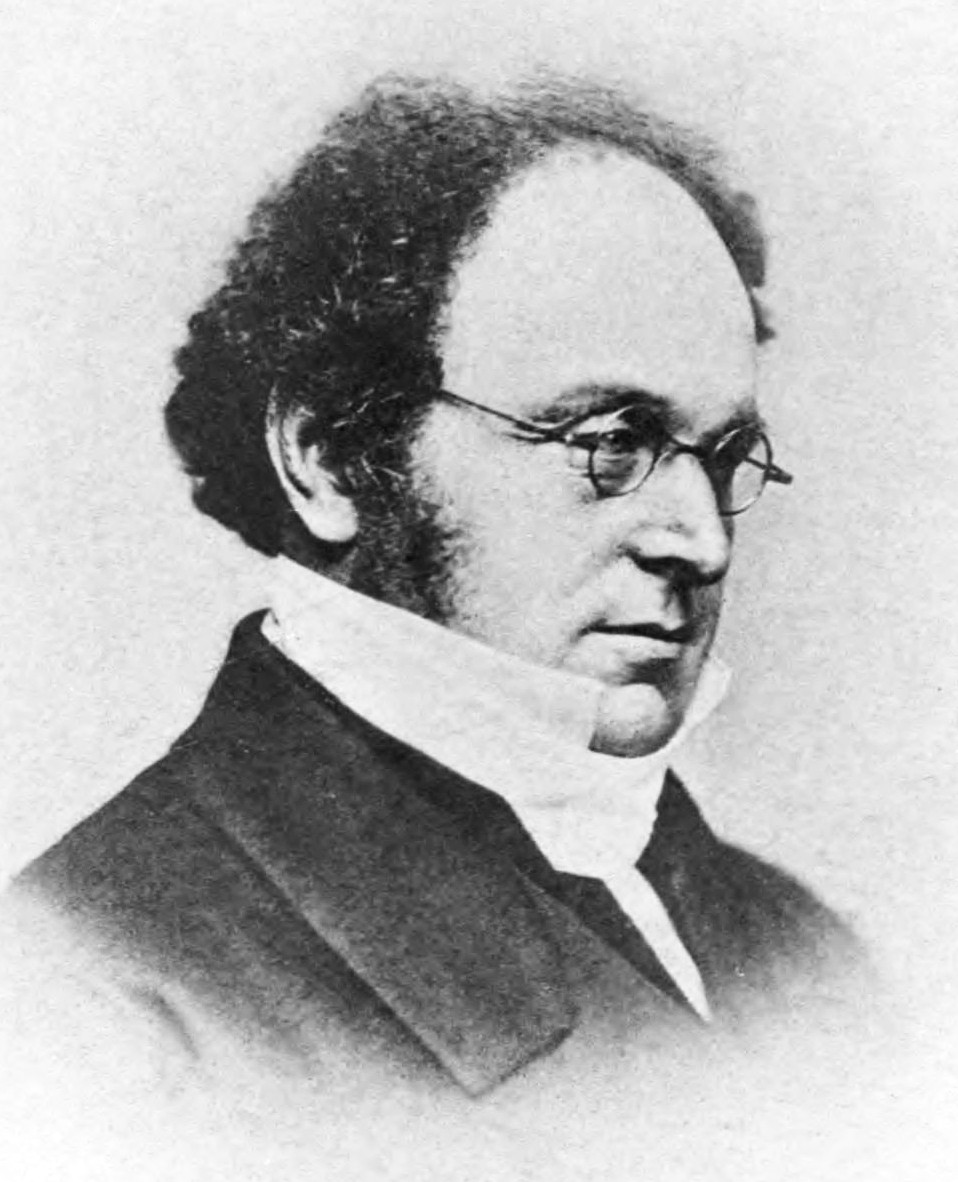 PhilosopherModern European1806 – 1871
Augustus De Morgan
Augustus De Morgan was a British mathematician and logician. He is best known for De Morgan's laws relating logical conjunction, disjunction, and negation, and for coining the term "mathematical induction", the underlying principles of which he formalized.
- ◆De Morgan's laws
- ◆De Morgan algebra
- ◆De Morgan hierarchy
- ◆Relation algebra
- ◆Universal algebra
Read the full pageAugustus De Morgan (27 June 1806 – 18 March 1871) was a British mathematician and logician. He is best known for De Morgan's laws relating logical conjunction, disjunction, and negation, and for coining the term "mathematical induction", the underlying principles of which he formalized. De Morgan's contributions to logic are heavily used in many branches of mathematics, including set theory and probability theory, as well as other related fields such as computer science.
Augustus De Morgan was born in Madurai, in the Carnatic region of India, in 1806. His father was Lieutenant-Colonel John De Morgan (1772–1816), who held various appointments in the service of the East India Company, and his mother, Elizabeth (née Dodson, 1776–1856), was the granddaughter of James Dodson, who computed a table of anti-logarithms (inverse logarithms). Augustus De Morgan became blind in one eye within a few months of his birth. His family moved to England when Augustus was seven months old. As his father and grandfather had both been born in India, De Morgan used to say that he was neither English nor Scottish nor Irish, but a Briton "unattached," using the technical term applied to an undergraduate of Oxford or Cambridge who was not a member of any one of the colleges.
- 7
 PhilosopherModern European1807 – 1858
Harriet Taylor Mill
Harriet Taylor Mill was an English writer, philosopher, and women's rights advocate. Her extant corpus of writing can be found in The Complete Works of Harriet Taylor Mill.
Read the full pageHarriet Taylor Mill (born Harriet Hardy; 8 October 1807 – 3 November 1858) was an English writer, philosopher, and women's rights advocate. Her extant corpus of writing can be found in The Complete Works of Harriet Taylor Mill. Several pieces can also be found in The Collected Works of John Stuart Mill, especially volume XXI.
Harriet Taylor Mill was born Harriet Hardy in 1807 in Walworth, south London, to parents Harriet and Thomas Hardy, a surgeon. She was educated at home and expressed an early interest in writing poetry as well as radical and "free thinking" ideas, leading to her association with the congregation of Unitarian "free thinker" Rev. William Fox.
- 8
 PhilosopherModern European1807 – 1887
Friedrich Theodor Vischer
Friedrich Theodor Vischer was a German novelist, poet, playwright, and writer on the philosophy of art. Today, he is mainly remembered as the author of the novel Auch Einer, in which he developed the concept of Die Tücke des Objekts (the spite of objects), a comic theory that inanimate objects conspire against humans.
Read the full pageFriedrich Theodor Vischer (German: [ˈfɪʃɐ]; 30 June 1807 – 14 September 1887) was a German novelist, poet, playwright, and writer on the philosophy of art. Today, he is mainly remembered as the author of the novel Auch Einer, in which he developed the concept of Die Tücke des Objekts (the spite of objects), a comic theory that inanimate objects conspire against humans.
Born at Ludwigsburg as the son of a clergyman, Vischer was educated at Tübinger Stift, and began life in his father's profession. He became Privatdozent in aesthetics and German literature at his old university in 1835, was advanced to extraordinary professor two years later, and was appointed to full professor in 1844. Due to his outspoken inaugural address he was suspended for two years by the Württemberg government. In this enforced leisure he wrote the first two volumes of his Aesthetik, oder Wissenschaft des Schönen (1846), the fourth and last volume of which did not appear till 1857.
- 9
 PhilosopherModern European1808 – 1874
David Strauss
David Friedrich Strauss was a German liberal Protestant theologian and writer who influenced Christian Europe with his portrayal of the "historical Jesus", whose divine nature he explored via myth. Strauss argued that many Gospel narratives are myths, where "myth" means not mere falsity but the imaginative expression o
- ◆Historical Jesus
Read the full pageDavid Friedrich Strauss (German: Strauß; 27 January 1808 – 8 February 1874) was a German liberal Protestant theologian and writer who influenced Christian Europe with his portrayal of the "historical Jesus", whose divine nature he explored via myth.
Strauss argued that many Gospel narratives are myths, where "myth" means not mere falsity but the imaginative expression of religious truth; however, he rejected orthodox supernatural claims about Jesus and did not simply affirm Jesus' divine nature in the traditional doctrinal sense.
- 10
 PhilosopherModern European1809 – 1865
Pierre-Joseph Proudhon
Pierre-Joseph Proudhon was a French anarchist, socialist, philosopher, and economist who founded mutualist philosophy and is considered by many to be the "father of anarchism". He was the first person known to self-identify as an anarchist, and is widely regarded as one of anarchism's most influential theorists.
- ◆Property is theft
- ◆Mutualism
- ◆Dual power
Read the full pagePierre-Joseph Proudhon (, also US: ; French: [pjɛʁ ʒozɛf pʁudɔ̃]; 15 January 1809 – 19 January 1865) was a French anarchist, socialist, philosopher, and economist who founded mutualist philosophy and is considered by many to be the "father of anarchism". He was the first person known to self-identify as an anarchist, and is widely regarded as one of anarchism's most influential theorists. Proudhon became a member of the French Parliament after the Revolution of 1848, whereafter he referred to himself as a federalist. Proudhon described the liberty he pursued as the synthesis of community and individualism. Some consider his mutualism to be part of individualist anarchism while others regard it to be part of social anarchism.
Proudhon, who was born in Besançon, was a printer who taught himself Latin in order to better print books in the language. His best-known assertion is that "property is theft!", contained in his first major work, What Is Property? Or, an Inquiry into the Principle of Right and Government (Qu'est-ce que la propriété? Recherche sur le principe du droit et du gouvernement), published in 1840. The book's publication attracted the attention of the French authorities. It also attracted the scrutiny of Karl Marx, who started a correspondence with its author. The two influenced each other and they met in Paris while Marx was exiled there. Their friendship finally ended when Marx responded to Proudhon's The System of Economic Contradictions, or The Philosophy of Poverty with the provocatively titled The Poverty of Philosophy. The dispute became one of the sources of the split between the anarchist and Marxist wings of the International Working Men's Association. Some, such as Edmund Wilson, have contended that Marx's attack on Proudhon had its origin in the latter's defense of Karl Grün, whom Marx bitterly disliked, but who had been preparing translations of Proudhon's work.
- 11
 PhilosopherModern European1809 – 1882
Bruno Bauer
Bruno Bauer was a German philosopher, theologian, and historian. Initially a student of Georg Wilhelm Friedrich Hegel, he became a radical rationalist critic of the Bible and Christianity, and a prominent member of the Young Hegelians.
- ◆Gospel
- ◆republicanism
Read the full pageBruno Bauer (; German: [baʊɐ]; 6 September 1809 – 13 April 1882) was a German philosopher, theologian, and historian. Initially a student of Georg Wilhelm Friedrich Hegel, he became a radical rationalist critic of the Bible and Christianity, and a prominent member of the Young Hegelians. Bauer was a central figure in the intellectual circles of the Vormärz, the period preceding the Revolutions of 1848, and his philosophical work was a major influence on, and target of critique for, Karl Marx and Friedrich Engels, with whom he had a close but tumultuous relationship.
Starting as a right-wing Hegelian, Bauer shifted to the left by 1839, developing a radical critique of religion and the state. He argued that the Christian gospels were not historical records but literary works of the human self-consciousness. His most significant work of this period, The Trumpet of the Last Judgement over Hegel the Atheist and Antichrist (1841), presented Hegel's philosophy as a revolutionary atheism that called for the overthrow of all existing religious and political institutions. Bauer's political thought was a form of republicanism based on the concept of "infinite self-consciousness," an ethical idealism that advocated for the constant transformation of society in pursuit of rational freedom.
- 12
 PhilosopherModern European1809 – 1877
Hermann Grassmann
Hermann Günther Grassmann was a German polymath known in his day as a linguist and now also as a mathematician. He was also a physicist, general scholar, and publisher.
- ◆Bivector
- ◆Color space
- ◆Grassmannian
- ◆Grassmann algebra
- ◆Grassmann number
- ◆Grassmann's law
Read the full pageHermann Günther Grassmann was a German polymath known in his day as a linguist and now also as a mathematician. He was also a physicist, general scholar, and publisher. His mathematical work was little noted until he was in his sixties. His work preceded and exceeded the concept which is now known as a vector space. He introduced the Grassmannian, the space which parameterizes all k-dimensional linear subspaces of an n-dimensional vector space V. In linguistics he helped free language history and structure from each other.
Hermann Grassmann was the third of 12 children of Johanne Luise Friederike Medenwald and Justus Günter Grassmann, an ordained minister who taught mathematics and physics at the Stettin Gymnasium, where Hermann was educated. His brother Robert was also a mathematician.