Modern European thinkers, 19th century: Bolzano to Babbage
- 1
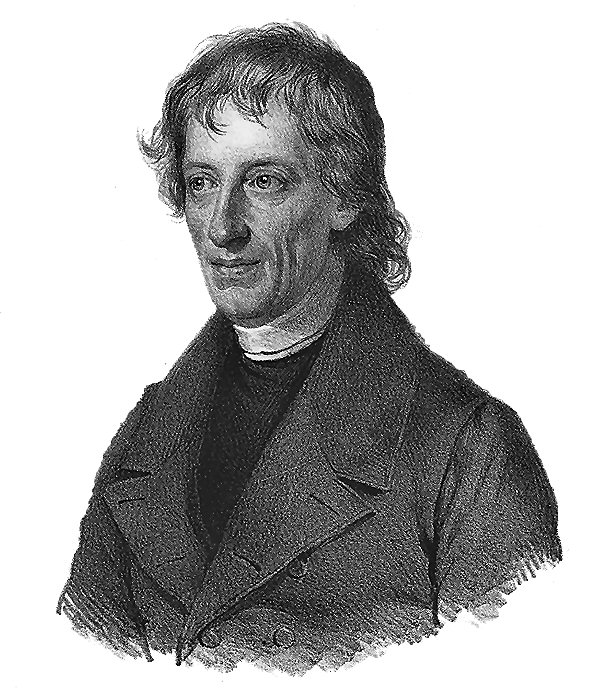 PhilosopherModern European1781 – 1848
Bernard Bolzano
Bernard Bolzano was a Bohemian mathematician, logician, philosopher, theologian and Catholic priest of Italian extraction, also known for his liberal views. Bolzano wrote in German, his native language.
- ◆Bolzano's theorem
- ◆analytic proof
- ◆intermediate value theorem
- ◆Bolzano–Weierstrass theorem
- ◆(ε, δ)-definition of limit
- ◆Least-upper-bound property
Read the full pageBernard Bolzano (UK: , US: ; German: [bɔlˈtsaːno]; Italian: [bolˈtsaːno]; born Bernardus Placidus Johann Nepomuk Bolzano; 5 October 1781 – 18 December 1848) was a Bohemian mathematician, logician, philosopher, theologian and Catholic priest of Italian extraction, also known for his liberal views.
Bolzano wrote in German, his native language. For the most part, his work came to prominence posthumously.
- 2
 PhilosopherModern European1782 – 1854
Félicité de La Mennais
Félicité Robert de La Mennais was a French Catholic priest, philosopher and political theorist. He was one of the most influential intellectuals of Restoration France.
Read the full pageFélicité Robert de La Mennais (or Lamennais, French: [lamnɛ]; 19 June 1782 – 27 February 1854) was a French Catholic priest, philosopher and political theorist. He was one of the most influential intellectuals of Restoration France. Lamennais is also considered the forerunner of both liberal Catholicism and Modernism.
His opinions on matters of religion and government changed dramatically over the course of his life. He initially held rationalistic views, but in part due to the influence of his elder brother, Jean-Marie, came to see religion as an antidote for the anarchy and tyranny unleashed by revolution. He derided Napoleon, in part because of the Organic Articles, in which France acting unilaterally amended the Concordat of 1801 between France and the papacy. Lamennais vocally assailed both Gallicanism and Caesaropapism, views that demanded a completely subservient relationship by the Church to the State, and he was for a time a staunch defender of the independence of the Church.
- 3
 PhilosopherModern European1783 – 1872
Nikolaj Frederik Severin Grundtvig
Nikolaj Frederik Severin Grundtvig, most often referred to as N. F.
Read the full pageNikolaj Frederik Severin Grundtvig (Danish: [ˈne̝kolɑjˀ ˈfʁeðˀʁek ˈse̝vəʁiˀn ˈkʁɔntviˀ, - ˈfʁæðˀʁæk -]; 8 September 1783 – 2 September 1872), most often referred to as N. F. S. Grundtvig, was a Danish pastor, author, poet, philosopher, historian, teacher and politician. He was one of the most influential people in Danish history, as his philosophy gave rise to a new form of nationalism in the last half of the 19th century. It was steeped in the national literature and supported by deep spirituality.
Grundtvig holds a unique position in the cultural history of his country. Grundtvig and his followers are credited with being very influential in the formulation of modern Danish national consciousness. He was active during the Danish Golden Age, but his style of writing and fields of reference are not immediately accessible to a foreigner, thus his international importance does not match that of his contemporaries Hans Christian Andersen and Søren Kierkegaard.
- 4
 PhilosopherModern European1783 – 1847
Erik Gustaf Geijer
Erik Gustaf Geijer was a Swedish writer, historian, poet, romantic critic of political economy, philosopher, and composer. His writings served to promote Swedish National Romanticism.
Read the full pageErik Gustaf Geijer (12 January 1783 – 23 April 1847) was a Swedish writer, historian, poet, romantic critic of political economy, philosopher, and composer. His writings served to promote Swedish National Romanticism. He was an influential advocate of conservatism, but switched to liberalism later in life.
Geijer was born at Geijersgården, his family's estate in Ransäter, Värmland. He was educated at the gymnasium of Karlstad and then attended the University of Uppsala, where he earned his master's degree in 1806. In 1803 he had competed successfully for an historical prize offered by the Academy of Sciences at Stockholm. In 1809, he traveled in England. The year following, he became a lecturer in history at Uppsala, and in 1815 assistant to Eric Michael Fant. Succeeding Fant, Geijer was a professor of history from 1817 at Uppsala University where a statue now commemorates him. He was rector of Uppsala University during the years 1822, 1830, 1836 and 1843–1844. As a representative of the university, he was a member of the Church of Sweden clergy in the Riksdag of the Estates in 1828–1830 and 1840–1841. He was a member of the Swedish Academy (on seat 14) from 1824. He was a member of the education committee from 1825 to 1828. In 1830 he joined Pro Fide et Christianismo, a Christian education society. In 1835, he became a member of the Royal Swedish Academy of Sciences.
- 5
 PhilosopherModern European1787 – 1863
Richard Whately
Richard Whately was an English academic, rhetorician, logician, philosopher, economist, and theologian who also served as a reforming Church of Ireland Archbishop of Dublin. He was a leading Broad Churchman, a prolific and combative author over a wide range of topics, a flamboyant character, and one of the first review
Read the full pageRichard Whately (1 February 1787 – 8 October 1863) was an English academic, rhetorician, logician, philosopher, economist, and theologian who also served as a reforming Church of Ireland Archbishop of Dublin. He was a leading Broad Churchman, a prolific and combative author over a wide range of topics, a flamboyant character, and one of the first reviewers to recognise the talents of Jane Austen.
Whately was born in London, the son of the Rev. Dr. Joseph Whately (1730–1797). He was educated at a private school near Bristol, and at Oriel College, Oxford, from 1805. He obtained a B.A. in 1808, with double second-class honours, and the prize for the English essay in 1810; in 1811, he was elected Fellow of Oriel, and in 1814 took holy orders. After graduation he acted as a private tutor, in particular to Nassau William Senior who became a close friend, and to Samuel Hinds.
- 6
 PhilosopherModern European1788 – 1860
Arthur Schopenhauer
Pessimist who saw the world as blind Will and found relief in art, compassion and Indian philosophy.
- ◆Animal ethics
- ◆Anthropic principle
- ◆Criticism of religion
- ◆German idealism
- ◆The World as Will and Representation
- ◆Fourfold root of the principle of sufficient reason
Read the full pageArthur Schopenhauer (22 February 1788 – 21 September 1860), also known as the "Philosopher of Pessimism", was a German philosopher and writer. He is known for his 1818 work The World as Will and Representation (expanded in 1844), which characterizes the phenomenal world as the manifestation of a blind and irrational noumenal will. Building on the transcendental idealism of Immanuel Kant, Schopenhauer developed an atheistic, metaphysical and ethical system that rejected the contemporaneous ideas of German idealism.
Schopenhauer was among the first philosophers in the Western tradition to share and affirm significant tenets of Indian philosophy, such as asceticism, denial of the self, and the notion of the world-as-appearance. His work has been described as an exemplary manifestation of philosophical pessimism. Though his work failed to garner substantial attention during his lifetime, he had a posthumous impact across various disciplines, including philosophy, literature, and science. His writing on aesthetics, morality, and psychology has influenced many thinkers and artists.
- 7
 PhilosopherModern European1788 – 1856
Étienne Cabet
Étienne Cabet was a philosopher and utopian socialist who founded the Icarian movement. Cabet became the most popular socialist advocate of his day, with a special appeal to artisans who were being undercut by factories.
- ◆Icarian movement
Read the full pageÉtienne Cabet (French: [etjɛn kabɛ]; January 1, 1788 – November 9, 1856) was a philosopher and utopian socialist who founded the Icarian movement. Cabet became the most popular socialist advocate of his day, with a special appeal to artisans who were being undercut by factories.
Cabet published Voyage en Icarie in French in 1839 (and in English in 1840 as Travels in Icaria), in which he proposed replacing capitalist production with workers' cooperatives. Recurrent problems with French officials (a treason conviction in 1834 resulted in five years' exile in England), led him to emigrate to the United States in 1848. Cabet founded utopian communities in Texas and Illinois, but was again undercut, this time by recurring feuds with his followers.
- 8
 PhilosopherModern European1788 – 1869
Carl Reichenbach
Karl Ludwig Freiherr von Reichenbach, known as Carl Reichenbach, was a German chemist, geologist, metallurgist, naturalist, industrialist and philosopher, and a member of the Prussian Academy of Sciences. He is best known for his discoveries of several chemical products of economic importance, extracted from tar, such
- ◆Odic force
Read the full pageKarl Ludwig Freiherr von Reichenbach (German pronunciation: [ˈkaʁl ˈluːtvɪç ˈfʁaɪhɛʁ fɔn ˈʁaɪçn̩bax]; February 12, 1788 – January 19, 1869), known as Carl Reichenbach, was a German chemist, geologist, metallurgist, naturalist, industrialist and philosopher, and a member of the Prussian Academy of Sciences. He is best known for his discoveries of several chemical products of economic importance, extracted from tar, such as eupione, waxy paraffin, pittacal (the first synthetic dye) and phenol (an antiseptic). He also dedicated his last years to researching an unproved field of energy combining electricity, magnetism and heat, emanating from all living things, which he called the Odic force.
Reichenbach was educated at the University of Tübingen, where he obtained the degree of doctor of philosophy. At the age of 16 he conceived the idea of establishing a new German state in one of the South Sea Islands, and for five years he devoted himself to this project.
- 9
 PhilosopherModern European1788 – 1856
Sir William Hamilton, 9th Baronet
Sir William Hamilton, 9th Baronet was a Scottish philosopher. He is often referred to as William Stirling-Hamilton (of Preston), in reference to his mother, Elizabeth Stirling.
- ◆Quantification
- ◆predicate
Read the full pageSir William Hamilton, 9th Baronet (8 March 1788 – 6 May 1856) was a Scottish philosopher. He is often referred to as William Stirling-Hamilton (of Preston), in reference to his mother, Elizabeth Stirling.
Hamilton was born in rooms at the University of Glasgow. He was from an academic family: his father, William Hamilton, had in 1781, on the recommendation of William Hunter, been appointed to succeed his own father, Thomas Hamilton, as Regius Professor of Anatomy, Glasgow; he died in 1790, aged 32. William Hamilton and his younger brother, Thomas Hamilton, were brought up by their mother.
- 10
 PhilosopherModern European1789 – 1869
Carl Gustav Carus
Carl Gustav Carus was a German physiologist and painter, born in Leipzig in a house in the street Ranstädter Steinweg, who played various roles during the Romantic era. A friend of the writer Johann Wolfgang Goethe, he was a many-sided man: a doctor, a naturalist, a scientist, a psychologist, and a landscape painter wh
- ◆Painting
Read the full pageCarl Gustav Carus (3 January 1789 – 28 July 1869) was a German physiologist and painter, born in Leipzig in a house in the street Ranstädter Steinweg, who played various roles during the Romantic era. A friend of the writer Johann Wolfgang Goethe, he was a many-sided man: a doctor, a naturalist, a scientist, a psychologist, and a landscape painter who studied under Caspar David Friedrich.
In 1811 he graduated as a doctor of medicine and a doctor of philosophy. In 1814 he was appointed professor of obstetrics and director of the maternity clinic at the teaching institution for medicine and surgery in Dresden. He wrote on art theory. From 1814 to 1817 he taught himself oil painting working under Caspar David Friedrich, a Dresden landscape painter. Subsequently, he studied under Julius Schnorr von Carolsfeld at the Oeser drawing academy.
- 11
 PhilosopherModern European1790 – 1859
John Austin
John Austin was an English legal theorist who posthumously influenced British and American law with an analytical approach to jurisprudence and a theory of legal positivism. Austin opposed traditional approaches of "natural law", arguing against any need for connections between law and morality.
- ◆natural law
Read the full pageJohn Austin (3 March 1790 – 1 December 1859) was an English legal theorist who posthumously influenced British and American law with an analytical approach to jurisprudence and a theory of legal positivism. Austin opposed traditional approaches of "natural law", arguing against any need for connections between law and morality. Human legal systems, he claimed, can and should be studied in an empirical, value-free way.
Austin was born on 3 March 1790 at Creeting St Mary in today's district of Mid Suffolk, as the eldest son of a well-to-do miller.
- 12
 PhilosopherModern European1791 – 1871
Charles Babbage
Charles Babbage was an English polymath. A mathematician, philosopher, inventor and mechanical engineer, Babbage originated the concept of a digital programmable computer.
- ◆Analytical engine
- ◆Difference engine
Read the full pageCharles Babbage (; 26 December 1791 – 18 October 1871) was an English polymath. A mathematician, philosopher, inventor and mechanical engineer, Babbage originated the concept of a digital programmable computer.
Babbage is considered by some to merit the title of "father of the computer". He is credited with inventing the first mechanical computer, the difference engine, that eventually led to more complex electronic designs, though all the essential ideas of modern computers are to be found in his analytical engine, programmed using a principle openly borrowed from the Jacquard loom. As part of his computer work, he also designed the first computer printers. He had a broad range of interests in addition to his work on computers, covered in his 1832 book Economy of Manufactures and Machinery. He was an important figure in the social scene in London, and is credited with importing the "scientific soirée" from France with his well-attended Saturday evening soirées. His varied work in other fields has led him to be described as "pre-eminent" among the many polymaths of his century.