Rationalism
Reason, not the senses, is the chief source of knowledge; some ideas are innate.
- 1SchoolModern European1630 – 1780
Rationalism
Reason, not the senses, is the chief source of knowledge; some ideas are innate.
- ◆Innate ideas
- ◆Knowledge by deduction from first principles
- ◆Mathematics as model
Read the full pageIn philosophy, rationalism is the epistemological view that "regards reason as the chief source and test of knowledge" or "the position that reason has precedence over other ways of acquiring knowledge", often in contrast to other possible sources of knowledge such as faith, tradition, or sensory experience. More formally, rationalism is defined as a methodology or a theory "in which the criterion of truth is not sensory but intellectual and deductive".
In a major philosophical debate during the Enlightenment, rationalism (sometimes here equated with innatism) was opposed to empiricism. On the one hand, rationalists like René Descartes emphasized that knowledge is primarily innate and the intellect, the inner faculty of the human mind, can therefore directly grasp or derive logical truths; on the other hand, empiricists like John Locke emphasized that knowledge is not primarily innate and is best gained by careful observation of the physical world outside the mind, namely through sensory experiences. Rationalists asserted that certain principles exist in logic, mathematics, ethics, and metaphysics that are so fundamentally true that denying them causes one to fall into contradiction. The rationalists had such a high confidence in reason that empirical proof and physical evidence were regarded as unnecessary to ascertain certain truths – in other words, "there are significant ways in which our concepts and knowledge are gained independently of sense experience".
- 2
 PhilosopherModern European1596 – 1650
René Descartes
The father of modern philosophy: he doubted everything he could and found certainty in "I think, therefore I am".
- ◆Method of doubt
- ◆Cogito ergo sum
- ◆Mind–body dualism
- ◆Clear and distinct ideas
- ◆Analytic geometry
Read the full pageRené Descartes wanted to rebuild knowledge on foundations as certain as mathematics. In the Meditations on First Philosophy (1641) he resolves to doubt everything that can possibly be doubted: the senses sometimes deceive; he might be dreaming; an all-powerful evil demon might deceive him even about arithmetic.
One thing survives the doubt. Even if he is deceived, he must exist to be deceived: cogito, ergo sum — I think, therefore I am. From this foundation Descartes argues that God exists and is no deceiver, so that whatever he perceives "clearly and distinctly" must be true.
- 3
 PhilosopherModern European1612 – 1694
Antoine Arnauld
Antoine Arnauld was a French Catholic theologian, priest, philosopher and mathematician. He was one of the leading intellectuals of the Jansenist group of Port-Royal and had a very thorough knowledge of patristics.
Read the full pageAntoine Arnauld (French: [ɑ̃twan aʁno]; 6 February 1612 – 8 August 1694) was a French Catholic theologian, priest, philosopher and mathematician. He was one of the leading intellectuals of the Jansenist group of Port-Royal and had a very thorough knowledge of patristics. Contemporaries called him le Grand to distinguish him from his father.
Antoine Arnauld was born in Paris to the Arnauld family. The twentieth and youngest child of the original Antoine Arnauld, he was the brother of Angélique Arnauld and Agnès Arnauld. He was originally intended for the bar, but decided instead to study theology at the Sorbonne. Here he was brilliantly successful, and his career was flourishing when he came under the influence of Jean du Vergier de Hauranne, the spiritual director and leader of the convent of Port-Royal, and was drawn in the direction of Jansenism.
- 4
 PhilosopherModern European1638 – 1715
Nicolas Malebranche
Nicolas Malebranche was a French Oratorian Catholic priest and rationalist philosopher. In his works, he sought to synthesise the thought of St.
- ◆St. Augustine
- ◆Descartes
- ◆occasionalism
- ◆ontologism
- ◆theodicy
- ◆vision in God
Read the full pageNicolas Malebranche (6 August 1638 – 13 October 1715) was a French Oratorian Catholic priest and rationalist philosopher. In his works, he sought to synthesise the thought of St. Augustine and Descartes, in order to demonstrate the active role of God in every aspect of the world. Malebranche is best known for his doctrines of vision in God, occasionalism and ontologism.
Malebranche was born in Paris in 1638, the youngest child of Nicolas Malebranche, secretary to King Louis XIII, and Catherine de Lauzon, sister of Jean de Lauson, a Governor of New France. Because of a malformed spine, Malebranche received his elementary education from a private tutor. He left home at the age of sixteen to pursue a course of philosophy at the Collège de la Marche, and subsequently to study theology at the Collège de Sorbonne, both colleges from the University of Paris. He eventually left the Sorbonne, having rejected scholasticism, and entered the Oratory in 1660. There, he devoted himself to ecclesiastical history, linguistics, the Bible, and the works of Saint Augustine. Malebranche was ordained a priest in 1664.
- 5
 PhilosopherModern European1646 – 1716
Gottfried Wilhelm Leibniz
Polymath of monads, pre-established harmony and "the best of all possible worlds"; co-inventor of calculus.
- ◆Monads
- ◆Principle of sufficient reason
- ◆Best of all possible worlds
- ◆Identity of indiscernibles
Read the full pageGottfried Wilhelm Leibniz (or Leibnitz; 1 July 1646 [O.S. 21 June] – 14 November 1716) was a German polymath active as a mathematician, philosopher, scientist, engineer, inventor, historian and diplomat. Alongside Isaac Newton, he is widely credited with the invention of calculus. He is also credited with making foundational contributions to other areas of mathematics, such as binary arithmetic and statistics.
Leibniz has been called the "last true genius" due to his vast expertise across fields, which became a rarity after his lifetime with the coming of the Industrial Revolution and the spread of specialized labour. He is a prominent figure in both the history of philosophy and the history of mathematics. He wrote works on philosophy, theology, ethics, politics, law, history, philology, games, music, economics and other studies. Leibniz also made major contributions to physics and technology, and anticipated notions that surfaced much later in probability theory, biology, medicine, geology, psychology, linguistics and computer science.
- 6
 PhilosopherModern European1666 – 1731
Mary Astell
Mary Astell was an English proto-feminist author, philosopher, and rhetorician who advocated for equal educational opportunities for women. Astell was born in a small city of the United Kingdom, called New Castle, and spent her adulthood in the capital city of United Kingdom, London.
Read the full pageMary Astell (12 November 1666 – 9 May 1731) was an English proto-feminist author, philosopher, and rhetorician who advocated for equal educational opportunities for women. Astell was born in a small city of the United Kingdom, called New Castle, and spent her adulthood in the capital city of United Kingdom, London. Astell is primarily remembered as one of England's inaugural advocates for women's rights and some commentators consider her to have been "the first English feminist". Through her philosophical writings, she challenged the assumption that women were intellectually inferior to men, arguing that women possessed the same capacity for reason and intellectual development. Her most influential work, A Serious Proposal to the Ladies (1694), proposed establishing an educational institution exclusively for women where they could develop their intellectual and moral abilities. She also criticized the inequalities within marriage in Some Reflections upon Marriage (1700), emphasizing the importance of education and reason in women's ability to make informed decisions. Her work helped establish an early philosophical foundation for arguments concerning women's intellectual equality and independence.
Astell's works, particularly A Serious Proposal to the Ladies and Some Reflections Upon Marriage, argue for the fundamental intellectual equality between men and women. Her philosophical writings are thought to have influenced subsequent generations of educated women, including the literary group known as the Bluestockings, whose discussions of literature, science, and philosophy often centred on issues related to women's education and equality. Astell, who never married, formed the majority of her close personal relationships with women. During the early 1700s, she withdrew from public life and dedicated herself to planning and managing a charitable school for girls. Astell viewed herself as self-reliant and took pride in advancing her mission to rescue her gender from oppression.
- 7
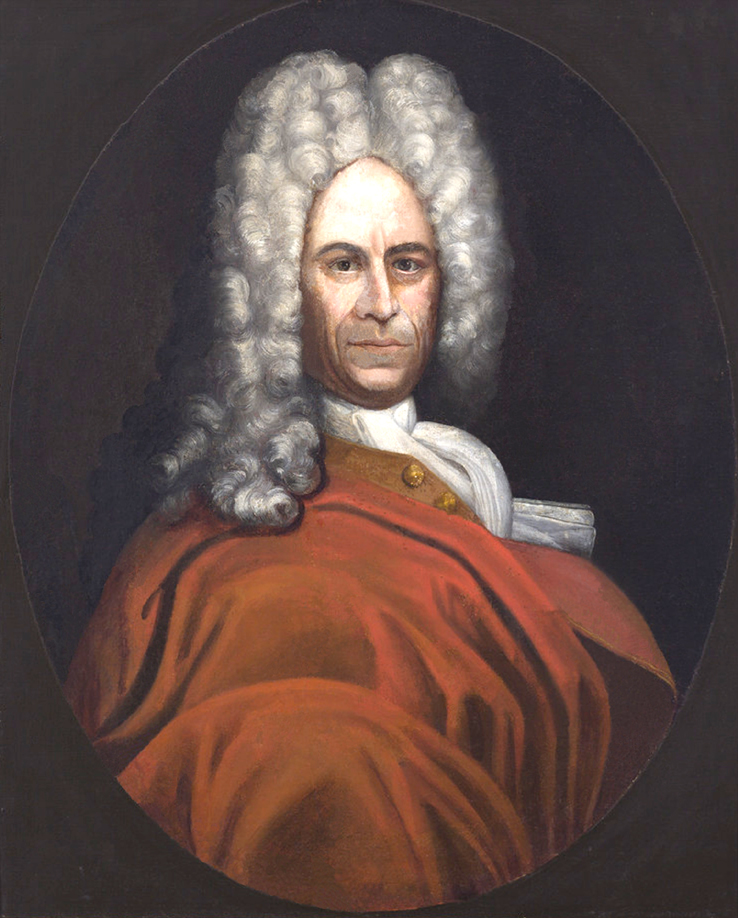 PhilosopherModern European1679 – 1754
Christian Wolff
Christian Wolff was a German philosopher. Wolff is characterized as one of the most eminent German philosophers between Leibniz and Kant.
- ◆Theoretical philosophy
- ◆general metaphysics
- ◆philosophia prima
- ◆ontology
- ◆special metaphysics
- ◆psychology
Read the full pageChristian Wolff (; German: [vɔlf]; less correctly Wolf; also known as Wolfius; ennobled as Christian von Wolff in 1745; 24 January 1679 – 9 April 1754) was a German philosopher. Wolff is characterized as one of the most eminent German philosophers between Leibniz and Kant. His life work spanned almost every scholarly subject of his time, displayed and unfolded according to his demonstrative-deductive, mathematical method, which some deem the peak of Enlightenment rationality in Germany.
Wolff wrote in German as his primary language of scholarly instruction and research, although he did translate his works into Latin for his transnational European audience. A founding father of, among other fields, economics and public administration as academic disciplines, he concentrated especially in these fields, giving advice on practical matters to people in government, and stressing the professional nature of university education.
- 8
 PhilosopherModern European1700 – 1766
Johann Christoph Gottsched
Johann Christoph Gottsched was a German philosopher, author, critic and grammarian of the Enlightenment.
- ◆Classicist
Read the full pageJohann Christoph Gottsched (German: [ˈɡɔtʃeːt]; 2 February 1700 – 12 December 1766) was a German philosopher, author, critic and grammarian of the Enlightenment.
He was born at Juditten (renamed Mendeleyevo in 1947) near Königsberg (Kaliningrad), Brandenburg-Prussia, the son of a Lutheran pastor, and was baptised in St. Mary's Church. He studied philosophy and history at the University of Königsberg, but immediately on taking the degree of Magister in 1723, he fled to Leipzig to avoid being drafted into the Prussian army. In Leipzig, he enjoyed the protection of Johann Burckhardt Mencke, who, under the name of "Philander von der Linde", was a well-known poet and president of the Deutschübende poetische Gesellschaft in Leipzig. Of this society, Gottsched was elected "Senior" in 1726, and in the next year reorganised it under the title of the Deutsche Gesellschaft.
- 9
 PhilosopherAfrican1703 – 1759
Anton Wilhelm Amo
Anton Wilhelm Amo was a Nzema philosopher from Axim, Dutch Gold Coast then within what was broadly considered the region of Guinea (the area is now in Ghana). Amo was a professor at the universities of Halle and Jena in Germany after studying at Halle.
- ◆Descartes
- ◆philosophy of mind
- ◆Wiredu, Kwasi
Read the full pageAnton Wilhelm Amo (c. 1703 – c. 1759) was a Nzema philosopher from Axim, Dutch Gold Coast then within what was broadly considered the region of Guinea (the area is now in Ghana).
Amo was a professor at the universities of Halle and Jena in Germany after studying at Halle. He was brought to Germany by the Dutch West India Company in 1707 and was presented as a gift to Dukes Augustus William and Ludwig Rudolf of Brunswick-Wolfenbüttel, being treated as a member of the family by their father Anthony Ulrich, Duke of Brunswick-Wolfenbüttel.
- 10PhilosopherModern European1714 – 1762
Alexander Gottlieb Baumgarten
Alexander Gottlieb Baumgarten was a German philosopher. He established aesthetics as a philosophical discipline.
- ◆Steven Nadler
Read the full pageAlexander Gottlieb Baumgarten (; German: [ˈbaʊmˌgaʁtn̩]; 17 July 1714 – 27 May 1762) was a German philosopher. He established aesthetics as a philosophical discipline.
He was the brother of the theologian Siegmund Jakob Baumgarten (1706–1757).