Renaissance humanism
Recovery of classical learning and celebration of human dignity and potential.
- 1
 SchoolModern European1350 – 1600
Renaissance humanism
Recovery of classical learning and celebration of human dignity and potential.
Read the full pageRenaissance humanism is a worldview centered on the nature and importance of humanity that emerged from the study of classical antiquity.
Renaissance humanists sought to create a citizenry able to speak and write with eloquence and clarity, and thus capable of engaging in the civic life of their communities and persuading others to virtuous and prudent actions. Humanism, while set up by a small elite who had access to books and education, was intended as a cultural movement to influence all of society. It was a program to revive the cultural heritage, literary legacy, and moral philosophy of the Greco-Roman civilization.
- 2
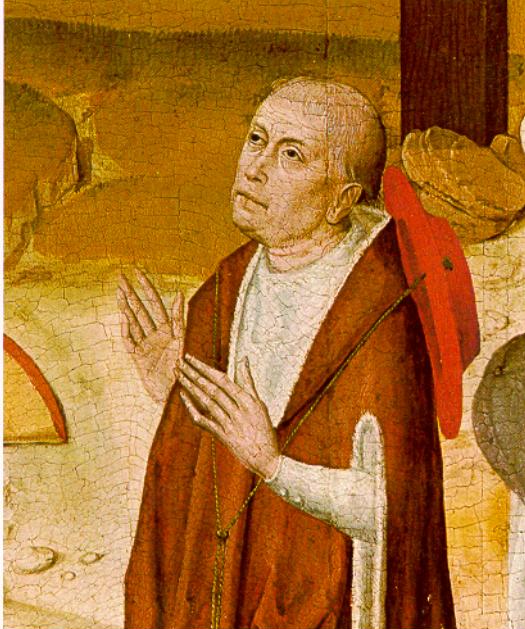 PhilosopherModern European1401 – 1464
Nicholas of Cusa
Nicholas of Cusa, also referred to as Nicholas of Kues and Nicolaus Cusanus (), was a German Catholic bishop and polymath active as a philosopher, theologian, jurist, mathematician, and astronomer. One of the first German proponents of Renaissance humanism, he made spiritual and political contributions to European cult
- ◆Learned ignorance
- ◆coincidence of opposites
Read the full pageNicholas of Cusa (1401 – 11 August 1464), also referred to as Nicholas of Kues and Nicolaus Cusanus (), was a German Catholic bishop and polymath active as a philosopher, theologian, jurist, mathematician, and astronomer. One of the first German proponents of Renaissance humanism, he made spiritual and political contributions to European culture. A notable example of this is his mystical or spiritual writings on "learned ignorance", as well as his participation in power struggles between Rome and the German states of the Holy Roman Empire.
As papal legate to Germany from 1446, he was appointed cardinal for his merits by Pope Nicholas V in 1448 and Prince-Bishop of Brixen two years later. In 1459, he became vicar general in the Papal States. Nicholas has remained an influential figure. In 2001, the sixth centennial of his birth was celebrated on four continents and commemorated by publications on his life and work.
- 3
 PhilosopherModern European1407 – 1457
Lorenzo Valla
Lorenzo Valla was an Italian Renaissance humanist scholar, rhetorician, educator, and Catholic priest. He is best known for his historical-critical textual analysis that proved that the Donation of Constantine was a forgery, therefore impugning and undermining the presumption of temporal power claimed by the papacy.
Read the full pageLorenzo Valla (Italian: [loˈrɛntso ˈvalla]; also latinized as Laurentius; c. 1407 – 1 August 1457) was an Italian Renaissance humanist scholar, rhetorician, educator, and Catholic priest. He is best known for his historical-critical textual analysis that proved that the Donation of Constantine was a forgery, therefore impugning and undermining the presumption of temporal power claimed by the papacy. Lorenzo is sometimes seen as a precursor of the Reformation.
Valla was born in Rome, with a family background of Piacenza; his father, Luciave della Valla, was a lawyer who worked in the Papal Curia. He was educated in Rome, attending the classes of teachers including Leonardo Bruni and Giovanni Aurispa, from whom he learned Latin and Greek. He is thought otherwise to have been largely self-taught.
- 4
 PhilosopherModern European1466 – 1536
Erasmus
Prince of the humanists, satirist of folly and advocate of tolerance.
- ◆ad fontes
- ◆Erasmian pronunciation
- ◆just war theory
- ◆accommodation
- ◆Lectio difficilior potior
Read the full pageDesiderius Erasmus Roterodamus ( DEZ-i-DEER-ee-əs irr-AZ-məs; Dutch: [ˌdeːziˈdeːrijʏs eːˈrɑsmʏs]; 28 October c. 1466 – 12 July 1536), commonly known in English as Erasmus of Rotterdam or simply Erasmus, was a Dutch humanist, theologian, and philosopher. He was, through his writings and translations, one of the most influential scholars of the Northern Renaissance and a major figure of Western culture.
Erasmus was an important figure in Renaissance classical scholarship who wrote in a spontaneous, copious and correct but natural Latin style. As a Catholic priest developing humanist techniques for working on texts, he prepared pioneering new Latin and Greek scholarly editions of the New Testament and of the Church Fathers, with annotations and commentary that were immediately and vitally influential in both the Protestant Reformation and the Catholic Reformation. He also wrote On Free Will, The Praise of Folly, The Complaint of Peace, Handbook of a Christian Knight, On Civility in Children, Copia: Foundations of the Abundant Style and many other academic, popular and pedagogical works.
- 5
 PhilosopherModern European1469 – 1527
Niccolò Machiavelli
Florentine diplomat whose The Prince separated politics from conventional morality.
- ◆virtù
- ◆modern republicanism
Read the full pageNiccolò di Bernardo dei Machiavelli (3 May 1469 – 21 June 1527) was a Florentine diplomat, author, philosopher, and historian who lived during the Italian Renaissance. He is best known for his political treatise The Prince (Il Principe), written around 1513 but not published until 1532, five years after his death. He has often been called the father of modern political philosophy and political science.
For many years he served as a senior official in the Florentine Republic with responsibilities in diplomatic and military affairs. He worked as secretary to the second chancery of the Republic of Florence from 1498 to 1512, when the Medici were out of power. He was expelled from his duties as a diplomat when the Medici retook power in Florence in 1512, and soon thereafter would be mistakenly suspected of treason, and sent into exile. A year later, he took up the life of a political writer.
- 6
 PhilosopherModern European1492 – 1540
Juan Luis Vives
Juan Luis Vives y March was a Spanish (Valencian) scholar and Renaissance humanist who spent most of his adult life in the southern Habsburg Netherlands. His beliefs on the soul, insight into early medical practice, and perspective on emotions, memory and learning earned him the title of the "father of modern psycholog
- ◆psyche
Read the full pageJuan Luis Vives y March (Spanish: [ˈbiβes]; Latin: Joannes Ludovicus Vives; Catalan: Joan Lluís Vives i March; Dutch: Jan Ludovicus Vives; 6 March 1493 – 6 May 1540) was a Spanish (Valencian) scholar and Renaissance humanist who spent most of his adult life in the southern Habsburg Netherlands. His beliefs on the soul, insight into early medical practice, and perspective on emotions, memory and learning earned him the title of the "father of modern psychology". Vives was the first to shed light on some key ideas that established how psychology is perceived today.
The text on his grave said:
- 7
 PhilosopherModern European1511 – 1553
Michael Servetus
Michael Servetus was a Spanish theologian, physician, cartographer, and Renaissance humanist. He was the first European to correctly describe the function of pulmonary circulation, as discussed in Christianismi Restitutio.
- ◆Nontrinitarian Christology
- ◆pulmonary circulation
Read the full pageMichael Servetus (; Spanish: Miguel Servet; French: Michel Servet; also known as Michel Servetus, Miguel de Villanueva, Revés, or Michel de Villeneuve; 29 September 1509 or 1511 – 27 October 1553) was a Spanish theologian, physician, cartographer, and Renaissance humanist. He was the first European to correctly describe the function of pulmonary circulation, as discussed in Christianismi Restitutio (1553). He was a polymath versed in many sciences: mathematics, astronomy and meteorology, geography, human anatomy, medicine and pharmacology, as well as jurisprudence, translation, poetry, and the scholarly study of the Bible in its original languages.
He is renowned in the history of several of these fields, particularly medicine. His work on the circulation of blood and his observations on pulmonary circulation were particularly important. He participated in the Protestant Reformation, and later rejected the doctrine of the Trinity and mainstream Catholic Christology. Biblical unitarians credit him with reviving this theological issue, originally associated with Arius more than a thousand years previously.
- 8
 PhilosopherModern European1515 – 1572
Petrus Ramus
Petrus Ramus was a French humanist, logician, and educational reformer. A prominent and controversial academic and professor in Paris' College De France, Ramus became famous for his iconoclastic critiques of Aristotle, Cicero, and Quintilian.
- ◆Ramism
Read the full pagePetrus Ramus (French: Pierre de La Ramée; Anglicized as Peter Ramus ; 1515 – 26 August 1572) was a French humanist, logician, and educational reformer. A prominent and controversial academic and professor in Paris' College De France, Ramus became famous for his iconoclastic critiques of Aristotle, Cicero, and Quintilian. Ramus argued that dialectic should be removed or separated from the purview of rhetoric, a stance which significantly narrowed rhetorical theory's scope. A convert to Protestantism, he was a victim of the St. Bartholomew's Day massacre.
He was born at the village of Cuts, Picardy; his father was a farmer. He gained admission at age twelve (thus about 1527) to the Collège de Navarre, working as a servant. A reaction against scholasticism was in full tide, at a transitional time for Aristotelianism. On the occasion of receiving his M.A. degree in 1536, Ramus allegedly took as his thesis Quaecumque ab Aristotele dicta essent, commentitia esse (Everything that Aristotle has said is false), which Walter J. Ong paraphrases as follows:
- 9
 PhilosopherModern European1530 – 1563
Étienne de La Boétie
Étienne or Estienne de La Boétie was a French magistrate, classicist, writer, poet and political theorist, best remembered for his relationship with essayist Michel de Montaigne. His early political treatise Discourse on Voluntary Servitude was posthumously adopted by the Huguenot movement and is sometimes seen as an e
- ◆Voluntary servitude
Read the full pageÉtienne or Estienne de La Boétie (French: [etjɛn d(ə) la bɔesi] , also [bwati] or [bɔeti]; Occitan: Esteve de La Boetiá; 1 November 1530 – 18 August 1563) was a French magistrate, classicist, writer, poet and political theorist, best remembered for his relationship with essayist Michel de Montaigne. His early political treatise Discourse on Voluntary Servitude was posthumously adopted by the Huguenot movement and is sometimes seen as an early influence on modern anti-statist, utopian and civil disobedience thought.
La Boétie was born in Sarlat, in the Périgord region of southwest France, in 1530 to an aristocratic family. His father was a royal official of the Périgord region and his mother was the sister of the president of the Bordeaux Parliament (assembly of lawyers). Orphaned at an early age, he was brought up by his uncle and namesake, the curate of Bouilbonnas, and received his law degree from the University of Orléans in 1553. His great and precocious ability earned La Boétie a royal appointment to the Bordeaux Parliament the following year, despite his being under the minimum age. There he pursued a distinguished career as judge and diplomatic negotiator until his untimely death from illness in 1563 at the age of thirty-two. La Boétie was also a distinguished poet and humanist, translating Xenophon and Plutarch, and being closely connected with the leading young Pleiade group of poets, including Pierre de Ronsard, Jean Daurat and Jean-Antoine de Baïf.
- 10
 PhilosopherModern European1583 – 1645
Hugo Grotius
Hugo Grotius, also known as Hugo de Groot (Dutch: [ˈɦyɣoː də ˈɣroːt]) or Huig de Groot (Dutch: [ˈɦœyx də ˈɣroːt]), was a Dutch humanist, diplomat, lawyer, theologian, jurist, statesman, poet and playwright. A teenage prodigy, he was born in Delft and studied at Leiden University.
- ◆natural rights
- ◆just war
- ◆natural law
- ◆governmental theory of atonement
Read the full pageHugo Grotius ( GROH-shee-əss; 10 April 1583 – 28 August 1645), also known as Hugo de Groot (Dutch: [ˈɦyɣoː də ˈɣroːt]) or Huig de Groot (Dutch: [ˈɦœyx də ˈɣroːt]), was a Dutch humanist, diplomat, lawyer, theologian, jurist, statesman, poet and playwright. A teenage prodigy, he was born in Delft and studied at Leiden University. He was imprisoned in Loevestein Castle for his involvement in the controversies over religious policy of the Dutch Republic, but escaped hidden in a chest of books that was regularly brought to him and was transported to Gorinchem. Grotius wrote most of his major works in exile in France.
Grotius was a major figure in the fields of philosophy, political theory and law during the 16th and 17th centuries. Along with the earlier works of Francisco de Vitoria and Alberico Gentili, his writings laid the foundations for international law. Two of his books have had a lasting impact in the field: De jure belli ac pacis (On the Law of War and Peace) dedicated to Louis XIII of France and the Mare Liberum (The Free Seas) for which Grotius has been called the "father of international law". Grotius has also contributed significantly to the evolution of the notion of rights. Before him, rights were, above all, perceived as attached to objects; after him, they are seen as belonging to persons, as the expression of an ability to act, or as a means of realizing something.
