Pragmatism
The meaning and truth of ideas lie in their practical consequences.
- 1
 SchoolAmericas1870 – present
Pragmatism
The meaning and truth of ideas lie in their practical consequences.
Read the full pagePragmatism is a philosophical tradition that views language and thought as tools for prediction, problem solving, and action, rather than describing, representing, or mirroring reality. Pragmatists contend that most philosophical topics—such as the nature of knowledge, language, concepts, meaning, belief, and science—are best viewed in terms of their practical uses and successes.
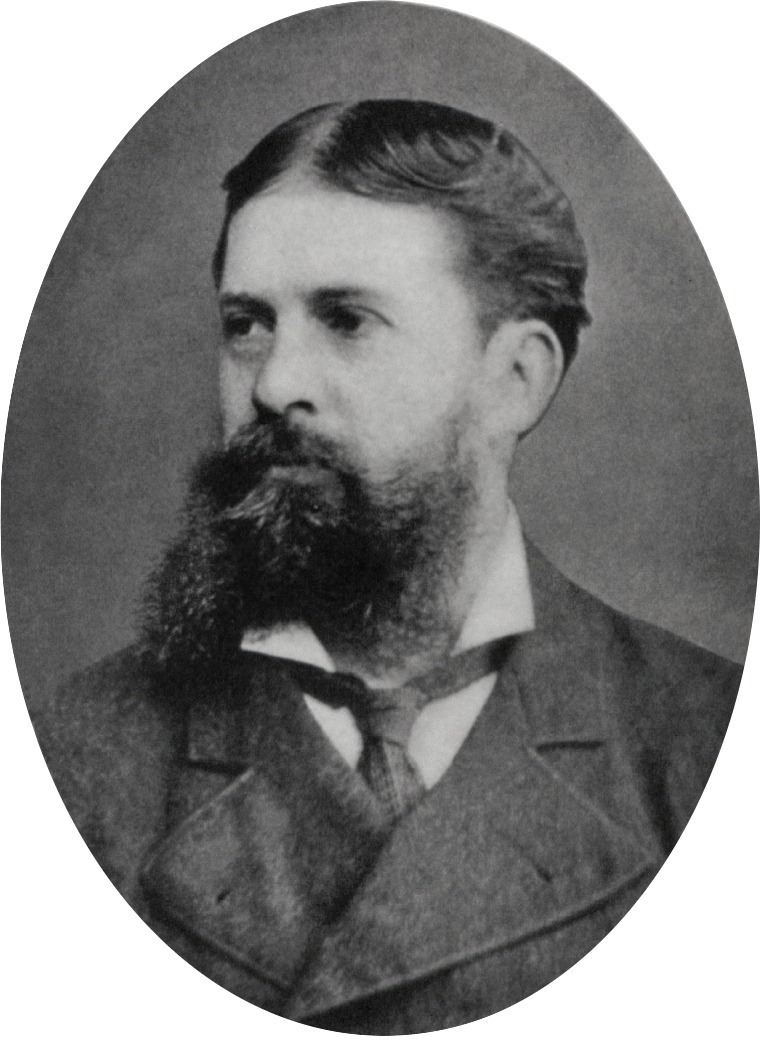
Pragmatism began in the United States in the 1870s. Its origins are often attributed to philosophers Charles Sanders Peirce, William James and John Dewey. In 1878, Peirce described it in his pragmatic maxim: "Consider the practical effects of the objects of your conception. Then, your conception of those effects is the whole of your conception of the object."
- 2
 PhilosopherAmericas1839 – 1914
Charles Sanders Peirce
Founder of pragmatism and semiotics; pioneer of abduction and modern logic.
- ◆Pragmatic maxim
- ◆abductive reasoning
- ◆triadic sign relation
Read the full pageCharles Sanders Peirce ( PURSE; September 10, 1839 – April 19, 1914) was an American scientist, mathematician, logician, and philosopher who is sometimes known as "the father of pragmatism". According to philosopher Paul Weiss, writing in 1934, Peirce was "the most original and versatile of America's philosophers and America's greatest logician". Bertrand Russell wrote in 1959, "he was one of the most original minds of the later nineteenth century and certainly the greatest American thinker ever".
Educated as a chemist and employed as a scientist for thirty years, Peirce made major contributions to logic, such as theories of relations and quantification. C. I. Lewis wrote, "The contributions of C. S. Peirce to symbolic logic are more numerous and varied than those of any other writer—at least in the nineteenth century." For Peirce, logic also encompassed much of what is now called epistemology and the philosophy of science. He saw logic as the formal branch of semiotics or study of signs, of which he is a founder, which foreshadowed the debate among logical positivists and proponents of philosophy of language that dominated 20th-century Western philosophy. Peirce's study of signs also included a tripartite theory of predication.
- 3PhilosopherAmericas1839 – 1914
Charles Sanders Peirce
Founder of pragmatism and semiotics; pioneer of abduction and modern logic.
- ◆Pragmatic maxim
- ◆abductive reasoning
- ◆triadic sign relation
Read the full pageCharles Sanders Peirce ( PURSE; September 10, 1839 – April 19, 1914) was an American scientist, mathematician, logician, and philosopher who is sometimes known as "the father of pragmatism". According to philosopher Paul Weiss, writing in 1934, Peirce was "the most original and versatile of America's philosophers and America's greatest logician". Bertrand Russell wrote in 1959, "he was one of the most original minds of the later nineteenth century and certainly the greatest American thinker ever".
Educated as a chemist and employed as a scientist for thirty years, Peirce made major contributions to logic, such as theories of relations and quantification. C. I. Lewis wrote, "The contributions of C. S. Peirce to symbolic logic are more numerous and varied than those of any other writer—at least in the nineteenth century." For Peirce, logic also encompassed much of what is now called epistemology and the philosophy of science. He saw logic as the formal branch of semiotics or study of signs, of which he is a founder, which foreshadowed the debate among logical positivists and proponents of philosophy of language that dominated 20th-century Western philosophy. Peirce's study of signs also included a tripartite theory of predication.
- 4
 PhilosopherAmericas1842 – 1910
William James
Pragmatist and psychologist: truth is what works; the stream of consciousness.
- ◆Will to believe doctrine
- ◆crisis of self-surrender
- ◆pragmatic theory of truth
- ◆radical empiricism
- ◆James–Lange theory
- ◆psychologist's fallacy
Read the full pageWilliam James (January 11, 1842 – August 26, 1910) was an American philosopher and psychologist. The first educator to offer a psychology course in the United States, he is considered to be one of the leading thinkers of the late 19th century, one of the most influential philosophers and is often dubbed the "father of American psychology".
Born into a wealthy family, James was the son of the Swedenborgian theologian Henry James Sr. and the brother of both the prominent novelist Henry James and the diarist Alice James. James trained as a physician and taught anatomy at Harvard, but never practiced medicine. Instead, he pursued his interests in psychology and then philosophy. James wrote widely on many topics, including epistemology, education, metaphysics, psychology, religion, and mysticism. Among his most influential books are The Principles of Psychology, a groundbreaking text in the field of psychology; Essays in Radical Empiricism, an important text in philosophy; and The Varieties of Religious Experience, an investigation of different forms of religious experience, including theories on mind-cure.
- 5
 PhilosopherAmericas1855 – 1916
Josiah Royce
Josiah Royce was an American pragmatist and absolute idealist philosopher and the founder of American idealism. His philosophical ideas included his joining of pragmatism and idealism, his philosophy of loyalty, and his defense of absolutism.
- ◆loyalty
Read the full pageJosiah Royce (; November 20, 1855 – September 14, 1916) was an American pragmatist and absolute idealist philosopher and the founder of American idealism. His philosophical ideas included his joining of pragmatism and idealism, his philosophy of loyalty, and his defense of absolutism.
Royce's essay "A Word for the Times" (December 1914) was quoted in the 1936 State of the Union Address by Franklin Delano Roosevelt: "The human race now passes through one of its great crises. New ideas, new issues – a new call for men to carry on the work of righteousness, of charity, of courage, of patience, and of loyalty. [...] I studied, I loved, I labored, unsparingly and hopefully, to be worthy of my generation."
- ◆Reflective thinking
- ◆Functional psychology
- ◆Immediate empiricism
- ◆Practical idealism
- ◆Educational progressivism
- ◆Occupational psychosis
Read the full pageJohn Dewey (; October 20, 1859 – June 1, 1952) was an American philosopher, psychologist, and educational reformer. He was one of the most prominent American scholars in the first half of the twentieth century.
The overriding theme of Dewey's works was his profound belief in democracy, be it in politics, education, or communication and journalism. As Dewey himself stated in 1888, while still at the University of Michigan, "Democracy and the one, ultimate, ethical ideal of humanity are to my mind synonymous." Dewey considered two fundamental elements—schools and civil society—to be major topics needing attention and reconstruction to encourage experimental intelligence and plurality. He asserted that complete democracy was to be obtained not just by extending voting rights but also by ensuring that there exists a fully formed public opinion, accomplished by communication among citizens, experts, and politicians.
- 7
 PhilosopherAmericas1863 – 1952
George Santayana
George Santayana was a Spanish American philosopher, essayist, poet, and novelist. Born in Spain, he moved to the United States at the age of eight.
- ◆Lucretian
- ◆materialism
- ◆Skepticism
- ◆aristocracy
- ◆Realms of Being
- ◆Beauty
Read the full pageGeorge Santayana (born Jorge Agustín Nicolás Ruiz de Santayana y Borrás, December 16, 1863 – September 26, 1952) was a Spanish American philosopher, essayist, poet, and novelist. Born in Spain, he moved to the United States at the age of eight.
As a philosopher, Santayana is known for aphorisms, such as "Those who cannot remember the past are condemned to repeat it", and "Only the dead have seen the end of war", and his definition of beauty as "pleasure objectified".
- 8
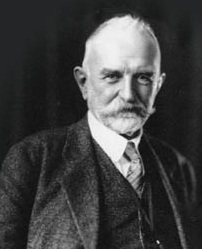 PhilosopherAmericas1863 – 1931
George Herbert Mead
George Herbert Mead was an American philosopher, sociologist, and psychologist, primarily affiliated with the University of Chicago. He was one of the key figures in the development of pragmatism.
Read the full pageGeorge Herbert Mead (February 27, 1863 – April 26, 1931) was an American philosopher, sociologist, and psychologist, primarily affiliated with the University of Chicago. He was one of the key figures in the development of pragmatism. He is regarded as one of the founders of symbolic interactionism, and was an important influence on what has come to be referred to as the Chicago School of Sociology.
George Herbert Mead was born on February 27, 1863, in South Hadley, Massachusetts. He was raised in a Protestant, middle-class family comprising his father, Hiram Mead, his mother, Elizabeth Storrs Mead (née Billings), and his sister Alice. His father was a former Congregationalist pastor from a lineage of farmers and clergymen and who later held the chair in Sacred Rhetoric and Pastoral Theology at Oberlin College's theological seminary. Elizabeth taught for two years at Oberlin College and subsequently, from 1890 to 1900, served as president of Mount Holyoke College in South Hadley, Massachusetts.
