Continental philosophy: Negri to Mouffe
- 1
 PhilosopherModern European1933 – 2023
Antonio Negri
Antonio Negri was an Italian political philosopher known as one of the most prominent theorists of autonomism, as well as for his co-authorship of Empire with Michael Hardt. Born in Padua, Italy, Negri became a professor of political philosophy at the University of Padua, where he taught state and constitutional theory
- ◆Philosophy of globalization
- ◆multitude
- ◆Empire
- ◆immaterial labour
- ◆post-Fordism
- ◆altermodernity
Read the full pageAntonio Negri (; Italian: [ˈneːɡri]; 1 August 1933 – 16 December 2023) was an Italian political philosopher known as one of the most prominent theorists of autonomism, as well as for his co-authorship of Empire with Michael Hardt. Born in Padua, Italy, Negri became a professor of political philosophy at the University of Padua, where he taught state and constitutional theory. Negri founded the Potere Operaio (Worker Power) group in 1969 and was a leading member of Autonomia Operaia, and published highly influential books, including Empire and Multitude: War and Democracy in the Age of Empire.
Negri was accused in the late 1970s of being the mastermind of the left-wing urban guerrilla organization Red Brigades (Brigate Rosse or BR), which was involved in the May 1978 kidnapping and murder of former Italian prime minister Aldo Moro. On 7 April 1979, Negri was arrested and charged with a number of crimes, including the Moro murder. Most charges were quickly dropped, but in 1984, having fled to France, he was sentenced in absentia to 30 years in prison. He was given an additional four years on the charge of being morally responsible for the violence of political activists in the 1960s and 1970s. The question of Negri's involvement with left-wing extremism is a controversial subject. He was indicted on a number of charges, including "association and insurrection against the state" (a charge which was later dropped), and sentenced for involvement in two murders.
- ◆Nietzsche
- ◆metaphor
Read the full pageSarah Kofman (French: [kɔfman]; 14 September 1934 – 15 October 1994) was a French philosopher.
Kofman began her teaching career in Toulouse in 1960 at the Lycée Saint-Sernin. She worked under the supervision of Jean Hyppolite, initially planning studies of Freud and art; Mikel Dufrenne, on Freud's aesthetics for her third-cycle doctoral thesis, published under the title The Childhood of Art; and then Gilles Deleuze, for her State doctorate based on published work. In 1969–69, Kofman met Jacques Derrida and began attending his seminars at the École Normale Supérieure.
- 3
 PhilosopherAmericas1935 – 2014
Ernesto Laclau
Ernesto Laclau was an Argentine political theorist and philosopher. He is often described as an 'inventor' of post-Marxist political theory.
- ◆Marxist
- ◆economic determinism
Read the full pageErnesto Laclau (Spanish: [laˈklaw]; 6 October 1935 – 13 April 2014) was an Argentine political theorist and philosopher. He is often described as an 'inventor' of post-Marxist political theory. He is well known for his collaborations with his long-term partner, Chantal Mouffe.
He studied history at the University of Buenos Aires Faculty of Philosophy and Letters, graduating with a licenciatura in 1964, and received a PhD from the University of Essex in 1977.
- 4PhilosopherModern European1936 – 1979
Nikos Poulantzas
Nicos Poulantzas was a Greek-French Marxist political philosopher and sociologist. In the 1970s, he became a leading figure in the structuralist Marxist school of thought.
- ◆capitalist state
- ◆capitalist class
- ◆economic exploitation
Read the full pageNicos Poulantzas (Greek: Νίκος Πουλαντζάς; 21 September 1936 – 3 October 1979) was a Greek-French Marxist political philosopher and sociologist. In the 1970s, he became a leading figure in the structuralist Marxist school of thought. He is best known for his theoretical work on the state, social class, fascism, and authoritarianism. His work was influential in critiquing traditional communist views and developing a sophisticated Marxist theory of the capitalist state.
Born in Greece, Poulantzas moved to France in 1960, where he spent the remainder of his life. Initially influenced by the existentialist Marxism of Jean-Paul Sartre, he later became associated with the structuralist school of Louis Althusser. His first major work, Political Power and Social Classes (1968), presented a structuralist theory of the state as relatively autonomous from the direct control of the capitalist class, serving instead as a "factor of cohesion" for the social formation. His subsequent work analysed exceptional forms of the state, such as in Fascism and Dictatorship (1970), and addressed contemporary class structures in Classes in Contemporary Capitalism (1974).
- 5
 PhilosopherModern Europeanborn 1937
Hélène Cixous
Hélène Cixous is a French writer, playwright and literary critic. During her academic career, she was primarily associated with the Centre universitaire de Vincennes (today's University of Paris VIII), which she co-founded in 1969 and where she created the first centre of women's studies at a European university.
- ◆Écriture féminine
Read the full pageHélène Cixous ( sihk-SOO; French: [siksu]; born 5 June 1937) is a French writer, playwright and literary critic. During her academic career, she was primarily associated with the Centre universitaire de Vincennes (today's University of Paris VIII), which she co-founded in 1969 and where she created the first centre of women's studies at a European university. Known for her experimental writing style and great versatility as a writer and thinker, she has written more than seventy books dealing with multiple genres: theatre, literary and feminist theory, art criticism, autobiography and poetic fiction.
She first gained attention in 1969 with her first work of fiction, Dedans (Inside), a semi-autobiographical novel which won the Prix Médicis and explored the themes of identity, memory, death and writing. She is perhaps best known for her 1976 article "The Laugh of the Medusa", which established her as one of the early thinkers in post-structural feminism. She has collaborated with several artists and directors, such as Adel Abdessemed, Pierre Alechinsky, Simone Benmussa, Jacques Derrida, Simon Hantaï, Daniel Mesguich and Ariane Mnouchkine. She is considered a strong contender for the Nobel Prize in Literature.
- 6
 PhilosopherModern European1937 – 2015
André Glucksmann
André Glucksmann was a French philosopher, activist, and writer. He was a leading figure of the new philosophers.
Read the full pageAndré Glucksmann (French: [ɡlyksman]; 19 June 1937 – 10 November 2015) was a French philosopher, activist, and writer. He was a leading figure of the new philosophers. Glucksmann began his career as a Marxist, who went on to reject Marxism–Leninism and "real-existing socialism" in the popular book La Cuisinière et le Mangeur d'Hommes (1975), and later positioned himself on the Chinese side of the Sino-Soviet split, becoming an outspoken critic of the Soviet Union and post-Soviet Russian foreign policy. He was a strong supporter of human rights. In later years, he opposed the claim that Islamic terrorism is the product of the clash of civilizations between Islam and the Western world.
André Glucksmann was born in 1937 in Boulogne-Billancourt, the son of Ashkenazi Jewish parents from Austria-Hungary. His father was from Czernowitz in northern Bukovina, which later became part of Romania and is now in Ukraine, and his mother from Prague, which later became the capital of Czechoslovakia.
- 7
 PhilosopherModern European1939 – 2017
Tzvetan Todorov
Tzvetan Todorov was a Bulgarian-French historian, philosopher, structuralist literary critic, sociologist and essayist. He was the author of many books and essays, which have had a significant influence in anthropology, sociology, semiotics, literary theory, intellectual history and culture theory.
- ◆Fantastic
Read the full pageTzvetan Todorov (; French: [tsvetan tɔdɔʁɔv, dzve-]; Bulgarian: Цветан Тодоров [ˈtɔdorof]; 1 March 1939 – 7 February 2017) was a Bulgarian-French historian, philosopher, structuralist literary critic, sociologist and essayist. He was the author of many books and essays, which have had a significant influence in anthropology, sociology, semiotics, literary theory, intellectual history and culture theory.
Tzvetan Todorov was born on 1 March 1939 in Sofia, Bulgaria. He earned an M.A. in philology at the University of Sofia in 1963. He enrolled at the University of Paris to do his doctorat de troisième cycle (equivalent to the Ph.D.) in 1966 under Roland Barthes and his doctorat ès lettres in 1970.
- 8
 PhilosopherModern Europeanborn 1940
Jacques Rancière
Jacques Rancière is a French philosopher, Professor of Philosophy at European Graduate School in Saas-Fee and Emeritus Professor of Philosophy at the University of Paris VIII: Vincennes—Saint-Denis. After co-authoring Reading Capital with the structuralist Marxist philosopher Louis Althusser and others, and after witne
- ◆The Visual
- ◆2019 [2007]
- ◆p. 2.
- ◆"part with no part"
- ◆K. Cho
- ◆''Psychopedagogy: Freud
Read the full pageJacques Rancière ( RAHN-see-AIR; French: [ʒɑk ʁɑ̃sjɛʁ]; born 10 June 1940) is a French philosopher, Professor of Philosophy at European Graduate School in Saas-Fee and Emeritus Professor of Philosophy at the University of Paris VIII: Vincennes—Saint-Denis. After co-authoring Reading Capital (1965) with the structuralist Marxist philosopher Louis Althusser and others, and after witnessing the 1968 political uprisings, his work turned against Althusserian Marxism. He later came to develop an original body of work focused on aesthetics.
Rancière contributed to the influential volume Reading Capital before publicly breaking with Althusser over his attitude toward the May 1968 student uprising in Paris; Rancière felt Althusser's theoretical stance did not leave enough room for spontaneous popular uprising.
- 9
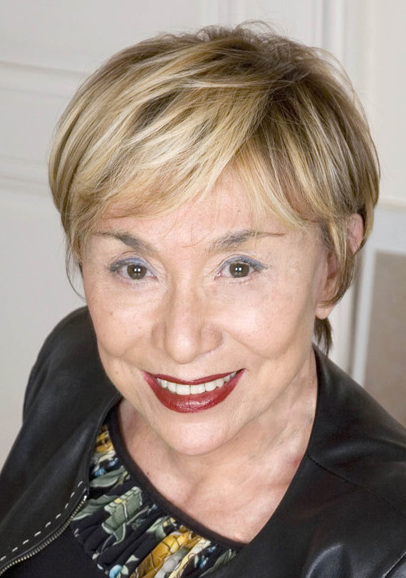 PhilosopherModern Europeanborn 1941
Julia Kristeva
Julia Kristeva is a Bulgarian-French philosopher, literary critic, semiotician, psychoanalyst, feminist, and novelist who has lived in France since the mid-1960s. She has taught at Columbia University, and is now a professor emerita at Université Paris Cité.
Read the full pageJulia Kristeva (; French: [kʁisteva]; born Yuliya Stoyanova Krasteva, Bulgarian: Юлия Стоянова Кръстева [ˈkrɤstɛvɐ]; on 24 June 1941) is a Bulgarian-French philosopher, literary critic, semiotician, psychoanalyst, feminist, and novelist who has lived in France since the mid-1960s. She has taught at Columbia University, and is now a professor emerita at Université Paris Cité. The author of more than 30 books, including Powers of Horror, Tales of Love, Black Sun: Depression and Melancholia, Proust and the Sense of Time, and the trilogy Female Genius, she has been awarded Commander of the Legion of Honor, Commander of the Order of Merit, the Holberg International Memorial Prize, the Hannah Arendt Prize, and the Vision 97 Foundation Prize, awarded by the Havel Foundation.
Kristeva became influential in international critical analysis, cultural studies and feminism after publishing her first book, Semeiotikè, in 1969. Her sizeable body of work includes books and essays that address intertextuality, the semiotic, and abjection, in the fields of linguistics, literary theory and criticism, psychoanalysis, biography and autobiography, political and cultural analysis, art and art history. She is prominent in structuralist and poststructuralist thought.
- 10
 PhilosopherModern Europeanborn 1942
Giorgio Agamben
Giorgio Agamben is an Italian philosopher whose work spans political theory, ontology, aesthetics, and literature. He is best known for developing the concept of homo sacer and exploring the relationship between sovereignty, legal authority, and what he calls 'bare life'.
- ◆Homo sacer
- ◆Auctoritas
- ◆zoe
- ◆bios
Read the full pageGiorgio Agamben ( ə-GAM-bən; Italian: [ˈdʒordʒo aˈɡamben]; born 22 April 1942) is an Italian philosopher whose work spans political theory, ontology, aesthetics, and literature. He is best known for developing the concept of homo sacer and exploring the relationship between sovereignty, legal authority, and what he calls 'bare life'. His writings draw on sources including Aristotle, Roman law, Christian theology, Martin Heidegger, Walter Benjamin, Ludwig Wittgenstein, St. Augustine and Carl Schmitt among others, and engage critically with Michel Foucault’s account of biopolitics and biopower. Agamben’s multi-volume Homo Sacer project has been widely discussed within political philosophy, jurisprudence, anthropology, and the humanities, and he is considered one of the most influential writers in contemporary continental philosophy.
Agamben has held teaching and research positions at institutions including the University of Verona, the University of Macerata, the University of Palermo, and the Università Iuav di Venezia, and he has lectured widely in Europe and North America. His publications include Homo Sacer: Sovereign Power and Bare Life (1995), State of Exception (2003), The Kingdom and the Glory (2007), and The Use of Bodies (2014), alongside works on language, poetry, and the history of Western metaphysics. His ideas have generated substantial scholarly debate and have influenced fields ranging from political theory to literary studies.
- 11
 PhilosopherModern Europeanborn 1943
Chantal Mouffe
Chantal Mouffe is a Belgian political theorist and philosopher, teaching at University of Westminster. She is best known for her and Ernesto Laclau's contribution to the development of the so-called Essex School of discourse analysis.
- ◆Agonism
- ◆deliberative democracy
- ◆radical democracy
Read the full pageChantal Mouffe (French: [muf]; born 17 June 1943) is a Belgian political theorist and philosopher, teaching at University of Westminster. She is best known for her and Ernesto Laclau's contribution to the development of the so-called Essex School of discourse analysis. She is a strong critic of deliberative democracy and advocates a conflict-oriented model of radical democracy.
Chantal Mouffe studied at the Universities of Leuven, Paris and Essex and has worked in many universities throughout the world (in Europe, North America and Latin America). She has also held visiting positions at Harvard, Cornell, Princeton and the CNRS (Paris). During 1989–1995, she served as Programme Director at the Collège international de philosophie in Paris. She currently holds a professorship at the Department of Politics and International Relations, University of Westminster in the United Kingdom, where she is a member of the Centre for the Study of Democracy.
